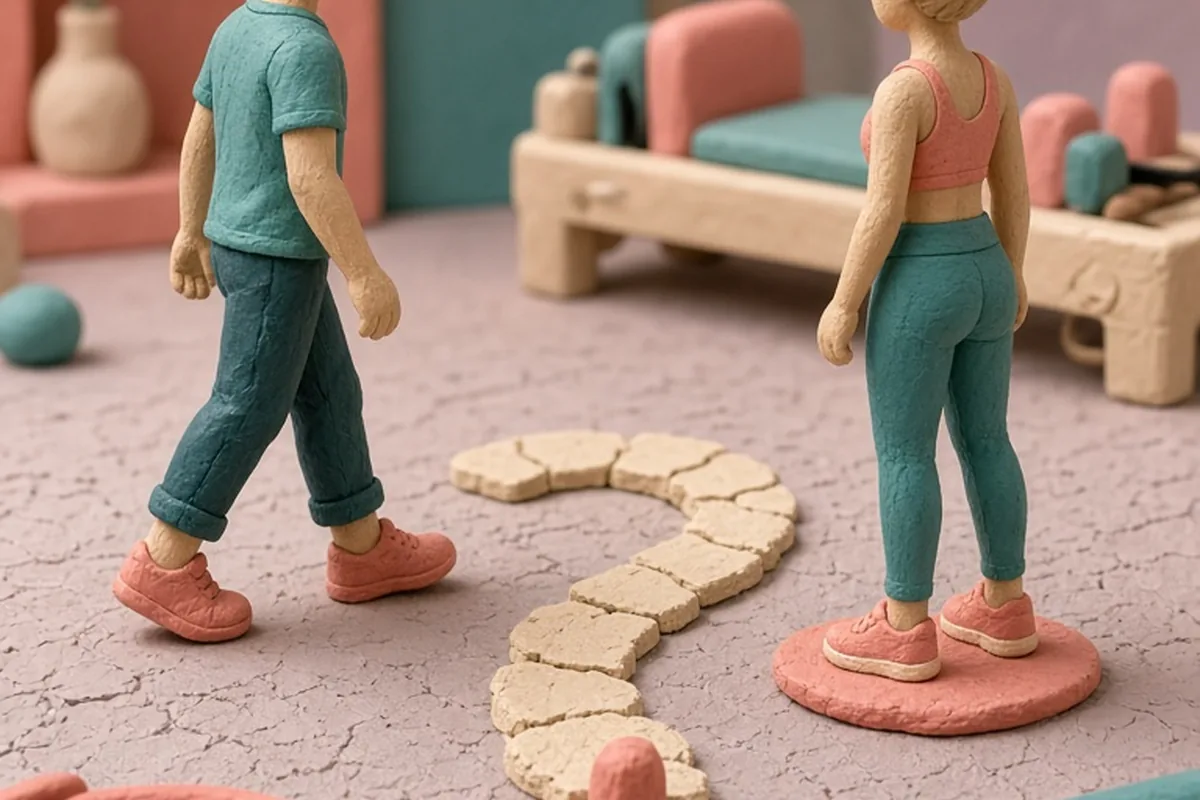
Pilates is exceptionally beneficial for women, though it was created for anyone seeking core strength and functional mobility. Women frequently gravitate toward Pilates because it targets deep stabilizing muscles, supports pelvic floor health, improves alignment, and builds durable strength without heavy joint impact. While popularized in women's wellness culture, its principles apply universally across all bodies and fitness levels.
Walking into a modern boutique fitness studio, it is easy to assume Pilates was designed exclusively for women. Pastel equipment, specialized activewear, and social media trends have closely tied the practice to female wellness culture, yet the discipline itself carries a practical biomechanical foundation that addresses specific, lifelong physical demands.
The Origins of Pilates and Its Evolution into Women's Wellness
Pilates was not originally designed as a female-only exercise method. Developed in the early twentieth century by German physical trainer Joseph Pilates, the discipline—originally named 'Contrology'—was formulated to rehabilitate injured soldiers, box-train athletes, and build resilient physical conditioning. When Pilates moved to New York City in the 1920s, his studio shared space with prominent dance organizations. Dancers, who required exceptional core strength, spinal flexibility, and rehabilitation tools that did not add bulk, quickly adopted the practice.
Over the subsequent decades, marketing shifted the cultural perception of the modality. Fitness brands and media outlets recognized that the emphasis on elongated posture, low-impact toning, and deliberate breathwork resonated strongly with women seeking alternatives to high-impact aerobics or aggressive weight room environments. While this commercial framing positioned Pilates almost exclusively as a women's lifestyle activity, the underlying system remains rooted in mechanical alignment, breath coordination, and neuromuscular control that serves any human body.
Understanding this background helps demystify the practice. Recognizing that Pilates is an athletic conditioning tool rather than a passive stretching routine allows practitioners to approach it with realistic expectations about effort, precision, and physical progression.
Targeting the Deep Core and Pelvic Floor Alignment
One of the primary reasons women find Pilates uniquely advantageous is its focus on the inner core unit. Rather than isolating superficial muscles like the rectus abdominis through traditional crunches, Pilates activates the deeper muscular corset: the transverse abdominis, the multifidus along the spine, the diaphragm, and the pelvic floor. These muscles function in tandem to create central stability, which cushions the spine and supports internal organs during everyday activities.
This deep muscular integration becomes especially valuable during significant physical phases such as pregnancy, postpartum recovery, and menopause. Concentric and eccentric muscular engagements guided by controlled exhalations help rebuild abdominal tone and improve intra-abdominal pressure management. For example, during a fundamental movement like the pelvic curl, the practitioner rolls through the spine one vertebra at a time while engaging the hamstrings and lower abdominals, gently training the pelvic basin to stabilize under movement.
However, Pilates should not be viewed as an automatic substitute for specialized medical rehabilitation. While it promotes general pelvic awareness and muscular balance, conditions like severe diastasis recti, active pelvic organ prolapse, or hypertonic pelvic floors often require individual guidance from a licensed pelvic floor physical therapist before stepping into group classes.
Alleviating Postural Strain from Modern Daily Routines
Women often navigate physical stresses that pull the body out of balanced alignment, ranging from prolonged hours seated at office desks to carrying young children, heavy bags, or groceries on one hip. These repetitive asymmetrical patterns commonly lead to rounded shoulders, forward head posture, and an exaggerated tilt in the pelvis, which in turn causes persistent lower back tightness and neck fatigue.
Pilates directly targets these postural imbalances by prioritizing spinal articulation and scapular stabilization. Exercises such as the chest expansion, swan prep, and spine stretch forward train the upper back extensors to counteract slouching while gently lengthening tight chest musculature. Rather than passively holding stretches, the body works through dynamic ranges of motion that teach muscles how to maintain structural integrity under load.
The practical result is greater functional ease in daily movement. When postural stabilizers fire correctly, carrying items or sitting through long meetings requires far less energy and creates significantly less compensatory tension throughout the neck and lower lumbar region.
Comparing Mat and Reformer Pilates for Your Routine
When exploring Pilates, beginners are usually faced with a choice between mat-based classes and equipment-based sessions, most commonly utilizing the reformer. Both share identical foundational principles—centering, concentration, control, precision, breath, and flow—yet they provide distinctly different physical challenges and accessibility profiles.
Mat Pilates uses body weight and gravity as primary resistance, often supplemented by simple props like small inflatable balls, resistance bands, or magic circles. Because there is no external apparatus supporting the limbs, mat work can surprisingly be more challenging for complete beginners who lack baseline core awareness. In contrast, the reformer uses an arrangement of springs, a sliding carriage, footbars, and straps. The springs can either provide adjustable resistance to build muscular stamina or act as assistive support, offloading joint pressure and guiding the body through clean planes of motion.
Choosing between the two depends heavily on your budget, schedule, and joint tolerance. Mat classes are widely accessible at home and through community centers, making them highly sustainable for consistent daily practice. Reformer classes offer versatile feedback and gentle joint decompression, though studio fees and equipment costs present a higher barrier to entry.
- Mat Pilates: Highly accessible, portable, uses body weight and gravity, teaches self-stabilization without external guidance.
- Reformer Pilates: Uses spring-loaded resistance, provides assistive feedback for joint sensitivity, allows for wider exercise variety and progressive loading.
- Tower and Cadillac: Specialized vertical frames offering bar-assisted articulation and deep spinal decompression for tailored progression.
How Pilates Fits into a Broader Strength and Conditioning Plan
A common debate is whether Pilates provides enough stimulus to serve as a standalone fitness regimen. The answer depends on individual health goals. Pilates is remarkably effective for developing muscular endurance, joint mobility, rotational control, and body awareness. For individuals returning to movement after sedentary periods or recovering from minor injuries, a regular practice delivers notable increases in physical capability and comfort.
Nevertheless, Pilates has structural boundaries. While it fosters lean muscular endurance, standard classes typically do not produce the high-load mechanical tension needed for significant bone density stimulation—a critical consideration for women as they age and face risks of osteopenia and osteoporosis. Additionally, classical and contemporary Pilates rarely drive sustained elevated heart rates necessary for progressive cardiovascular adaptation.
The most effective approach is often integration rather than exclusivity. Pairing two sessions of Pilates per week with progressive heavy resistance training—such as squats, deadlifts, and overhead presses—and regular brisk walking or cardiovascular activity creates a well-rounded regimen. In this hybrid routine, Pilates improves technique, core engagement, and hip mobility, which directly enhances performance and reduces injury risks in heavier lifting.
Dismantling Aesthetic Myths and Studio Intimidation
Much of modern wellness media advertises Pilates through promises of creating 'long, lean muscles' or targeting spot fat reduction around the waistline. From an anatomical perspective, muscle length is fixed by genetic tendon attachment points to bone; no exercise can physically lengthen a muscle fiber. What practitioners observe as a leaner appearance is typically the combination of improved postural alignment, enhanced resting muscle tone, and changes in overall body composition.
Furthermore, high-end studio branding can create an environment that feels intimidating to those who do not fit the conventional fitness demographic. Moving through unfamiliar choreography on complex equipment while surrounded by seasoned practitioners can discourage beginners before they experience the physical rewards of the practice.
Overcoming this barrier starts with selecting studios that emphasize education over aesthetic conformity. Seeking introductory workshops, asking instructors for foundational modifications, and remembering that Pilates was created to meet bodies where they currently reside can transform the studio from an intimidating space into an empowering physical sanctuary.
Designing a Sustainable Practice That Fits Your Lifestyle
Building lasting benefits from Pilates requires consistent practice rather than sporadic high-intensity workouts. A practical starting frequency is two to three twenty- to forty-minute sessions per week. This spacing allows the nervous system to absorb movement patterns and recover while establishing motor control habits that carry over into daily life.
Beginners benefit most from mastering non-negotiable fundamentals before attempting advanced choreography like the teaser or rollover. Developing a keen awareness of neutral spine alignment, learning to initiate movements from the pelvic basin rather than the neck, and maintaining smooth diaphragmatic breathing form the true engine of progress.
Whether practicing on a living room rug using an online tutorial or attending boutique studio classes, prioritize precise execution over speed. Five repetitions performed with complete control and correct stabilization deliver far greater neuromuscular benefit than twenty repetitions rushed with poor form.
Illustrative Scenarios
Choosing Between Mat and Reformer with Joint Sensitivity
Elena, a 38-year-old software designer who spent eight hours daily at her desk, experienced chronic mild knee soreness and lower back fatigue. Eager to start Pilates, she initially tried self-directed advanced mat workouts online but found that holding tabletop leg positions aggravated her lower back. She transitioned to an introductory reformer class where spring assistance supported the weight of her legs during footwork and bridging exercises. Within six weeks, the mechanical feedback helped her identify how to engage her lower abdominals without straining her hip flexors or lumbar spine.
Key point: Equipment-based Pilates can provide helpful assistive unloading for individuals with joint sensitivities or weak stabilizing muscles before they progress to unsupported floor exercises.
Frequently asked questions
Can men do Pilates, or is it strictly designed for women?
Pilates is entirely suitable for men and was originally developed by Joseph Pilates to train athletes and soldiers. Although boutique marketing has heavily targeted women, the core stabilization, flexibility, and spinal health benefits apply equally regardless of gender.
How often should I do Pilates to notice changes in my strength and posture?
Practicing two to three times per week typically allows individuals to notice improved core control, postural awareness, and movement ease within four to six weeks. Consistency and focus on movement precision are far more impactful than daily marathon sessions.
Is Pilates safe during pregnancy and early postpartum?
Pilates can be modified safely for many stages of pregnancy and postpartum, especially for supporting pelvic floor and hip stability. However, pregnant individuals must avoid lying flat on their backs after the first trimester, avoid over-stretching lax ligaments, and receive explicit clearance from their healthcare provider.
Your next step
Take your next step by completing one 15-minute beginner mat session focused on pelvic placement and breath awareness, or book an introductory reformer class to assess which format best supports your joints and lifestyle.