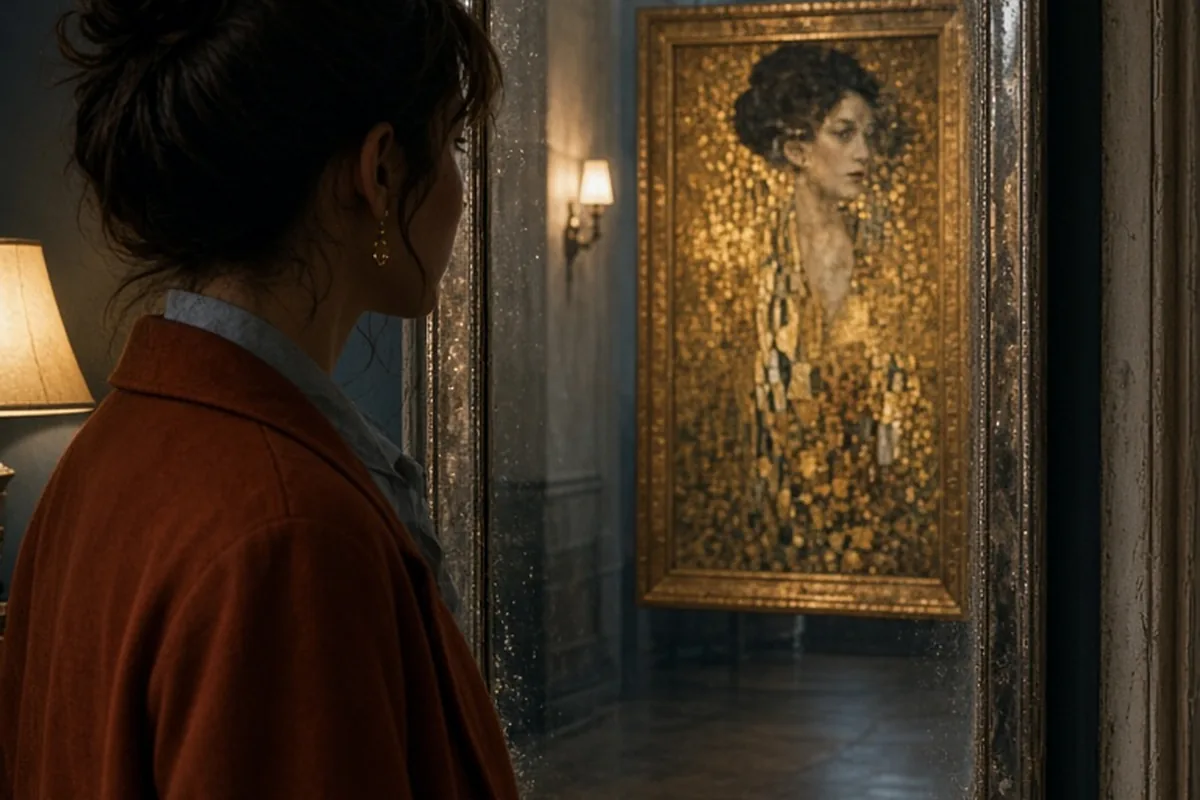
No, Gustav Klimt's famous painting Portrait of Adele Bloch-Bauer I, widely known as The Woman in Gold, is not at the Rijksmuseum in Amsterdam. It is permanently housed at the Neue Galerie New York in Manhattan. The Rijksmuseum specializes in Dutch art and history, while Klimt's Austrian masterpiece resides in the United States.
Navigating international art collections can easily cause confusion, especially when world-renowned institutions celebrate major masterworks from overlapping eras. If you are organizing a museum itinerary or seeking Gustav Klimt's most celebrated golden portrait, clarifying where it hangs ensures your travel expectations match reality.
Where The Woman in Gold Hangs Today: Neue Galerie New York
Gustav Klimt's 1907 masterpiece, Portrait of Adele Bloch-Bauer I, hangs permanently inside the Neue Galerie New York, located on Manhattan's Upper East Side along Museum Mile. The painting was acquired for the museum in 2006 by philanthropist Ronald S. Lauder following a historic legal restitution case. Housed within a dedicated gallery room on the second floor, the portrait serves as the crown jewel of the institution's Austrian collection.
The Neue Galerie specializes exclusively in early twentieth-century German and Austrian art and design, providing an intimate, focused environment that mirrors the aesthetic sensibilities of fin-de-siècle Vienna. Unlike cavernous encyclopedic museums, this former private mansion presents Klimt's gold-leaf canvas in a space designed with period woodwork, tailored lighting, and complementary decorative objects. This setting allows viewers to inspect the intricate geometric patterning, delicate oil portraiture, and Byzantine-inspired gilding up close without the overwhelming crowds typical of massive public institutions.
Why Visitors Confuse the Rijksmuseum with the Neue Galerie
The assumption that The Woman in Gold resides at the Rijksmuseum in Amsterdam often stems from overlapping artistic terminology and the global prestige of both names. The Rijksmuseum is internationally celebrated for art from the Dutch Golden Age, a seventeenth-century cultural movement led by painters like Rembrandt and Johannes Vermeer. Because Klimt's most famous working era in early 1900s Vienna is frequently categorized as his own 'Golden Phase,' travelers sometimes conflate the two distinct historical concepts when recalling famous golden paintings.
Additionally, travelers visiting European capitals frequently assume that foundational European masterworks remain housed in the continent's largest national galleries. Because the Rijksmuseum is one of the most prominent cultural institutions in Europe, it is often mistakenly treated as a catch-all repository for continental treasures. In reality, national museums maintain specific curatorial mandates focused on regional heritage, meaning an Austrian Secessionist portrait created in Vienna rarely intersects with a Dutch national collection.
The Restitution Journey of Adele Bloch-Bauer I
The path that brought Portrait of Adele Bloch-Bauer I to New York is one of the most significant provenance and restitution stories in modern art history. Commissioned by the wealthy Viennese industrialist Ferdinand Bloch-Bauer, the painting was seized by the Nazi regime in 1938 following the annexation of Austria. For decades after the end of World War II, the portrait hung in the Österreichische Galerie Belvedere in Vienna, where it was renamed The Lady in Gold to obscure the Jewish identity of its subject.
In the late 1990s, Adele's niece, Maria Altmann, initiated a legal battle to reclaim her family's looted property from the Austrian state. After years of litigation, including a landmark ruling by the United States Supreme Court that permitted the lawsuit to proceed against a foreign government, an independent arbitration panel in Vienna ruled in 2006 that the painting and four other Klimt works must be returned to the Bloch-Bauer heirs. Maria Altmann subsequently sold the portrait to Ronald Lauder on the condition that it would remain on permanent public view at the Neue Galerie.
What You Can Actually Experience at the Rijksmuseum
While you will not find Gustav Klimt in Amsterdam, the Rijksmuseum offers one of the most comprehensive presentations of Dutch art, craft, and history in the world. Spanning eight centuries across eighty separate galleries, the museum's collection centers on the rich cultural output of the Netherlands from the Middle Ages through the twentieth century, with its core strength concentrated in the seventeenth century.
Visitors to the Rijksmuseum encounter iconic works that define Western art history, including Rembrandt van Rijn's monumental The Night Watch, Johannes Vermeer's The Milkmaid, and Frans Hals's expressive portraits. Beyond painting, the collection features intricate delftware ceramics, maritime artifacts, historic period rooms, and the Cuypers Library, the largest art history library in the Netherlands. Experiencing the Rijksmuseum means exploring Dutch civic identity, global trade history, and masterly manipulation of light rather than Viennese modernism.
Practical Tips for Viewing The Woman in Gold in Manhattan
Planning a trip to see The Woman in Gold requires attention to the specific operational guidelines of the Neue Galerie. Located at 1048 Fifth Avenue at 86th Street, the museum operates on a timed-entry ticket system, and reservations are highly recommended during peak tourist periods. The museum is generally closed on Tuesdays and Wednesdays, and children under ten years of age are not admitted to preserve the quiet, contemplative atmosphere of the historic townhouse galleries.
To make the most of your visit, consider scheduling your arrival during morning hours when gallery traffic is lowest. The Neue Galerie enforces strict photography rules in certain collection rooms to maintain security and flow, so visitors should prepare to appreciate the painting directly rather than through a screen. You can also round out your cultural experience by visiting the museum's on-site Café Sabarsky, which serves traditional Viennese coffee, pastries, and lunch dishes inspired by early twentieth-century café society.
Where to See Other Major Gustav Klimt Artworks in Europe
If your travels are centered in Europe and you wish to view Gustav Klimt's major works in person, Vienna is the essential destination. The Belvedere Palace holds the world's largest collection of Klimt oil paintings, including his most famous work, The Kiss (Der Kuss), as well as Judith and the Head of Holofernes. Walking through the Upper Belvedere provides a direct look at Klimt's stylistic evolution from academic realism to ornate, gilded Symbolism.
Other notable European institutions house critical pieces of Klimt's artistic output, allowing travelers to build a comprehensive itinerary across Austria and neighboring regions:
The Leopold Museum in Vienna's MuseumsQuartier, featuring Death and Life alongside extensive works by Egon Schiele.
The Secession Building in Vienna, home to Klimt's monumental Beethoven Frieze painted directly onto the interior walls.
The Wien Museum on Karlsplatz, which preserves extensive drawings, sketches, and personal memorabilia from the artist.
The Galleria Internazionale d'Arte Moderna at Ca' Pesaro in Venice, which houses Judith II (Salome), purchased directly from the 1910 Venice Biennale.
Artistic Significance: Adele Bloch-Bauer as Patron and Muse
Understanding Adele Bloch-Bauer I requires appreciating the unique relationship between the artist and his subject. Adele Bloch-Bauer was a prominent Viennese socialite, intellectual, and patron of the arts who hosted regular salon gatherings of writers, musicians, and thinkers. She is the only woman Klimt painted in full portraiture twice, appearing again in the 1912 composition Adele Bloch-Bauer II, which shifted from gold leaf toward colorful, expressive brushwork.
The 1907 gold portrait represents the pinnacle of Klimt's synthesis of multiple cultural influences. Inspired by sixth-century Byzantine mosaics he viewed in Ravenna, Italy, Klimt surrounded Adele's delicate, lifelike face and hands with an elaborate field of gold leaf, silver, and symbolic eye and triangle motifs. The result is a canvas that transforms a real, contemporary woman into a secular icon, bridging traditional portraiture with radical modern abstraction.
Frequently asked questions
Can you see any Gustav Klimt paintings at the Rijksmuseum?
No, the Rijksmuseum does not display works by Gustav Klimt. The institution focuses strictly on Dutch art and history from the Middle Ages to the twentieth century, so Austrian artists are not part of its collection.
How much was The Woman in Gold sold for when it came to New York?
Ronald S. Lauder purchased the portrait for the Neue Galerie in 2006 for a reported 135 million dollars. At the time, it was recognized as one of the highest prices ever paid for a painting at public or private sale.
Does The Woman in Gold ever travel on international loan exhibitions?
The painting rarely, if ever, travels from its permanent home at the Neue Galerie New York. Due to its historical significance, delicate materials, and agreement of acquisition, it remains on continuous display for museum visitors in Manhattan.
Your next step
Review your upcoming travel destination to reserve tickets directly through the Neue Galerie in New York if you wish to see The Woman in Gold, or book admission to the Belvedere Palace in Vienna if you are exploring Klimt's masterpieces across Europe.