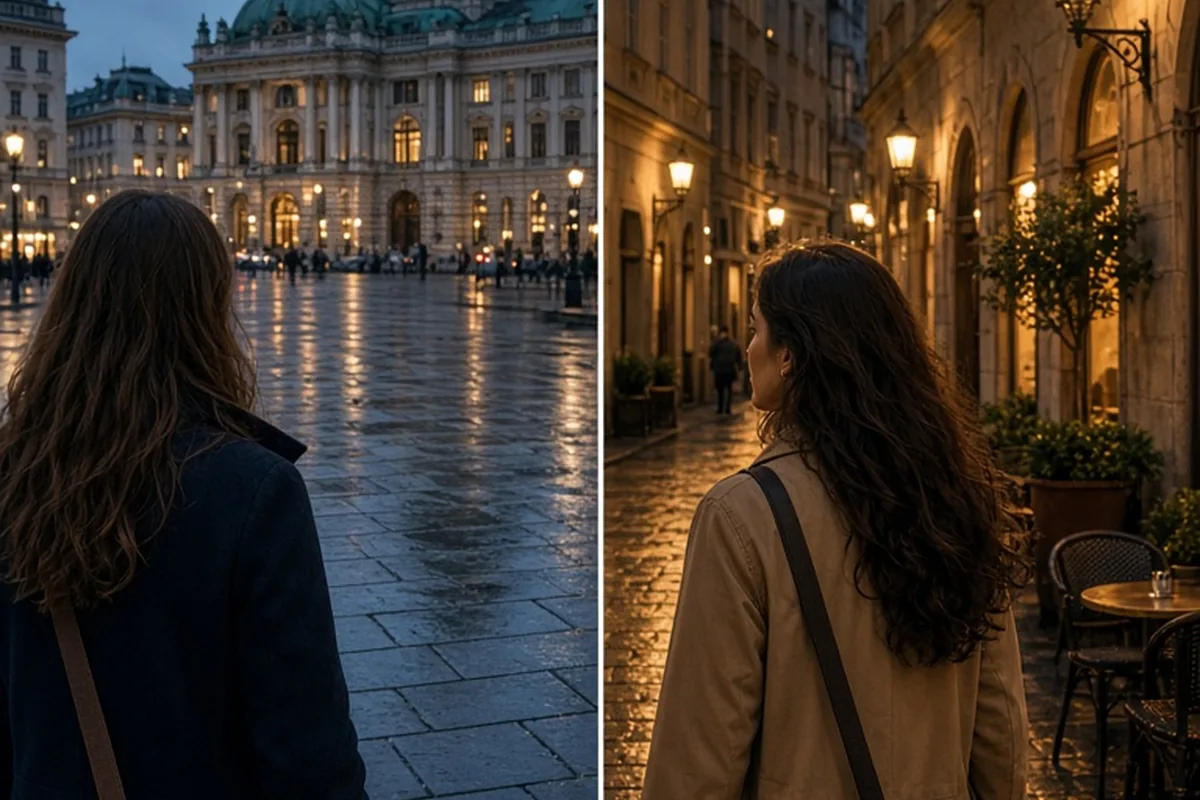
Vienna is widely considered one of the safest cities in the world for solo female travelers. Violent crime is rare, public transit is exceptionally reliable and well monitored, and walking alone at night is routine for locals. Standard urban awareness is still necessary, particularly around major transit hubs and crowded tourist attractions where opportunistic pickpocketing can occur.
Planning an independent trip to Austria's capital offers an accessible introduction to European solo travel, combining efficient infrastructure, walkable historic districts, and a welcoming café culture.
Evaluating Vienna's Urban Safety and Everyday Environment
Vienna consistently earns a reputation as an exceptionally safe, manageable destination for solo women. The city benefits from high social stability, well-maintained public spaces, and an active civic presence throughout day and evening hours. Violent crime against visitors is remarkably uncommon, meaning that solo travelers can generally explore without heightened anxiety. Even late at night, streets in both the historic core and residential districts remain well lit and populated by residents commuting, walking dogs, or socializing.
However, absolute safety does not exist in any metropolitan area, and treating any city as entirely free from risk can lead to preventable oversights. Minor property offenses, such as pickpocketing or luggage theft, happen in bustling areas. Major rail hubs like Wien Hauptbahnhof, Praterstern, and Westbahnhof experience transient traffic and occasional loitering, which can feel uncomfortable even if serious incidents remain infrequent. Understanding the distinction between actual danger and general urban discomfort helps solo travelers make measured, confident choices about where and when to move around.
Navigating Public Transit Alone by Day and Night
Vienna's public transportation network, operated by Wiener Linien, is a standout asset for solo female travelers. The system integrates underground trains (U-Bahn), trams (Bim), local commuter trains (S-Bahn), and buses into an intuitive, punctual network. Stations are clean, bright, and equipped with emergency call pillars and surveillance. During daytime travel, carriages are filled with commuters, families, and students, creating an open and secure atmosphere where traveling alone feels unremarkable.
Nighttime mobility is equally straightforward, though it requires familiarizing yourself with schedule shifts. On Friday and Saturday nights, the U-Bahn runs continuously on all lines every fifteen minutes. On weeknights, when the subway closes around midnight, an extensive NightLine bus network takes over, with departures centered around Schwedenplatz and Schottentor. While these night buses and late-night platforms are generally safe, choosing seats near the driver or near other small groups provides extra peace of mind. As a trade-off, late-night surface connections can take longer than daytime trains, so planning your route back before leaving your venue prevents unnecessary waiting in colder weather.
Selecting Safe and Convenient Neighborhoods for Lodging
Choosing the right district (Bezirk) significantly influences your comfort and convenience when traveling alone. The central 1st District (Innere Stadt) places major sights right outside your door, offering high foot traffic and historic charm, though accommodation prices reflect that premium. For a vibrant, pedestrian-friendly environment with moderate pricing, inner-ring residential districts such as Neubau (7th), Mariahilf (6th), and Josefstadt (8th) are excellent choices. These neighborhoods feature boutique hotels, independent shops, and bustling cafés filled with locals, allowing you to walk back after dinner without feeling isolated.
Leopoldstadt (2nd District), situated across the Danube Canal, has become a popular creative and culinary hub, particularly around the Karmelitermarkt area. It offers easy walking access to the center and the sprawling Prater park. The primary trade-off to consider is proximity to major stations; while staying near Praterstern or the outer edges of the 10th District (Favoriten) can lower accommodation costs, these areas can feel somewhat grittier late at night compared to the quieter inner residential streets. Selecting accommodation located within a short, well-lit walk of a U-Bahn station is generally the most practical balance of budget and comfort.
Dining, Coffeehouse Culture, and Solo Evening Activities
One of the greatest appeals of Vienna for independent travelers is its traditional coffeehouse culture (Kaffeehauskultur). Historically conceived as extensions of the living room, classic establishments like Café Central, Café Sperl, or Café Hawelka welcome solo visitors without expectation. You can order a Melange and a pastry, settle into a booth, and read or write for hours without pressure from waitstaff to vacate the table. Casual dining at neighborhood bistros (Beisl) and indoor food markets like the Naschmarkt is equally comfortable for a solo diner.
Evening entertainment, ranging from standing-room opera tickets at the Vienna State Opera to classical concerts at the Musikverein, regularly attracts single attendees of all ages. If you decide to visit wine taverns (Heurigen) in Grinzing or evening cocktail bars in the 7th District, standard social boundaries apply. Catcalling and aggressive street harassment are relatively rare compared to many large capitals, but firm, polite disinterest is effective if someone approaches you uninvited. Viennese social etiquette tends to be reserved and privacy-respecting, which naturally favors solo women seeking relaxed, unbothered evenings.
Preventing Common Scams and Property Theft
While violent crime rates are low, opportunism exists wherever tourists gather in high concentrations. Pickpockets operate most frequently in pedestrian zones around Stephansplatz, Kärntner Straße, along the Naschmarkt aisles, and inside crowded U-Bahn carriages during peak commute hours. Simple physical security—such as keeping your bag zipped and worn in front of you on transit, avoiding back-pocket phone storage, and not leaving personal items unattended on café tables—eliminates the vast majority of risks.
Specific local scams are limited but worth noting. In tourist plazas, you may encounter individuals dressed in Mozart-era costumes selling concert tickets; while not strictly illegal, these performances vary wildly in quality, and aggressive sales pitches can be avoided by purchasing tickets directly from established venue box offices. Additionally, legitimate ticket controllers on public transport always carry official identification badges; never pay an unverified individual claiming you have an invalid ticket without verifying their credentials or requesting to handle the matter at an official customer service desk.
Handling Health Needs, Emergencies, and Language Practicalities
Vienna possesses an advanced healthcare and emergency services infrastructure that is easily accessible to international visitors. Emergency numbers are standardized across Austria: dial 112 for the general European emergency line, 133 for the police, 144 for an ambulance, and 122 for the fire service. For minor illnesses, pharmacies (Apotheken) are widespread throughout every district and operate on an organized after-hours rotation (Nachtdienst), ensuring at least one pharmacy in every area is open 24 hours a day.
Language barriers rarely pose a safety concern in Vienna. While German is the official language, English is widely and fluently spoken by emergency personnel, medical staff, transit workers, and hotel staff. Learning basic German courtesy phrases like 'Guten Tag' (Hello), 'Bitte' (Please), and 'Danke' (Thank you) shows respect for local customs, but in urgent situations, communicating in clear English will be understood quickly. Keeping digital offline copies of your identification, insurance details, and hotel address saved on your phone ensures you can resolve unexpected logistical issues smoothly.
Illustrative Scenarios
Composite Scenario: Managing Late-Night Transit and Lodging Choices
A solo traveler attending an evening concert at the Konzerthaus planned to return to her boutique hotel in Neubau near the Neubaugasse station. Rather than walking through dimly lit side streets after 11:00 PM, she checked the transit timetable beforehand, boarded a well-occupied tram along the Ringstraße, and transferred directly to the U3 subway line. When a commuter on the platform appeared intoxicated and began speaking loudly, she stepped into the center carriage near a group of passengers.
Key point: Planning evening transit routes in advance and proactively moving toward populated sections of trains or platforms ensures smooth, stress-free travel late at night.
Frequently asked questions
Is it safe to walk alone in Vienna at night?
Yes, walking alone at night in Vienna is generally very safe in central and residential districts. Streets are well illuminated, and foot traffic remains steady near public transit lines. Practicing standard situational awareness and avoiding unlit park paths late at night is still advisable.
Are taxis and ride-shares safe for solo women in Vienna?
Licensed taxis and ride-share services like Uber and Bolt are regulated, reliable, and safe to use across the city. Official taxis have roof signs and registered meters, making them easy to hire from designated taxi stands or via verified dispatch apps.
Do I need to speak German to travel safely on my own in Vienna?
No, speaking fluent German is not required to navigate Vienna safely or comfortably. English is widely understood by transit workers, hospital staff, hotel teams, and restaurant personnel, allowing you to ask for directions or help whenever needed.
Your next step
Download the official WienMobil transit app to map your routes in advance and book accommodation near an inner-district U-Bahn station for seamless, independent travel.