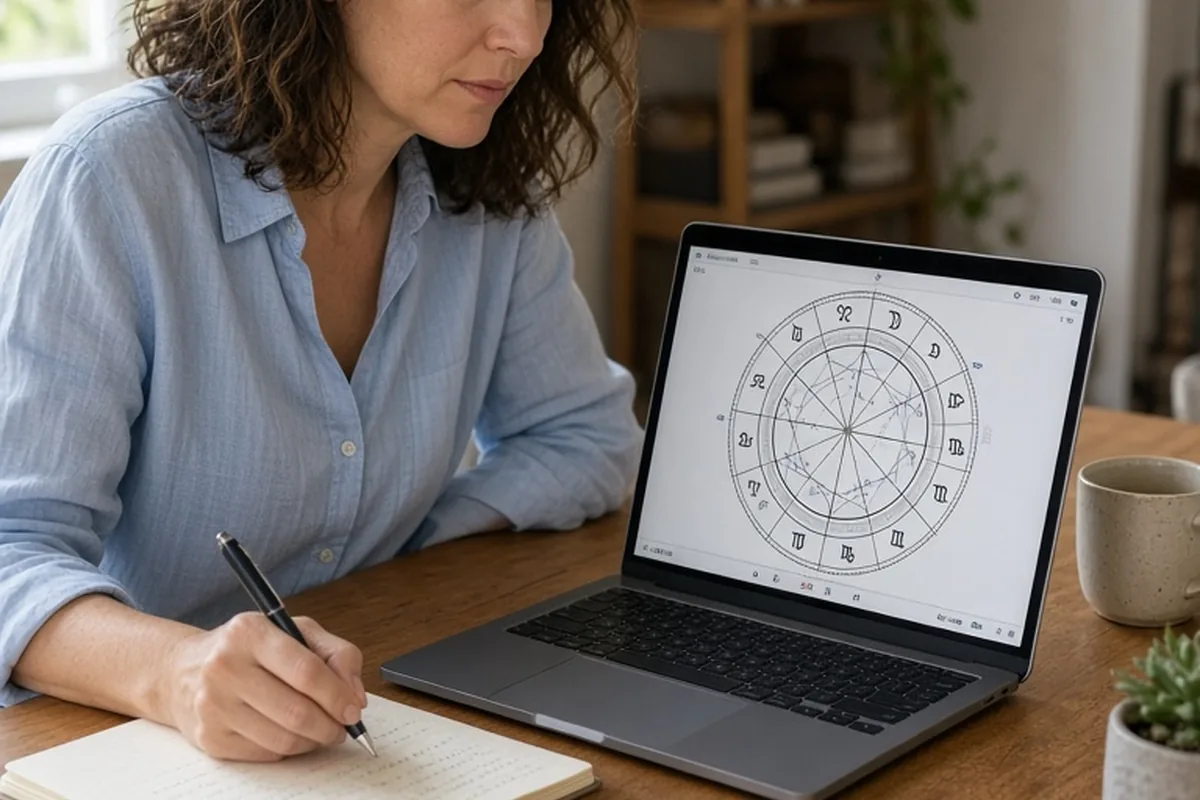
Your Juno sign represents your core blueprint for long-term commitment, mutual respect, and marital endurance, rather than initial romantic infatuation. While it cannot magically summon a predestined soulmate, knowing your placement clarifies your non-negotiable partnership needs. This self-awareness helps you filter out incompatible connections early and choose a companion whose daily habits, loyalty, and values align with your long-term emotional well-being.
Astrology often focuses heavily on Sun signs for personal identity and Venus or Mars for romantic attraction and chemistry. Yet many people find that initial passion does not translate into lasting security, leaving them wondering why promising connections unravel once daily reality sets in.
What Asteroid Juno Actually Signifies in Astrological Compatibility
First discovered in 1804 and named after the Roman goddess of marriage and community, the asteroid Juno occupies a distinct position in modern psychological astrology. In relationship charts, Venus explains what delights you during courtship, your aesthetic tastes, and the pleasures you share socially. Mars illustrates physical drive, assertive pursuit, and the kinetic chemistry that sparks early infatuation. Juno steps forward only when courtship matures into shared responsibilities, joint decision-making, and enduring relational contracts. While Venus asks who excites you today, Juno asks who you can weather life with over the next twenty years.
Juno highlights the functional architecture of a lifelong union, including how you handle domestic parity, financial stress, fidelity, and interpersonal conflict. Rather than describing the person who gives you exciting butterflies on a weekend trip, Juno indicates the companion with whom you can establish a stable, equitable household. Many relationships experience a painful crisis between their second and third years precisely because the initial Venusian attraction wanes, leaving partners face-to-face with incompatible expectations around labor and lifestyle. Understanding Juno encourages you to evaluate potential partners through the lens of durable partnership rather than fleeting attraction.
Calculating and Interpreting Your Natal Juno Sign by Element
To locate your Juno sign, you need your birth date, time, and location to generate an accurate birth chart using an ephemeris or online chart tool. Juno travels through the zodiac in roughly four years, lingering in each sign for several months. Once identified, your Juno sign and its corresponding house placement outline your baseline criteria for partnership equity and mutual devotion. For example, Juno in the fourth house emphasizes domestic sanctuary and shared family traditions, while Juno in the tenth house often seeks a partner with aligned public ambitions and career respect. These core expectations naturally align with the temperament of the four classical elements.
Fire signs (Aries, Leo, Sagittarius) need dynamic co-creators who respect personal autonomy, celebrate personal ambition, and bring optimism to daily hurdles without creating power struggles. Earth signs (Taurus, Virgo, Capricorn) require tangible dependability, financial responsibility, and predictable domestic support where consistent actions match verbal promises. Air signs (Gemini, Libra, Aquarius) prioritize intellectual equality, collaborative problem-solving, and continuous dialogue that protects against emotional disconnect. Water signs (Cancer, Scorpio, Pisces) seek profound emotional safety, gentle vulnerability, and steadfast loyalty where feelings are met with empathy rather than defensiveness.
Distinguishing Fleeting Romantic Chemistry from Sustainable Partnership Needs
Modern romance narratives often teach daters to treat intense adrenaline, obsession, and rapid emotional highs as proof of a soulmate. In reality, psychological compatibility and nervous system activation are entirely different phenomena. If your Venus sign sits in an adventurous fire sign while your Juno resides in a grounded earth sign, you may repeatedly fall for charming, unpredictable individuals who thrill your romantic impulses but consistently fail to provide the quiet security you need to feel settled. This internal tension often leads to a cycle of passionate beginnings followed by deep emotional exhaustion.
Examining connections through Juno shifts your focus from initial courtship performance to sustainable relational character. Instead of judging compatibility by someone's wit or social charisma, you observe how they manage ordinary logistical friction. Do they keep simple agreements? Are they transparent about schedule changes? Can they discuss money or chores without hostility? Lasting suitability is reflected in ordinary consideration and emotional dependability during calm, routine days. Slowing your dating pace allows these behavioral patterns to emerge organically before you commit your emotional resources.
Managing Juno’s Shadow: Insecurity, Power Struggles, and Covert Contracts
In Roman mythology, Juno's marriage was marked by both institutional power and intense grief stemming from infidelity and imbalance. Psychologically, Juno’s shadow placement reveals where you might feel taken for granted, harbor deep insecurity, or attempt to control a partner out of fear of abandonment. When people suppress their genuine relationship requirements, this energy often sours into passive-aggressive withdrawal, covert scorekeeping, or quiet resentment. Rather than confronting relational imbalances directly, people caught in Juno's shadow may become hyper-vigilant, monitoring their partner's movements and cataloging minor faults.
A frequent symptom of this shadow is the covert contract, where you provide care or practical labor while secretly expecting a partner to intuitively reciprocate in an exact, unspoken way. When they fail to guess your expectations, you feel betrayed. Healing this dynamic requires direct communication. Articulating your needs plainly and early gives a partner the voluntary opportunity to meet them. If a partner repeatedly ignores clear, reasonable requests, that observable boundary violation provides the clarity you need to walk away cleanly, rather than escalating into resentment.
Practical Relationship Evaluation: Using Juno Insights on Real Dates
Astrological archetypes are helpful only when they inform practical decision-making rather than substituting for genuine observation. You never need to interrogate a date about their birth time or reject someone purely over an incompatible planetary symbol. Astrology simply supplies a helpful reflective framework, clarifying what matters to you so you can ask thoughtful questions and listen carefully to how a prospective companion describes their life, relationships, and responsibilities. It turns vague desires into specific standards that you can observe in real life.
If your Juno highlights a need for collaborative decision-making, notice how your date handles minor adjustments to plans or whether they actively invite your perspective. You can ask grounded questions such as, 'How do you usually handle stress when your schedule gets overwhelming?' or 'What does equitable teamwork look like to you in a household?' Notice whether they speak about former partners with basic respect or unresolved bitterness. Consistent, observable behavior across diverse settings will always provide far more reliable evidence of long-term compatibility than any chart calculation.
When Birth Chart Placements Clash: Harmonizing Independence and Devotion
It is common to possess internal contradictions within a birth chart. For instance, an independent Aquarius Sun or Aries Mars might fiercely protect personal freedom, while a sensitive Cancer or Taurus Juno craves deep domestic interdependence and steadfast loyalty. When individuals do not understand these opposing desires, they often cycle through frustrating extremes, alternating between pushing partners away to safeguard personal space and clutching tightly when feeling emotionally distant. This inner friction can confuse partners, who receive contradictory signals about closeness and distance.
Integrating these conflicting needs requires establishing relationships that intentionally hold space for both autonomy and companionship. Needing personal solitude or separate interests does not diminish genuine devotion. Communicating this balance warmly prevents unnecessary tension. A simple phrase like, 'I love spending our evenings together, and I also need a few hours of quiet time on Saturdays to recharge,' demonstrates self-awareness while reassuring your partner that your commitment remains steadfast. Clear communication dissolves the false choice between total self-sacrifice and emotional isolation.
Synastry and Soulmates: What Astrological Aspects Can and Cannot Guarantee
In relationship astrology, synastry compares two charts to see how planets aspect one another. When someone’s Sun, Moon, or Venus touches your natal Juno, it often sparks an immediate feeling of domestic familiarity, mutual recognition, or relational purpose. Many people label this sensation a soulmate connection, assuming that harmonious planetary alignment guarantees lifelong relationship success. While these aspects can indicate natural rapport and shared values, assuming that cosmic alignment removes the need for active relationship skills is a dangerous mistake.
Astrological aspects cannot replace active emotional maturity, mutual empathy, or daily commitment. A harmonious Juno aspect does not protect a relationship from neglect, nor does an astrologically tense chart sentence a partnership to failure. Using astrology to excuse poor behavior, tolerate chronic disrespect, or stay in an unfulfilling relationship out of a sense of cosmic destiny strips you of your personal agency. Healthy partnerships are built on conscious choices, reciprocal effort, and mutual respect, not celestial arrangements.
Illustrative Scenarios
Evaluating the Difference Between Chemistry and Daily Teamwork
Marcus felt an intense, electric spark with Julian during three months of thrilling weekend getaways. Julian possessed the fiery spontaneity Marcus’s Venus in Sagittarius adored, but Marcus’s Juno in Virgo yearned for dependable domestic routines, shared organization, and reliable scheduling. When Julian consistently arrived late, forgot shared commitments, and treated administrative planning with casual indifference, Marcus felt chronically anxious rather than supported. Instead of waiting for Julian to change his core personality, Marcus initiated an honest conversation about practical household expectations. Julian admitted he preferred spontaneous arrangements without scheduled obligations. Recognizing an irreconcilable mismatch between his romantic excitement and his fundamental partnership needs, Marcus chose a mutual, respectful parting.
Key point: Chemistry can initiate a lively romance, but day-to-day consideration and reliable mutual habits determine whether a partnership can thrive over time.
Transforming Silent Resentment into Explicit Boundaries
Elena, whose Juno in Scorpio craved complete emotional transparency, found herself constantly auditing her partner Sam’s social interactions after noticing vague answers about an evening with coworkers. Rather than asking directly, Elena withdrew emotionally and kept mental score of perceived slights, expecting Sam to intuit her hurt. The growing chill prompted a tense argument where Sam expressed feeling unfairly scrutinized and distrusted. Elena stepped back to examine her underlying fear of vulnerability. She scheduled a calm dinner conversation where she owned her guardedness, explained that straightforward communication made her feel secure, and asked how they could handle ambiguous social plans together. Sam appreciated the honesty and agreed to clear updates, restoring their bond without evasiveness or surveillance.
Key point: Unspoken expectations inevitably produce resentment; direct, non-accusatory conversations about your emotional baseline build security far better than silent testing.
Frequently asked questions
Can your Juno sign accurately predict the exact zodiac sign of your future spouse?
No, your Juno sign does not guarantee your partner's specific Sun sign. Instead, it reflects the behavioral qualities, emotional values, and communication habits you require for enduring compatibility. A partner might embody your Juno archetype through their rising sign, Moon placement, or simply through their mature personal character.
What should you do if your Juno sign clashes with your current partner's chart?
Chart tension is an opportunity for thoughtful communication, not a reason to end a caring relationship. Astrological differences simply illuminate contrasting emotional reflexes or conflict styles that benefit from clear compromises. Pay attention to how you treat each other daily, how you handle disagreements, and whether mutual respect is consistently maintained.
How does Juno differ from the Seventh House in a birth chart?
The Seventh House illustrates the overall landscape of one-on-one commitments, partnerships, and recurring relationship themes you attract over your lifetime. Juno functions as a specific psychological archetype within that broader framework, detailing your personal standards for fairness, fidelity, and daily support in long-term unions.
Does having Juno in retrograde change what you need in a soulmate?
A retrograde Juno suggests that your understanding of partnership develops through deep internal reflection rather than conventional social norms. You might take longer to define your marital ideals or prefer non-traditional relationship arrangements, but your fundamental requirements for mutual respect, fidelity, and equity remain unchanged.
Your next step
Calculate your natal Juno sign using an accurate birth chart tool, write down three non-negotiable partnership values it highlights, and reflect on whether your current dating choices support those needs.