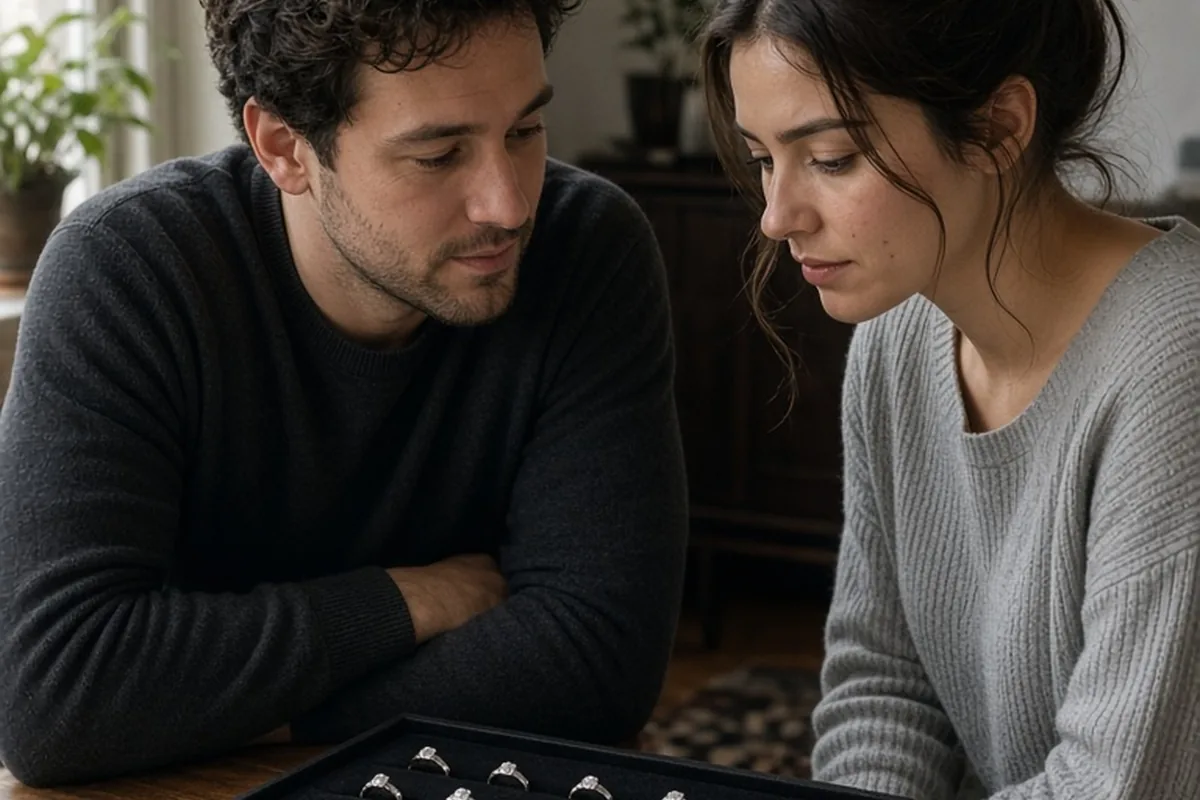
A quality one-carat lab-grown diamond typically costs between five hundred and twelve hundred dollars loose, with complete finished rings averaging one to two thousand dollars depending on the metal setting. Larger stones, such as two-carat gems, generally range from twelve hundred to three thousand dollars. Prices have decreased significantly due to manufacturing efficiencies, making them roughly eighty to ninety percent less expensive than mined diamonds of comparable cut, color, and clarity.
Shopping for an engagement ring brings together personal symbolism, relationship milestones, and significant financial planning. Understanding the real pricing dynamics behind manufactured diamonds helps you make clear decisions that honor your shared aesthetic goals without straining your household finances.
How Lab-Grown Diamonds Are Priced and Why They Cost Less
The pricing of lab-created diamonds is primarily determined by production yield, energy overhead, and supply chain logistics rather than artificial scarcity or heavy mining operations. Two main manufacturing processes dominate the industry: Chemical Vapor Deposition (CVD) and High Pressure High Temperature (HPHT). As these technologies have matured, the cost required to synthesize gem-quality crystallized carbon has dropped substantially. Because laboratories can produce stones predictably in controlled facilities, the wholesale supply has expanded, passing meaningful savings directly to the retail consumer.
Unlike natural stones whose pricing scales exponentially with each carat milestone due to rarity in the earth, manufactured gems follow a much gentler pricing curve. You are paying for the technical precision of the growth run, the labor of skilled diamond cutters, and standard retail overhead. While the physical, chemical, and optical properties remain identical to mined stones, the absence of extensive extraction and geopolitical distribution markups creates a massive price disparity that allows buyers to prioritize design preferences over raw mining provenance.
Typical Price Ranges Across Common Carat Weights
When planning your overall budget, loose stone costs serve as the foundation before adding your setting and ring band. For a round brilliant cut with excellent cut grades, near-colorless grades (F through H), and eye-clean clarity (VS1 to VS2), a 1.0-carat loose lab stone generally sells between $500 and $1,100. Moving to a 1.5-carat stone typically places the cost between $800 and $1,600, while a 2.0-carat center stone usually lands between $1,200 and $2,800. Stones reaching 3.0 carats and above often range from $2,500 to $4,500 depending on color accuracy and certified cut proportions.
Fancy shapes like oval, emerald, radiant, and pear cuts can occasionally offer even greater value per millimeter of visual surface area. For instance, an elongated oval or radiant cut often looks larger on the finger than a traditional round brilliant of the exact same carat weight while priced competitively. However, budget planners should always reserve an additional $400 to $1,800 for the mounting, setting labor, and metal choices such as fourteen-karat gold, eighteen-karat gold, or platinum.
Understanding Resale Reality and Long-Term Financial Value
A critical trade-off every buyer must understand is that lab-grown diamonds should never be purchased as an investment vehicle or financial asset. Secondary markets for manufactured gems are limited, and most retail jewelers do not offer substantial buyback programs for lab stones. If you attempt to resell a lab diamond years down the road, you should expect to recoup only a tiny fraction of your purchase price, or potentially find that private consignment is your only liquidation option.
This economic reality means you should view the purchase strictly as discretionary lifestyle spending on a meaningful piece of fine jewelry. The primary financial benefit of a lab stone is realized upfront through money saved immediately at the point of purchase, rather than through future appreciation. By spending thousands of dollars less on day one, couples preserve vital capital that can be redirected toward emergency savings, home deposits, debt reduction, or wedding travel.
Navigating the Ring Conversation with Your Partner
Talking about ring preferences and budget requires honest, pressure-free communication between partners. Some people hold strong sentimental attachments to natural stones due to family tradition or personal symbolism, while others strongly prefer lab-grown diamonds for environmental reasons or the ability to maximize stone dimensions within a sensible budget. Making assumptions about what your partner expects can lead to avoidable anxiety, overspending, or private disappointment.
A helpful approach is having a grounded conversation about joint priorities before browsing ring styles. You might discuss what design elements matter most to each of you, such as stone shape, band durability, or ethical sourcing, alongside your broader wedding and financial goals. Framing the discussion around teamwork ensures neither person feels judged for their preferences, allowing you to establish a mutually comfortable spending boundary that respects both your taste and your joint financial stability.
Allocating Funds Between Diamond Specs and Setting Durability
Because lab diamond pricing is approachable, buyers frequently make the mistake of overpaying for extreme technical specifications that the naked eye cannot perceive. For example, upgrading from an eye-clean VS2 clarity to an internally flawless VVS1 grade, or from an F color to a D color, can add hundreds of dollars without making any noticeable visual difference in daily wear. Directing your stone budget toward cut quality—which dictates brilliance, sparkle, and light return—delivers far higher visual impact than invisible perfection on a lab grading report.
Furthermore, a smart budget balances the center gem with the quality of the ring setting. A secure mounting protects your stone over decades of regular wear. Investing in durable construction, such as sturdy platinum prongs or a solid gold shank crafted by a reputable bench jeweler, ensures that daily bumps and friction do not loosen the center stone. Skimping on setting craftsmanship to buy the largest possible diamond often results in maintenance headaches, lost accent stones, and costly repairs later.
Evaluating Retail Markups and Avoiding Unnecessary Fees
Where you buy your ring plays a substantial role in the final price tag. Traditional brick-and-mortar luxury boutiques carry massive overhead expenses, from commercial rent to commission staff, which can double or triple the retail price of a lab-grown diamond compared to dedicated online retailers. While local jewelers offer the benefit of in-person viewing and hands-on resizing services, online vendors with transparent inventory and high-definition video tools frequently provide significantly lower prices on identical certified stones.
To protect your wallet, ensure any lab diamond you evaluate comes with an independent certification from a recognized gemological authority, such as the International Gemological Institute (IGI) or the Gemological Institute of America (GIA). Avoid retailers who charge premium fees for in-house generic certificates or who bundle undisclosed insurance packages into your final invoice. Comparing certified stone specs across multiple reputable vendors gives you the leverage to find a fair price without paying inflated boutique markups.
Illustrative Scenarios
Balancing Ring Expectations and Real Savings
Marcus felt torn while browsing engagement rings. He wanted to give his partner a classic, high-quality diamond ring but worried that spending four months of salary on a natural stone would wipe out their down payment fund for a townhome. Instead of guessing in silence or overextending his credit, he brought up ring styles during a weekend coffee walk. They looked at certified lab-grown options together, discovering she prioritized an oval cut on a platinum band over whether the stone came from the earth. Marcus purchased a stunning two-carat lab stone in a custom setting for under twenty-two hundred dollars, leaving their joint savings completely intact.
Key point: Transparent conversations about stone origins clarify mutual priorities and eliminate the stress of unnecessary financial strain.
Avoiding the Over-Specification Trap
Jordan initially planned to spend his entire four-thousand-dollar jewelry budget on a one-carat diamond with flawless clarity and top-tier D color. After consulting with a bench jeweler, he learned that the subtle grading differences between D and G color, and between VVS1 and VS1 clarity, are indistinguishable to the human eye once set in a yellow gold solitaire ring. By adjusting his search to an eye-clean VS2 stone with an excellent cut grade, he acquired a gorgeous 1.75-carat center stone for twelve hundred dollars, using the remaining funds to cover their wedding bands and an anniversary trip.
Key point: Focusing on cut quality and real-world appearance delivers better visual value than paying premiums for microscopic grading perks.
Frequently asked questions
How do lab diamond prices compare directly to natural diamonds?
Lab-grown diamonds generally cost eighty to ninety percent less than natural mined diamonds of identical cut, clarity, carat weight, and color. For example, a quality two-carat natural diamond can cost between fifteen and twenty-five thousand dollars, whereas a comparable lab-created diamond sells for fifteen hundred to three thousand dollars.
Can a jeweler tell the difference between lab and mined diamonds?
A jeweler cannot distinguish between a lab diamond and a mined diamond using a standard handheld loupe or microscope because they share identical optical and chemical properties. Differentiation requires specialized laboratory spectroscopy equipment that detects subtle nitrogen growth patterns and fluorescence signatures.
Will lab grown diamond prices continue to decrease significantly?
While prices dropped rapidly over the past decade as technology scaled, retail prices for loose lab stones are approaching production baseline costs. Minor fluctuations may continue, but future price drops are expected to be much more gradual than the steep declines observed in earlier manufacturing phases.
Which diamond certification is best for lab-grown stones?
The International Gemological Institute (IGI) and the Gemological Institute of America (GIA) are the two most trusted authorities for grading lab-grown diamonds. Always request an independent certificate from one of these labs to verify cut proportions, carat weight, color, and clarity before purchasing.
Your next step
Determine your total comfortable ring budget together first, then select an independently certified stone with an excellent cut grade so you maximize daily sparkle while keeping your shared financial future secure.