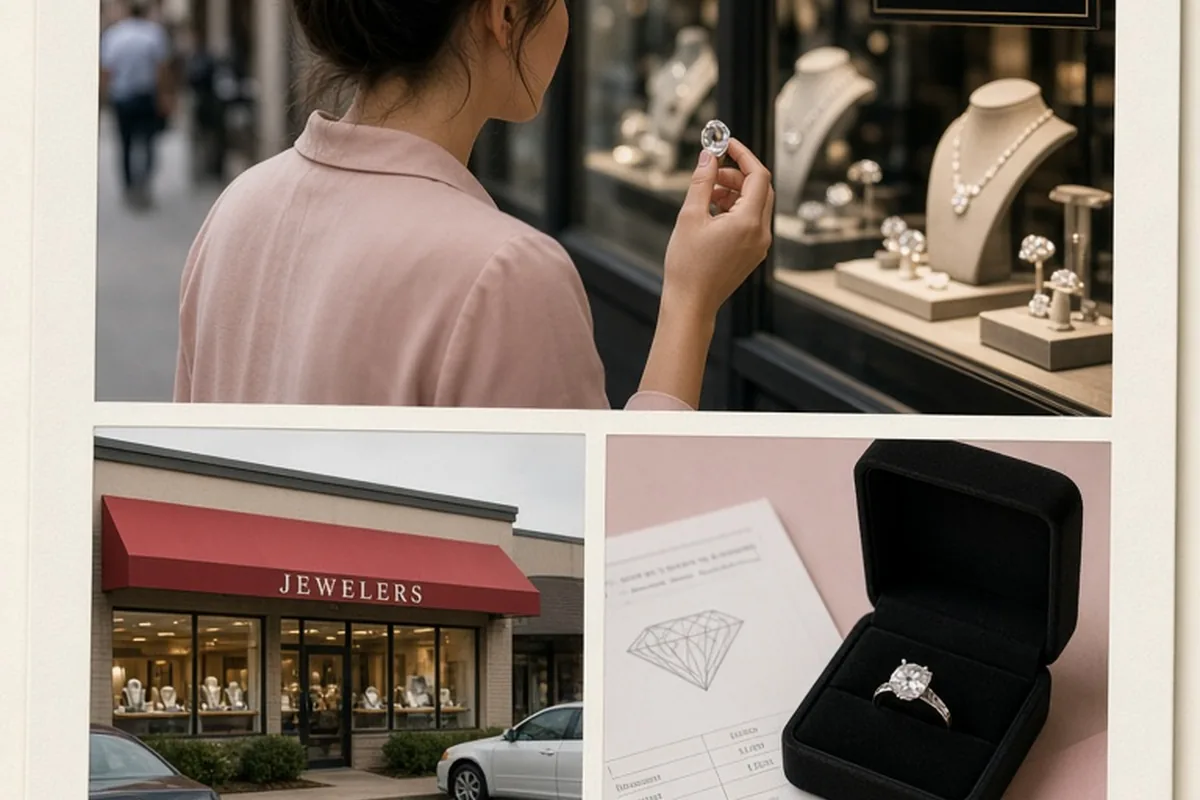
Lab grown diamond resale value varies primarily by the type of secondary market available in your geographic area. Major metropolitan jewelry districts offer the highest liquidity because high-volume dealers have established customer channels for second-hand stones. In contrast, suburban independent jewelers and regional pawn shops frequently offer little to no cash buyback for lab-created stones due to rapid retail price shifts and limited resale demand. Choosing online peer-to-peer platforms or metro consignment gives you wider buyer reach than local brick-and-mortar storefronts.
Selling a lab grown diamond requires navigating a secondary market that operates very differently from the traditional natural diamond trade. Understanding how local merchant appetite, regional competition, and geographic sales channels affect your payout is essential before accepting an offer.
Why Geographic Markets Value Lab Diamonds Differently
The resale value of a lab grown diamond depends heavily on the concentration of active jewelry buyers and wholesalers in your immediate region. Unlike natural diamonds, which have established wholesale scrap and recut markets worldwide, lab-created diamonds are manufactured commodities with declining initial production costs. In smaller towns and suburban communities, local independent jewelers maintain limited inventories and frequently source brand-new lab stones on memo from distributors at near-wholesale cost. Because they can purchase brand-new, perfectly graded inventory on demand without tying up capital, these local shops rarely have a commercial reason to purchase pre-owned lab diamonds from private walk-in customers.
Conversely, large metropolitan centers feature diverse retail formats, high-volume estate jewelry dealers, and specialized consignment boutiques that actively serve cost-conscious engagement ring shoppers. In these competitive environments, a dealer who turns over inventory rapidly may be willing to buy a pre-owned lab grown diamond at a reasonable discount below current wholesale rates. The geographic variation in resale value is therefore not driven by regional consumer taste alone, but by local inventory turnover speed and the wholesale access available to nearby storefronts.
Selling Lab Grown Diamonds in Major Metropolitan Diamond Districts
Major trade hubs such as New York City's 47th Street Diamond District, the Los Angeles Jewelry District on Hill Street, and Chicago's Jewelers Row house the highest concentration of competitive jewelry buyers in North America. When you present a lab grown diamond to diamond district merchants, you are dealing with professionals who operate on tight margins and high daily volume. These merchants can assess the stone immediately, verify its laser inscription against a grading report, and make immediate cash or wire offers based on real-time wholesale trading sheets.
However, sellers should maintain realistic expectations even in premier diamond districts. Because these merchants have direct access to overseas manufacturers and domestic growers, their purchase offers will reflect wholesale acquisition pricing rather than retail replacement cost. To maximize your return in a diamond district, visit multiple booths or offices on the same day, ask whether they specialize in lab-created stones or estate jewelry, and request clear itemized quotes separating the stone value from the precious metal setting.
What to Expect at Suburban Jewelers, Pawn Shops, and Gold Buyers
Outside major metropolitan centers, the most common physical venues for selling jewelry are independent suburban retail jewelers, regional pawn shops, and local gold buying businesses. Independent jewelers in suburban strip malls or downtown shopping districts often maintain exclusive partnerships with specific lab diamond distributors. When private sellers bring in a lab diamond, these jewelers may decline the stone entirely or offer only a store credit toward another purchase. Their retail showcase space is finite, and stocking pre-owned lab stones can complicate their marketing of new inventory.
Pawn shops and general precious metal buyers treat lab grown diamonds with significant caution. Pawn shops operate on rapid collateral liquidation models, meaning they prefer assets with stable, predictable liquidation floors. Because retail prices for newly manufactured lab diamonds have dropped consistently over time, pawn brokers face high inventory holding risk. In many instances, a suburban pawn shop or gold buyer will offer payment only for the melt value of the gold or platinum mounting, attributing zero or negligible value to the lab grown center stone itself.
Online Secondary Marketplaces Versus Local In-Person Sales
When local geographic options are limited or uncompetitive, digital resale channels provide access to a national or international audience of private buyers. Peer-to-peer luxury marketplaces, wedding forum resale boards, and dedicated secondhand jewelry sites allow private sellers to list lab grown diamonds directly to end consumers. In a direct peer-to-peer transaction, you can often recoup a higher percentage of the diamond's current market value because you bypass the retail markup and wholesale dealer margins that lower trade-in quotes.
Operating online introduces practical trade-offs that sellers must carefully manage. You assume responsibility for high-resolution macro photography, writing accurate descriptions from your grading certificate, coordinating insured shipping, and utilizing secure escrow payment services to prevent fraud. Additionally, selling directly to another consumer can take weeks or months depending on the shape, carat weight, and asking price, whereas an in-person dealer sale provides immediate settlement.
How Origin Documentation and Grading Reports Influence Local Quotes
Regardless of where you attempt to sell your lab grown diamond, physical documentation directly dictates whether a dealer will make a serious offer. Major gemological laboratories—such as the International Gemological Institute (IGI) and the Gemological Institute of America (GIA)—inscribe a unique laboratory report number directly onto the diamond's girdle along with clear identification that the stone is lab-created. Dealers use specialized magnification to verify that this microscopic inscription matches the physical grading certificate presented by the seller.
Attempting to sell a lab grown diamond without its original grading report creates friction that reduces your payout. While a qualified gemologist or dealer can test the stone on a desktop diamond verification instrument to confirm it is synthetic diamond rather than simulant cubic zirconia or moissanite, determining precise cut, color, and clarity grades requires unmounting the stone and sending it for grading. If you lack documentation, local buyers will either discount their offer substantially to cover grading uncertainty or require you to pay for appraisal services upfront.
Evaluating Trade-In and Upgrade Policies Across Retail Chains
A practical alternative to an outright cash sale is utilizing the trade-in or upgrade policy of the original retailer where the diamond was purchased. National jewelry chains and large online lab diamond retailers have differing corporate policies regarding buybacks. Some major brands offer lifetime upgrade programs where the full original purchase price of a lab grown diamond can be applied toward a new piece of jewelry, provided the new purchase meets specific price thresholds (such as double the original item value).
Before pursuing local cash liquidators, contact your original point of purchase to review their current written trade-in policy. If your goal is to acquire a larger diamond, an alternative cut, or a different piece of fine jewelry, a retailer upgrade credit almost always yields significantly higher purchasing power than selling the stone for cash in a secondary market. Ensure that you obtain the exact terms in writing, including whether the trade-in applies exclusively to other lab-created stones or to natural diamonds and custom settings.
Steps to Solicit and Compare Local Purchase Offers Safely
Before presenting your jewelry to prospective buyers, organize your documentation, including the original grading dossier, purchase receipt, and any previous independent insurance appraisals. Call multiple prospective buyers in advance—including estate jewelers, high-end consignment stores, and specialized diamond buyers—to verify that they actively buy lab grown stones from private individuals. This initial screening saves time and prevents unnecessary trips to storefronts that deal exclusively in mined gemstones.
When presenting your diamond for inspection, remain present while the gemologist or buyer examines the stone under magnification and verifies the girdle inscription. Request an itemized written quote that breaks down the valuation of the center diamond, any accent stones, and the precious metal mounting. Comparing at least three distinct quotes across different business models (such as an estate dealer, a consignment store, and an online diamond platform) ensures you identify the most advantageous route for your specific timeline and geographic area.
Illustrative Scenarios
Comparing Local Suburb and Metropolitan Selling Routes
A seller owning a certified two-carat lab grown diamond ring sought to liquidate the piece. Visiting two local suburban jewelry stores resulted in one outright refusal and one offer limited strictly to the scrap metal value of the 14k gold setting. The seller then drove to a major metropolitan diamond exchange, where an estate dealer verified the grading inscription and made a purchase offer covering both the mounting and the center stone, yielding a noticeably higher total payout.
Key point: Metropolitan jewelry districts with high inventory turnover frequently provide viable wholesale offers for lab diamonds that suburban retail shops cannot match.
Frequently asked questions
Can I sell a lab grown diamond to a standard pawn shop?
Yes, but standard pawn shops often offer minimal payouts for lab grown diamonds. Many pawn brokers assign value primarily to the precious metal mounting because of rapid price changes in the synthetic gemstone market. It is advisable to consult specialized jewelry buyers or estate jewelers before accepting a pawn shop offer.
Why do some local jewelers refuse to buy back lab created diamonds?
Independent retailers can easily order brand-new lab grown diamonds directly from manufacturers at low wholesale prices without holding inventory. Purchasing pre-owned lab diamonds from walk-in customers ties up store cash in inventory that carries lower consumer demand on the secondary market.
Does having a GIA or IGI certificate increase local resale value?
A grading report from an established lab like GIA or IGI does not change the wholesale market price, but it makes the selling process faster and prevents heavy discounting. Dealers can immediately verify the stone's laser inscription against the paperwork without charging extra grading fees.
Is consignment a better option than an immediate cash sale?
Consignment through an estate jeweler or luxury resale platform generally yields a higher net payout than an immediate cash sale because the stone is sold at retail pricing to an end consumer. The trade-off is that you must wait until a buyer purchases the item, and the store retains a commission fee.
Your next step
Locate your diamond grading certificate and contact at least two estate jewelers in the nearest metropolitan area alongside an online consignment platform to compare written offers before selling.