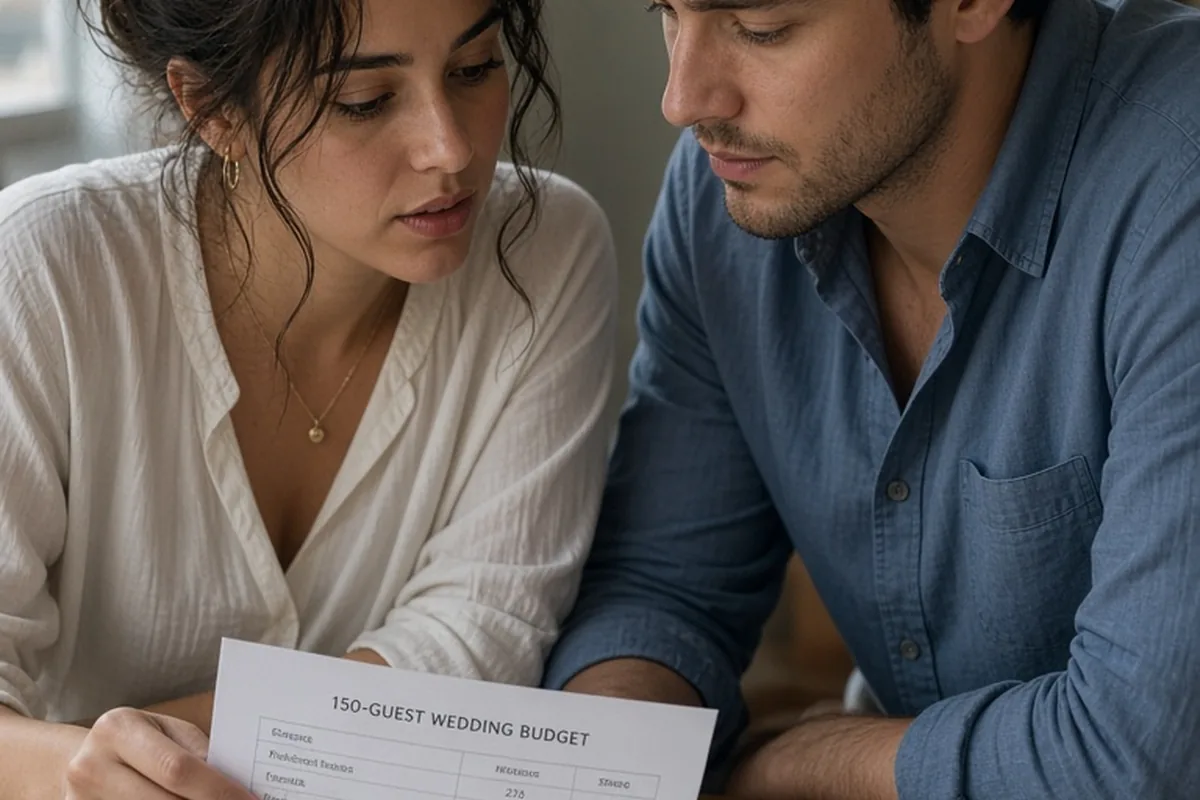
Lab-grown diamonds generally hold very little resale value on the secondary market compared to their original retail price. Because synthetic gemstone production continues to scale and wholesale manufacturing costs decline, jewelers and secondary buyers typically offer minimal buyback rates for manufactured stones. When planning a 150-guest wedding, choosing a lab-grown ring allows couples to redirect substantial upfront savings into immediate reception expenses like catering and venue costs rather than banking on future ring equity.
Balancing the purchase of an engagement ring with the financial demands of hosting a large celebration requires a clear understanding of where your money actually goes. An event for 150 guests introduces substantial baseline commitments for catering, bar service, rentals, and venue space. Deciding whether to allocate significant funds toward a mined diamond with speculative retention value or choose a lower-cost lab-grown alternative directly influences what you can spend on your wedding day.
Secondary Market Reality for Manufactured Gemstones
The secondary jewelry market operates strictly on wholesale replacement costs, rarity, and raw material demand. Because lab-grown diamonds are manufactured in controlled factory environments using chemical vapor deposition or high-pressure high-temperature methods, supply is not constrained by natural geological availability. As production efficiency improves and laboratory output expands worldwide, the cost to produce new gems continues to trend downward. Consequently, estate jewelers, pawnshops, and online consignment platforms have limited incentive to offer strong purchase prices for pre-owned lab-grown stones when identical new stones can be sourced directly from manufacturers at low wholesale rates.
When an individual attempts to sell a lab-grown diamond, offers frequently reflect only the scrap value of the precious metal setting, such as fourteen-karat gold or platinum, alongside a modest fraction of the stone's initial retail price. Traditional diamond dealers rarely hold inventory of second-hand synthetic stones because retail customers generally prefer buying new stones with clean laboratory grading certificates. Approaching a lab-grown diamond purchase as a depreciating consumer item, similar to modern consumer electronics or a new vehicle, provides a much more accurate financial framework than treating it as an appreciating or value-preserving asset.
Allocating Upfront Savings Toward a 150-Guest Wedding Reception
Hosting a gathering of 150 guests creates a substantial financial baseline where per-person charges quickly compound. In traditional event planning, guest counts dictate major variable expenses, including multi-course meal service, open bar packages, table linens, place settings, centerpieces, and cake servings. Even a small increase in per-guest catering rates can shift an overall event budget by thousands of dollars, making initial capital allocation a crucial exercise for engaged couples.
Opting for a lab-grown center stone significantly lowers the initial out-of-pocket expenditure for fine jewelry while delivering identical visual and chemical characteristics to a mined gem. Instead of tying up funds in an expensive mined stone under the assumption of long-term value retention, couples can immediately channel those upfront savings into critical reception line items. This capital reallocation can cover essential guest comforts, such as premium food selections, extended venue rental hours, professional day-of coordination, or comprehensive photography packages that preserve memories of the event itself.
Retail Markups Versus Secondary Liquidity in Fine Jewelry
Understanding the gap between retail pricing and liquidation value requires looking at how retail jewelry stores price their pieces. Every retail jewelry transaction includes overhead costs, marketing campaigns, labor for ring design, designer licensing fees, store rent, and standard retail profit margins. When a consumer buys either a mined or a lab-created piece, a considerable portion of the purchase price covers these retail operational expenses rather than the intrinsic raw commodity value alone.
While mined diamonds also suffer from immediate retail-to-wholesale depreciation upon leaving the showroom, they still possess a globally standardized wholesale baseline tracked by international trade indices. Lab-created diamonds lack this standardized secondary floor because new inventory arrives on the retail market with lower wholesale acquisition costs every season. For buyers trying to decide between the two, the primary financial advantage of lab-grown stones is realized entirely at the moment of purchase through lower initial outlay, rather than down the line through resale, trade-in, or consignment.
Weighing Emotional Significance Against Asset Liquidation
An engagement ring is primarily a personal symbol of a lifetime commitment, yet financial conversations surrounding weddings often conflate romantic sentiment with traditional investment language. In reality, very few couples purchase an engagement ring with an active intention to liquidate it later in life. Rings are customarily kept for decades, passed down as family heirlooms, or periodically reset into new jewelry mountings to celebrate anniversaries and milestones.
Evaluating a ring strictly through the lens of resale liquidity can lead couples to overextend their pre-wedding finances on a mined stone that they never plan to sell. If an engagement ring will remain on a partner's hand indefinitely, secondary market resale performance becomes largely theoretical. Prioritizing everyday wearability, personal design preferences, and responsible pre-wedding debt management allows couples to enter their marriage with reduced financial pressure while still wearing a beautiful, durable piece of fine jewelry.
Comparing Trade-In Policies and Buyback Guarantees
Before finalizing any jewelry purchase, it is vital to review the jeweler's specific written policies regarding upgrades, lifetime maintenance, and trade-in allowances. Some national and independent retailers offer proprietary upgrade programs for lab-grown gems, though these policies often come with precise restrictions. For example, a retailer may require that any future trade-in purchase be valued at double the original ring's purchase price, effectively requiring significant additional spending to utilize the credit.
Furthermore, retail buyback commitments rely entirely on the ongoing solvency and continued operational policies of that individual business. Unlike gold bullion or sovereign currency, which can be liquidated across thousands of independent financial exchanges, a jeweler's in-house credit policy cannot be transferred to an outside merchant. Requesting clear documentation on whether a vendor offers cash buybacks, store credit only, or standard trade-in terms protects you from incorrect assumptions about your ring's future liquidity.
Practical Methods for Getting an Accurate Jewelry Appraisal
Obtaining a formal appraisal serves an entirely different purpose than determining fair market liquidation value. Insurance appraisals are calculated on a high replacement-cost basis, representing the full retail amount an insurance underwriter would pay to replace the item brand new at current retail prices, including high designer markups. Consequently, an appraisal document generated for an insurance rider usually shows a figure considerably higher than what any secondary dealer or buyer would pay in cash.
To establish realistic market expectations, consult an independent certified gemologist who does not buy or sell jewelry and charges a flat hourly or per-item fee rather than a percentage of value. An independent appraisal clarifies the precise grading parameters of the laboratory stone, including its carat weight, color grade, clarity level, and cutting quality, alongside the exact precious metal purity of the setting. Having this objective documentation is essential for properly insuring the item against loss, damage, or theft during the wedding festivities and throughout everyday married life.
Frequently asked questions
Can I sell a lab-grown diamond back to a local jewelry store?
Most independent jewelry stores and estate dealers decline to purchase pre-owned lab-grown diamonds because they can source brand new stones at low wholesale prices. Some jewelers may offer a small scrap value payment for the gold or platinum setting, or offer limited in-store credit toward an upgrade if the original piece was purchased directly from their showroom.
Does a lab-grown diamond look different to wedding guests compared to a mined diamond?
No. Lab-grown diamonds share identical chemical, physical, and optical properties with mined diamonds, meaning they display the same brilliance, fire, and hardness. Even trained gemologists cannot distinguish between them using standard visual magnification tools without specialized spectroscopic laboratory equipment.
How should I insure a lab-grown diamond engagement ring before the wedding?
Contact your homeowners or renters insurance provider to add a personal property jewelry rider, or purchase a dedicated fine jewelry insurance policy. Provide the insurer with the independent laboratory grading certificate and a formal replacement-value appraisal from your jeweler to ensure coverage against loss, theft, or damage.
Your next step
Review your overall wedding budget sheet today to compare how allocating ring savings toward catering, venue, or guest hospitality aligns with your shared financial goals.