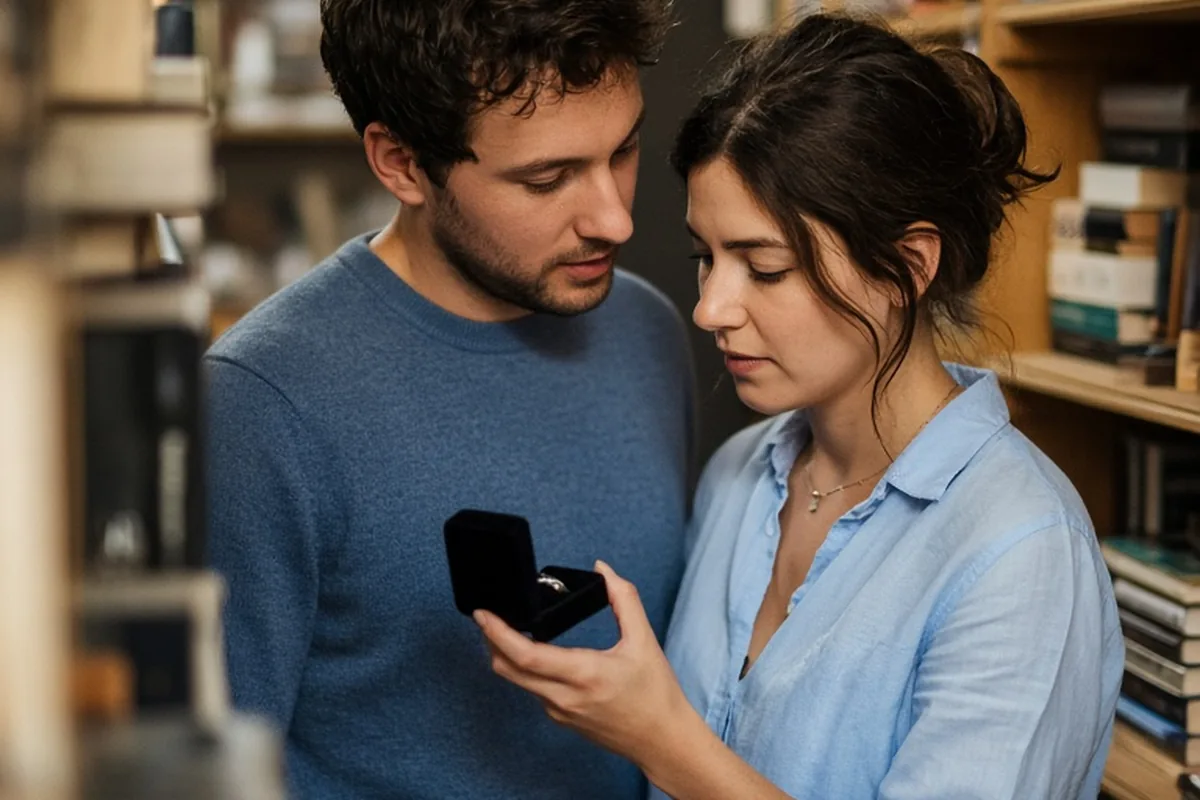
Lab grown diamonds typically retain very little resale value on the secondary market compared to their original retail price. Because manufacturing technologies continue to advance and production volumes expand, the wholesale cost of creating new stones decreases over time. Most jewelers do not buy back pre-owned lab diamonds for cash, or they offer modest wholesale rates. Couples should view lab diamonds as wearable consumer purchases rather than financial investments.
Shopping for an engagement ring or milestone jewelry involves balancing aesthetic desires, personal ethics, and financial boundaries. As lab grown diamonds have grown in popularity, understanding how they perform after the initial retail transaction helps couples make clear-eyed decisions without unexpected financial surprises down the road.
Why Lab Grown Diamonds Behave Differently on the Secondary Market
To understand secondary market pricing, couples must first recognize the fundamental economic difference between manufactured gems and mined commodities. Mined diamonds derive part of their pricing structure from geological scarcity, extensive mining infrastructure, and tightly managed global distribution pipelines. In contrast, lab grown diamonds are created using high-pressure high-temperature (HPHT) or chemical vapor deposition (CVD) methods in commercial laboratory facilities. As synthesis technology improves, reactors become more energy-efficient and scalable, steadily lowering the cost required to produce high-clarity, high-carat crystals.
Because jewelers can order brand-new, flawlessly cut lab diamonds directly from manufacturers at declining wholesale rates, they have minimal commercial incentive to purchase pre-owned stones from retail consumers. When a consumer attempts to sell a pre-owned lab diamond back to a jeweler or diamond dealer, the business evaluates the stone against current wholesale inventory pricing rather than what the consumer originally paid. Consequently, the secondary cash market for lab diamonds is highly discounted, often yielding only a minor fraction of the original retail invoice.
Core Resale and Upgrade Questions to Ask Your Jeweler
Before finalizing a ring purchase, couples should engage their jeweler with direct, practical questions about long-term policies. Begin by asking whether the retailer offers a formal cash buyback program, a consignment service, or exclusively store credit for returned items. Many retailers advertise flexible service policies, but these frequently exclude lab-created stones or apply only within standard return windows of thirty to ninety days. Obtaining clear written definitions of these terms prevents misunderstandings if circumstances change.
Another essential inquiry focuses on trade-in and upgrade guarantees. Some jewelry companies offer lifetime upgrade programs, but these often come with strict contractual conditions. For example, a common policy requires the customer to spend at least double the original purchase price on a new diamond to receive trade credit for the initial stone. Couples should ask whether lab diamonds qualify for trade-in towards natural diamonds, whether trade credit is pegged to the original purchase price or prevailing market value, and what documentation is required to redeem the offer.
Finally, ask about independent certification and grading. Request verification that the stone comes with a grading report from an established gemological laboratory, such as the International Gemological Institute (IGI) or the Gemological Institute of America (GIA). A reputable grading certificate verifies the exact cut, color, clarity, and carat weight, which serves as your primary proof of identity and quality if you ever decide to sell, trade, or insure the piece.
Evaluating Upfront Purchase Savings Against Long-Term Asset Retention
The primary financial benefit of choosing a lab grown diamond is realized at the cash register, not at resale. Because lab stones typically retail at a substantial discount compared to natural diamonds of equivalent size and quality, couples often save considerable money during the initial purchase. A couple might spend a fraction of their target budget to acquire a stone that meets all their visual preferences, leaving remaining funds available for other immediate life priorities.
When evaluating long-term value, consider the opportunity cost of those initial savings. If a couple saves several thousand dollars by selecting a lab diamond and directs those funds into an interest-bearing savings account, retirement contributions, or paying down high-interest debt, that saved capital works productively over time. In contrast, treating any piece of fine jewelry as a primary store of liquid wealth carries inherent risks, as retail markups, dealer margins, and changing consumer tastes historically erode secondary liquidation returns across almost all retail jewelry.
Reframing the purchase as a meaningful consumer item rather than an asset class brings helpful clarity to wedding budgeting. Just as one buys fine clothing, consumer electronics, or quality furniture expecting gradual depreciation through personal use, viewing an engagement ring as an emotional and aesthetic heirloom helps prevent unrealistic expectations regarding future cash recovery.
The Resale Role of Precious Metal Settings Versus the Center Stone
When couples evaluate the total liquidation value of an engagement ring, the metal setting often represents the most reliable source of recovered funds. Mountings crafted from platinum, 14-karat gold, or 18-karat gold retain intrinsic value tied to international precious metal commodity spot markets. Unlike gemstones, which require finding a buyer who values specific aesthetic qualities, precious metals can always be weighed, melted down, and recycled into the global supply chain.
Secondary buyers, including estate jewelers and precious metal refiners, routinely separate the appraisal of the mounting from the center stone. When presented with a complete ring featuring a lab grown diamond, a gold buyer may calculate an immediate offer based purely on the scrap weight and purity of the gold or platinum, assigning negligible value to the lab center stone itself. Understanding this distinction helps couples see where the physical baseline value of their jewelry actually rests.
If retaining some tangible baseline value is a priority, couples can pay close attention to the construction of the setting. Selecting a substantial, well-crafted platinum or solid gold band ensures that the ring contains measurable physical metal weight. However, custom fabrication costs, intricate engraving, and designer brand markups are rarely recovered upon liquidation, meaning simple, classic mountings retain a higher percentage of their raw material value.
Selling Privately Versus Offering Stones to Commercial Jewelers
If a couple decides to sell a lab grown diamond in the future, choosing the right sales channel significantly affects the final recovery amount. Commercial jewelry stores and pawn shops operate on thin retail acquisition margins and carry inventory holding costs. When an individual offers a lab stone to a commercial buyer, the offer will reflect wholesale manufacturing pricing minus a safety margin for the dealer, which frequently results in nominal cash offers.
Direct peer-to-peer sales platforms offer an alternative route that may capture higher recovery than wholesale liquidation. Listing a certified lab diamond on specialized pre-owned jewelry marketplaces or consumer resale platforms allows the seller to market directly to an end consumer looking to bypass traditional retail markups. In this scenario, the seller can price the stone below retail but above wholesale scrap rates, creating a mutually beneficial price point for both parties.
Private sales, however, introduce logistical responsibilities and frictional costs. Sellers must manage independent verification, provide high-resolution photography, cover platform listing or escrow fees, and arrange secure, insured shipping. Furthermore, because consumer demand on secondary marketplaces heavily favors heavily discounted items, sellers should be prepared for negotiations and extended listing periods before completing a transaction.
Insurance Appraisals Versus Secondary Market Liquidation Realities
A frequent source of confusion for jewelry buyers is the disparity between an insurance appraisal document and actual secondary market value. When purchasing an engagement ring, retailers typically supply an appraisal document designed for insurance underwriters. This document states the estimated retail replacement value, which reflects the maximum retail cost to duplicate the exact item from scratch in the event of theft, loss, or catastrophic damage.
Insurance replacement values are deliberately set at high retail price ceilings and do not represent a cash offer or a baseline for what a dealer would pay to buy the ring back. Relying on an insurance appraisal as proof of financial appreciation can lead to costly overpayment on insurance premiums. Because lab diamond production costs have trended downward, the cost to replace a lab stone today may be lower than it was several years ago.
To manage ongoing costs effectively, couples should review their jewelry insurance coverage periodically. If market replacement prices for lab grown diamonds decrease, requesting a re-evaluation from your insurer or updating your policy schedule ensures you are paying an accurate, cost-effective premium rather than insuring the item at an obsolete, inflated replacement ceiling.
How Couples Can Align on Jewelry Priorities and Financial Goals
Selecting an engagement ring is both an emotional milestone and an early financial negotiation for a couple. Having an open, transparent discussion about what matters most to each partner ensures shared satisfaction with the final choice. Couples should discuss whether their primary priority is visual presentation, carat size, diamond origin, brand heritage, or total budget conservation.
If one partner values maximum visual impact, modern design aesthetics, and keeping out-of-pocket costs low to fund other milestones like a wedding celebration or home purchase, a lab grown diamond aligns well with those goals. If either partner places a heavy emotional emphasis on traditional geological rarity or hopes the stone will serve as a multi-generational store of monetary wealth, that preference must be addressed realistically before purchasing.
Creating a shared agreement removes pressure from the buying process. When both partners recognize that lab diamonds offer upfront affordability rather than future asset liquidity, they can confidently choose a piece of jewelry that celebrates their relationship while keeping their broader financial future balanced and secure.
Frequently asked questions
Can I trade in a lab grown diamond for a natural diamond later?
Whether you can trade in a lab grown diamond depends entirely on individual retailer policies. Some jewelers allow trade-ins but require you to spend double the original purchase amount on a new stone, while others restrict trade credits strictly to other lab grown items. Always request the store's written policy before completing your purchase.
Do pawn shops and local jewelers buy lab grown diamonds?
Many pawn shops and independent jewelers decline to purchase loose lab grown diamonds outright because they can source new inventory from wholesalers at low prices. Those that do buy pre-owned lab stones typically offer modest wholesale rates or price the offer strictly around the scrap weight of the gold or platinum setting.
Why does my insurance appraisal show a higher value than what I paid?
Insurance appraisals reflect the estimated full retail cost to replace the custom ring from scratch, including retail markup, individual labor, and overhead. It serves as a financial ceiling for insurance claim payouts rather than a realistic cash price you could receive if selling the ring on the secondary market.
Does an IGI or GIA certificate increase the resale value of a lab diamond?
An independent grading certificate from IGI or GIA does not inflate market prices, but it provides essential third-party verification of the diamond's 4Cs. Having this certificate makes it significantly easier to list and sell the stone to private secondary buyers who require verified specifications before purchasing.
Your next step
Schedule a conversation with your partner to define your jewelry budget and priorities, then ask your jeweler for their written buyback, trade-in, and grading policies before finalizing any purchase.