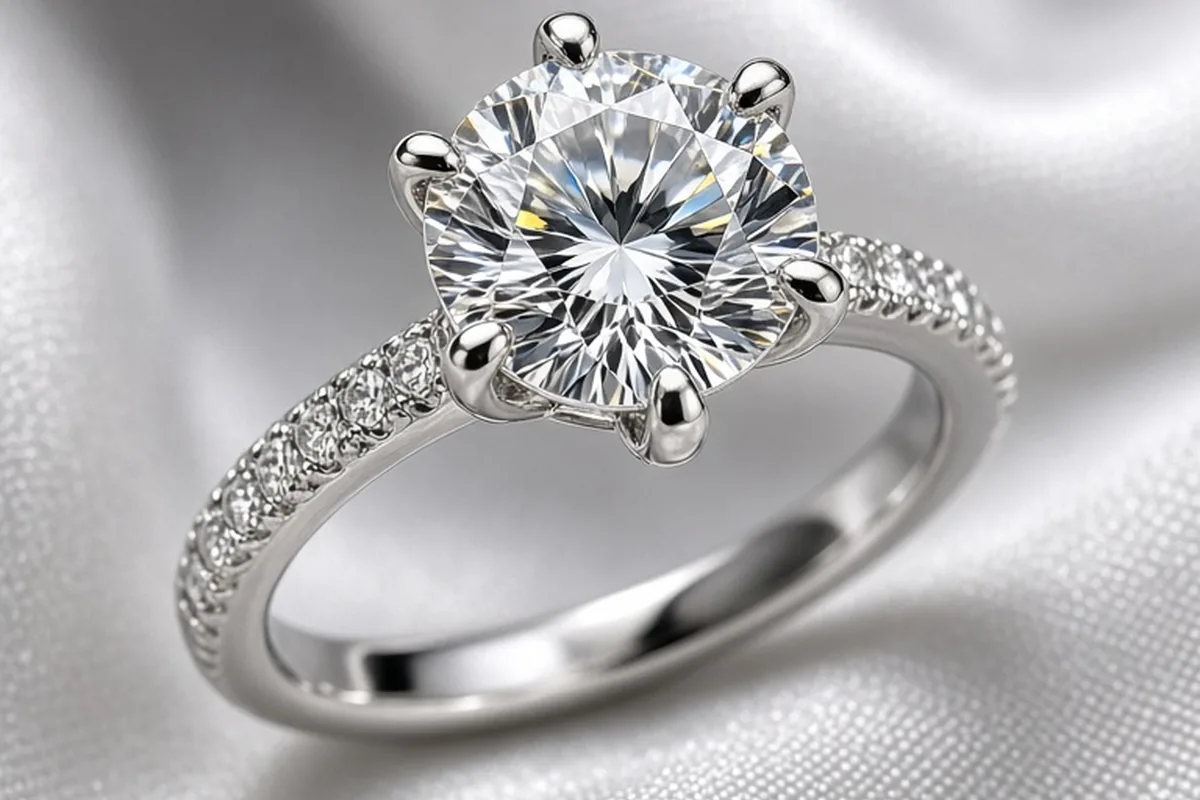
Lab-grown diamonds typically cost 80 to 90 percent less than natural diamonds of identical carat weight, cut, color, and clarity. While natural stones command a premium rooted in mining scarcity and historical market structures, lab diamonds offer identical physical and optical properties at a much lower upfront price. The right choice depends on your shared budget priorities, emotional values, and long-term financial plans.
Deciding on an engagement ring brings together emotional commitment and significant financial decision-making, where traditional expectations often collide with modern budgeting realities.
The Pricing Landscape Between Lab-Grown and Natural Diamonds
The most immediate difference when shopping for a center stone is the dramatic variance in upfront retail cost. For a high-quality one-carat round diamond with excellent cut, near-colorless grading, and eye-clean clarity, a natural mined diamond often ranges between four thousand and seven thousand dollars, depending on retailer markup and specific certifications. In contrast, an identical lab-grown diamond with equivalent or superior laboratory grades frequently retails between five hundred and one thousand dollars. This pricing divergence widens significantly as carat weight increases, because natural diamond prices rise exponentially with size due to the rarity of large, gem-quality rough stones in the earth.
When couples move into two-carat and three-carat categories, the dollar gap becomes substantial. A premium natural two-carat stone can easily exceed fifteen thousand to twenty-five thousand dollars, whereas a comparable lab-created alternative may cost under two thousand dollars. For buyers navigating multiple financial commitments—such as buying a home, paying down debt, or funding a wedding—this price differential transforms the ring search from an exercise in financial strain into a flexible decision where design ambitions do not require draining emergency savings.
Why the Production and Supply Chains Drive the Price Gap
Understanding why lab diamonds cost significantly less requires looking at how each stone comes into existence. Natural diamonds require massive capital expenditure, exploration, heavy machinery, and geological luck to extract rough material from deep underground deposits. The global supply chain involves complex layers of mining concessions, sorting houses, international tenders, and distribution networks, each adding operating overhead and margin to the final polished gem. These structural costs establish a high baseline price floor that cannot easily be reduced.
Lab-grown diamonds, conversely, are cultivated in controlled laboratory environments utilizing High Pressure High Temperature (HPHT) or Chemical Vapor Deposition (CVD) technologies. As technological efficiency improves, energy usage becomes more optimized, and production yields scale upward, the marginal cost to manufacture high-purity carbon crystals steadily decreases. Because laboratories can produce rough diamonds on predictable schedules without geological exploration risk, retail supply remains steady, putting downward pressure on retail prices year after year.
Resale Value, Market Liquidity, and Investment Misconceptions
A frequent point of confusion during the buying process is the concept of diamond investment value. Natural diamonds are often marketed as enduring stores of wealth, but retail buyers should recognize that engagement rings are consumer luxury goods rather than liquid financial assets. When an individual attempts to resell a natural diamond on the secondary market, jewelers and diamond buyers generally purchase at wholesale trade prices, typically returning forty to sixty percent of the original retail cost, excluding the retail markup on the setting.
Lab-grown diamonds carry even lower secondary market liquidity. Because manufacturing costs continue to decline and new inventory enters the market continuously, secondhand buyers have little incentive to pay premium prices for pre-owned lab stones. A buyer should enter a lab diamond purchase with the expectation of minimal to zero monetary return on resale. Viewing an engagement ring as an emotional symbol and an upfront expense—rather than a retirement vehicle or emergency hedge—protects buyers from unrealistic financial expectations regardless of which origin they select.
Navigating the Preference Conversation with Your Partner
Discussing ring preferences requires open communication to prevent assumptions from creating unspoken resentment or disappointment. Many partners worry that bringing up lab diamonds might be perceived as cutting corners or lacking commitment, while others fear that expressing a preference for natural diamonds might seem financially irresponsible. Direct, low-pressure conversations allow both partners to clarify what matters most: whether that is the traditional romance of an ancient natural stone, the visual scale and modern ethics of a lab stone, or the financial freedom to allocate funds toward other shared goals.
A practical way to begin this dialogue is to discuss overall lifestyle priorities before looking at specific rings. Framing the conversation around total wedding and life budgets helps establish a collaborative tone. If one partner places deep personal meaning on the geological origin of a natural diamond, knowing that early allows the couple to adjust carat expectations or choose a simpler setting to stay within bounds. Conversely, if both partners prioritize maximizing visual presence while preserving capital for travel or savings, a lab diamond becomes an easy, mutually celebrated choice.
Where Quality and Craftsmanship Truly Matter
Regardless of whether you choose a mined or lab-created diamond, the visual beauty of the finished ring depends far more on cut precision and setting craftsmanship than on the stone's origin. Cut quality directly determines how light refracts and returns to the eye as brilliance and fire. A poorly cut natural diamond with high clarity will look lifeless and dull, whereas a masterfully cut lab diamond with moderate clarity will display exceptional sparkle and presence. Prioritizing cut grade ensures that your budget translates into visible brilliance rather than hidden laboratory specs.
Similarly, the setting itself requires careful attention to metal choice, prong integrity, and overall durability. Platinum and solid gold settings provide the structural security needed for daily, lifelong wear. Allocating a portion of the savings from a lab diamond toward custom bench jewelers, durable prong work, or higher-quality side stones often results in a more striking, durable piece of jewelry than stretching the entire budget to afford a mediocre natural stone placed in a thin, mass-produced setting.
Balancing Long-Term Financial Goals Against Upfront Ring Costs
The financial decision surrounding an engagement ring should always be evaluated in the context of your broader financial health. Spending substantial sums on a luxury item by relying on high-interest credit cards, personal loans, or draining emergency reserves introduces avoidable stress into the early stages of an engagement. If purchasing a natural diamond strains your ability to contribute to an emergency cushion, retirement accounts, or a down payment on a home, the opportunity cost can linger for years.
Choosing a lab-grown stone can serve as a deliberate financial strategy that preserves liquidity while delivering the exact aesthetic your partner desires. When savings are redirected into interest-bearing accounts or high-priority investments, the compound returns over a decade can significantly outpace any theoretical value retention of a natural gem. Balancing emotional satisfaction with grounded financial responsibility ensures the ring remains a source of joy rather than a reminder of debt.
Illustrative Scenarios
Resolving Assumptions About Tradition and Cost
Julian planned to propose to his partner, Maya, and assumed she expected a traditional mined diamond based on family habits. He began looking at natural two-carat rings priced around twelve thousand dollars, which would have depleted his emergency savings. Instead of making a unilateral purchase, Julian initiated a casual conversation about ring aesthetics while browsing designs online. Maya expressed that she preferred a larger, clean stone and strongly preferred directing extra funds toward their upcoming relocation fund. Julian purchased a premium two-carat lab-grown diamond in a custom platinum setting for eighteen hundred dollars.
Key point: Transparent conversations about values and financial priorities eliminate expensive guesswork and ensure both partners feel understood.
Addressing Resale Concerns with Realistic Budgeting
Kareem felt conflicted between buying a natural one-carat diamond for six thousand dollars or a lab diamond for eight hundred dollars. He hesitated because family members claimed natural diamonds were a safer long-term asset. After researching secondary jewelry markets, Kareem realized that natural diamonds rarely serve as practical liquid investments and that selling pre-owned jewelry typically incurs a significant loss against retail purchase prices. He chose the lab diamond and invested the five-thousand-dollar difference into an index fund for their joint savings.
Key point: Treating fine jewelry as a meaningful lifestyle purchase rather than an investment asset provides clarity on true upfront costs.
Frequently asked questions
Can a certified gemologist tell the difference between lab and natural diamonds with a standard jeweler loupe?
No, a gemologist cannot distinguish between them using standard optical magnification because lab and natural diamonds share identical physical, chemical, and optical structures. Differentiation requires specialized spectroscopic equipment that detects trace growth patterns and nitrogen levels.
Do lab-grown diamonds fade, turn cloudy, or scratch over time?
Lab diamonds will never fade, discolor, or become cloudy over time because they are pure crystallized carbon with a Mohs hardness of ten. They handle daily wear and tear with the exact same durability and scratch resistance as natural mined diamonds.
How should a couple decide between lab and natural when they hold differing opinions?
Focus the discussion on total budget limitations and underlying emotional motivations rather than debating technical superiority. Finding a compromise may involve selecting a slightly smaller natural diamond or opting for a lab stone paired with a bespoke designer setting.
Does choosing a lab-grown diamond affect the cost of jewelry insurance?
Yes, insuring a lab diamond is significantly less expensive because annual premiums are calculated as a percentage of the ring's replacement value. A stone that costs fifteen hundred dollars will carry a fraction of the annual insurance premium of a ten-thousand-dollar natural stone.
Your next step
Schedule a candid conversation with your partner to align on your total ring budget, design expectations, and long-term financial priorities before visiting a jewelry retailer.