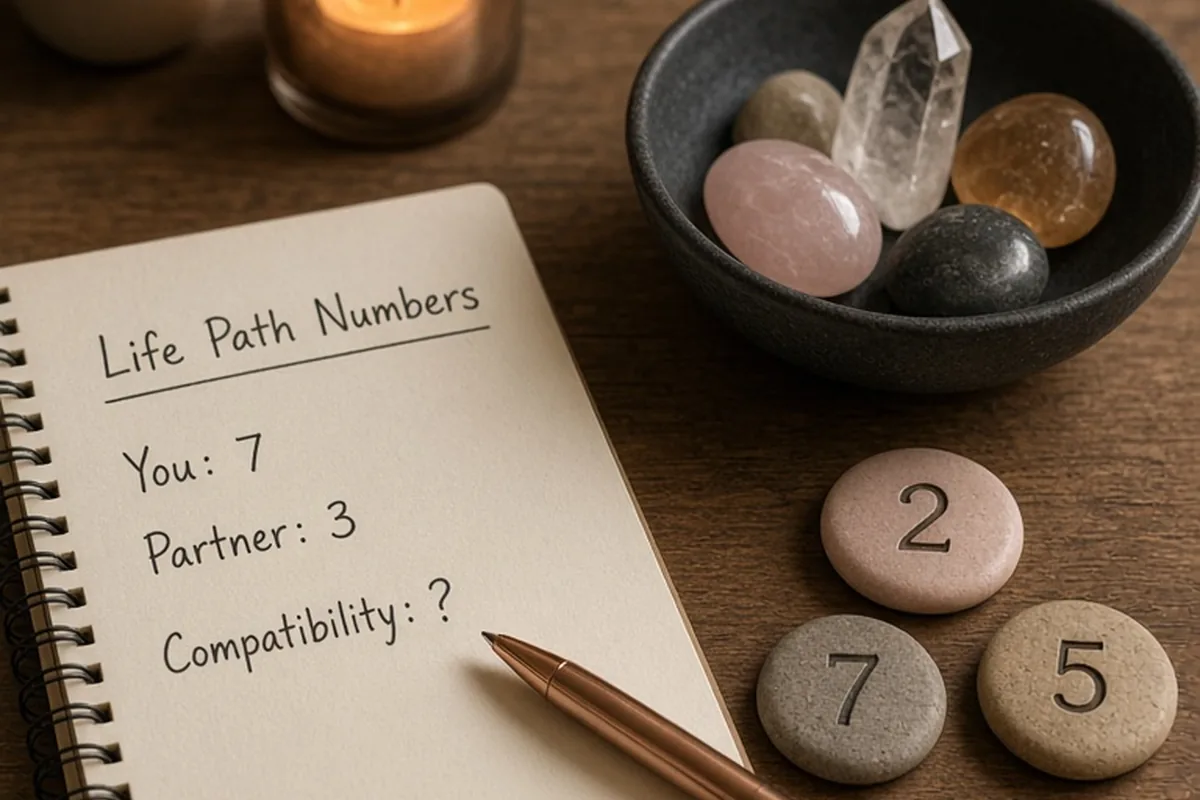
Life path number compatibility compares single-digit values derived from full birthdates to evaluate core personality traits, communication patterns, and natural emotional rhythms between partners. While harmonious combinations suggest shared priorities, compatibility numbers reflect general behavioral tendencies rather than fixed relationship outcomes. Long-term relationship success depends on mutual respect, emotional maturity, active communication, and personal effort rather than numerical alignment alone.
Exploring numerological compatibility can provide a structured framework for understanding how two distinct personalities interact, handle stress, and express affection in everyday life.
How to Calculate and Interpret Your Life Path Numbers
Determining a life path number requires reducing each unit of a complete birthdate down to a single digit before adding them together. To calculate yours, write out your birth month, day, and year in numbers. Reduce the month to a single digit, reduce the day to a single digit, and reduce the four-digit year to a single digit by adding its components together. Once you have three single digits, add them together and reduce the sum once more to arrive at a number between one and nine, unless the sum equals a master number such as eleven, twenty-two, or thirty-three. For example, a birthdate of October 14, 1992 breaks down as month ten reducing to one, day fourteen reducing to five, and year nineteen ninety-two reducing to three, which then combine to produce a life path number of nine.
In relationship contexts, each life path number represents an overarching behavioral archetype, highlighting what motivates a person and how they naturally process their surroundings. While some numbers lean toward independent action and direct decision-making, others prioritize stability, creative expression, or emotional mediation. Calculating these figures gives partners a neutral vocabulary for discussing behavioral differences without assigning blame. It is essential, however, to treat these numbers as reflective lenses rather than rigid personality boxes, as lived experience, personal values, and communication habits always shape how a person expresses their natural traits.
Core Energetic Groups and Behavioral Tendencies
In modern numerology, life path numbers are often grouped into three distinct categories based on their primary approach to life: mind-driven numbers, practical foundation numbers, and emotional or creative numbers. Mind-driven numbers such as one, five, and seven value autonomy, intellectual curiosity, and rapid adaptation. Foundation numbers including two, four, and eight emphasize structure, reliability, tangible goals, and steady support. Creative and service-oriented numbers, such as three, six, and nine, tend to focus on self-expression, community well-being, relational harmony, and empathy.
When partners share a category, they often experience an immediate sense of familiarity because their pacing and problem-solving styles align naturally. For instance, two foundation numbers will likely agree on household budgets and long-term security without prolonged debate. Conversely, pairing partners from contrasting groups—such as an adventurous five with a cautious four—can introduce both dynamic balance and operational friction. The independent partner may perceive the structured partner as overly rigid, while the structured partner may view the spontaneous partner as unpredictable. Recognizing these energetic styles allows couples to anticipate where their instincts might clash during joint decisions.
Compatibility Dynamics for Grounded and Structured Numbers
Partners with life path numbers two, four, and eight generally build relationships anchored in loyalty, consistent effort, and clear expectations. A life path two naturally acts as a sensitive diplomat, seeking deep emotional connection and peaceful compromise. A life path four provides methodical stability, organizational reliability, and enduring patience, while an eight brings strategic ambition, resource management, and executive focus. When these numbers pair with one another, the partnership typically excels in establishing a secure home, managing shared finances responsibly, and working steadily toward long-term milestones.
Despite their functional strengths, relationships centered on structured numbers can struggle with emotional vulnerability and spontaneous intimacy. An eight focused on professional ambition might unintentionally sideline the relational reassurance that a two needs to feel secure, while a four might resist unexpected changes or creative risks that could revitalize the partnership. To maintain warmth, couples within this category benefit from scheduling intentional quality time that is entirely detached from domestic chores, financial planning, or career goals. Consciously practicing emotional check-ins prevents the relationship from feeling purely transactional.
Compatibility Dynamics for Independent and Expressive Numbers
Life path numbers one, three, and five bring high enthusiasm, creative communication, and a strong drive for novelty into romantic partnerships. A life path one leads with bold initiative and self-reliance, a three enlivens the dynamic with social charm and artistic expression, and a five seeks experiential freedom and constant personal evolution. When two expressive or independent numbers connect, the relationship is rarely dull; partners frequently inspire one another to pursue creative projects, travel, and explore unconventional lifestyle choices.
The primary challenge for these dynamic pairings lies in establishing consistency and managing emotional follow-through. When disagreements emerge, an independent one may instinctively withdraw to solve problems alone, while a freedom-loving five might avoid difficult conversations altogether to sidestep emotional constraints. A expressive three may struggle if their partner appears dismissive of their feelings. For these partnerships to thrive over the long term, both individuals must intentionally develop grounding habits, such as regular routines and explicit agreements regarding shared domestic responsibilities and personal boundaries.
Compatibility Dynamics for Intuitive, Nurturing, and Idealistic Numbers
Life paths six, seven, and nine, alongside master numbers eleven, twenty-two, and thirty-three, approach relationships with a focus on deep meaning, shared ideals, and emotional resonance. A life path six prioritizes domestic care, family harmony, and protective loyalty, while a seven seeks philosophical depth, quiet reflection, and spiritual connection. A nine operates with broad humanitarian empathy and a desire to support personal transformation. When these numbers align, partners often bond over shared ethical values, intellectual discussions, and a mutual desire to support one another's personal growth.
However, idealistic pairings carry a distinct vulnerability toward over-functioning, perfectionism, and unspoken expectations. A six can slip into micromanagement or caregiver burnout if they feel their efforts are unreciprocated, while a seven may detach into isolation when emotional demands feel overwhelming. Furthermore, master numbers may place unrealistically high standards on their partners, mistaking normal relationship challenges for existential misalignment. Preserving individuality, establishing healthy emotional boundaries, and accepting everyday imperfections are vital practices for keeping these relationships balanced and grounded.
Navigating Challenging or Clashing Life Path Pairings
In numerology, certain pairings are traditionally considered challenging due to fundamentally opposing core motivations. For example, a stability-focused life path four and an unpredictability-seeking life path five often have contrasting needs regarding security and change. Similarly, an authoritative life path one and a socially sensitive life path two can easily fall into an imbalance where one partner dominates decision-making while the other suppresses their own preferences to avoid conflict.
Friction between contrasting life path numbers does not indicate that a relationship is doomed; rather, it highlights the specific areas where conscious communication is required. Instead of attempting to change a partner's core personality traits, couples can treat complementary differences as practical assets. A structured partner can provide a reliable anchor that allows an adventurous partner to explore safely, while the adventurous partner can help the structured partner embrace flexibility. Success in contrasting pairings relies entirely on ongoing negotiation, empathy, and clear agreements around sensitive topics like finances, social calendars, and personal autonomy.
Using Compatibility Insights to Improve Communication
The most constructive way to apply life path compatibility is as a diagnostic tool for interpersonal awareness rather than a predictive label. When you understand your partner's core numeric tendencies, you can tailor your communication style to better match their processing habits. For instance, if you are addressing a concern with a logic-driven seven, presenting your thoughts with calm clarity and allowing them time to reflect will yield far better results than demanding an immediate emotional reaction. Conversely, when communicating with a six, validating their contributions before raising a critique helps them feel valued rather than criticized.
It is equally important to avoid using numerological concepts as an excuse for poor relationship behavior or lack of accountability. Saying that a life path number makes someone inherently emotionally distant, impulsive, or controlling misuses the framework. Spiritual and symbolic tools should always serve as an invitation for self-reflection and mutual understanding, supporting the essential work of active listening, respectful boundary-setting, and collaborative conflict resolution.
Frequently asked questions
Can two people with the same life path number have a successful relationship?
Yes, identical life path numbers often share intuitive understanding and similar life values. However, they may also amplify shared blind spots, such as two stubborn numbers clashing or two passive numbers avoiding difficult decisions.
Does a low compatibility score mean a relationship will fail?
No, numerological compatibility represents general behavioral tendencies rather than a relationship verdict. Healthy communication, shared values, and mutual emotional commitment are far more influential in determining relationship longevity.
How do Master Numbers affect relationship compatibility?
Master numbers such as eleven, twenty-two, and thirty-three carry heightened intuition and intense personal drives. In relationships, these individuals often require partners who can provide steady grounding while respecting their deep sense of purpose.
Your next step
Calculate your and your partner's life path numbers together and use the resulting archetypes to start an open conversation about your communication styles, stress responses, and personal relationship goals.