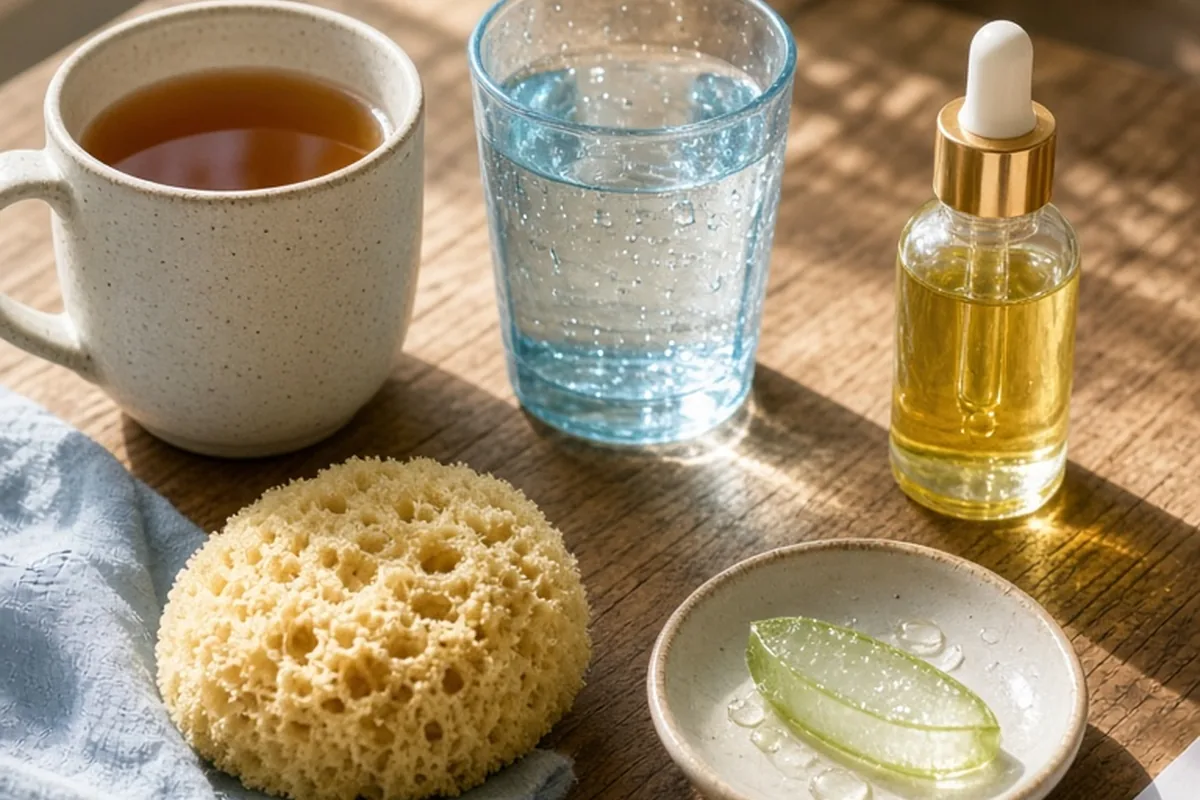
Low porosity hair has tightly bound, overlapping cuticle layers that resist moisture penetration and trap buildup on the surface. The most effective product ingredients are lightweight humectants like glycerin, aloe vera, and hyaluronic acid, combined with fast-absorbing, small-molecule oils such as jojoba, argan, and grapeseed. Heavy plant butters, unevaporated mineral oils, and frequent high-molecular-weight proteins should be minimized, as they sit atop the cuticle scales, leading to stiffness, dullness, and severe moisture resistance.
Navigating product aisles with low porosity hair often feels like a cycle of trial and error, where rich creams leave hair greasy on the outside yet brittle underneath. Understanding which cosmetic ingredients interact favorably with closed cuticles allows you to build a routine that delivers deep, lasting hydration.
How Cuticle Structure Dictates Ingredient Absorption in Low Porosity Hair
The outermost layer of the hair strand, known as the cuticle, consists of flat, shingle-like keratin scales that overlap to shield the inner cortex. In low porosity hair, these cuticles lie exceptionally flat, compact, and tight against the hair shaft. Because the natural openings between these scales are microscopic, water droplets and cosmetic formulations struggle to slip beneath the surface. Instead of sinking into the hair fiber, dense liquid and semi-solid formulations tend to bead up, slide off, or dry as a sticky film on the exterior of the strand.
This structural tightness fundamentally changes how ingredients behave on your scalp and strands. In high porosity hair, large botanical oils and heavy proteins easily fill gaping fissures in the damaged cuticle. When applied to low porosity hair, those same large molecules cannot fit between the tightly clamped scales. The trapped residue acts as a physical barrier, effectively locking new hydration out during subsequent wash days. To achieve healthy elasticity, shine, and softness, formulations must rely on specific molecular sizes, water-soluble bases, and thermal assistance to encourage the cuticle to accept moisture.
High-Performance Humectants That Pull Water Past Tight Cuticles
Humectants are the cornerstone of any hydrating regimen for low porosity strands because their chemical structure attracts and binds atmospheric water molecules directly to the hair shaft. Simple, small-molecule humectants are particularly valuable because they slip past resistant cuticles more readily than heavy occlusive pastes. Glycerin remains the industry standard humectant due to its low molecular weight and potent hygroscopic capability, though its performance depends on balanced relative humidity in your environment to prevent drawing moisture out of the cortex under desert-dry conditions.
Other superior humectants for low porosity hair include aloe vera juice, panthenol (provitamin B5), sodium hyaluronate, and agave nectar. Panthenol is especially beneficial because it possesses a tiny molecular footprint that can penetrate the cuticle layer, converting into pantothenic acid to impart internal flexibility without leaving a waxy coating. Similarly, hydroxyethylcellulose and botanical mucilages derived from marshmallow root or flaxseed provide effortless slip and moisture distribution without coating the strand in an impenetrable film that blocks future wash-day hydration.
Lightweight Penetrating Oils Versus Heavy Sealing Butters
Choosing the right lipid base requires balancing lipid composition, carbon chain lengths, and molecular weight. Low porosity hair requires lightweight, non-greasy carrier oils rich in polyunsaturated and monounsaturated fatty acids that can lubricate the hair without weighing it down. Jojoba oil is an outstanding choice because it is structurally a liquid wax ester that closely mimics human sebum, allowing it to condition the surface seamlessly. Sweet almond oil, argan oil, grapeseed oil, and fractionated coconut oil (medium-chain triglycerides) are also excellent because their smaller molecular profiles glide smoothly over tightly sealed cuticles.
Conversely, heavy raw butters and thick, viscous lipids should generally be limited or used with extreme caution in leave-in products. Raw shea butter, mango butter, cocoa butter, and pure Jamaican black castor oil have high concentrations of dense saturated fats and long-chain fatty acids. When applied to low porosity hair, these heavy butters harden at room temperature, forming a thick exterior blanket that repels water during your next wash. If you enjoy the nourishing properties of butters, look for formulations where they appear near the middle or bottom of the ingredient list, blended into a water-dominant emulsion rather than as the primary base.
Managing Hydrolyzed Proteins and Film-Forming Conditioners
Protein treatments are frequently misunderstood in low porosity hair care. Because low porosity hair has an intact, non-porous cuticle layer, it naturally retains its internal protein matrix and does not require frequent structural patching. Introducing large, film-forming hydrolyzed proteins—such as hydrolyzed wheat protein, hydrolyzed soy protein, or large keratin complexes—can cause rapid protein overload. Overloaded low porosity hair feels stiff, straw-like, rough to the touch, and snaps easily under minimal tension because the rigid protein coating prevents water molecules from flexing the strand.
When your hair does require strengthening—such as after chemical processing, coloring, or prolonged heat styling—opt for micro-proteins and free amino acids. Ingredients labeled as silk amino acids, hydrolyzed silk, or hydrolyzed oat protein feature significantly smaller molecular weights that fortify hair gently without creating an impenetrable exterior armor. Limit intensive protein-dominant masques to an occasional cadence, prioritizing balanced moisturizing deep conditioners that list humectants and softening emollient esters ahead of any protein derivatives.
Clarifying Surfactants and Chelating Agents to Prevent Stubborn Buildup
Because product residue easily accumulates on the surface of tightly closed cuticles, a gentle sulfate-free cleanser alone is often insufficient over time. Regular use of mild co-washes and conditioning cleansers leaves conditioning agents, cationic polymers (like polyquaternium compounds), and environmental dust behind. To reset low porosity strands, incorporate a dedicated clarifying shampoo containing effective primary surfactants such as sodium C14-16 olefin sulfonate or cocamidopropyl betaine once or twice a month to thoroughly strip surface accumulation without damaging the lipid barrier.
If you live in an area with hard tap water, mineral deposits from calcium, magnesium, and iron will bind to your cuticles, locking them down even tighter and making hair feel chronically dry regardless of the products you apply. In these scenarios, look for chelating agents on your clarifying shampoo label, specifically tetrasodium EDTA, disodium EDTA, or sodium phytate. These chelators bond with mineral ions and wash them down the drain, restoring the cuticle's natural ability to receive water and conditioning treatments.
Thermal and pH Triggers That Open Cuticles for Better Absorption
Even the most thoughtfully chosen ingredients will struggle to penetrate low porosity hair if applied cold to a dry strand. The physical behavior of the hair cuticle is sensitive to both temperature and pH levels. Warm water and indirect heat temporarily soften the keratin structure and gently elevate the tightly pressed cuticle plates, creating temporary micro-channels that allow humectants, fatty acids, and water to migrate into the hair cortex.
To maximize ingredient performance, apply your deep conditioner under a heated processing cap, warm towel, or hair steamer for 15 to 30 minutes. Furthermore, pay attention to formulation pH: while slightly acidic products (pH 4.5 to 5.5) are essential for smoothing down cuticles at the end of a routine, applying warm, neutral-to-mildly-warm water during the cleansing and conditioning stage gives your moisturizing ingredients the opening they need before you seal everything with a cool or lukewarm rinse.
Reading Product Labels: Evaluating Ingredient Lists from Top to Bottom
Becoming adept at reading cosmetic labels prevents costly purchasing mistakes. In regulatory cosmetic labeling, ingredients are listed in descending order of concentration until reaching the one-percent threshold. For low porosity hair, water (aqua) or aloe barbadensis leaf juice should ideally be the first ingredient listed in your leave-ins, sprays, and daily moisturizers, followed immediately by light slip agents, water-soluble humectants, and fatty alcohols like cetyl alcohol, stearyl alcohol, or cetearyl alcohol, which soften the hair without building up.
Scrutinize the top five to seven ingredients for heavy non-evaporating silicones (such as dimethicone, amodimethicone, and cyclopentasiloxane if not accompanied by strong cleansing surfactants), mineral oils, petrolatum, and dense plant waxes like beeswax or candelilla wax. If these occlusives appear near the top of the list, the product is engineered to create a thick external water barrier, which is ideal for high porosity hair seeking to trap moisture inside, but counterproductive for low porosity hair that needs water to enter the strand first.
Frequently asked questions
Are silicones bad for low porosity hair?
Non-water-soluble silicones like dimethicone are not inherently harmful, but they create a tight waterproof seal over closed cuticles that accelerates product buildup. If you choose products with silicones, opt for water-soluble variations such as PEG-modified dimethicones or commit to a clarifying shampoo every few washes.
Is coconut oil recommended for low porosity hair?
Pure virgin coconut oil is rich in lauric acid, which penetrates deep into the cortex and binds to natural hair proteins, often making low porosity strands feel uncomfortably stiff, brittle, or greasy. Fractionated coconut oil (caprylic/capric triglyceride) is much lighter and generally performs far better.
How often should low porosity hair use deep conditioning treatments with heat?
Deep conditioning once a week or every two weeks with indirect heat for 15 to 20 minutes is typically ideal. Using heat helps open the flat cuticle scales, allowing water-based emollients and humectants to penetrate rather than simply coating the surface.
What is the best type of leave-in conditioner base for low porosity hair?
Liquid or lightweight milky leave-in conditioners with a purified water or aloe vera base are best. Look for formulations containing glycerin, panthenol, and lightweight oils like argan or jojoba rather than heavy butter-based creams.
Your next step
Check the ingredient labels of your current leave-in products and replace any formulas dominated by heavy butters or insoluble silicones with a lightweight, water-based humectant spray containing aloe vera, glycerin, or jojoba oil.