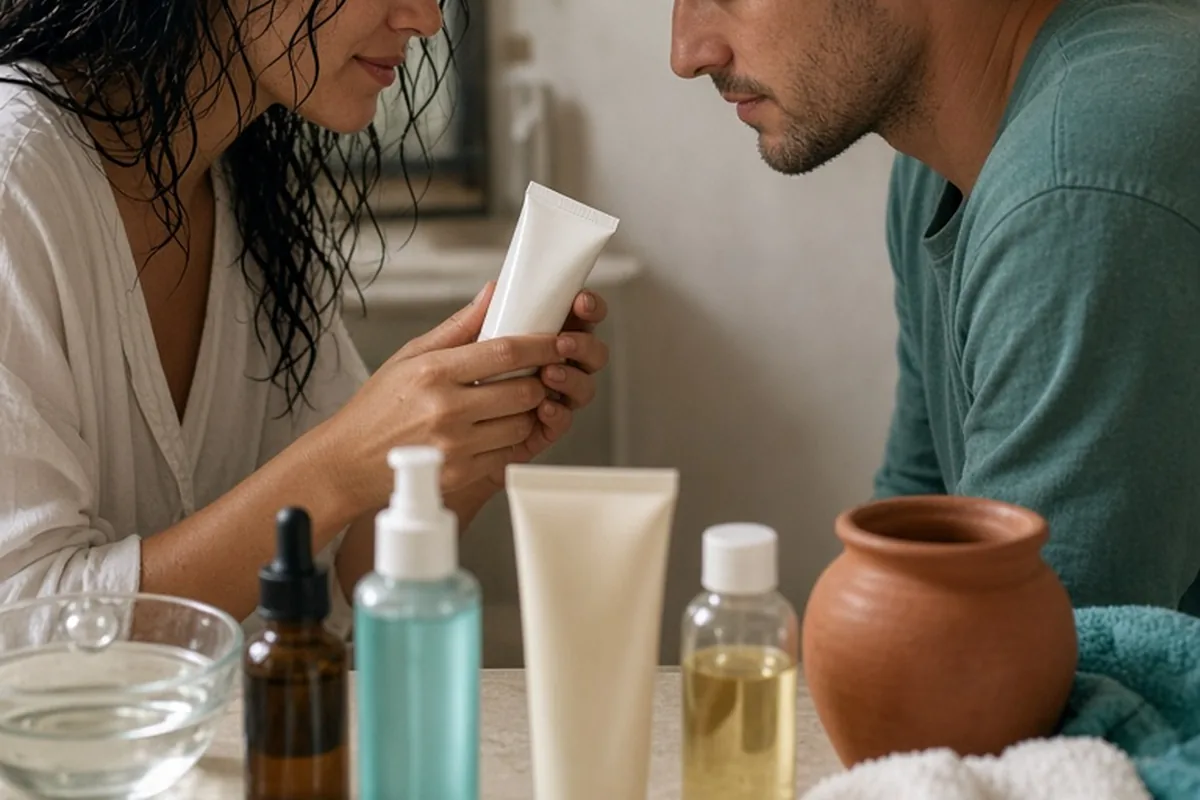
Low porosity hair features tightly bound cuticle layers that repel moisture and resist product penetration. At-home low porosity products rely on lightweight humectants, gentle heat caps, and clarifying shampoos for routine maintenance. Salon treatments use professional-grade alkaline prep, commercial micro-misting steamers, and concentrated acid-balanced sealers to force moisture into the cortex. While home care maintains daily hydration balance, professional salon visits reset severe product buildup and correct chronic dehydration.
Managing low porosity strands often feels like an ongoing balancing act where water beads on the surface and rich conditioners sit like a slick coating without sinking in. Choosing whether to manage this texture exclusively at home or invest in salon treatments comes down to product chemistry, thermal tools, and your hair's current level of moisture starvation.
The Cuticle Barrier: How Low Porosity Hair Interacts with Formulations
Hair porosity refers to your hair shaft's ability to absorb and retain water, treatment agents, and conditioning oils. In low porosity hair, the outermost cuticle scales lay flat, overlapping tightly like shingles on a well-built roof. While this compact structure protects the inner cortex from environmental pollutants, mechanical friction, and sun damage, it creates a persistent hydrophobic barrier against water and conditioning formulas. Thick styling products simply rest on the outside of the strand, drying into a greasy or flaky film rather than infusing moisture into the shaft.
Because the cuticle scales refuse to lift easily, applying room-temperature conditioners rarely solves dryness. Standard conditioning creams are often formulated with medium-to-large molecular compounds designed for hair with normal or raised cuticles, which easily receive heavy emulsions. On low porosity hair, those large molecules cannot squeeze beneath the shingles. To hydrate low porosity strands, products must either have small molecular weights to slip past the cuticle boundary or be paired with gentle thermal swelling methods that encourage the scales to lift open temporarily.
Decoding Home Formulas: Lightweight Humectants vs Heavy Occlusive Traps
Building a home regimen for low porosity hair begins with reading product labels for water-based, small-molecule humectants. Ingredients like glycerin, aloe vera juice, panthenol, and agave nectar draw ambient moisture toward the hair shaft without forming an impenetrable barrier. When selecting botanical oils, low porosity strands respond best to light carrier oils such as jojoba, sweet almond, argan, and grapeseed oils. These oils have smaller lipid profiles that can lubricate the hair fiber without sealing the cuticle so firmly that subsequent moisture cannot enter.
The most common mistake with at-home care is relying on heavy butters and thick waxes to cure perceived dryness. Raw shea butter, cocoa butter, pure castor oil, and unrefined coconut oil are classic staples for high porosity or damaged hair, but they spell disaster for tight cuticles. Coconut oil, in particular, is rich in lauric acid, an occlusive fatty acid with a strong affinity for hair proteins. When applied to low porosity strands, it can saturate the perimeter and harden, making the hair feel stiff, brittle, and straw-like rather than soft.
Application technique at home matters just as much as ingredient selection. Low porosity hair requires warm or lukewarm water during washing and conditioning because elevated water temperatures help soften the keratin shingles. Applying leave-in conditioners and light styling milks to soaking wet hair right out of the shower—rather than towel-dried hair—allows the product to bind with the water molecules already sitting on the fiber surface, improving absorption before the cuticle snaps completely shut.
Professional Salon Formulations and Deep Penetration Chemistry
Professional salons approach low porosity hair with specialized backbar chemistry rarely accessible in consumer retail lines. Stylists often start with controlled pH manipulation. By applying a mildly alkaline pre-treatment or specialized clarifying wash, a stylist temporarily raises the cuticle scale without inducing chemical damage. Once the cortex is accessible, the stylist applies high-potency conditioning emulsions featuring micro-emulsified humectants, silk amino acids, or hydrolysates whose molecular structures are fine enough to navigate the open layers.
The final phase of a salon moisture service involves deliberate pH restoration. Once the cortex is saturated with conditioning nutrients, the stylist applies an acidic finishing rinse or sealer with a low pH. This acidic wash prompts the cuticle shingles to flatten down tightly again, locking the newly introduced moisture and amino acids inside the core. This balance of intentional lifting, micro-penetration, and controlled sealing explains why a professional treatment often leaves low porosity hair pliable and supple for several weeks, whereas standard at-home deep conditioning can wear off after a few days.
Thermal Activation: Heat Caps and Warm Towels vs Commercial Micro-Mist Steamers
Mechanical heat is the ultimate catalyst for low porosity hair, serving as the bridge that allows ingredients to enter the cortex. At home, you can achieve thermal activation using microwavable gel or flaxseed heat caps, thermal electric bonnets, or a damp towel warmed in the microwave under a plastic shower cap. These tools provide conductive heat, warming the surface of the hair shaft for fifteen to twenty minutes while a treatment sits on the strands.
While home heat caps represent a massive improvement over unheated conditioning, they have mechanical limits. Microwavable caps steadily lose their warmth as time passes, and dry heat can occasionally cause the product to dry against the hair rather than sink in. Electric caps provide consistent warmth but deliver dry thermal heat rather than vaporized moisture, which can leave coarse textures feeling slightly parched if the hair was not drenched beforehand.
In contrast, salons utilize commercial standing steamers and ultrasonic micro-mist machines. These devices do not simply heat the hair; they generate microscopic water droplets that are substantially smaller than typical bathroom shower steam particles. The warm mist gently softens the cuticle scales while infusing purified hydration alongside the treatment product. Because the micro-mist sustains a stable temperature and humidity level throughout the entire duration of the service, the hair achieves total cortex saturation that is difficult to replicate with a consumer heat cap.
Clarifying Protocols: Addressing Product Buildup and Protein Sensitivity
Product buildup is the primary enemy of low porosity hair. Because treatments struggle to enter the strand, lingering conditioners, styling gels, and dry shampoo residues quickly form a stubborn coating on the cuticle exterior. Over time, this coating repels water entirely, causing the hair to look lifeless, feel greasy at the roots, and snap off easily at the ends. Many people mistake this dull, stiff state for chronic dehydration and respond by layering on more heavy creams, unintentionally worsening the buildup.
At home, an effective clarifying protocol involves using a sulfate-based or gentle olefin-sulfonate clarifying shampoo every two to four weeks, depending on how many styling products you apply. Some individuals incorporate diluted raw apple cider vinegar rinses to cut mineral deposits and restore shine, though vinegar's low pH flattens cuticles quickly and should generally follow thorough cleansing rather than precede it. Additionally, home users must monitor protein sensitivity. Low porosity hair already possesses a dense, tightly wound protein structure; using leave-in conditioners with heavy wheat or soy proteins can create immediate brittleness.
Salon clarifying goes deeper by addressing environmental and municipal tap water variables. Salons offer specialized chelating treatments designed to strip away hard water mineral deposits such as calcium, magnesium, copper, and chlorine that domestic shampoos fail to dissolve. If your low porosity hair feels persistently rough and fails to absorb moisture despite using lightweight products and heat at home, mineral accumulation from hard shower water is often the unseen cause, and a salon-grade chelating treatment provides an immediate reset.
Building a Strategic Regimen: When to Treat at Home and When to Book a Salon
An effective approach to low porosity hair care does not require choosing exclusively between home maintenance and salon visits. Instead, the most resilient, hydrated results come from a strategic hybrid schedule where daily and weekly upkeep happens at home, while complex corrective procedures are reserved for the salon chair.
Your home routine serves as the front line of defense. On a weekly or bi-weekly basis, wash with warm water, apply a lightweight moisturizing conditioner enriched with humectants, and use a thermal cap for twenty minutes. For daily styling, reach for water-based leave-in mists and light oils like argan or jojoba to lock in hydration without suffocating the strand. When performed consistently, this low-manipulation, light-product routine keeps the hair supple without creating rapid buildup.
Salon appointments are best scheduled quarterly, seasonally, or whenever your hair hits an unresponsive plateau. If you notice persistent dullness, excessive shedding caused by product-related breakage, or if you reside in an area with hard municipal water, a professional visit pays dividends. Booking a salon visit every eight to twelve weeks for a chelating wash, deep micro-mist steam infusion, and a precision trim allows a stylist to inspect your scalp and hair health, clear out deep mineral residue, and establish a clean baseline for your home routine.
Evaluating Stylist Experience and Treatment Pricing Factors
Not all hair salons or stylists understand the distinct mechanical and chemical needs of low porosity hair. When seeking a stylist, ask direct questions about their approach to tight, moisture-resistant textures. Inquire whether their deep hydration services incorporate micro-mist steam or hooded steamers, what specific product lines they utilize for low porosity clients, and whether their clarifying services include chelating washes to eliminate hard water buildup. A knowledgeable professional will gladly explain their protocol and tailor their formula to your hair's density and porosity level.
Pricing for salon moisture services varies widely based on geographic region, salon tier, hair length, and hair density. A deep conditioning steam service is rarely billed as an isolated charge; it is usually structured as an add-on treatment to a standard wash and blow-dry, silk press, or curly cut. Additional costs often apply if the stylist needs to perform extensive detangling, specialized chelating treatments, or bond-building steps. To avoid unexpected charges, contact the salon ahead of time or schedule an initial consultation to request an itemized service breakdown based on your hair's length and current condition.
Frequently asked questions
Can low porosity hair permanently turn into high porosity hair?
Yes. Severe heat damage from flat irons, chemical processing such as bleaching or relaxers, and rough mechanical manipulation can chip or strip away the cuticle scales. Once the cuticle layer is permanently lifted or eroded, the hair shifts from low to high porosity, absorbing water quickly but losing it just as fast.
Is standing in a warm shower enough steam to open low porosity hair cuticles?
A steamy shower helps soften the hair shaft, but it is rarely sufficient for deep product penetration. The steam in a domestic shower disperses rapidly and carries coarse water droplets, whereas a dedicated thermal heat cap or salon micro-mister concentrates uniform warmth and fine vapor directly onto the strands for an extended period.
Why does coconut oil often make low porosity hair feel stiff and brittle?
Coconut oil is rich in lauric acid, an occlusive fat that binds tightly to hair proteins and creates a rigid barrier over closed cuticles. On low porosity hair, this surface barrier prevents water from entering the cortex, causing the hair fiber to harden and snap under tension.
How often should low porosity hair be clarified to prevent product buildup?
Most low porosity hair benefits from clarifying once every two to four weeks. If you use styling gels, edge controls, or silicone-based serums regularly, you may need a gentle clarifying shampoo every two weeks to prevent moisture-blocking films from accumulating on the cuticles.
Your next step
Inspect your current hair products for heavy butters and dense oils, swap them for water-first formulas with lightweight humectants like aloe or glycerin, and use a warm thermal cap during your next wash day to test your hair's hydration response before booking a professional steam treatment.