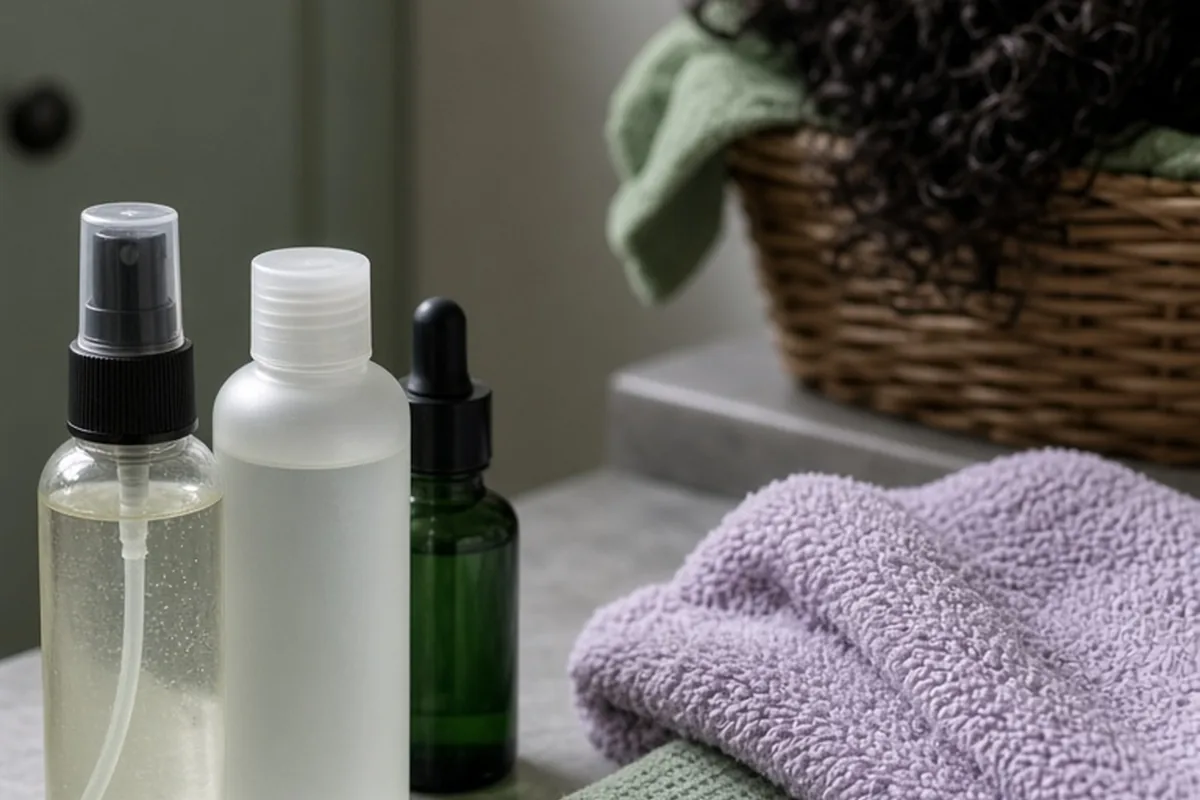
To care for low porosity curly hair, select lightweight, water-based products formulated with humectants like glycerin, aloe vera, and panthenol, paired with heat during conditioning to open tightly bound cuticles. Avoid heavy raw butters, waxes, and dense oils like coconut or castor oil, which sit on the hair shaft and cause buildup. Prioritize clarifying shampoos, liquid leave-in sprays, and botanical styling gels that provide curl definition and moisture without weighing down your curl pattern.
Low porosity curls possess tightly sealed, overlapping cuticle scales that resist moisture absorption and trap residue on the hair surface. Navigating product aisles requires understanding how specific formulas penetrate compact cuticles rather than relying on heavy traditional curl creams.
Identifying Low Porosity Curly Hair and Common Cuticle Challenges
Low porosity hair features a flat, tightly bound cuticle layer that functions much like roof shingles laid flush against one another. While this structural arrangement protects the inner cortex from environmental damage and prevents internal hydration from escaping easily, it presents a substantial barrier when you try to introduce moisture into dry strands. When you mist water onto clean, product-free low porosity curls, water droplets tend to bead on the surface for several minutes rather than soaking in immediately. Wash days often take an extended time because thoroughly saturating your hair under running water requires patience, and air-drying can take six to twelve hours or more because any water that does manage to enter remains trapped beneath the closed cuticles.
A recurring frustration for people with low porosity curly hair is product buildup masquerading as chronic dryness. Because the outer layer resists absorption, heavy oils, butters, and thick styling creams accumulate on the exterior of the hair shaft. This surface coating creates a dull cast, causes curl clumps to feel stiff or sticky, and blocks subsequent water from reaching the cortex during future washes. Over time, curls lose their elasticity and bounce, becoming limp, brittle, and prone to snapping. Recognizing this cuticle behavior is essential: your curls are rarely lacking oil, but rather struggling to absorb water due to a physical barrier of closed cuticles and accumulated surface residue.
Essential Ingredients to Look for in Low Porosity Curl Products
Formulas tailored for low porosity curls prioritize low-molecular-weight ingredients and film-forming humectants that draw ambient moisture to the strand without creating a thick, occlusive barrier. Water should always appear as the first ingredient on your product labels. Key humectants to seek include vegetable glycerin, aloe vera juice, panthenol (provitamin B5), agave nectar, marshmallow root extract, and flaxseed extract. These ingredients deliver hydration in soluble forms that glide between cuticles. Flaxseed and marshmallow root also provide natural slip, allowing you to detangle delicate curl patterns without relying on synthetic silicones or dense waxes.
When evaluating lipid and emollient content, favor lightweight, penetrating plant oils over heavy sealing butters. Jojoba oil, argan oil, sweet almond oil, grapeseed oil, and squalane possess molecular profiles small enough to soften the hair fiber without suffocating it. Conversely, formulations dominated by raw shea butter, cocoa butter, beeswax, petrolatum, or high concentrations of unrefined coconut oil frequently overwhelm low porosity curls. While these heavy ingredients work well on high porosity or damaged hair that needs a heavy sealant, on low porosity curls they form a water-repellent layer that leads to rapid buildup and chronic dehydration.
Cleansers and Clarifying Shampoos That Prevent Product Buildup
Because low porosity curls are exceptionally prone to residue, a dedicated cleansing routine serves as the foundation for moisture retention. Gentle, sulfate-free shampoos formulated with mild surfactants such as cocamidopropyl betaine, sodium cocoyl isethionate, or decyl glucoside effectively remove daily sweat, sebum, and water-soluble styling products without stripping natural lipids. These shampoos allow you to cleanse your scalp and hair weekly while preserving the integrity of your curl pattern. However, relying exclusively on ultra-gentle cleansers or co-washing conditioners often leads to gradual product accumulation over several weeks.
Incorporating a clarifying shampoo every two to four weeks is necessary to reset low porosity curls. Clarifiers contain stronger cleansing agents or chelating ingredients like tetrasodium EDTA or citric acid, which break down stubborn polyquaternium polymers, hard water minerals, and oil deposits. If you notice your curls feel coated, take unusually long to dry, or fail to absorb your regular leave-in conditioner, buildup is the primary culprit. Washing with a clarifying formula strips away the invisible film, allowing your deep conditioning treatments to make direct contact with the cuticle layer once again.
Deep Conditioning Low Porosity Curls With Indirect Heat
Deep conditioning low porosity curls requires a combination of lightweight formulation and thermal activation. Simply applying a conditioner in a lukewarm shower and rinsing it out after five minutes rarely yields lasting results because the cuticles remain firmly closed. Choose deep conditioners rich in water-soluble hydrators, fatty alcohols like cetyl and stearyl alcohol for slip, and small emollients. Avoid deep treatments that list heavy waxes or unhydrolyzed proteins near the top of the ingredient deck, as these cannot penetrate compact hair fibers and leave a waxy film.
Applying indirect heat is the single most effective way to improve conditioner absorption in low porosity hair. Heat gently expands and lifts the cuticle scales, creating pathways for water and conditioning agents to reach the cortex. After coating your damp curls with conditioner, cover your hair with a plastic shower cap and apply heat for fifteen to thirty minutes using a microwavable thermal heat cap, a hooded dryer, or a warm, damp towel wrapped over the cap. When you finish the heated session, rinse your hair with lukewarm water rather than icy water, as lukewarm water keeps the conditioner soluble during rinsing without shocking the cuticle closed prematurely.
Selecting Leave-Ins, Milks, and Gels for Definition Without Heaviness
Leave-in conditioners for low porosity curls should have a liquid, milky, or lightweight spray consistency. A spray-based leave-in formulated with water, aloe, and light amino acids evenly distributes hydration across the hair without concentrating heavy clumps on individual curl bundles. If you prefer a curl milk or light lotion, verify that it contains a high water content and absorbs quickly when rubbed between your palms rather than leaving a greasy sheen. Applying leave-in products to soaking-wet hair immediately after washing helps lock in ambient moisture before the cuticles tighten back down.
For hold and definition, botanical styling gels and lightweight polymer gels outperform heavy styling butters or dense curl custards. Gels based on flaxseed, pectin, aloe vera, or hydroxyethylcellulose form a thin, flexible cast around the curl clump that preserves curl architecture while drying. Once the hair is fully dry, this cast can be gently scrunched out to reveal soft, frizz-free curls with natural movement. Heavy curl creams, by contrast, frequently weigh down the roots, elongate the curl pattern unintentionally, and create a greasy finish that attracts environmental dust and lint.
Managing Protein Sensitivity in Low Porosity Curly Hair
Low porosity hair naturally possesses an intact, undamaged protein structure, which makes it particularly susceptible to protein overload. When products contain high concentrations of large proteins—such as hydrolyzed keratin, collagen, or whole wheat protein—these molecules attach to the cuticle surface. On low porosity hair, this structural reinforcement is often unnecessary and causes the hair shaft to feel stiff, straw-like, brittle, and prone to tangling. If your hair snaps easily when stretched or feels uncharacteristically coarse after using a new product, review the ingredient list for concentrated protein compounds.
To maintain a healthy balance, keep your core wash-day products largely protein-free or protein-light, focusing primarily on moisture and humectants. If your curls are chemically colored, frequently heat-styled, or exposed to sun and chlorine, they may benefit from occasional protein support. In these cases, select products containing smaller amino acids or hydrolyzed silk proteins, which have a lower molecular weight and integrate more smoothly without creating a rigid surface shell. Limit targeted protein treatments to once a month or once every six weeks, monitoring how your hair responds before repeating the application.
Designing a Practical Wash-Day and Mid-Week Refresh Routine
A streamlined wash day for low porosity curls begins with thorough water saturation using warm water, which aids initial cuticle expansion. Cleanse the scalp thoroughly with your regular sulfate-free shampoo or monthly clarifying cleanser, massaging with your fingertips to lift residue. Apply your lightweight deep conditioner from mid-lengths to ends, detangle gently with a wide-tooth comb or flexible detangling brush while the conditioner provides slip, and apply indirect heat for fifteen to twenty minutes. Rinse thoroughly with lukewarm water until the hair feels clean and slippery, with no greasy residue remaining.
Style your curls while they are still dripping wet, utilizing the 'praying hands' method or gentle raking to distribute a liquid leave-in conditioner followed by your botanical gel. Scrunch upward toward the scalp to encourage natural clump formation, then blot excess water using a microfiber towel or a soft cotton t-shirt to minimize friction frizz. Between wash days, avoid layering heavy leave-in creams daily, which accelerates buildup. Instead, refresh your curls by lightly misting them with warm water mixed with a few drops of lightweight leave-in, or use a handheld facial steamer to reactivate the styling polymers already present on your hair strands.
Frequently asked questions
How often should low porosity curly hair be clarified?
Most low porosity curly hair benefits from clarifying once every two to four weeks. If you use botanical gels and light leave-ins daily, monthly clarifying is typically sufficient to reset the hair. However, if you swim regularly, have hard tap water, or notice your curls feel coated and take unusually long to dry, clarifying every two weeks helps prevent persistent buildup.
Can I use coconut oil on low porosity curls?
Pure, unrefined coconut oil is generally not recommended as a primary leave-in or sealant for low porosity curls. Coconut oil penetrates the hair shaft and binds strongly to internal proteins, which can cause low porosity hair to feel brittle, stiff, and dry. If you wish to use plant oils, lighter options like argan, jojoba, or grapeseed oil absorb more effectively without causing rigidity.
Why does low porosity curly hair take so long to dry?
Low porosity hair takes an extended time to dry because once water successfully passes beneath the tightly sealed cuticles, the compact outer layer locks the moisture inside. Additionally, using heavy products that coat the outside of the hair traps external water on the surface, preventing efficient evaporation. Diffusing on low to medium heat can significantly cut drying time without causing cuticle friction.
Is using heat necessary when conditioning low porosity hair?
While not mandatory for every quick rinse, applying indirect heat during deep conditioning is the most reliable method for hydrating low porosity hair. Because the cuticles are naturally flat and resistant, warmth from a thermal cap or warm towel gently lifts the cuticle scales, allowing conditioning agents to penetrate the cortex instead of merely sitting on the surface.
Your next step
Audit your current curl products, replace heavy butter- or petroleum-based styling creams with a water-based liquid leave-in, and use a thermal heat cap or warm damp towel during your next deep conditioning session to maximize hydration absorption.