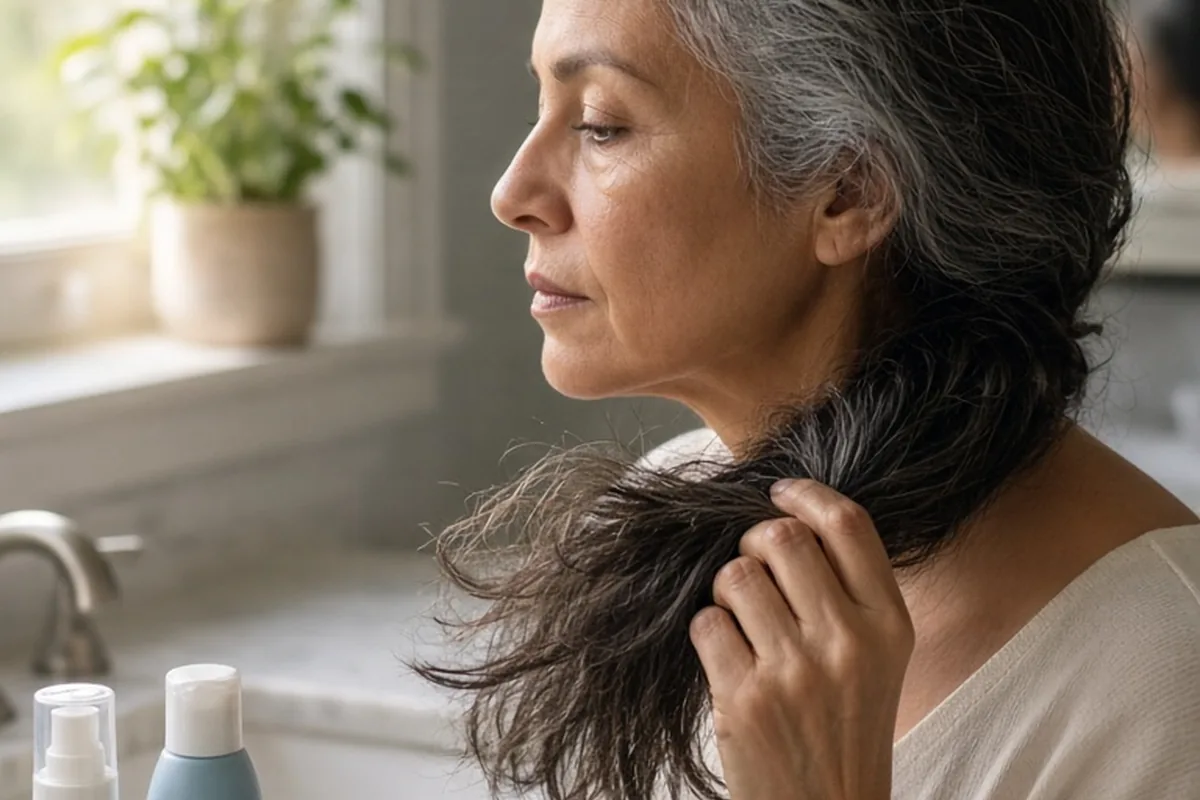
The best low porosity hair products for women over 40 prioritize lightweight hydration, gentle clarification, and cuticle-opening warmth over heavy butters. Look for water-based leave-in conditioners with humectants like glycerin, aloe vera, and panthenol, paired with mild clarifying shampoos to prevent product buildup. Because mature strands produce less natural oil yet feature tightly sealed cuticles, apply moisture using indirect steam or warm water, and seal lightly with lightweight oils like jojoba, squalane, or argan rather than heavy waxes.
Navigating low porosity hair often becomes noticeably more complex in your forties and beyond, as changing hormone levels and emerging gray strands alter your natural texture and oil distribution.
Why Low Porosity Hair Changes After Forty
Low porosity hair possesses a tightly closed, overlapping cuticle layer that resists moisture absorption. Water and liquid products tend to bead up on the hair shaft rather than penetrate it, while moisture that does manage to enter takes a long time to dry. When women enter their forties, fluctuating estrogen and progesterone levels often decrease natural sebum production from the scalp. This creates a challenging paradox: the scalp and strand surfaces feel drier, yet the cuticle remains tightly shut, causing traditional rich creams to sit on top of the hair like an oily film without providing genuine hydration.
At the same time, gray hair often begins emerging in greater volume. Gray strands lack melanin and frequently feature an even thicker, more irregular cuticle structure that feels wiry, coarse, and resistant to water. If you try to soften these stubborn hairs using thick balms or heavy styling waxes, you end up with coated, limp, or greasy strands that remain brittle underneath. Understanding that your hair requires water-based penetration techniques rather than heavier surface coatings is the foundational step in choosing the right products for mature, low porosity hair.
Cleansers That Remove Buildup Without Stripping Mature Scalps
Because low porosity hair does not absorb products easily, residual conditioners, serums, and styling aids accumulate rapidly on the exterior of the hair fiber. Over time, this buildup forms an impermeable barrier that blocks all future hydration. For women over forty, whose scalps may also experience increased sensitivity or reduced lipid production, harsh clarifying shampoos can cause excessive tightness, flaking, or irritation. The goal is to clear the slate completely without stripping away the scalp's delicate protective moisture barrier.
Incorporate a gentle, sulfate-free clarifying shampoo or an apple cider vinegar-based rinse once every two to three weeks, alternating with a mild, hydrating daily or weekly cleanser. Look for formulas containing gentle surfactants like decyl glucoside, sodium cocoyl isethionate, or cocamidopropyl betaine. Avoid co-washing exclusively; while cleansing conditioners work well for high porosity textures, they quickly coat low porosity strands with conditioning agents, causing dullness and preventing water from reaching the hair core.
Hydrating Conditioners and Leave-Ins for Low Porosity Strands
When selecting rinse-out conditioners and daily leave-in sprays, prioritize water as the first ingredient, followed by lightweight film-forming humectants. Ingredients such as vegetable glycerin, aloe vera juice, panthenol (provitamin B5), flaxseed extract, and agave nectar draw moisture directly into the hair fiber without leaving a suffocating residue. These ingredients help plump the hair strand, softening coarse gray or mature textures while maintaining natural body and movement.
Carefully inspect product ingredient labels to steer clear of heavy occlusives placed high in the formulation. Ingredients like raw shea butter, mineral oil, petroleum jelly, beeswax, and thick unrefined coconut oil tend to solidify at cooler room temperatures and block the tightly shingled cuticles of low porosity hair. Instead, choose liquid leave-in mists or light, milky lotions that spread evenly through damp hair with minimal mechanical friction, protecting delicate aging strands from unnecessary tension or breakage.
Evaluating Protein Sensitivity and Deep Treatments in Mature Hair
Low porosity hair is naturally rich in intact keratin proteins and tightly packed structural bonds. Adding excessive hydrolyzed proteins, collagen, or keratin treatments can lead to protein overload, making the hair feel stiff, straw-like, and prone to snapping. However, mature hair that has undergone chemical coloring, highlights, or heat styling does experience localized porosity variations and structural loss, meaning you should not eliminate protein entirely without assessing your hair's specific behavioral feedback.
If your hair feels mushy, overly stretchy when wet, or limp after washing, a light protein treatment containing small-molecule hydrolyzed silk, hydrolyzed wheat protein, or amino acids can restore elasticity. If your hair feels rough, brittle, or tangles easily after a deep treatment, your strands are likely overloaded with protein and need pure moisture instead. Always apply deep conditioning treatments under a thermal heat cap or warm steamer for fifteen to twenty minutes; the gentle warmth temporarily lifts the resistant cuticles, allowing the hydrating agents to sink deep into the cortex.
Styling Products and Sealants That Add Moisture Without Weighing Hair Down
Styling mature, low porosity hair requires lightweight products that provide definition, manage frizz, and impart shine without collapsing the root volume that naturally thins with age. Water-based botanical gels containing marshmallow root, slippery elm, or xanthan gum offer flexible hold while actively contributing moisture. Mousse and styling foams formulated with humectants are also excellent choices for fine-to-medium low porosity textures, offering lift at the crown alongside curl or wave definition.
When sealing in moisture after applying your leave-in conditioner, avoid heavy pomades or thick sealing butters. Instead, opt for lightweight, high-spreadability oils that feature smaller molecular weights or fast-absorbing lipid profiles. Jojoba oil closely mimics human sebum, making it ideal for dry mature scalps, while squalane, argan oil, and grapeseed oil provide glossy surface smoothing and moisture retention without leaving a greasy sheen or dragging down fine, aging hair fibers.
Application Techniques to Force Moisture into Stubborn Cuticles
Product selection represents only half the solution for low porosity hair; your application technique determines whether those products actually penetrate the hair shaft. Always apply your hydrating leave-in products while your hair is soaking wet or freshly steamed, as the presence of warm water helps soften the cuticle shingles. Working in small, manageable sections ensures that product reaches the interior layers rather than just coating the canopy, which is especially important if your hair density has shifted over time.
Utilize the praying hands method followed by gentle squishing or pulsing motions to press watery conditioners directly into the strand structure. If you need to refresh your hair between wash days, avoid spraying heavy leave-in creams onto dry hair, which merely sits on the surface and creates buildup. Instead, mist your hair lightly with warm distilled water or a botanical hydrosol to reactivate existing products before deciding whether a drop of lightweight oil is necessary to smooth dry ends.
Illustrative Scenarios
Adjusting from Heavy Butters to Lightweight Humectants
Elena, a 46-year-old teacher, noticed her emerging gray waves were becoming coarse and dry. Assuming her hair needed intensive nourishment, she switched to a heavy raw shea butter mask and a rich curl-defining cream. Within three weeks, her hair felt coated, greasy at the roots, and remarkably brittle at the ends, snapping during brushing. After learning about low porosity hair, Elena clarified her hair thoroughly to remove the waxy buildup. She replaced the thick butters with an aloe vera-based leave-in spray and incorporated a thermal heat cap during her weekly conditioning routine. Within a month, her hair regained its softness, natural bounce, and shine.
Key point: Coarseness in low porosity gray hair is rarely solved by heavy surface butters; water-based humectants combined with gentle heat deliver genuine hydration without residue.
Solving Product Buildup and Dullness on Fine Mature Strands
Renee, a 52-year-old consultant with fine, low porosity hair, was frustrated by how quickly her hair became limp and dull after washing. She had been co-washing exclusively for months to combat perceived dryness, but her hair looked stringy within hours of air drying. Renee decided to introduce a gentle, sulfate-free clarifying shampoo every two weeks to remove accumulated conditioning agents, followed by a lightweight liquid leave-in with panthenol and two drops of squalane oil on the ends. Her hair immediately regained crown volume, drying faster and retaining softness throughout the week.
Key point: Low porosity hair requires periodic clarification to clear surface films so that lightweight hydrators can reach the inner hair fiber.
Frequently asked questions
How can I tell if my hair is low porosity?
Low porosity hair takes a long time to become fully saturated with water in the shower and takes several hours to air dry completely. Products often feel like they sit on top of your strands rather than absorbing, and your hair is prone to rapid buildup that makes it feel stiff or greasy.
Why does gray hair behave like low porosity hair?
Gray hair lacks melanin pigment, and the structural cells in the cuticle layer often become more compact, rigid, and tightly aligned. This creates a dense barrier that repels water and liquid styling aids, giving gray strands a wiry, moisture-resistant feel that responds best to warmth and humectant-rich formulas.
Is coconut oil recommended for low porosity hair over 40?
Coconut oil is generally not recommended as a leave-in treatment for low porosity hair because its lauric acid penetrates the cuticle and binds tightly with natural proteins, which can make protein-sensitive or aging strands feel stiff and brittle. If you use oils, choose lighter alternatives like squalane, argan, or jojoba oil.
How often should women over 40 clarify low porosity hair?
Most women with low porosity hair benefit from clarifying once every two to three weeks. If you use styling gels, silicone-based serums, or dry shampoos regularly, you may need a gentle clarifying wash every ten to fourteen days to prevent buildup from blocking moisture.
Your next step
Examine your current hair products, set aside heavy butters and thick oils, and introduce a gentle clarifying wash followed by an aloe- or glycerin-based leave-in applied with warm water.