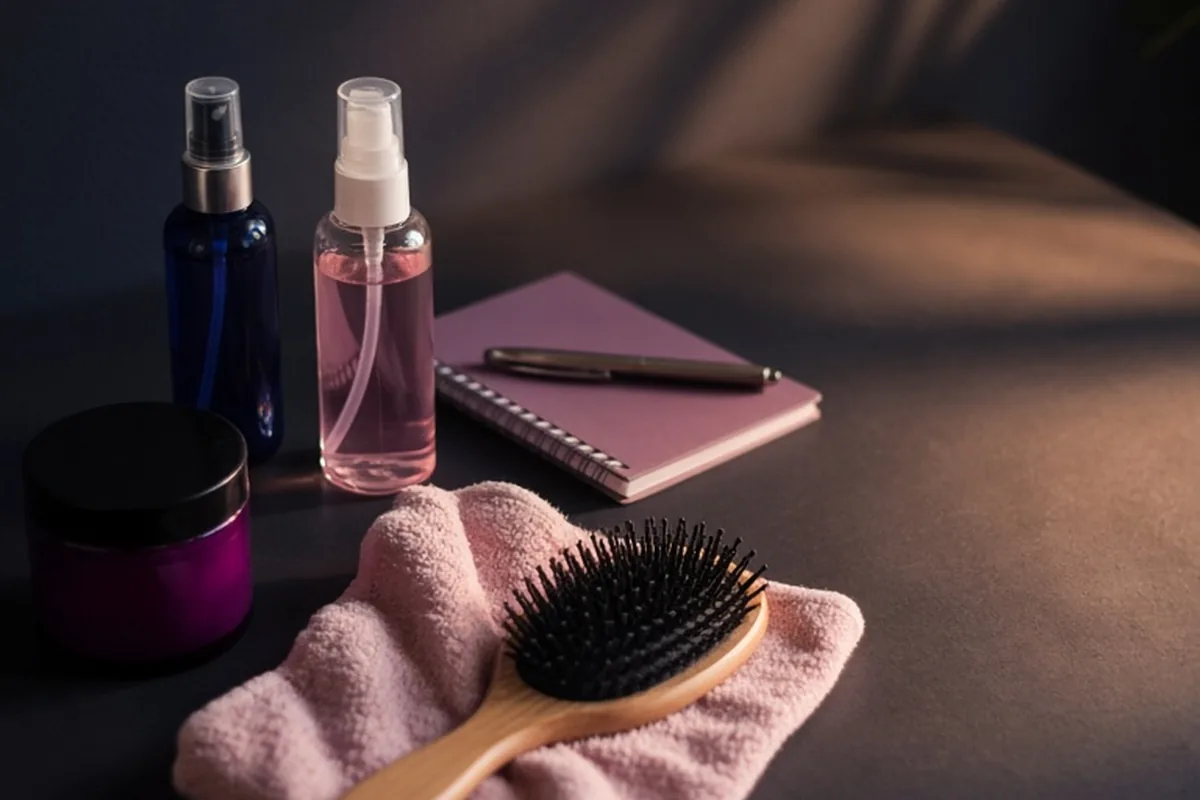
A low porosity hair products maintenance schedule balances lightweight daily moisture with structured weekly cleansing and monthly clarifying to prevent product buildup. Because tightly closed cuticles resist water absorption, an effective routine involves daily lightweight water-based leave-in mists, a weekly wash with sulfate-free shampoo and heat-assisted deep conditioning, a bi-weekly protein balance check, and a monthly chelating or clarifying wash. Pairing lightweight humectants with indirect heat opens the cuticle layer without weighing down strands.
Low porosity hair possesses tightly bound cuticle layers that lie flat and overlap closely, creating an effective natural barrier against external moisture. While this structure helps the hair retain internal hydration once absorbed, getting moisture through the closed cuticle in the first place requires deliberate product selection and precise timing. Applying heavy formulations or applying products haphazardly causes rapid buildup on the surface of the strand, leading to stiffness, dullness, and eventual breakage from dehydration.
Selecting Ingredients and Formulas for Low Porosity Cuticles
The foundation of any successful maintenance schedule is matching your product formulations to the physical structure of low porosity hair. Because the cuticle scales are compact, large molecular structures cannot penetrate the hair shaft easily. Heavy plant butters such as raw shea, cocoa butter, and thick oils like castor oil tend to sit on the exterior, coating the hair in a greasy film that blocks future moisture from entering. Instead, choose water-based products that feature lightweight humectants such as glycerin, aloe vera juice, agave nectar, and marshmallow root extract. These ingredients draw ambient water to the hair shaft without forming an impermeable barrier.
When selecting sealing oils and styling emollients, opt for lightweight, high-spreadability plant oils that have smaller molecular profiles. Jojoba oil, sweet almond oil, argan oil, and grapeseed oil provide excellent lubrication and seal the cuticle without smothering it. Film-forming humectants such as flaxseed gel and pectin provide curl definition or light hold without leaving a brittle, insoluble residue. Reviewing ingredient labels to ensure that water is the primary ingredient, followed by lightweight botanical extracts and water-soluble conditioning agents, prevents the rapid accumulation of buildup between scheduled wash days.
Daily Refresh Schedules and Moisture Maintenance
Daily maintenance for low porosity hair should prioritize hydration refreshes rather than heavy product reapplication. Layering creams, butters, and thick leave-in conditioners every morning will quickly suffocate the hair shaft, resulting in flaking and weighed-down strands. Instead, use a continuous spray bottle filled with warm distilled water or a light water-based herbal mist. The warmth of the water helps gently loosen the cuticle scales, allowing hydration to enter. Lightly mist the lengths of your hair from a moderate distance until damp, rather than soaking the hair completely.
Following your warm water mist, apply a dime-sized amount of a lightweight leave-in conditioner or two to three drops of grapeseed or argan oil smoothed over your hands using the praying hands method. This technique distributes moisture evenly without forcing excess product into concentrated patches. At night, protect your daily moisture by wearing a satin bonnet or sleeping on a silk or satin pillowcase. Friction from cotton fabrics absorbs surface moisture and roughens the delicate cuticle layer, making morning detangling more difficult and increasing the need for unnecessary product intervention.
The Weekly Low Porosity Wash Day and Heat-Assisted Conditioning Routine
A consistent weekly wash day is essential for removing environmental debris, dissolving water-soluble stylers, and deeply hydrating low porosity strands. Begin by thoroughly soaking your hair with warm water for several minutes. Low porosity hair can take a surprisingly long time to become fully saturated because water beads up on the tightly aligned cuticles. Apply a gentle, sulfate-free moisturizing shampoo to your scalp, massaging with your fingertips to lift oils and flakes without stripping the hair fiber. Rinse thoroughly with warm water to keep the cuticle softened and receptive for treatment.
Deep conditioning is the most critical phase of the weekly routine, and it requires heat to be truly effective on low porosity hair. Without heat, deep conditioners simply coat the surface and rinse down the drain. Apply a lightweight, moisturizing deep conditioner evenly from mid-lengths to ends, using a wide-tooth comb for even distribution. Cover your hair with a plastic shower cap and apply indirect heat using a thermal heat cap, a tabletop hair steamer, or a hooded dryer set to medium heat for twenty to thirty minutes. The gentle heat expands the cuticle layers, allowing humectants and conditioning agents to penetrate deep into the cortex. Finish your wash day by rinsing with lukewarm water to set the moisture inside.
Bi-Weekly Protein and Elasticity Checks
Maintaining the balance between moisture and structural protein is a delicate process for low porosity hair. Because the cuticle is already tightly bound, low porosity strands are naturally prone to protein sensitivity. Using protein-rich treatments too frequently can cause strands to become rigid, straw-like, and vulnerable to snapping. On a bi-weekly basis, assess your hair's elasticity on a clean, wet strand. Gently stretch a single shed hair strand; if it stretches slightly and returns to its original length without breaking, your protein-moisture balance is intact.
If the strand stretches excessively without bouncing back or feels mushy, your hair requires a mild, hydrolyzed protein treatment. Always select products containing hydrolyzed proteins—such as hydrolyzed silk, wheat, or keratin—because their smaller molecular size enables them to bond to the hair shaft without forming a stiff, unyielding exterior shell. If the hair feels dry, brittle, and snaps immediately when pulled, skip all protein formulations and focus entirely on deep moisture and hydration during that cycle. Alternating between pure moisturizing conditioners weekly and mild protein formulations every two to four weeks prevents overload while preserving tensile strength.
Monthly Clarifying and Hard Water Scalp Resets
Even with careful product selection, low porosity hair inevitably accumulates a micro-layer of product residue, sebum, and environmental particulates over time. A monthly clarifying wash resets the hair shaft by stripping away stubborn buildup that sulfate-free cleansers leave behind. Incorporate a dedicated clarifying shampoo once every four weeks to ensure your strands can continue absorbing water and leave-in conditioners effectively. If your hair begins to feel perpetually dry, takes twice as long to get wet, or looks dull despite recent conditioning, excessive buildup is the primary culprit.
For those living in regions with hard water, mineral deposits like calcium and magnesium can bind tightly to the hair shaft, creating an impenetrable barrier that mimics product buildup. In these situations, replace your standard monthly clarifying shampoo with a chelating shampoo containing disodium EDTA or tetrasodium EDTA. Chelating agents bond with mineral ions and rinse them away cleanly. After any clarifying or chelating treatment, always follow up immediately with a rich, heat-assisted deep conditioning session to replenish lost moisture and restore natural softness.
Seasonal Product Adjustments for Humidity and Temperature
A low porosity hair maintenance schedule must adapt to changing outdoor climates and indoor heating environments. In dry, cold winter months, simple humectants like glycerin can sometimes pull moisture out of the hair shaft into the dry surrounding air if ambient humidity is exceptionally low. During winter, reduce the proportion of simple humectants in your leave-in stylers and rely on film-forming alternatives such as aloe vera, flaxseed gel, or marshmallow root, sealing them with slightly richer emollient layers like sweet almond or jojoba oil to shield the hair from crisp air.
During warm, humid summer months, the opposite challenge occurs. High atmospheric humidity can force excessive water vapor into the cuticle, causing swelling, frizz, and loss of definition. In high humidity, switch to lightweight botanical gels that provide strong anti-humectant properties once dry, creating a flexible barrier against ambient water vapor. Keep your clarifying schedule consistent in summer, as sweat, sunscreen migration, and outdoor activities increase scalp sebum production and product breakdown.
Establishing an Evaluation Method for New Low Porosity Formulations
Introducing new products into your low porosity schedule should always be done systematically rather than changing multiple items simultaneously. When testing a new conditioner, leave-in spray, or styling gel, introduce only one product per wash cycle. This isolation allows you to observe how your hair responds over a three to five day period. If your hair develops white flakes, feels tacky, or looks greasy by day two, the new formula is likely incompatible with your existing base products or too heavy for your cuticle structure.
A reliable pre-application check is the water-cup solubility test. Mix a small dollop of your chosen leave-in conditioner or cream into a small glass of warm water and stir gently. If the product dissolves and disperses smoothly into the water, it is lightweight enough for low porosity cuticles to absorb easily. If the product clumps, floats on top, or remains stringy and insoluble, it will almost certainly sit on top of your hair strands and cause immediate buildup, indicating it should be avoided or used very sparingly.
Illustrative Scenarios
Transitioning from Heavy Creams to a Heat-Assisted Lightweight Routine
An individual with tightly coiled low porosity hair experienced persistent dryness, visible white residue, and breakage while using heavy raw shea butter creams and unrefined castor oil daily. The heavy sealants formed an impermeable layer on the flat cuticles, preventing water penetration. The routine was restructured into a monthly chelating wash, a weekly sulfate-free wash paired with twenty minutes of hooded-dryer deep conditioning using an aloe-based mask, and daily warm water mists sealed with three drops of jojoba oil.
Key point: Replacing heavy, occlusive butters with heat-activated lightweight humectants and a disciplined clarifying schedule allows moisture to penetrate tightly closed cuticles effectively.
Frequently asked questions
How often should low porosity hair be washed?
Most low porosity hair thrives on a weekly wash schedule using a gentle, sulfate-free cleanser. Washing weekly removes product residue before it forms an impermeable barrier while providing a regular opportunity for heat-assisted deep conditioning. If you exercise intensely or experience oily scalp buildup, you can wash every five to six days.
Can you use a leave-in conditioner every day on low porosity hair?
Applying a traditional cream leave-in conditioner every day is not recommended for low porosity hair because it quickly creates heavy buildup. Instead, refresh daily using warm water or a lightweight water-based spray mist, only adding a few drops of lightweight oil or a tiny dab of leave-in if your ends feel noticeably parched.
Why does conditioner sit on top of low porosity hair without soaking in?
Conditioner sits on low porosity hair because the outer cuticle scales are tightly bound and naturally repel water and large molecular agents. Without warmth to expand the cuticle, conditioning formulas cannot penetrate into the cortex, causing them to rest on the surface as a slippery or greasy coating.
What is the best way to open the hair cuticle during washing?
The most effective way to open the cuticle layer is by applying indirect heat and warm water during your deep conditioning step. Using a thermal microwaveable heat cap, a facial or hair steamer, or sitting under a hooded dryer with a shower cap for twenty to thirty minutes gently lifts the cuticle scales safely.
Your next step
Inspect the ingredient labels of your current hair products to identify any heavy raw butters or insoluble waxes, and incorporate twenty minutes of indirect heat with a thermal cap during your next weekly deep conditioning session.