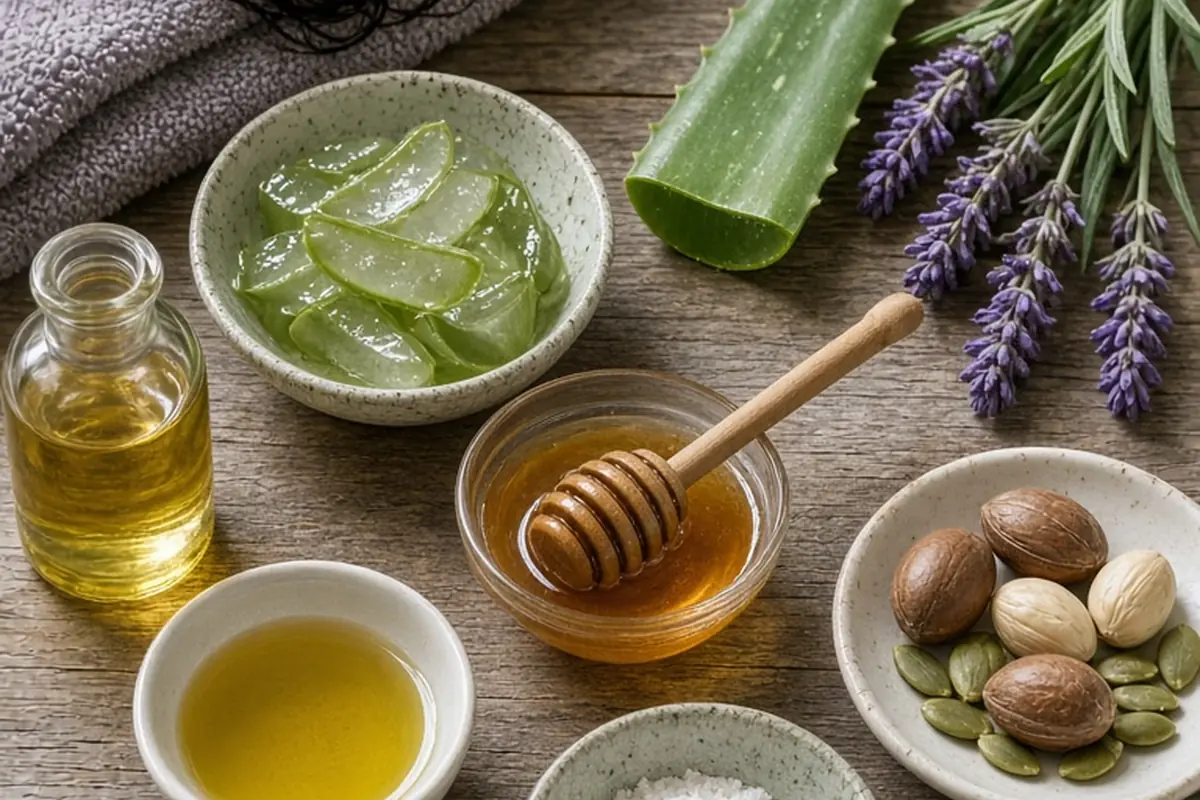
Low porosity hair requires lightweight, hydrating ingredients that can slip past tightly bound cuticles without causing surface buildup. The best product ingredients include film-forming humectants like glycerin, aloe vera, honey, and panthenol, alongside lightweight oils such as argan, jojoba, sweet almond, and grapeseed. You should generally avoid heavy, occlusive butters like pure shea or cocoa butter, thick waxes, and high concentrations of large hydrolyzed proteins, which sit on the hair shaft rather than absorbing.
Determining why a moisturizing conditioner leaves your hair feeling coated, sticky, or brittle often comes down to cuticle structure. Low porosity hair features tightly overlapping cuticle scales that resist moisture absorption while trapping heavy residue on the outside of the fiber. Choosing the right products begins with reading cosmetic ingredient labels, understanding how different molecular weights behave on the hair shaft, and selecting formulations designed to deliver water-based hydration rather than surface occlusion.
How Cuticle Architecture Governs Ingredient Absorption
Hair porosity refers to the ability of the hair fiber to absorb and retain moisture, which is governed by the structural condition of the outermost layer known as the cuticle. In low porosity hair, the cuticle scales lay completely flat, overlapping tightly in a compact, shingle-like pattern. While this dense barrier prevents internal moisture from escaping easily, it also acts as a formidable shield against incoming water, conditioning agents, and cosmetic oils. When standard formulations formulated for damaged or highly porous hair are applied, their heavier ingredients are physically unable to penetrate the interior cortex and instead dry on the exterior surface.
This structural barrier means that low porosity strands are exceptionally prone to product accumulation, dullness, and false dryness. A common mistake is attempting to treat stiff, parched low porosity hair with rich, dense formulas loaded with heavy butters and unrefined plant fats. Instead of softening the hair, these ingredients form an impermeable film that repels subsequent water applications, making the underlying fiber progressively drier over time. Formulations must be chosen based on small molecular sizing, water-soluble bases, and low surface tension to effectively work with, rather than against, a closed cuticle.
Hydrating Humectants and Penetrating Agents for Low Porosity Strands
The primary goal for low porosity hair is delivering water into the cortex and anchoring it there with water-loving compounds known as humectants. Humectants are hygroscopic substances that attract and bind water molecules from the surrounding environment and from the product itself. For low porosity textures, simple humectants such as glycerin, propylene glycol, and butylene glycol are highly effective because their small molecular structure allows them to navigate narrow cuticle gaps. Panthenol, also known as provitamin B5, is another valuable component; it acts as a penetrating humectant that diffuses into the hair shaft, helping to improve elasticity and moisture retention without leaving a detectable coating.
Film-forming humectants derived from botanical sources offer an additional layer of benefit for low porosity strands by providing moisture and slip without creating heavy buildup. Ingredients such as aloe barbadensis leaf juice, marshmallow root extract (Althaea officinalis), slippery elm bark extract, flaxseed extract, and agave nectar create a flexible, breathable, water-soluble matrix over the cuticle. This matrix prevents moisture loss through evaporation while remaining easy to rinse away during cleansing cycles, making these extracts ideal primary ingredients in daily leave-in conditioners, detanglers, and styling gels.
Lightweight Oils and Emollients That Prevent Buildup
While low porosity hair requires lipid-based emollients to seal in hydration and soften the outer fiber, the molecular weight and fatty acid profile of the chosen oil are critical. Heavy lipids remain on the surface and create a greasy, weighed-down appearance, whereas lightweight oils with balanced fatty acid profiles lubricate the cuticle without forming an impenetrable barrier. Jojoba oil is technically a liquid wax ester with a composition closely resembling human sebum, allowing it to coat the hair shaft smoothly and provide shine without creating heavy residue.
Other excellent lightweight plant oils include argan oil, sweet almond oil, grapeseed oil, baobab oil, and squalane. Grapeseed oil has a high concentration of linoleic acid, giving it a light consistency that absorbs readily into the cuticle interstices. Baobab oil and argan oil provide essential fatty acids and natural antioxidants that improve hair softness and reduce mechanical friction during styling. When evaluating product labels for serums, sealing oils, or leave-in creams, look for formulas that feature these lightweight plant oils in moderate concentrations, preferably listed in the middle or lower half of the ingredient deck rather than as the primary base.
Ingredients to Avoid or Minimize in Low Porosity Formulations
Certain ingredients frequently found in generic hair care products can create substantial challenges for low porosity hair. Dense vegetable butters, such as unrefined shea butter, cocoa butter, and mango butter, possess high melting points and dense molecular compositions. When applied in high quantities, these butters coat tightly bound cuticles in a waxy layer that repels hydration and attracts dust, lint, and atmospheric particulate matter. Pure castor oil, while beneficial for scalp massage, is similarly viscous and difficult for low porosity strands to tolerate as a leave-in treatment.
Insoluble silicones, synthetic waxes, and heavy mineral oils can also exacerbate moisture deprivation in low porosity hair if used without consistent, thorough cleansing. Dimethicone, dimethiconol, and cetearyl methicone create a durable hydrophobic layer over the cuticle. In high-porosity hair, this film can help seal gaps in damaged cuticles, but on low porosity hair, it simply locks moisture out. If you choose to use styling products containing silicones for heat protection or smoothing, opt for water-soluble variations like dimethicone copolyol, PEG-modified dimethicones, or ensure that you use a clarifying shampoo regularly to prevent compound accumulation.
Managing Protein Sensitivity and Selecting the Right Amino Acids
Low porosity hair naturally contains an intact, undamaged protein structure with few gaps or structural fissures in the cuticle. Because the internal cortex is already well-reinforced, low porosity hair is inherently prone to what is commonly termed protein overload. When products rich in large hydrolyzed proteins—such as hydrolyzed wheat protein, hydrolyzed keratin, or hydrolyzed collagen—are applied repeatedly, these large molecules attach to the cuticle exterior and harden. This outer rigidity causes the hair to feel stiff, straw-like, brittle, and prone to snapping during detangling.
This does not mean low porosity hair must entirely avoid protein, but the form and frequency of protein application must be managed carefully. If your hair is color-treated, chemically altered, or frequently heat-styled, it can benefit from smaller protein derivatives that do not sit heavily on the surface. Look for amino acids, such as silk amino acids, wheat amino acids, or hydrolyzed silk, which possess much smaller molecular weights and can integrate into minor cuticle gaps without creating a rigid outer shell. For untreated low porosity hair, protein-free moisturizing formulas should make up the core of the routine, with protein treatments reserved for occasional use when structural fatigue is detected.
Reading the INCI List for Cleansers, Surfactants, and pH Balance
Understanding how to navigate the International Nomenclature of Cosmetic Ingredients (INCI) allows you to predict how a product will perform before purchasing it. In leave-in conditioners and moisturizing treatments, water (listed as Aqua or Water) should almost always be the first ingredient, establishing a fluid, hydrating carrier. The accompanying conditioning agents should ideally be gentle fatty alcohols such as cetyl alcohol or stearyl alcohol, which provide lubrication and slip without the heavy, waxy feel associated with longer-chain compounds like behenyl alcohol or heavy lanolin derivatives.
Cleanser selection is equally important for maintaining healthy low porosity hair. Because low porosity strands are prone to buildup from styling products and environmental minerals, gentle clarifying surfactants are necessary to reset the cuticle. Look for cleansers containing sodium C14-16 olefin sulfonate or cocamidopropyl betaine paired with mild chelating agents like tetrasodium EDTA or disodium EDTA, which remove mineral deposits from hard water. Furthermore, pay attention to product pH: slightly warm water and mildly alkaline cleansing steps help loosen tight cuticles during washing, while a balanced conditioning formula with a pH of 4.5 to 5.5 helps smooth the cuticle down after hydration has been successfully introduced.
Applying Heat to Assist Ingredient Penetration During Conditioning
Even when using the most carefully formulated low porosity products, room-temperature application may not always provide sufficient penetration. Because the cuticle scales remain closed by default, thermal energy can be used as a physical tool to temporarily raise the cuticle edges and facilitate deeper ingredient entry. Applying moderate, indirect heat during a deep conditioning session with a water-based conditioner allows humectants and conditioning agents to migrate beneath the cuticle surface rather than remaining strictly on the exterior.
You can achieve this thermal activation by wearing a plastic processing cap under a heated conditioning cap, sitting under a hooded dryer for 15 to 20 minutes, or using a gentle hair steamer. Once the heat source is removed, rinsing the hair with lukewarm or cool water helps the cuticle return to its natural, flat position, effectively locking the absorbed humectants and emollients within the cortex. This practice maximizes the efficacy of lightweight ingredients and reduces the need for heavy, greasy products that weigh down low porosity hair.
Frequently asked questions
Is coconut oil suitable for low porosity hair?
Coconut oil is rich in lauric acid, a medium-chain fatty acid with a strong affinity for hair proteins that penetrates deeply into the shaft. Because low porosity hair already has an intact protein matrix, unrefined coconut oil can cause strands to feel stiff, greasy, or brittle. If you want to use coconut derivatives, fractionated coconut oil or products containing coconut-derived surfactants are typically much lighter and better tolerated.
How often should low porosity hair be clarified to remove ingredient buildup?
Most low porosity routines benefit from clarifying once every two to three weeks, depending on the number of styling products used and local water hardness. Using a gentle clarifying shampoo that removes film-forming residues and mineral scale prevents humectants from becoming blocked from entering the hair shaft.
Can low porosity hair use leave-in conditioners with shea butter?
Shea butter can be used if it appears low on the ingredient list as a minor emollient within a water-dominant formulation. However, leave-in conditioners where shea butter is one of the top three ingredients generally prove too dense and occlusive, leading to rapid buildup and reduced moisture absorption over consecutive days.
What is the best way to layer products on low porosity hair?
The Liquid-Oil-Cream (LOC) or Liquid-Cream-Oil (LCO) methods can both work, but low porosity hair usually performs best with a modified Liquid-Oil method using lightweight formulas. Start with water or a watery leave-in conditioner containing humectants, followed by a few drops of a light sealing oil like argan or jojoba, omitting thick styling creams to prevent excess weight.
Your next step
Review the ingredient labels of your current hair products, set aside formulas containing heavy butters or large hydrolyzed proteins near the top of the list, and test a lightweight, humectant-rich leave-in paired with a monthly clarifying wash.