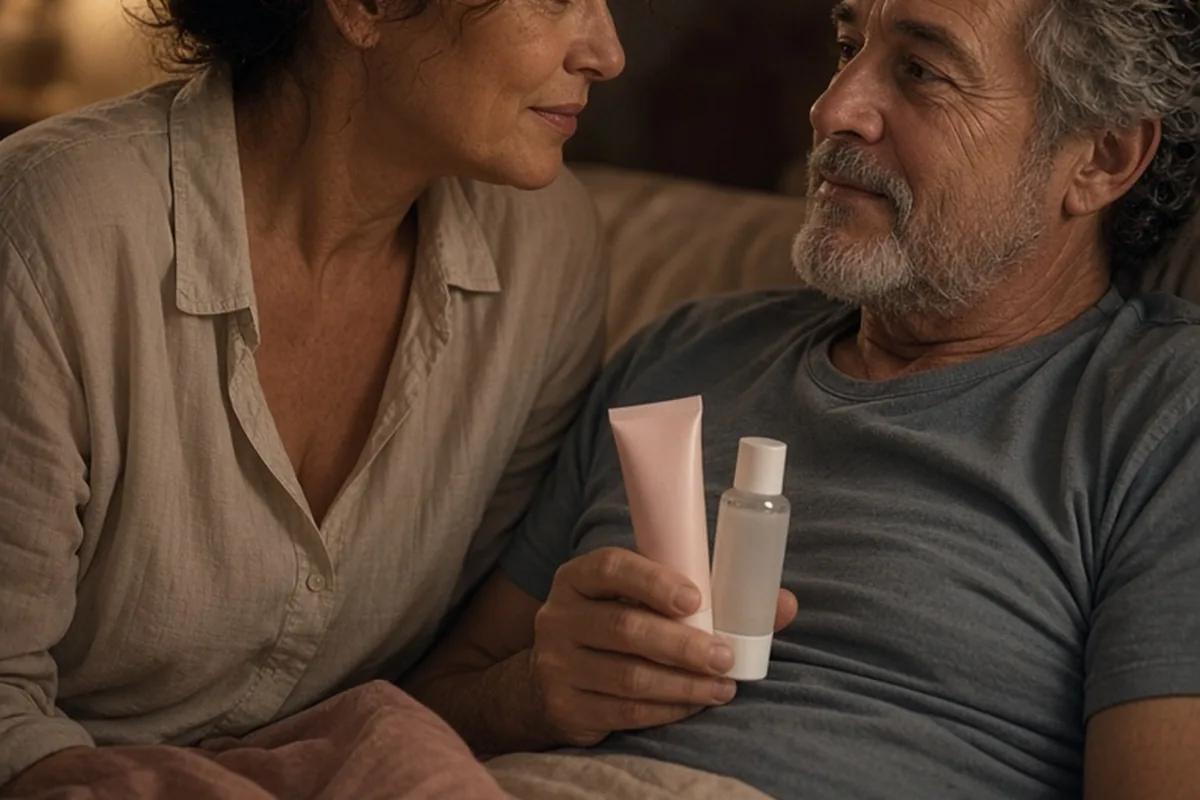
The most effective approach for menopause dryness combines regular vaginal moisturizers for baseline tissue hydration with high-quality lubricants during intimacy. Water-based lubricants with neutral pH and balanced osmolality offer gentle, versatile slip, while silicone-based formulas provide longer-lasting cushion against friction. Natural plant oils work well for external massage, provided they are not paired with latex condoms.
Navigating intimate physical changes during and after menopause often requires adjusting familiar routines to support changing comfort levels and body chemistry.
Understanding Menopausal Vaginal Dryness and Tissue Changes
During perimenopause and postmenopause, natural shifts in circulating hormone levels alter the structure and behavior of vulvovaginal tissues. As estrogen declines, the vaginal lining naturally becomes thinner, less elastic, and slower to produce spontaneous lubrication during arousal. Blood flow to the pelvic region can decrease, leading to a narrower canal and a shift toward a less acidic pH balance. These physiological adjustments mean that friction which once went unnoticed can suddenly cause burning, irritation, or superficial micro-tears.
It is essential to recognize that a reduction in natural lubrication is a physical tissue response rather than a reflection of diminished desire, attraction, or emotional connection. Many individuals find that even with intense psychological excitement, the body simply requires supplemental moisture to engage in penetrative intimacy comfortably. Normalizing this biological transition helps relieve self-consciousness, allowing partners to approach sexual wellness with practical adjustments rather than frustration or anxiety.
Lubricants Versus Vaginal Moisturizers: Knowing the Difference
Many people confuse personal lubricants with vaginal moisturizers, yet each serves a distinct role in managing menopausal dryness. Personal lubricants are designed for short-term use right before and during sexual activity, masturbation, or pelvic exams to reduce immediate surface friction. They provide instant glide across skin and mucosal membranes but are absorbed, evaporated, or washed away shortly after use.
Vaginal moisturizers, by contrast, are formulated for ongoing, therapeutic hydration to improve tissue elasticity over time. Applied regularly two to three times a week regardless of intimate activity, moisturizers adhere to the vaginal wall, slowly releasing water and binding moisture to underlying cells. For comprehensive comfort, a common regimen involves using a regular moisturizer throughout the week to ease daily itching or tightness, alongside a dedicated lubricant whenever engaging in intimacy.
Evaluating Water-Based Lubricants for Daily and Intimate Use
Water-based personal lubricants are widely accessible, easy to rinse away with plain water, and safe to use with all types of condoms, dental dams, and silicone intimacy devices. Quality water-based products are formulated with an osmolality and pH that closely mimic healthy vaginal secretions, ensuring that moisture is not pulled out of sensitive mucosal cells. They leave minimal residue on bedding and clothing, making them an approachable starting choice for general intimacy.
The primary drawback of water-based formulas for menopausal tissue is their rate of absorption and evaporation. Because thinner, drier skin absorbs moisture rapidly, water-based lubricants may become tacky or dry out during extended encounters. To manage this trade-off without causing irritation, keep a small mister of clean water nearby to reactivate the product, or apply generous amounts gradually rather than using a single small dollop at the start.
Using Silicone-Based Formulations for Long-Lasting Glide
Silicone-based lubricants, typically formulated with medical-grade dimethicone, offer a dense, silky cushion that does not absorb into the skin or dissolve in water. Because silicone remains active on the tissue surface without evaporating, it provides prolonged glide with very small amounts, making it especially beneficial for individuals experiencing severe dryness, sensitivity, or chronic chafing. It is also well-suited for use in the shower or bath, where water-based products would wash away immediately.
Despite their superior slip, silicone formulations come with specific practical limitations. They can break down and degrade silicone adult novelties over time, meaning they should only be paired with glass, metal, or hard plastic toys. Furthermore, silicone does not rinse away with water alone and requires mild soap and water for thorough cleanup, and it may leave oily spots on delicate silk or satin bed linens if not protected by a towel.
Exploring Oil-Based and Natural Options with Practical Precautions
Natural plant oils, such as organic cold-pressed coconut oil, sweet almond oil, and jojoba oil, are popular for their rich emollient qualities and nourishing texture. Many people appreciate using pure plant oils for external vulvar massage, manual stimulation, or easing external skin tightness after bathing. High-quality oil-based products provide substantial, heavy slip that lasts through unhurried intimacy without becoming sticky.
However, oil-based lubricants carry significant safety boundaries that must be respected. Mineral and plant oils degrade latex and polyisoprene materials rapidly, rendering standard barrier condoms ineffective against infections or unintended pregnancy. Additionally, oils can trap bacteria if used internally by individuals prone to bacterial vaginosis or recurrent yeast infections, so they are generally best reserved for external application or non-barrier encounters.
Ingredients to Avoid for Sensitive Menopausal Tissue
Because menopausal changes leave the vulvovaginal lining more delicate and permeable, harsh chemicals and artificial additives can quickly trigger allergic contact dermatitis, burning, or microbiome disruption. It is advisable to avoid products containing synthetic fragrances, artificial flavors, parabens, and strong preservatives like chlorhexidine. Warming, cooling, or tingling lubricants containing menthol or capsaicin can also cause intense, painful stinging on vulnerable tissues.
Pay close attention to glycerin and propylene glycol concentrations on product labels. High concentrations of these humectants can create a hyperosmolar environment, which draws essential water out of vaginal epithelial cells and increases tissue vulnerability to micro-abrasions. When testing a new brand, perform a small patch test on the inner forearm or outer labia before applying it internally to verify that your skin tolerates the formula without redness or itching.
Practical Application Techniques and Communication with Partners
How a lubricant is applied can dramatically change the intimate experience. Instead of treating lubrication as an afterthought when discomfort appears, incorporate generous application into the flow of foreplay. Warming a small amount between the palms before touching sensitive areas prevents an uncomfortable cold shock, and applying lubricant to both the receiving partner and the penetrating partner or device creates an effortless barrier against friction.
Clear, compassionate communication helps remove any lingering awkwardness surrounding lubricant use. Framing supplemental moisture as a shared tool for mutual comfort and enhanced sensation prevents either partner from feeling inadequate or pressured. Taking time to establish relaxed arousal, lengthening warm-up activities, and keeping bottles within arm's reach ensures that intimacy remains smooth, comfortable, and unhurried.
Frequently asked questions
Can I use standard body lotions or petroleum jelly for vaginal dryness?
Standard body lotions and petroleum jelly are not formulated for delicate internal membranes and often contain fragrances, emulsifiers, or thick petroleum bases that trap bacteria. Using these products internally can alter vaginal flora and cause difficult-to-treat infections, so it is safer to stick strictly to dedicated personal lubricants and vulvar moisturizers.
How often should I apply a vaginal moisturizer compared to a lubricant?
A vaginal moisturizer is typically applied internally every two to three days to maintain continuous cellular hydration and tissue elasticity throughout the week. In contrast, personal lubricants should be applied right before and during sexual activity or pelvic examinations to provide immediate glide against surface friction.
Are silicone lubricants safe to use with condoms and adult toys?
Silicone lubricants are fully compatible with latex, polyisoprene, and polyurethane condoms, providing durable protection against friction tears. However, they should not be paired with silicone-based adult toys, as the chemical interaction can degrade and pit the toy surface over time.
When should I consult a healthcare provider about dryness?
If over-the-counter moisturizers and lubricants do not relieve pain during intimacy, or if you experience persistent burning, abnormal discharge, bleeding, or urinary urgency, speak with a healthcare provider. They can evaluate underlying tissue changes and discuss targeted options such as local prescription therapies.
Your next step
Take time to review the ingredient list on your current products, select an unscented, iso-osmolar lubricant paired with a weekly moisturizer, and introduce generous application into your next intimate routine.