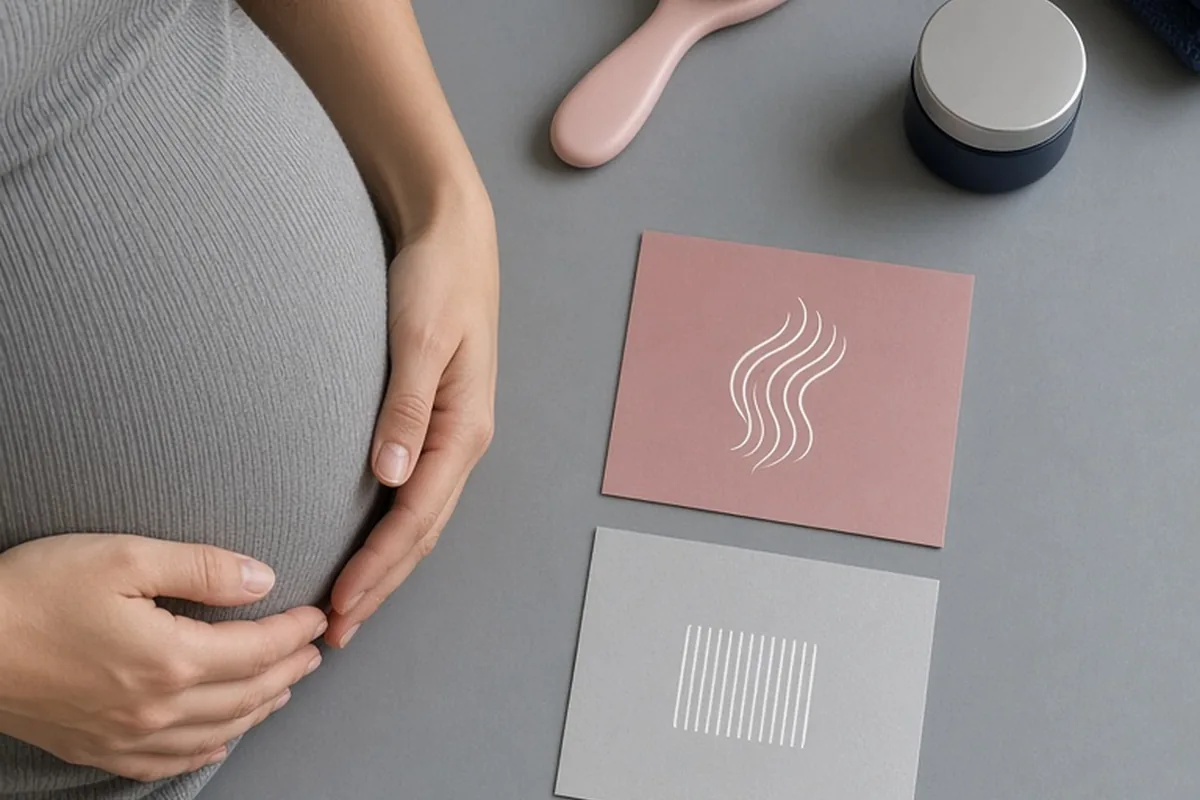
Maternity hormones significantly alter fine hair by shifting its natural growth cycle. Elevated pregnancy hormones keep hair in a prolonged growth phase, creating temporary fullness as daily shedding decreases. After childbirth, hormonal drops trigger noticeable shedding, known as telogen effluvium. Because fine strands have smaller individual diameters and break easily under heavy tension or thick products, managing these shifts requires lightweight hydration, low-manipulation styling, scalp-focused cleansing, and patience as your hair cycle stabilizes.
Experiencing hair changes during and after pregnancy can feel disorienting, particularly when fine strands already require careful handling to maintain body and avoid breakage. Learning how shifting hormonal patterns influence fine textures allows you to adapt your daily wash, styling, and cut routines for consistent comfort and lift.
Why Pregnancy and Postpartum Shift Fine Hair Growth Cycles
Fine hair is defined by the narrow diameter of each individual strand rather than the total number of hairs on your head. Because each strand possesses a thinner cortex and fewer cuticle layers than medium or coarse hair, it reacts quickly to internal biological shifts. During pregnancy, elevated levels of estrogen and progesterone prolong the anagen, or active growth, phase of the hair follicle. Under normal conditions, you naturally lose between fifty and one hundred resting hairs each day. During the second and third trimesters, this normal shedding process slows dramatically, allowing strands that would normally fall out to remain anchored in the scalp.
For people with fine hair, this prolonged growth phase often brings a welcome feeling of extra density and body. The cumulative effect of retained strands can make fine hair look fuller than it has in years, occasionally accompanied by shifts in natural oil production that make roots feel either drier or slightly oilier depending on individual hormone balance. However, this extra fullness is temporary. The hair follicles are simply holding onto strands past their standard lifespan rather than permanently altering their baseline diameter.
Following childbirth, estrogen levels drop rapidly back to pre-pregnancy levels. This abrupt hormonal shift signals the accumulated hairs to move simultaneously from the resting phase into the shedding phase, a condition termed postpartum telogen effluvium. While this shedding is a standard physiological reset rather than permanent hair loss, it often feels alarming on fine hair. Because fine strands offer less surface coverage over the scalp, diffuse shedding around the hairline, temples, and crown becomes visible much faster than it does on coarser hair textures.
Choosing Weightless Moisture and Scalp Cleansers for Delicate Strands
Fine hair requires a delicate balance between scalp cleanliness and strand hydration. Heavy cosmetic butters, thick mineral oils, and dense silicones coat fine strands, causing them to clump together and expose the scalp beneath. During pregnancy, fluctuating sebaceous gland activity can leave your scalp feeling congested while your ends remain brittle. To maintain natural movement, prioritize lightweight humectants such as vegetable glycerin, aloe vera leaf juice, and hydrolyzed rice or oat proteins that draw moisture into the hair shaft without leaving a waxy residue.
Your cleansing routine should focus on preserving scalp balance without aggressive stripping. A gentle, sulfate-free shampoo formulated for fine or color-treated hair removes daily sweat and excess sebum without dehydrating fragile follicles. If you experience increased oiliness during the first trimester, consider incorporating a mild clarifying wash once every week or two, applying it directly to the scalp while letting the lather rinse gently through the mid-lengths and ends.
When applying conditioner, keep the product concentrated strictly from the mid-shaft down to the tips, avoiding direct contact with the scalp. Rinsing thoroughly with lukewarm water ensures no conditioning agents remain at the root to weigh down fine texture. If your ends feel dry between washes, opt for a water-based leave-in mist rather than a heavy cream or oil serum to preserve root lift.
Cuts and Shapes That Maximize Density on Fine Maternity Hair
The right haircut serves as your primary defense against the limp appearance that fine hair can take on during maternity transitions. Long, heavily layered haircuts often remove too much internal weight, leaving fine ends looking sparse, translucent, and stringy. Conversely, a one-length cut or a blunt baseline perimeter creates the visual impression of thicker, denser hair by aligning all the ends along a solid structural edge.
Collarbone-length lobs, blunt bobs, and structured shoulder-length cuts are particularly practical choices during pregnancy and postpartum life. These lengths reduce the physical weight pulling down on fine roots, making it easier to achieve natural volume with minimal styling effort. If you prefer keeping some face-framing softness, ask your stylist for subtle, seamless surface layers rather than aggressive thinning shears or razor cutting, which can fray delicate fine cuticles and increase frizz.
As postpartum shedding begins around the front hairline, strategic fringe shapes can help bridge the transition. Soft curtain bangs, wispy bottleneck bangs, or a gently swept side fringe blend short regrowth hairs into the rest of your cut seamlessly. These shapes disguise uneven temple recession while new baby hairs gradually catch up to your primary hair length over several months.
Low-Tension Styling Habits to Prevent Mechanical Damage
Fine strands have lower mechanical tensile strength, making them particularly vulnerable to traction breakage when pulled tight. With the daily demands of pregnancy preparation and newborn care, reaching for a quick ponytail or messy bun is common, but tight elastic bands can snap delicate fine hairs along the hairline and nape. Constant tension also places unnecessary stress on hair follicles that may already be entering a sensitive shedding phase.
Switch from standard rubber or elastic hair ties to wide silk, satin, or soft bamboo scrunchies that distribute pressure evenly without gripping individual strands. Large claw clips with smooth, rounded interior teeth provide a secure, low-tension alternative for keeping hair up without creating tension creases or snapping fine hair at the crown. When securing hair for sleep, a loose low braid or a smooth silk pillowcase significantly reduces nocturnal friction and prevents morning tangles.
Thermal styling also requires conservative adjustments. Fine hair heats up quickly and loses moisture rapidly under high temperatures. Keep heated styling tools at moderate settings, ideally below 300 degrees Fahrenheit, and always apply a lightweight, aerosol-free thermal protection spray beforehand. Whenever possible, embrace gentle heat-free styling techniques, such as air-drying fine hair in loose soft rollers or wrapping damp hair around a plush headband for gentle waves without thermal stress.
Managing Postpartum Temple Shedding and Fine Regrowth Halos
When postpartum shedding peaks, typically between three and six months after delivery, fine hair often develops noticeable thinning along the frontal temples and front hairline. While this phase is standard and temporary, managing the visual impact can ease daily styling frustration. Shifting your natural part slightly to the side or creating a subtle zigzag part disrupts straight scalp exposure, instantly creating the appearance of broader coverage and extra root volume.
Tinted mineral root powders and scalp-matching hair fibers provide immediate, mess-free cosmetic coverage for temporarily sparse patches along the temples. These powders adhere naturally to existing fine strands and the scalp surface, softening the contrast between pale scalp skin and fine hair without clogging follicles. Tinted dry shampoos also offer dual benefits by absorbing excess oils while depositing a delicate veil of pigment that enhances root density.
As shedding subsides, short new growth will sprout along the hairline, often standing straight up in an unruly halo. Rather than using stiff gels or heavy hairsprays that make fine hair look greasy or stiff, tame these short wisps with a lightweight clear brow gel wand, an alcohol-free pomade stick applied sparingly with a clean spoolie brush, or a drop of water-based leave-in conditioner smoothed over the surface.
Ingredients and Scalp Care to Discuss with Your Doctor
Navigating hair products during pregnancy and lactation requires careful ingredient awareness. Many common over-the-counter hair growth treatments, such as minoxidil, are generally contraindicated during pregnancy and breastfeeding due to potential systemic absorption. Before introducing any dedicated hair growth serums, specialized botanical solutions, or oral hair supplements into your routine, consult directly with your obstetrician, midwife, or dermatologist to verify their safety profile.
Focus your everyday routine on safe, non-medicinal scalp health practices that support natural hair function. Gentle scalp massage using clean fingertips stimulates local blood circulation and helps distribute natural protective lipids across delicate fine roots. Avoid aggressive physical scalp scrubs with coarse walnut shells or large salt granules, which can create micro-tears on sensitive scalp skin and snap fragile fine strands near the root.
If postpartum shedding seems unusually heavy, persists past your baby's first birthday, or is accompanied by systemic symptoms like extreme fatigue, brittle nails, unexpected weight changes, or intense cold sensitivity, request a comprehensive evaluation from your primary care provider. Postpartum thyroid changes and depleted ferritin or iron levels are common contributors to prolonged hair shedding and can be diagnosed through standard blood testing.
Practical Timeline for Fine Hair Care from Pregnancy to Postpartum
Adapting your hair routine according to your pregnancy stage and postpartum recovery months helps you anticipate changes and adjust styling choices without frustration. During the first trimester, when morning sickness and fatigue often peak, streamline your hair care down to basic cleansing with a gentle shampoo and a wide-tooth comb for easy shower detangling. Focus on rest and simple, low-effort maintenance rather than complex styling regimens.
In the second and third trimesters, as hair shedding decreases and strands appear fuller, enjoy the extra density while maintaining regular split-end trims every ten to twelve weeks. Keeping your ends clean and sharp prevents splitting from traveling up the shaft, ensuring your fine hair remains resilient. This is also the ideal window to test convenient, low-tension hairstyles that you can easily recreate once your baby arrives.
During the first three months postpartum, treat your hair with extra gentleness as your body begins its hormonal reset. Wash hair when needed using lukewarm water, avoid tight updos, and sleep on a smooth pillowcase. Between months four and nine, when telogen effluvium shedding is most active, lean on lightweight texturizing mists, blunt cuts, and gentle parting adjustments. By twelve months postpartum, most follicles return to their baseline growth rhythm, allowing your natural fine hair texture and density to fully stabilize.
Frequently asked questions
Does fine hair always shed heavily after childbirth?
Most postpartum individuals experience some degree of hormonal shedding as estrogen drops, but the intensity varies from person to person. On fine hair, even mild or average shedding tends to be more visually noticeable because each individual strand covers less scalp surface area.
Can I use dry shampoo safely on fine hair during maternity?
Yes, dry shampoo is safe to use, but moderation is essential to prevent follicle congestion. Use a lightweight, residue-free formula held several inches away from roots, and ensure you wash your scalp thoroughly with a clarifying or balancing shampoo every few days to prevent product buildup.
When will fine hair return to its normal thickness after pregnancy?
Postpartum shedding typically peaks between three and six months after delivery and begins to level off as your hormone levels stabilize. Most people notice new hair growth filling in steadily, with fine hair returning close to its pre-pregnancy baseline around nine to twelve months postpartum.
Are volumizing mousses safe and effective for maternity hair changes?
Alcohol-free volumizing mousses are effective for adding structural support to fine strands without causing excessive dryness. Apply an egg-sized amount of lightweight foam through damp roots and mid-lengths before air-drying or gentle blow-drying to maximize body without weighing hair down.
Your next step
Assess your current hair products to remove heavy butters and tight elastics, replacing them with a lightweight water-based leave-in mist and soft silk scrunchies.