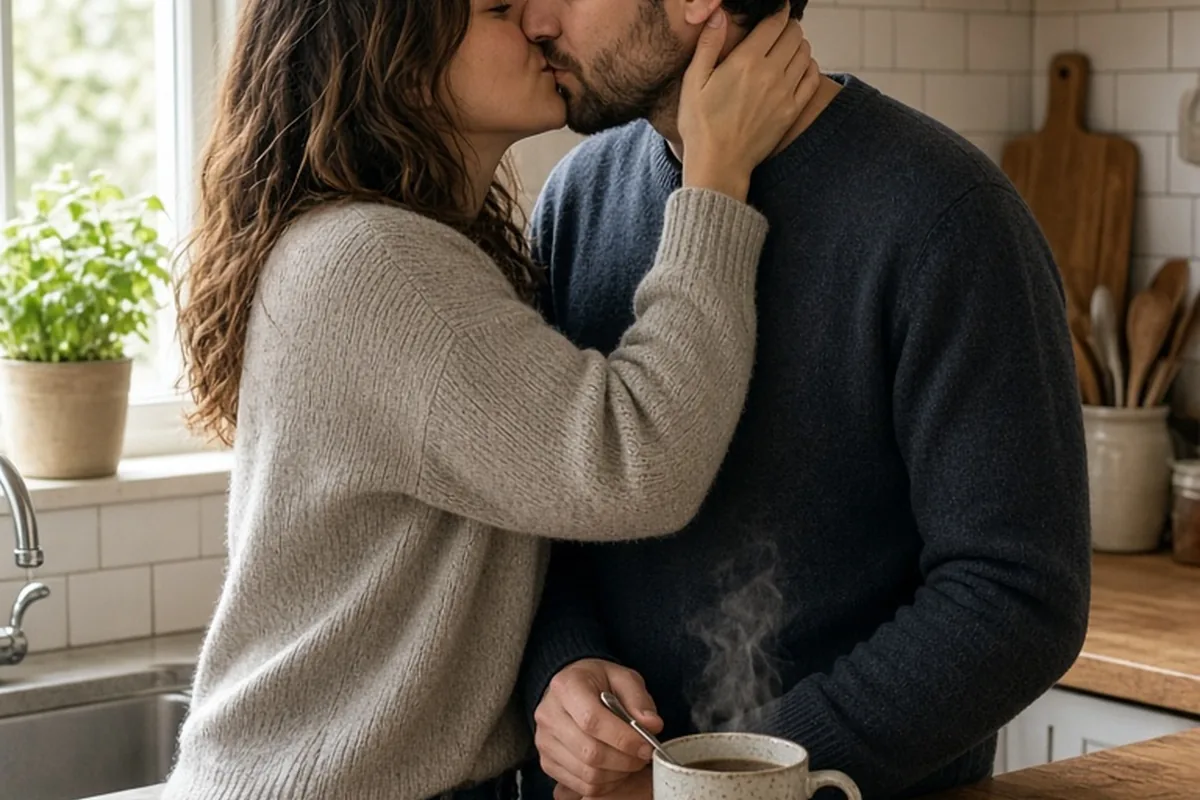
To make kissing your boyfriend memorable, focus on variety, presence, and responsiveness rather than mechanical technique. Alter your pace between slow, lingering touches and light, playful pecks. Incorporate gentle contact with his neck, jawline, or shoulders, and pay attention to how he reacts. Kisses stand out most when they reflect genuine emotional warmth, match the mood of the moment, and adapt naturally to what both partners enjoy together.
Even in close, loving partnerships, physical affection can easily settle into a predictable routine of quick hello and goodbye pecks. Introducing thoughtful variety into how and when you kiss helps reignite spontaneity, showing appreciation without needing a grand occasion.
Varying Speed, Pressure, and Rhythm to Break Routine
Kissing often turns repetitive when couples default to the same mechanical pattern every time their lips meet. If every interaction shares the exact same duration and pressure, the physical sensation fades into background comfort rather than an engaging experience. Breaking that automatic pattern starts with deliberate contrast. Rather than leaning in with your usual tempo, begin with feather-light contact on his lower lip, pausing for a breath before pulling back slightly. This gentle hesitation creates anticipation and shifts his attention fully into the physical present.
Rhythm works much like conversation: varied cadences hold interest far better than a continuous drone. You might alternate between two soft, brief pecks and a longer, sustained kiss where your breathing slows down to match his. Experimenting with firm, grounding contact followed by airy, grazing touches introduces sensory layers that feel fresh. By paying close attention to whether he matches your slower tempo or leans forward for more contact, kissing becomes an active, shared dance rather than an absentminded habit.
Integrating Hands and Body Positioning Beyond Just Lips
A truly memorable kiss engages far more than just the mouth; where you place your hands often determines the emotional weight of the encounter. Passive hands can leave a kiss feeling distant or incomplete, whereas deliberate touch anchors the connection. Gently resting your fingers along the side of his neck, cupping his jawline, or sliding a hand into the hair at the base of his head communicates focused devotion. Alternatively, placing a firm, flat palm against his chest lets him feel your physical closeness while you share a quiet moment.
Body distance also alters the tone of physical affection. Pulling him close by his waist or belt loops creates an intimate, grounded posture that brings your entire bodies into alignment. Conversely, maintaining a slight physical space while gently tilting his chin toward you creates a focused, tender dynamic. Observe how your partner responds to different placements. Some people find light touches along their collarbone or shoulders deeply soothing, while others feel most connected during a tight, secure embrace.
Catching Him Off Guard with Thoughtful Everyday Timing
The context surrounding a kiss frequently matters more than the physical technique used. Affection reserved exclusively for romantic dates or private bedroom settings can feel anticipated and compartmentalized. Unexpected kisses during ordinary daily activities stand out because they convey affection without asking for anything in return. Leaning over to kiss the side of his neck while he stirs dinner, kissing his temple while he works at his desk, or giving him a soft peck at a stoplight injects romance directly into routine living.
Spontaneity requires basic situational awareness to ensure your affection feels supportive rather than disruptive. If your partner is rushing to join a meeting or visibly stressed under a deadline, an intense kiss might feel overwhelming. Instead, a brief touch on the shoulder paired with a tender kiss to the cheek honors his immediate focus while still expressing support. Look for small, unscripted pauses throughout the day—such as the quiet moment right before stepping out of the car—to offer a lingering kiss that transforms a mundane transition into a shared memory.
Balancing Playful Teasing with Romantic Softness
Physical intimacy gains depth when you balance lighthearted fun with emotional tenderness. Playful kisses help dismantle performance pressure and invite laughter into the relationship. You can tease him gently by stepping close, making direct eye contact, leaning in until your lips nearly brush his, and then pulling back with a gentle smile to let him close the remaining gap. Scattering a quick flurry of butterfly pecks across his nose, forehead, and chin during a lazy morning creates a relaxed, joyful mood that reminds both of you not to take physical affection too seriously.
In contrast, moments of romantic softness call for stillness, vulnerability, and sustained presence. During these moments, slow down completely. Soften your facial muscles, relax your shoulders, and hold a continuous kiss without rushing into heavier physical escalation. Following a quiet kiss with a soft touch of your forehead against his, or kissing his eyelids while his eyes are closed, conveys deep emotional reassurance. Moving fluidly between playful energy and tender affection ensures that your intimacy never feels one-dimensional.
Reading Real-Time Comfort, Feedback, and Engagement
Great physical chemistry does not depend on telepathy; it relies on paying attention to clear behavioral feedback. As you kiss your boyfriend, observe how his body responds to changes in your style. When someone is fully engaged, their posture tends to soften, they return your pressure naturally, and their hands often move to hold you closer. Conversely, if he holds his breath, keeps his neck stiff, or leans slightly backward, he may be tired, stressed, or simply not in the mood for an extended kiss right then.
Recognizing these subtle cues allows you to adjust gracefully without turning ordinary hesitation into an emotional conflict. If you notice a drop in his engagement, gently ease back, offer a warm smile, and check in casually. Fluctuations in physical responsiveness are entirely normal and rarely signal a problem in the underlying relationship. Showing that you respect his current energy level and never pressure him to match your mood builds an enduring foundation of emotional safety and physical trust.
Handling Clumsy Moments and Accidental Collisions with Humor
Real-life intimacy rarely mirrors polished romantic movies; awkward angles, misjudged movements, and bumped teeth happen even to couples who have been together for years. When an awkward physical mismatch occurs—such as both leaning in the same direction or misjudging distance in dim lighting—the most reassuring response is laughter. Laughing together immediately strips away potential embarrassment and reminds both of you that physical connection is about warmth, not an audition for technical perfection.
After a minor collision, you do not need to over-apologize or treat the moment as an uncomfortable failure. Simply pause, make amused eye contact, and reset the tempo. A brief comment like taking a breath to try again, followed by a gentle, deliberate kiss, turns a momentary blunder into an endearing memory. Embracing imperfection helps your partner feel relaxed around you, freeing both of you from the anxiety of making a mistake when trying new ways to connect.
Sharing Preferences and Discovering What Your Boyfriend Enjoys
Open communication removes guesswork and allows physical intimacy to evolve naturally as your relationship matures. Rather than hoping your boyfriend intuitively knows how you like to be kissed, guide him with clear, positive reinforcement. Whispering that you love when he kisses you slowly or mentioning how nice it feels when he holds your neck provides direct validation. Positive feedback builds confidence and gives your partner clear clues about what brings you joy without making him feel critiqued.
Equally important is taking time to discover his personal preferences through low-pressure conversations. Ask casual questions outside of romantic moments, such as asking what kind of kisses he finds most comforting or exciting after a long week. Some men cherish slow, quiet affection that lets them decompress, while others appreciate spontaneous, energetic kisses. Honoring his specific responses while sharing your own ensures that physical affection remains a collaborative, deeply satisfying part of your relationship.
Illustrative Scenarios
Breaking an Automatic Doorway Routine
Elena noticed that greetings with her partner of three years had become mechanical, consisting of a brief peck while putting keys down. She worried this meant their chemistry was fading. Instead of raising an anxious conversation about lost passion, Elena chose a quiet Sunday afternoon to shift the rhythm. While he was making tea, she stood beside him, placed one hand softly on the side of his neck, made unhurried eye contact, and gave him a slow, lingering kiss on the lips before leaning her head on his shoulder. Her partner visibly relaxed and held her close.
Key point: Changing the setting, physical tempo, and touch points transforms an automatic habit into a memorable moment without requiring an intense confrontation.
Navigating Mismatched Pacing in the Car
Marcus felt overwhelmed when his boyfriend initiated rushed, intense kisses at the end of dates, which often resulted in bumped teeth and mismatched rhythms. Marcus initially thought about pulling away from physical affection altogether after dates. Instead, during their next goodbye, Marcus placed a gentle hand against his partner's chest to slow the movement, gave him a soft, sustained kiss on the lower lip, and smiled, whispering that he loved taking things slowly. His partner immediately softened his pace, creating a calm and connected goodbye.
Key point: Using gentle touch and brief verbal feedback in the moment guides pacing effectively without making your partner feel rejected.
Frequently asked questions
How can I tell if my boyfriend likes a certain kissing style?
Pay attention to whether he leans in, relaxes his posture, and matches your pressure, or if he seems distracted or pulls away. You can also ask him directly in a relaxed, casual conversation outside of intimate moments to see what he prefers.
What should I do if our kissing styles feel incompatible?
Avoid viewing differing styles as an incompatibility flaw, as rhythm and pressure are learned habits. Use gentle guidance in the moment, such as slowing down the pace with your hands, and share positive feedback when a particular kiss feels right for you.
Is deep French kissing necessary to make a kiss memorable?
Not at all. Emotional presence, gentle neck or cheek touches, and lingering slow kisses without tongue often create a much deeper, more memorable sense of intimacy than intense French kissing.
How do I handle it if my boyfriend does not seem in the mood to kiss?
Accept his reaction smoothly without taking it as personal rejection, as tiredness, work stress, or physical exhaustion frequently lower affection levels. Offer a warm smile or hold his hand instead, giving him space until he feels refreshed.
Your next step
Pick one ordinary moment today—such as saying goodbye before work or meeting in the kitchen—to slow down, place a gentle hand on his neck, and give him one unhurried, focused kiss.