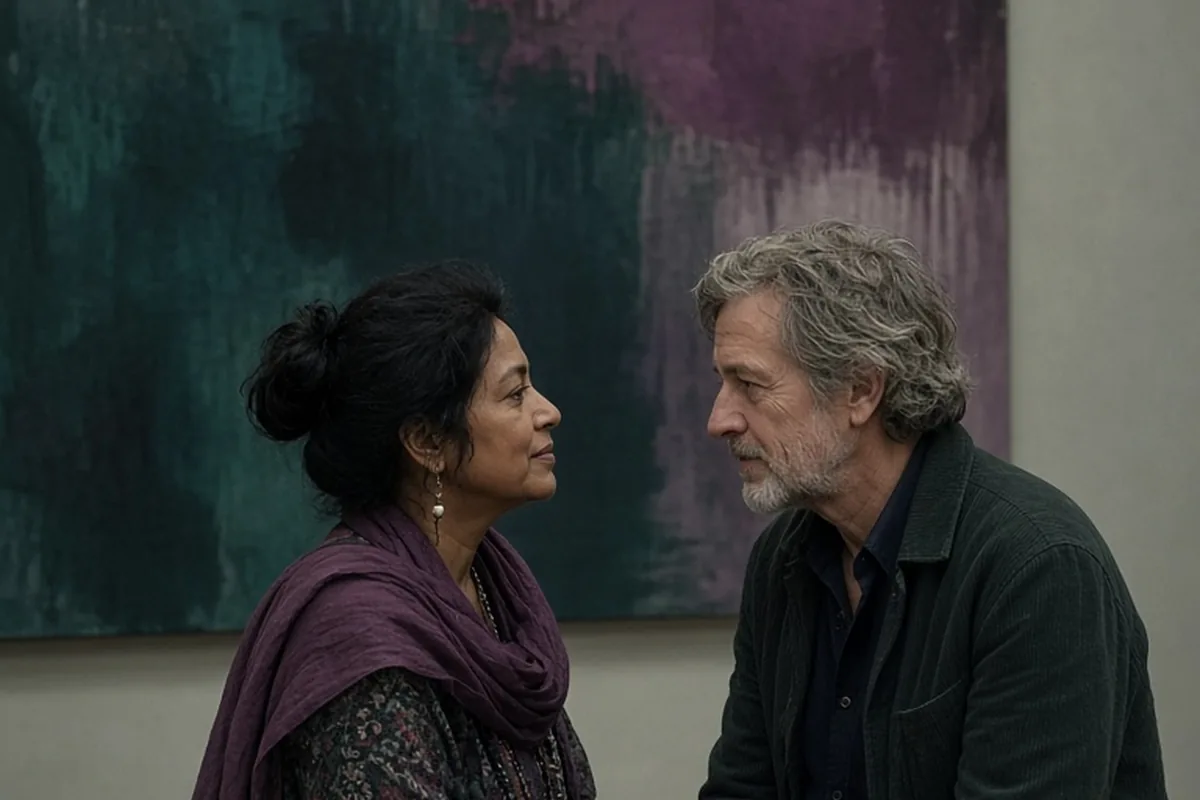
Interviews with author Mimlu Sen offer a grounded perspective on unconventional partnerships, creative companionship, and cross-cultural love. Rather than relying on traditional domestic expectations, her reflections highlight mutual autonomy, shared curiosity, and deep cultural respect. Her experiences illustrate how long-term romance thrives when two independent individuals support each other's artistic and personal journeys without attempting to control or reshape one another.
Modern dating often presents people with rigid scripts about what a serious partnership must look like, from predictable milestones to merged social circles. Exploring the reflections of author and translator Mimlu Sen provides an alternative framework, showing how two distinct people can craft a life together that honors individuality, artistic collaboration, and deep affection across cultural divides.
Redefining Partnership Beyond Standard Domestic Scripts
In many modern relationships, couples feel an unspoken pressure to conform to conventional timelines. This usually involves moving through rapid escalation phases, blending every aspect of their routines, and expecting a single romantic partner to fulfill every emotional, social, and creative role. Interviews highlighting Sen's life and work illustrate the value of shedding these rigid expectations in favor of an organic, self-defined connection. When partners stop measuring their bond against external norms, they create room for genuine compatibility to develop on its own terms.
Choosing a non-standard path requires both clarity and honest dialogue. Instead of assuming that commitment must look identical to standard domestic arrangements, couples can decide what daily proximity, shared goals, and individual space actually work for them. For instance, a couple might choose to maintain independent travel schedules, distinct workspaces, or unconventional financial structures while maintaining steadfast emotional loyalty. The trade-off is that non-traditional arrangements require ongoing communication, as there is no pre-existing blueprint to rely on when ambiguity arises.
Navigating Cultural and Background Differences with Active Curiosity
Cross-cultural relationships and partnerships across different artistic traditions frequently encounter friction when partners try to assimilate each other rather than celebrate differences. Sen's journey with Baul music and life alongside artist Paban Das Baul exemplifies the power of approaching a partner's world with humility and genuine curiosity. Rather than viewing cultural or lifestyle differences as obstacles to overcome, healthy partnerships treat those differences as opportunities for mutual expansion.
To put this into practice, one must avoid the instinct to correct or modernize a partner's habits just because they differ from one's own background. When a disagreement arises over social norms, family traditions, or personal rhythms, the most productive response is to ask clarifying questions before offering critique. For example, if your partner approaches conflict resolution or community connection through distinct cultural rituals, taking the time to understand the meaning behind those actions builds profound trust. The limitation to keep in mind is that mutual respect must remain bilateral; embracing difference never means compromising your fundamental emotional safety or core personal values.
Balancing Creative Independence with Mutual Support
One of the most persistent challenges in relationships between driven, creative, or independent individuals is preventing professional or personal competition from eroding the bond. Sen's reflections on collaboration demonstrate that two creators can work in parallel or together without diminishing one person's voice to elevate the other. This dynamic relies on an attitude of abundance, recognizing that your partner's artistic or professional triumphs do not subtract from your own accomplishments.
Fostering this balance requires establishing clear emotional and practical boundaries around personal work. Partners can support each other through active listening, administrative support, or creative feedback while maintaining complete ownership over their respective projects. A tangible example is setting aside dedicated uninterrupted hours for individual focus, followed by intentional time together where work discussions are paused. The potential pitfall occurs when one partner feels their contributions are overshadowed; addressing this early through transparent check-ins ensures that both individuals feel visible and appreciated.
Embracing Imperfection and Living with Uncertainty
Many relationship struggles stem from an insistence on total predictability. When people attempt to eliminate all risk from romance, they often resort to micromanagement, constant reassurance seeking, or excessive monitoring. Sen's life narrative highlights that adventurous, deeply fulfilling partnerships require accepting a certain degree of life's inherent unpredictability. Embracing life on the road or navigating fluctuating circumstances demands adaptability rather than rigid control.
Cultivating emotional resilience within a relationship means focusing on your own emotional regulation when external circumstances become turbulent. Instead of reacting with frustration when travel plans, career trajectories, or external environments shift, focus on maintaining a grounded and collaborative dynamic with your partner. For instance, if unexpected financial or logistical setbacks occur during a major transition, treating the challenge as a joint puzzle rather than a personal failure preserves relationship solidarity. However, living with uncertainty should not be confused with tolerating instability in trust, honesty, or basic emotional reliability.
Sustaining Romance Through Shared Adventures and Deep Engagement
Over long periods, partnerships often drift into functional maintenance mode, where daily conversations revolve strictly around chores, scheduling, and logistical duties. The insights shared in Sen's writing emphasize the necessity of maintaining shared intellectual and sensory adventures to keep passion alive. When two people continuously discover new ideas, music, places, or literature together, the relationship remains a source of vitality rather than mere routine.
Injecting intentional adventure does not require constant international travel or dramatic upheaval. It can be practiced by regularly engaging in novel experiences together, such as exploring unfamiliar neighborhoods, attending cultural performances outside your usual taste, or reading and discussing provocative books. A concrete habit is introducing one completely new shared experience each month that places both partners in the role of curious beginners. The only caveat is ensuring that both individuals genuinely want to participate, avoiding situations where one person's passion is imposed on an unwilling partner.
Maintaining Self-Respect and Grounded Autonomy
A healthy, lasting bond is composed of two whole individuals rather than two halves attempting to complete one another. Sen's public reflections repeatedly underline the importance of knowing who you are independently of your partner's identity, fame, or creative output. When an individual loses their sense of self inside a relationship, resentment inevitably follows, often masquerading as dissatisfaction with the partner.
Protecting your autonomy means maintaining your own friendships, personal hobbies, and solitary rituals, regardless of how deep your romantic attachment is. If your partner has an intense period of travel or demanding work, utilizing that time to nurture your own creative projects and personal friendships reinforces self-reliance. This approach eliminates needy behaviors and keeps the connection dynamic and attractive over decades. The trade-off is that maintaining strong autonomy requires conscious effort to regularly re-engage and reconnect, ensuring that independence does not turn into emotional detachment.
Illustrative Scenarios
Navigating Disparate Career Paths and Cultural Rhythms
Julian, an engineer raised in a traditional suburban household, began dating Ananya, a touring theater artist with deep ties to her international heritage. Early in their relationship, Julian interpreted Ananya's unpredictable schedule and vibrant, sprawling social network as a lack of serious commitment toward him. Instead of withdrawing or demanding that she adopt his structured 9-to-5 lifestyle, Julian initiated a conversation about how they could build dependable connection rituals despite irregular schedules. They established dedicated weekly check-ins and travel boundaries that honored Ananya's creative world while giving Julian the stability he valued.
Key point: Lasting compatibility comes from negotiating practical connection points that respect differing lifestyles, rather than forcing a partner into a conventional routine.
Overcoming the Urge to Control During Creative Solitude
Elena and Tomas, both freelance writers, shared a small workspace and found themselves constantly bickering over boundaries. When Tomas retreated into intense, solitary writing marathons for days at a time, Elena felt shut out and reacted with sarcastic comments about his aloofness. After reading reflections on artistic partnership, Elena realized Tomas's solitude was essential for his creative process and not a reflection of his feelings for her. She chose to focus on her own independent photography project during his writing blocks. When they reunited each evening, the tension had vanished, replaced by mutual admiration.
Key point: Respecting a partner's need for deep solitary focus allows both individuals to thrive without misinterpreting personal space as emotional neglect.
Frequently asked questions
What is the core takeaway from Mimlu Sen's perspectives on relationships?
The central insight is that enduring romance relies on radical mutual respect, cultural curiosity, and shared artistic or intellectual passion. Partnerships are strongest when both people remain autonomous individuals who choose to walk alongside one another without trying to control or reshape each other.
How can partners bridge significant differences in background or worldviews?
Couples can bridge differences by asking clarifying questions instead of making assumptions, showing active interest in each other's traditions, and refusing to rank one lifestyle as superior. Mutual respect requires both people to maintain their core values while making space for different expressions of living.
Can an unconventional relationship provide long-term emotional security?
Yes, emotional security comes from consistent honesty, follow-through, and deep mutual care rather than rigid social scripts. When partners clearly communicate their expectations and boundaries, an unconventional setup can be just as stable and fulfilling as a traditional one.
How do you avoid losing your identity when dating an intense or creative partner?
You avoid losing yourself by keeping your own creative outlets, friendships, and solitary routines active throughout the relationship. Continually investing in your personal growth ensures that you bring a complete, confident self to the partnership every day.
Your next step
Choose one area of your relationship this week where rigid expectations have caused unnecessary friction, and replace control with curiosity by having an open, non-judgmental conversation about what truly works for both of you.