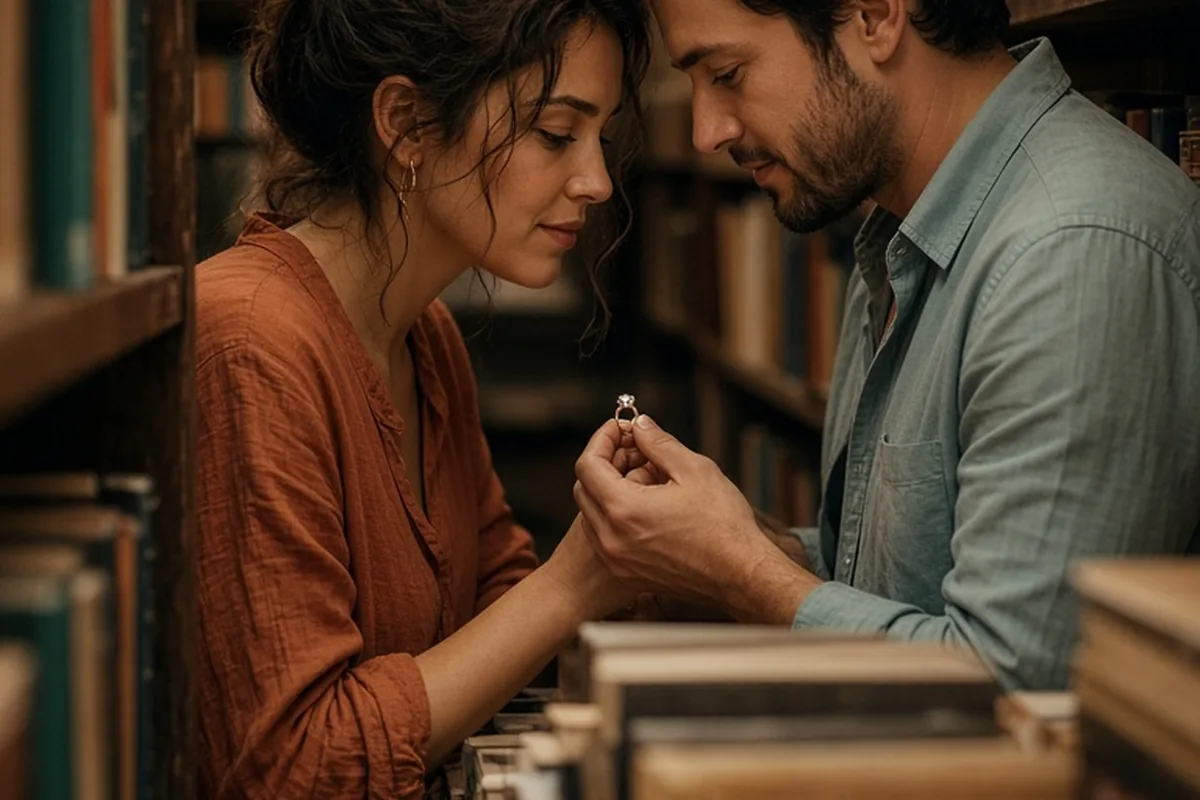
Moissanite engagement rings generally cost between four hundred and two thousand five hundred dollars for a complete finished ring. A standard one-carat equivalent stone typically runs between two hundred and five hundred dollars loose, with custom precious metal settings, intricate halo designs, or branded gemstones bringing premium options closer to fifteen hundred to three thousand dollars.
Choosing an engagement ring is one of the first major financial and emotional milestones a couple navigates together. Understanding the true price breakdown of moissanite allows you to balance personal aesthetics, durable daily wear, and long-term financial health without unnecessary guesswork.
Average Price Ranges by Carat and Stone Size
Moissanite pricing is primarily determined by millimeter dimensions and diamond equivalent weight rather than the strict rarity scales applied to mined gemstones. A half-carat equivalent round moissanite typically costs between one hundred and two hundred fifty dollars for the loose gem. When stepping up to a one-carat equivalent, which measures approximately 6.5 millimeters in diameter, buyers usually pay between two hundred fifty and six hundred dollars for the stone alone. Larger sizes offer dramatic price efficiency compared to other gems; a two-carat equivalent commonly ranges from five hundred to one thousand dollars, while three-carat and four-carat stones generally cost between eight hundred and fifteen hundred dollars.
Because lab-grown silicon carbide is produced in controlled laboratory conditions, the cost curve remains relatively linear rather than exponential. When purchasing mined diamonds, doubling the carat weight can quadruple or quintuple the price due to natural scarcity. With moissanite, moving from a one-carat to a two-carat look increases the stone price incrementally. However, choosing a significantly larger stone can sometimes alter the proportions of the ring setting, which may require thicker prongs or custom benchwork that adds separate structural costs.
How Metal Choices and Setting Styles Drive the Final Total
In many finished moissanite rings, the metal setting accounts for more than half of the total invoice. A simple four-prong solitaire band made of fourteen-karat white, yellow, or rose gold typically adds between three hundred and six hundred dollars to the final cost. Choosing eighteen-karat gold raises the price slightly due to higher gold purity, while platinum settings generally add six hundred to twelve hundred dollars. Platinum is naturally dense, hypoallergenic, and low maintenance, but its raw material and fabrication expenses significantly increase the overall budget.
Complex design features also introduce additional labor and material charges. Pave bands with tiny accent stones, hidden halos beneath the center stone, vintage filigree, and cathedral arches require extensive bench labor. Adding natural or lab diamond melee accents along the shank will typically raise the ring price by two hundred to seven hundred dollars depending on the total carat weight of the small stones. When budgeting, evaluating whether intricate detailing aligns with your partner's daily routine helps avoid paying for delicate accents that require frequent maintenance.
Moissanite Versus Diamond Pricing Realities
The cost disparity between moissanite and mined diamonds is substantial, often representing a price difference of eighty to ninety percent for comparable visual dimensions. A high-quality two-carat mined diamond with strong color and clarity grades frequently costs anywhere from twelve thousand to twenty-five thousand dollars, whereas a complete two-carat moissanite ring in a gold setting typically costs twelve hundred to two thousand dollars. Lab-grown diamonds occupy the middle ground, costing more than moissanite but significantly less than natural mined stones.
While the upfront savings of moissanite are clear, buyers should recognize the functional and optical trade-offs. Moissanite possesses a higher refractive index than diamond, creating a distinct double refraction that produces vibrant, rainbow-colored flashes of light known as fire. Some individuals love this heightened optical performance, while others prefer the deeper, white-light scintillation characteristic of diamonds. Furthermore, moissanite should never be purchased as an investment asset; like most retail jewelry, it holds minimal secondary market resale value and should be evaluated entirely on its aesthetic appeal, durability, and immediate budget compatibility.
Branded Versus Generic Gemstones
When browsing moissanite retailers, you will encounter both branded stones, such as Charles and Colvard Forever One or Harro Gem, and unbranded generic stones sourced from various domestic and overseas laboratories. Branded stones generally cost thirty to fifty percent more because the companies apply strict grading criteria for colorlessness, optical symmetry, and polish quality, often backing the product with a limited lifetime warranty covering optical clarity. A branded two-carat stone might cost eight hundred to eleven hundred dollars, whereas an unbranded equivalent of comparable quality may cost four hundred to six hundred dollars.
Opting for an unbranded stone can save substantial money, but it requires greater buyer diligence. Generic stones can vary in their color tint under indirect natural daylight, occasionally exhibiting faint greenish or yellow-gray undertones if cut from older crystal stock. If purchasing unbranded moissanite, ensure the retailer provides a clear return window and high-resolution video showing the exact stone from multiple lighting angles. Evaluating these details ensures you receive a modern, colorless crystal cut to precise optical proportions without paying solely for brand prestige.
Navigating Expectations and Shared Financial Values
Discussing ring budgets can feel intimidating when societal expectations, family opinions, or traditional benchmarks create unspoken pressure. Approaching the purchase as a collaborative financial decision allows both partners to establish clarity and mutual trust. If one partner values prioritizing a down payment on a home, funding travel, or remaining debt-free, selecting a moissanite ring can serve as an intentional lifestyle statement rather than a compromise. Open communication eliminates guesswork and ensures the piece honors personal tastes without lingering financial resentment.
A helpful strategy is to discuss ring styles, stone sizes, and lifestyle suitability openly before making an order. Many couples find that an honest conversation about center stone materials uncovers that one partner strongly prefers the durability and ethical clarity of moissanite over traditional alternatives. Framing the discussion around practical day-to-day wear, comfort, and shared long-term goals removes anxiety and keeps the engagement focused on genuine celebration rather than financial performance.
Accounting for Ring Sizing, Care, and Insurance
A complete ring budget extends beyond the initial purchase order to include long-term ownership costs. While moissanite registers at 9.25 on the Mohs hardness scale—making it exceptionally durable and resistant to scratches during daily activities—the precious metal band will experience natural wear. White gold rings require rhodium re-plating every one to three years to maintain their bright silver finish, costing between fifty and one hundred dollars per service. Platinum does not require plating but will develop a soft satin patina that occasionally requires professional buffing.
Jewelry insurance and ring sizing represent additional minor expenses. Insuring a moissanite ring typically costs between fifteen and thirty dollars per year through dedicated jewelry insurers or homeowners policies, based on the total replacement value. Sizing charges generally run between forty and one hundred dollars for simple bands, though eternity styles with pave stones wrapping entirely around the finger often cannot be resized and may require complete remanufacturing. Factoring these modest ongoing maintenance needs into your initial financial plan prevents small future surprises.
Practical Shopping Strategies to Maximize Value
To get the highest value from your ring budget, consider buying the center stone and setting from specialized online jewelers who maintain lower overhead than brick-and-mortar storefronts. Online retailers specializing in lab-grown stones often provide comprehensive custom design services and transparent pricing structures that allow you to modify band thickness, prong style, and metal purity to hit your exact target spending limit.
Another effective way to optimize your spending is selecting near-colorless grades, often labeled G to H color equivalent, if you are setting the stone in yellow gold or rose gold. The warm undertone of the precious metal naturally complements near-colorless moissanite, allowing you to save ten to twenty percent compared to strictly colorless D-E-F stones with zero visible difference to the naked eye. Pairing these thoughtful material selections with seasonal promotion periods or bundled wedding band packages creates substantial, lasting savings.
Illustrative Scenarios
Aligning Financial Goals and Stone Preferences
Marcus felt torn while preparing to propose. He assumed proposing with anything other than a traditional mined diamond might suggest he was cutting corners, yet spending three months of income on a ring would delay the couple's goal of buying their first condo. Rather than making an assumption based on pressure, he initiated a conversation about jewelry aesthetics and financial priorities. His partner shared that she loved the optical fire of moissanite and actively preferred directing their savings toward homeownership. They selected an elegant two-carat oval moissanite in an eighteen-karat gold setting for fourteen hundred dollars.
Key point: Transparent communication regarding budget and material choices prevents costly assumptions and aligns ring shopping with shared life goals.
Balancing Stone Quality with Structural Durability
Taylor found a loose three-carat equivalent moissanite online for a steep discount from an unverified overseas seller. To stay within a strict budget, he ordered an ultra-thin band from a separate discount vendor. Within four months of daily wear, the thin gold band warped, and one of the prongs loosened, causing the stone to sit unevenly. Taylor brought the ring to a local bench jeweler, who explained that the band gauge was too delicate to support a large center stone. Taylor invested three hundred dollars into a sturdy, well-engineered setting that secured the stone safely.
Key point: Budgeting must account for structural integrity and solid metal craftsmanship, not just obtaining the largest center stone at the lowest price.
Frequently asked questions
Does moissanite look fake or noticeably different from a diamond?
Moissanite has distinct optical properties, including higher dispersion and double refraction, which produce more colorful rainbow flashes than a diamond under direct sunlight. To the untrained eye in ordinary indoor lighting, high-quality colorless moissanite looks very similar to a diamond, though its unique sparkle becomes more pronounced in stones larger than two carats.
Will a moissanite engagement ring maintain its sparkle over a lifetime?
Yes, moissanite will not turn cloudy, fade, or lose its brilliance over time because the crystal structure is stable and resistant to heat and chemicals. Any temporary dullness is usually caused by routine surface buildup from lotion, soaps, or skin oils, which can be easily restored with warm soapy water and a soft toothbrush.
Does moissanite hold resale value if we decide to upgrade later?
Moissanite has very low secondary resale value, similar to most lab-created gemstones and contemporary retail jewelry. If you plan to sell or trade the ring in the future, expect to recover only a fraction of the original purchase price, primarily derived from the scrap value of the precious metal setting.
What is the most budget-friendly metal to pair with a moissanite center stone?
Fourteen-karat gold, whether yellow, rose, or white, offers the most balanced combination of affordability, everyday strength, and classic appearance. Sterling silver is cheaper upfront but is generally too soft for a lifetime engagement ring and requires frequent maintenance.
Your next step
Sit down with your partner this week for a brief, open discussion about your shared jewelry budget, aesthetic preferences, and metal choices before browsing specific retailers.