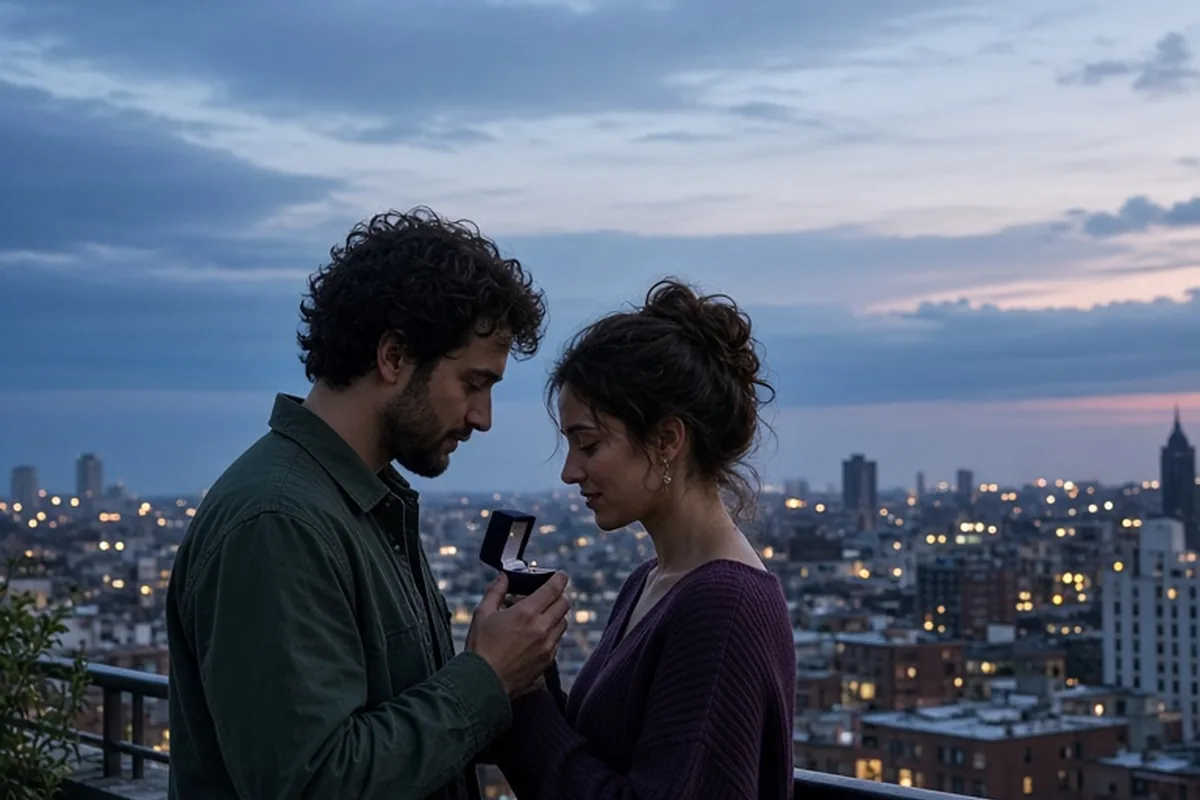
A typical moissanite engagement ring costs between $700 and $2,500 for a complete piece set in 14-karat gold or platinum with a 1-to-2-carat diamond equivalent center stone. Loose moissanite gems generally run between $200 and $900 depending on size and cut quality. Final pricing hinges mainly on metal choice, setting complexity, and whether you purchase through an independent jeweler or a branded specialty retailer.
Choosing an engagement ring involves balancing emotional significance with practical financial realities. Moissanite has evolved from an obscure diamond alternative into an intentional, stylish choice for couples who value durability, intense fire, and financial flexibility as they build a shared future.
Average Cost Breakdown by Carat and Size Equivalence
Moissanite pricing is structured primarily around millimeter measurements rather than raw carat weight because silicon carbide is roughly 15 percent lighter than carbon diamond. Jewelers use diamond equivalent weight, or DEW, to give buyers a familiar visual benchmark. A standard 6.5-millimeter round moissanite, which visually matches a 1.0-carat diamond, generally costs between $200 and $450 as a loose gemstone. Increasing to an 8.0-millimeter stone, equivalent to a 2.0-carat diamond, raises the stone cost to approximately $450 to $850. Larger center stones measuring 9.0 millimeters or more, equivalent to 3.0 carats and upward, typically range from $850 to $1,400.
Unlike mined diamonds, where prices climb exponentially at full-carat milestones due to natural rarity, moissanite maintains a gradual, predictable price curve. This allows you to select a stone size that complements your partner's hand and personal taste rather than feeling boxed in by dramatic cost cliffs. The practical trade-off lies in visual optics: moissanites larger than 2.5 carats display pronounced optical dispersion, generating colorful rainbow flashes under direct sunlight. Some wearers love this vibrant fire, while others feel an oversized stone looks less understated in everyday settings.
How Setting Metals and Craftsmanship Influence the Price
While the center gem attracts the most initial attention, the mounting often represents 40 to 60 percent of your total invoice. A classic, four-prong solitaire band crafted in 14-karat white, yellow, or rose gold typically adds between $400 and $900 to your overall cost. Opting for 18-karat gold or switching to dense, hypoallergenic platinum increases the setting expense to roughly $800 to $1,800. Platinum requires specialized bench tools and experienced craftsmanship, which drives up labor charges, but it offers superior security for holding the center stone securely over decades.
Elaborate design details introduce additional labor and material expenses that change the final total quickly. Adding a hidden halo, pavé diamond accents along the band, milgrain edging, or a split-shank framework can tack on another $300 to $1,000. For instance, pairing a modest $400 moissanite with an intricate, custom-cast platinum halo setting can produce a $2,200 ring. The trade-off here is balancing visual complexity against long-term maintenance; ultra-thin bands with delicate accent stones require more frequent prong checks and gentle handling than sturdy solitaire bands.
Retail Brands, Online Artisans, and Sourcing Strategies
Where you buy your ring has an undeniable impact on the final retail markup. Legacy brand names with established national footprints often price complete moissanite rings in the $1,500 to $3,500 range, factoring in substantial showroom overhead, marketing campaigns, and brand-name warranties. In contrast, specialized online jewelers and domestic independent artisans frequently sell comparable colorless moissanite rings mounted in solid gold for $800 to $1,800. These direct-to-consumer studios offer tighter pricing margins and personalized customer service.
Overseas wholesale marketplaces often present listings under $400 for complete rings, but these steep discounts carry significant practical risks. Budget imports frequently feature overly thin bands prone to bending, hollowed-out shanks, or poorly set prongs that loosen within months. Working with an established domestic studio or a reputable local jeweler ensures you receive solid precious metals, proper hallmark stamps, accurate sizing, and accessible support if a prong ever needs adjustment.
Moissanite Versus Lab-Grown Diamonds in Today's Market
Shifts in synthetic gemstone manufacturing have brought lab-grown diamonds into direct price competition with premium moissanite. A one-carat lab-grown diamond can now be sourced for $500 to $1,000 loose, narrowing what was once a vast financial gulf between the two options. Because upfront cost alone is no longer the sole deciding factor, buyers must consider material properties, daily wearability, and optical identity. Moissanite is a distinct silicon carbide mineral with a higher refractive index than diamond, meaning it produces sharper brilliance and more vivid spectral fire.
The essential trade-off comes down to aesthetic intention and how you both talk about the piece. If your partner desires a traditional diamond appearance without any perceived departure in sparkle pattern, a lab-grown diamond prevents second-guessing or awkward explanations to friends and relatives. If your partner values space-age material history, maximum sparkle, and an ethical stone that stands proudly on its own merits without imitating anything else, moissanite remains a brilliant and durable choice.
Navigating the Engagement Ring Conversation as a Team
Ring shopping carries emotional weight that can easily generate unspoken friction if expectations remain unvoiced. Men and purchasing partners often feel intense pressure to perform, operating under outdated rules suggesting that spending several months of salary measures their commitment. Approaching the ring as an early exercise in joint financial planning replaces performance anxiety with mutual alignment. A direct conversation about aesthetic preferences, ring profiles, and comfortable spending levels ensures no one ends up carrying silent resentment or private financial panic.
Consider framing the purchase around broader life goals rather than an isolated jewelry expenditure. Choosing a beautiful $1,500 moissanite ring over a $9,000 mined diamond frees up substantial capital for a house down payment, a retirement account, or an unforgettable honeymoon trip. When both partners participate in setting boundaries and selecting materials, wearing the ring becomes a shared statement of smart teamwork rather than an exercise in keeping up appearances.
Durability, Maintenance, and Long-Term Ownership Expenses
An engagement ring is a daily-wear piece of personal hardware exposed to friction, door frames, and household chemicals. Moissanite rates 9.25 on the Mohs hardness scale, making it second only to diamond in durability. It easily outlasts softer alternatives such as morganite, emerald, or cubic zirconia, which scratch, chip, or cloud under regular wear. Moissanite will never become permanently cloudy or lose its inner fire, though it can accumulate an oily film from hand creams and body soaps that rinses away clean with mild dish liquid and a soft brush.
Ongoing ownership costs for moissanite are minimal. Insuring a $1,500 to $2,500 ring through a jewelry specialty insurer or adding a personal property rider to your existing tenant or home insurance usually runs between $20 and $50 annually. Periodic maintenance involves standard bench work: having prongs inspected once a year and paying $40 to $70 every few years for cleaning, polishing, or rhodium re-plating on white gold bands. These modest expenses keep the piece looking pristine across decades of daily wear.
Illustrative Scenarios
Overcoming Showroom Pressure
Julian stood at a traditional jewelry counter feeling defensive after a sales representative hinted that choosing moissanite suggested a lack of seriousness about his engagement. Julian felt tempted to finance an expensive diamond ring on credit simply to prove his financial capability and protect his ego. Recognizing his gut reaction, he paused the transaction and initiated a transparent dinner conversation with his partner, Maya. She immediately reaffirmed that ethical sourcing and debt-free living were her top priorities, expressing complete enthusiasm for moissanite. Julian ordered an elegant 1.8-carat equivalent oval moissanite from an independent designer for $1,600, paying entirely in cash.
Key point: True confidence comes from honoring shared relationship priorities rather than caving to commercial guilt or third-party judgment.
Balancing Carat Equivalent with Daily Comfort
Evan and Claire spent weeks debating ring designs online, with Evan pushing to order a 3.5-carat equivalent moissanite because the competitive pricing made a huge stone affordable within their $2,000 budget. Claire worried the oversized gem would look exaggerated on her slender fingers and snag on her nursing scrubs during hospital shifts. Rather than letting the debate linger, they purchased inexpensive cubic zirconia trial rings in several millimeter sizes to wear around the apartment for four days. Experiencing the proportions firsthand helped Evan realize that an understated 1.5-carat equivalent round cut offered the ideal balance of elegance, sparkle, and daily practicality.
Key point: Physical proportions and daily comfort matter far more than buying the largest stone your available budget can secure.
Frequently asked questions
Does a moissanite stone look noticeably different from a diamond?
Moissanite has a higher refractive index and double refraction, which produces more intense, rainbow-colored flashes of light than a diamond, especially in bright sunlight or larger sizes. In stones under two carats and in typical indoor lighting, most observers cannot distinguish between a well-cut moissanite and a traditional diamond.
Can a local jeweler resize or repair a moissanite engagement ring?
Yes, bench jewelers can resize moissanite rings and tighten prongs using standard jewelry tools. Jewelers simply need to protect the stone from direct high-heat torch exposure during heavy soldering, as extreme temperatures can temporarily alter the stone's color.
Will a moissanite gemstone lose its sparkle or turn cloudy over time?
No, moissanite is an exceptionally stable crystalline material that will never fade, degrade, or permanently cloud over time. Any visible dullness is almost always caused by surface residue from lotions, oils, or soaps, which washes off completely with warm soapy water and a soft toothbrush.
What is the most practical way to budget for a moissanite engagement ring?
Determine a firm total spending cap that you can pay in cash without draining your emergency savings or carrying credit card balances. Allocate roughly half of that figure to a sturdy, well-crafted precious metal setting, dedicating the remainder to a colorless, professionally cut center stone.
Your next step
Before comparing stone shapes or shopping jewelers, sit down together to establish a comfortable cash budget and decide whether daily durability, stone proportions, or long-term financial flexibility matters most to both of you.