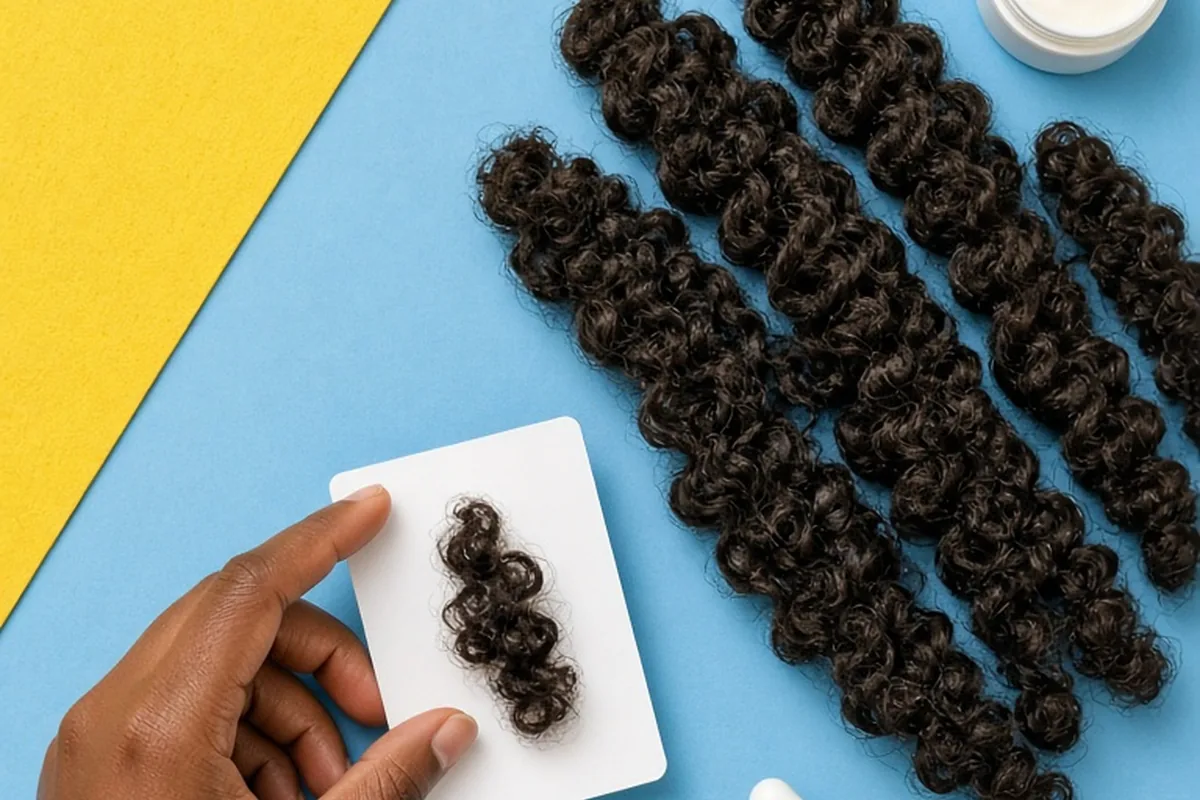
The most effective moisturizer for Black curly hair is a water-based leave-in or cream where water or aloe vera is the first ingredient, backed by humectants like glycerin and sealed with nourishing plant oils or butters. Because natural scalp oils struggle to travel down curved hair shafts, curly textures require deliberate hydration paired with an occlusive layer to prevent moisture from evaporating throughout the week.
Caring for textured curls requires an approach rooted in how coiled strands behave. The bends and spirals that give curly and coily hair its distinct shape also make it harder for natural sebum to travel from root to tip, leaving mid-lengths and ends vulnerable to chronic dryness, friction, and breakage.
Matching Moisturizers to Your Hair Porosity and Curl Pattern
While curl shape determines how light bounces off your hair and how strands interlock, hair porosity dictates how moisture actually enters and exits the shaft. Porosity measures how open or closed the outer cuticle layer sits along each individual strand. Low-porosity curls have tightly overlapping, shingle-like cuticles that resist water absorption. If you apply a dense, butter-heavy cream to low-porosity hair, the product frequently sits on the outside of the hair fiber, feeling greasy to the touch while leaving the internal cortex dry and brittle.
High-porosity hair features cuticles with gaps, chips, or lifted edges, often caused by mechanical friction, heat tools, color processing, or genetic structure. These strands take in water instantly, becoming thoroughly soaked within seconds of stepping into a shower, but they lose that moisture just as rapidly through ambient evaporation. Medium-porosity hair sits in the middle, allowing water to enter steadily and retain hydration with moderate maintenance.
To select the correct moisturizer, pair your curl diameter with your porosity level. Fine curly strands, regardless of whether they fall into a loose 3A ringlet or a tighter 3C coil, become easily weighed down by heavy vegetable shortenings, pure shea butter, or thick castor oil. They perform best with lightweight, milk-based moisturizers containing water, cetyl alcohol, and lighter plant oils such as jojoba or grapeseed. Coarser strands with thick individual fibers benefit significantly from richer emulsified creams that supply substantial weight and structural coating.
What Ingredients Actually Hydrate Black Curly Hair
True hair hydration comes solely from water. Oils, butters, and silicone serums do not hydrate hair; they lubricate the cuticle surface and form a mechanical barrier that slows down water evaporation. When reading an ingredient list for a daily or leave-in moisturizer, water, aloe barbadensis leaf juice, or an herbal water infusion should always appear as the very first ingredient. If an oil, petroleum derivative, or wax leads the list, the product functions as a sealant rather than a moisturizing treatment.
Beyond water, effective moisturizers balance three distinct cosmetic components: humectants, emollients, and occlusives. Humectants are small molecular compounds that bind to water molecules, pulling them into the outer layers of the hair fiber. Common humectants include glycerin, propylene glycol, panthenol (provitamin B5), agave nectar, and sodium PCA. Emollients soften the hair shaft, smoothing down jagged cuticle edges to improve elasticity and detangling slip. Look for fatty alcohols such as cetearyl alcohol, stearyl alcohol, and cetyl alcohol, as well as plant lipids like avocado oil and argan oil.
Occlusives form the protective finish that holds water inside the hair. Heavy plant butters, such as unrefined shea butter, mango seed butter, and cocoa butter, alongside heavier oils like Jamaican black castor oil, excel in this role. The goal of a well-formulated curl moisturizer is not to eliminate any of these categories, but to blend them in ratios that support your individual hair density and daily styling habits.
The LOC and LCO Methods for Retaining Hydration
Applying a moisturizer haphazardly to dry, styled hair rarely produces long-lasting softness. Instead, structured layering ensures hydration penetrates deeply and stays trapped inside the cortex. The two standard layering systems in textured haircare are the LOC method (Liquid, Oil, Cream) and the LCO method (Liquid, Cream, Oil). Both approaches operate on the principle that the smallest molecules must be applied first, followed progressively by denser, more occlusive barriers.
The liquid phase should consist of clean tap water or a thin, water-based leave-in conditioner applied to clean, damp strands. If your hair is low-porosity, applying warm water opens the cuticle slightly, preparing it to receive nutrients. The LCO method applies a water-based moisturizing cream directly after the liquid phase, finishing with a pure oil or butter to lock the cream into the fiber. This sequencing is particularly beneficial for low-porosity and normal-porosity curls because the water-soluble cream can absorb fully before encountering an impermeable oil film.
The LOC method places a thin layer of oil directly over the damp hair before working a rich styling cream over the top. This technique suits high-porosity hair and very tight, coarse coils that struggle to hold onto water for more than twenty-four hours. The intermediate oil layer acts as a buffer, preventing the moisture absorbed during the liquid phase from rapidly diffusing out into dry indoor air before the protective butter cream settles.
Daily Leave-Ins, Milk Lotions, and Heavy Butters Compared
Navigating the product aisle requires understanding the practical difference between consistency formats. Leave-in conditioners typically have a fluid, watery or light serum consistency. They provide moderate slip, balance the hair's surface pH after washing, and deliver a clean dose of water-soluble conditioning agents without building up on the scalp. Leave-ins work best as base foundations right after wash day or as light morning refreshing sprays to revive dormant curl patterns.
Moisturizing hair milks and lotions occupy a middle ground. Formulated with a balanced emulsion of water, fatty alcohols, and modest oil concentrations, they provide noticeable slip and flexibility. A hair milk is ideal for mid-week hydration on wash-and-go styles, twist-outs, or braided styles where you need to soften the hair without causing the curl pattern to shrink excessively from pure water exposure.
Heavy hair butters and pomades contain high percentages of solidified vegetable fats, waxes, or thick seed oils. These products do not penetrate the hair cuticle easily; instead, they coat the exterior, providing high mechanical protection against friction from shirt collars, hats, and pillows. Heavy butters are exceptional for sealing ends during protective styling, such as box braids, flat twists, and cornrows, but they should generally be avoided directly at the scalp or on fine hair textures that easily collapse under excess weight.
Adjusting Your Moisturizing Routine Across Changing Climates
A moisturizer that leaves your curls defined and supple in July may leave them brittle or sticky in December. This shift occurs because environmental humidity dramatically alters how humectants behave. In moderate to high humidity, humectants pull ambient moisture from the surrounding air directly into the hair fiber, keeping curls naturally pliable. However, when outdoor temperatures drop or indoor central heating drops indoor humidity below roughly thirty percent, the dry ambient air reverses this process.
In dry conditions, strong humectants like pure glycerin can begin pulling water out of the moist hair cortex toward the dry atmosphere, accelerating dehydration. If you notice your hair feeling crunchy or straw-like during winter despite regular moisturizing, inspect your daily product labels. Switching to a formula that minimizes simple glycerin in favor of film-forming humectants, such as marshmallow root extract, flaxseed gel, or hydroxyethylcellulose, helps maintain curl integrity without stripping moisture.
Conversely, in tropical or intensely humid summer weather, high concentrations of simple humectants can cause curly hair to absorb too much environmental water. This phenomenon, known as moisture overload or hygral fatigue, leads to swollen cuticles, loss of curl definition, and excessive frizz. During humid months, prioritize lighter emollients and sealing oils that resist exterior vapor absorption while preserving internal balance.
Balancing Moisture Retention With Scalp Health and Buildup
One of the most persistent issues in curly haircare is mistaking product accumulation for natural hydration. When heavy leave-ins, creams, and botanical oils are reapplied daily without periodic removal, they form an occlusive film over both the hair strand and the scalp skin. Over several weeks, this buildup prevents new moisture from entering the cuticle, creating a cycle where hair feels increasingly dry, prompting the user to apply even more cream.
Furthermore, applying thick hair moisturizers directly onto the scalp disrupts the skin's natural microenvironment. The scalp produces its own sebum and sheds skin cells continuously. Smothering the scalp with rich plant butters can trap yeast and bacteria against the follicle, contributing to itching, irritation, and flaking. Moisturizers belong on the hair shaft, starting at least one inch away from the roots, with the densest concentration placed on the fragile, oldest ends of your curls.
To keep your moisture routine effective, integrate a clarifying or chelating shampoo every three to four weeks, followed by a thorough deep conditioning treatment. Clarifying strips away stubborn silicone films, mineral deposits from hard water, and dried butter layers. Once the hair fiber is clean, fresh water and conditioning agents can access the cortex unimpeded, restoring true elasticity and bounce to your curl pattern.
How to Test a New Moisturizer Before Committing to a Full Wash Day
Introducing a new moisturizing cream to your routine can lead to unexpected frustration if the product flakes, pills, or reacts poorly with your existing styling gels. Cosmetic products use varying emulsifier systems and polymers; when two incompatible formulas mix, the proteins or synthetic thickeners can curdle into small white balls across your curls, requiring an unplanned full wash.
Perform a simple compatibility check on the back of your hand before wash day. Place a dime-sized dollop of your chosen leave-in or moisturizer on your skin, add an equal amount of your favorite styling gel or mousse, and swirl them together with your fingertip. If the mixture blends smoothly into a uniform, translucent or creamy liquid, the products will work cohesively in your hair. If the mixture separates, becomes gritty, or forms rubbery white flecks within thirty seconds, do not layer them together on your hair.
Once a product passes the hand check, test it on a single two-inch section of hair near the back of your head on your next wash day. Apply your water, moisturizer, and styler as planned, then let that section air dry completely. Evaluate how the strand feels after forty-eight hours. If the curl remains flexible, soft, and free of sticky residue or white crusting, the formulation is compatible with your hair density and existing product lineup.
Frequently asked questions
How often should I moisturize Black curly hair?
Most curly and coily textures benefit from thorough moisturization every two to four days, depending on environmental humidity and hair porosity. If your hair feels dry to the touch, spritz it lightly with water or a liquid leave-in before smoothing a small amount of cream over your ends. Avoid saturating the hair with heavy butter products every single day, as this leads to rapid buildup.
Can I use hair oil as my primary moisturizer?
No, pure hair oils do not moisturize hair because they contain no water. Oils act as lubricants and sealants that trap existing water inside the hair cuticle or smooth down rough outer layers. Applying oil directly to dry curls without water creates a waterproof barrier that actually blocks ambient hydration from entering the strand.
What is the difference between a leave-in conditioner and a daily moisturizing cream?
Leave-in conditioners have a lighter consistency dominated by water and slip agents designed to detangle, balance pH, and prime damp hair immediately after washing. Moisturizing creams are thicker emulsions containing higher levels of fatty alcohols, plant oils, and butters designed to provide longer-lasting softness and moisture retention between washes.
Why does my hair feel crunchy after applying moisturizer?
A crunchy texture usually indicates an ingredient conflict, protein overload, or the improper use of humectants in dry environments. If a product contains high levels of hydrolyzed wheat, soy, or silk protein, it can stiffen fine or low-porosity strands. Alternatively, applying strong glycerin-based products in very low humidity can cause the ingredient to pull water outward, leaving strands feeling rigid.
Your next step
Inspect your current hair product labels today to confirm that water is listed as the very first ingredient, and run a hand-blend test with your styling gel before your next wash day.