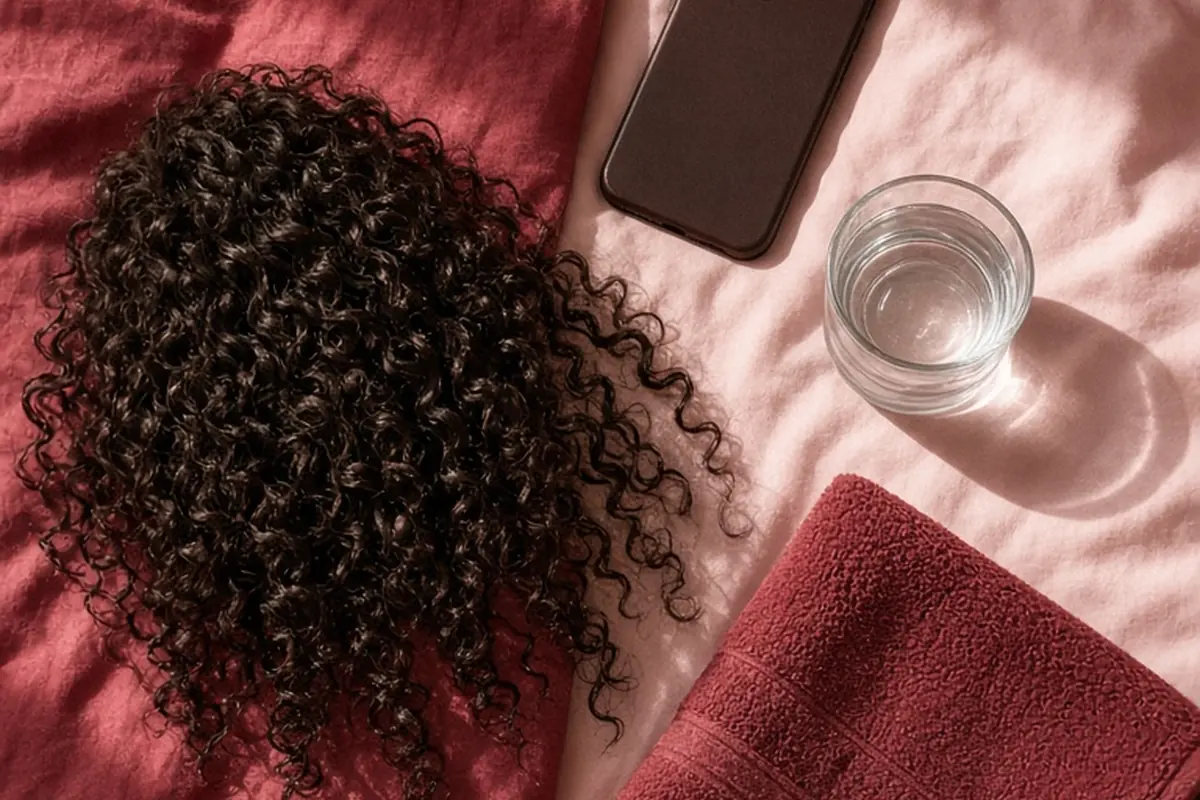
A moisturizer for black hair maintenance schedule generally requires daily to every-other-day lightweight hydration, supported by a weekly or bi-weekly deep conditioning wash day. High-porosity hair typically needs daily moisture layering using water-based leave-in creams and sealing oils to prevent rapid moisture loss. Low-porosity hair thrives on light hydration every two to three days using warmth and water mists, avoiding heavy daily butters that cause surface buildup. Mid-week refreshing keeps curls pliable between washes.
Black hair textures, ranging from tight coils to loose spirals, are structurally prone to dryness because natural sebum produced by the scalp travels slowly down an elliptical, curved hair shaft. Maintaining adequate hydration requires a predictable cadence that balances water delivery with protective sealing rather than reacting only after strands become brittle.
Matching Moisture Frequency to Hair Porosity and Strand Thickness
Determining how often to apply moisturizer begins with identifying hair porosity, which reflects how readily the cuticle layer absorbs and retains water. High-porosity hair features raised cuticles that take in moisture almost instantly but lose it just as quickly to the surrounding air. For this hair type, moisture schedules must focus on frequent hydration—often daily or every other day—anchored by heavier cream-based moisturizers and occlusive oils that coat the cuticle to slow evaporation. Without regular sealing, high-porosity strands become dry within hours of washing, leaving them susceptible to friction damage and split ends.
Low-porosity hair presents the opposite mechanical challenge because its cuticles lie tightly compact and flat, resisting water absorption while allowing surface buildup to accumulate rapidly. Individuals with low-porosity coils rarely benefit from daily applications of heavy butters or thick leave-in conditioners. Instead, an optimal schedule introduces light, water-based hydration every two to three days, preferably accompanied by mild heat or warm water to gently lift the cuticle layer. Applying moisture too frequently to low-porosity strands coats the exterior without penetrating the cortex, resulting in a waxy coating that repels subsequent hydration attempts.
Strand thickness also influences the cadence and weight of your moisturizing products. Fine-textured black hair easily collapses under dense shea or castor formulations, leading to limp, greasy coils that require frequent clarifying. Coarse strands, possessing a larger diameter and greater natural rigidity, demand more substantive emollients applied on a steady schedule to maintain softness and elasticity. Evaluating whether your hair is fine, medium, or coarse alongside its porosity ensures that your scheduling decisions preserve volume while preventing mechanical brittleness.
Constructing a Daily Hydration Routine for Natural Curls and Coils
A daily moisturizing cadence does not mean performing a full wash or saturating the hair with heavy product every morning. Daily maintenance should prioritize targeted hydration focused primarily on the mid-lengths and fragile ends, which are the oldest and most vulnerable segments of the hair shaft. For high-porosity or dry textures, a brief morning application of a fine water- or aloe-based mist reintroduces pliable moisture, followed by a dime-sized amount of leave-in conditioning cream distributed evenly across sections using gentle finger smoothing.
Nighttime routines play an equally critical role in preserving daily moisture levels. Friction from cotton pillowcases and dry ambient bedroom air actively siphons hydration out of textured strands while you sleep. To counter this, an effective evening schedule involves inspecting the ends for dry spots, applying a drop of lightweight sealing oil such as jojoba or sweet almond oil if the hair feels parched, and securing coils in a loose pineapple, twists, or braids beneath a silk or satin bonnet. This barrier ensures that the moisture introduced during the day remains locked within the fiber overnight.
Avoiding the trap of over-moisturizing requires daily observation rather than mindless product application. If your hair feels soft, cool to the touch, and retains its natural spring, adding more leave-in moisturizer creates unnecessary product accumulation. A flexible daily schedule allows you to alternate between a simple water mist on days when moisture balance is stable and a light cream application only when elasticity begins to drop.
The Mid-Week Reset: Addressing Mid-Shaft Dryness and Scalp Balance
By day three or four following a complete wash, most textured hair experiences a measurable dip in hydration, even when daily surface mists are applied faithfully. The mid-week mark represents a crucial operational checkpoint to refresh your style without stripping the hair with detergents. A mid-week reset involves lightly steaming the hair in the shower or using a handheld facial steamer, allowing water vapor to loosen tight coils and soften dry cuticle scales before smoothing a hydrating liquid leave-in through the hair.
Scalp health must be carefully distinguished from hair shaft moisture during this mid-week evaluation. While the hair fiber craves moisture in the form of water and conditioning emulsions, applying rich moisturizing creams or heavy hair butters directly onto the scalp frequently leads to clogged follicles, irritation, and flaking. If your scalp feels tight or dry mid-week, use a clean cotton pad or dropper to apply a few drops of lightweight, non-comedogenic oil or a targeted soothing serum directly to the skin, keeping hair moisturizers concentrated exclusively on the hair strands.
For loose styles like wash-and-gos or twist-outs, the mid-week reset helps reshape curls that have flattened or tangled. Rather than combing through dry hair—which causes severe breakage—apply a water-based curl refresher spray that contains humectants like glycerin or panthenol. Gently scrunch or re-twist sections while damp, allowing the humectants to attract ambient moisture into the strand before the hair air-dries, renewing definition and structural softness for the remainder of the week.
Wash Day Hydration: Deep Conditioning and Moisture Layering Methods
The weekly or bi-weekly wash day forms the foundation of any successful moisturizer schedule for black hair. Cleansing should begin with a sulfate-free moisturizing shampoo that purges environmental dirt and old styling residues without completely depleting the hair's lipid envelope. Every three to four weeks, rotate in an intentional clarifying shampoo to strip away accumulated silicones, butters, and oils. Without this periodic reset, subsequent deep conditioners cannot bind properly to the keratin structure, resulting in what appears to be chronic dryness.
Deep conditioning represents the primary moisture-infusion step of the entire cycle and should never be skipped. After rinsing the cleanser, apply a generous amount of formulated deep conditioner from root to tip, working in quadrants to guarantee uniform saturation. For optimal absorption, incorporate indirect heat using a hooded dryer, thermal cap, or warm damp towel for fifteen to twenty minutes. Heat lifts the cuticle tiles, driving water and conditioning agents deep into the cortex to rebuild strand flexibility.
Once the deep conditioner is rinsed out with cool or lukewarm water to encourage cuticle closure, immediately execute a structured moisture layering technique while the hair remains damp. The Liquid-Oil-Cream (LOC) or Liquid-Cream-Oil (LCO) protocol provides a reliable framework. The liquid component must be water or a water-based leave-in spray; the cream supplies fatty alcohols and humectants to lubricate fibers; and the oil serves as a physical barrier that restricts water evaporation. Tailor the sequence to your porosity: low-porosity hair generally responds better to the LCO method to avoid trapping oil under cream, while high-porosity hair thrives on the sealing power of the LOC sequence.
Adjusting Your Moisturizing Schedule for Protective Styles
Protective styles such as box braids, passion twists, cornrows, and faux locs safeguard natural ends from daily manipulation, but they do not eliminate the need for regular moisturizing. A common pitfall is ignoring hair hydration entirely for four to eight weeks while wearing extensions, which leads to excessive breakage and shedding during takedown. When hair is tucked into synthetic or human fiber extensions, its access to natural sebum is further reduced, making a dedicated weekly schedule essential.
Because dense creams and heavy butters leave unsightly, difficult-to-rinse residue trapped inside braided bases, switch your moisturizing schedule to liquid-only formulations during protective styling. Two to three times per week, mist your scalp parts and the length of your braids with a water-based spray infused with aloe vera, rosewater, or light glycerin. Follow this mist with a tiny amount of lightweight oil—such as argan, grapeseed, or jojoba—smoothed down the length of the braids using your palms to condition your enclosed natural hair.
Limit the frequency of heavy water saturation if your protective style incorporates synthetic hair, as prolonged dampness within dense braids can foster scalp irritation or mildew odors. Instead, focus on light, consistent misting that evaporates within thirty minutes. Before unraveling your protective style at the end of its life cycle, saturate the braids with a slip-enhancing leave-in conditioner twenty-four hours in advance to soften collected shed hair and shed sebum, ensuring a smooth, damage-free takedown.
Seasonal Schedule Adjustments: Humidity, Cold Weather, and Heat Exposure
A moisturizing schedule that maintains healthy elasticity in mild spring temperatures will often fail during harsh winter cold or sweltering summer humidity. In winter months, dry indoor heating systems and frigid outdoor winds work together to strip hydration out of porous coils. Winter schedules demand a higher proportion of protective emollient creams, weekly deep conditioning sessions, and consistent protective styling to shield fragile ends from friction against wool scarves and heavy coat collars.
In contrast, high-humidity summer conditions alter how humectants behave on textured hair. Ingredients such as glycerin absorb water from the surrounding atmosphere; when outdoor humidity is exceptionally high, these humectants can draw excessive water into the hair shaft, causing it to swell, lift cuticles, and lose defined curl patterns. During humid seasons, reduce the concentration of simple humectants in your leave-in moisturizers and rely more heavily on anti-humectant oils and lightweight botanical gels that hold curl geometry intact without inviting structural swelling.
Active individuals who swim or frequently exercise outdoors must also adapt their routine dynamically. Chlorine and saltwater leach internal moisture rapidly, requiring immediate rinsing with fresh water followed by an instant leave-in replenishment. Adding a pre-swim barrier coat of jojoba or coconut oil before entering the water minimizes chemical absorption, preserving your core moisturizing cadence even during periods of heavy physical activity.
Illustrative Scenarios
Balancing Low-Porosity Type 4 Curls on a Busy Work Schedule
Marcus wore his 4C hair in short two-strand twists and noticed mid-week flaking whenever he applied heavy butter-based moisturizers daily. Believing his hair needed more moisture, he layered heavier pomades on top of unwashed strands, which blocked moisture from penetrating the hair shaft and created dull, crunchy buildup. To resolve this, he adjusted his schedule to hydrate lightly every three mornings using a warm water-based aloe mist, followed by a pea-sized amount of jojoba oil to seal the cuticles. On Sunday wash days, he incorporated a clarifying shampoo followed by twenty minutes of heat-assisted deep conditioning. Within three weeks, the persistent mid-week crunch disappeared, and his twists retained elasticity between full wash routines.
Key point: Layering heavy creams over dry, unwashed hair impedes hydration; timing lightweight water mists with weekly clarifying restores moisture balance without buildup.
Frequently asked questions
Can I moisturize my black hair every single day?
Yes, but daily moisturizing should consist of light water-based hydration rather than heavy creams or butters. Applying thick leave-in formulas every day without regular washing causes severe product buildup and dullness. Gauge your hair daily, misting lightly with water or an aloe spray only when the strands feel dry.
What is the difference between hydrating hair and sealing it?
Hydration introduces water into the interior cortex of the hair fiber, which is accomplished using water, water-based leave-in conditioners, and steam. Sealing uses oils or butters to create a hydrophobic outer barrier that slows down water evaporation. Oil alone cannot moisturize hair because it does not contain water.
How do I know if my hair is suffering from moisture overload?
Moisture overload, or hygral fatigue, occurs when hair absorbs excessive water without sufficient protein balance. Symptoms include limp, mushy, overly soft strands that stretch excessively when wet and snap easily without bouncing back. If this occurs, incorporate a mild protein treatment and reduce the frequency of deep conditioning.
Should I apply moisturizer to wet or dry hair?
Applying moisturizer to clean, damp hair yields the most effective results because the cuticles are slightly opened and receptive to water absorption. When refreshing dry hair mid-week, always mist strands lightly with water first so the moisturizing cream has moisture to bind and seal into the strand.
Your next step
Assess your strand porosity using a simple water test this week, then calibrate your moisturizing routine by misting lightweight hydration every two to three days rather than coating unwashed hair in heavy daily butters.