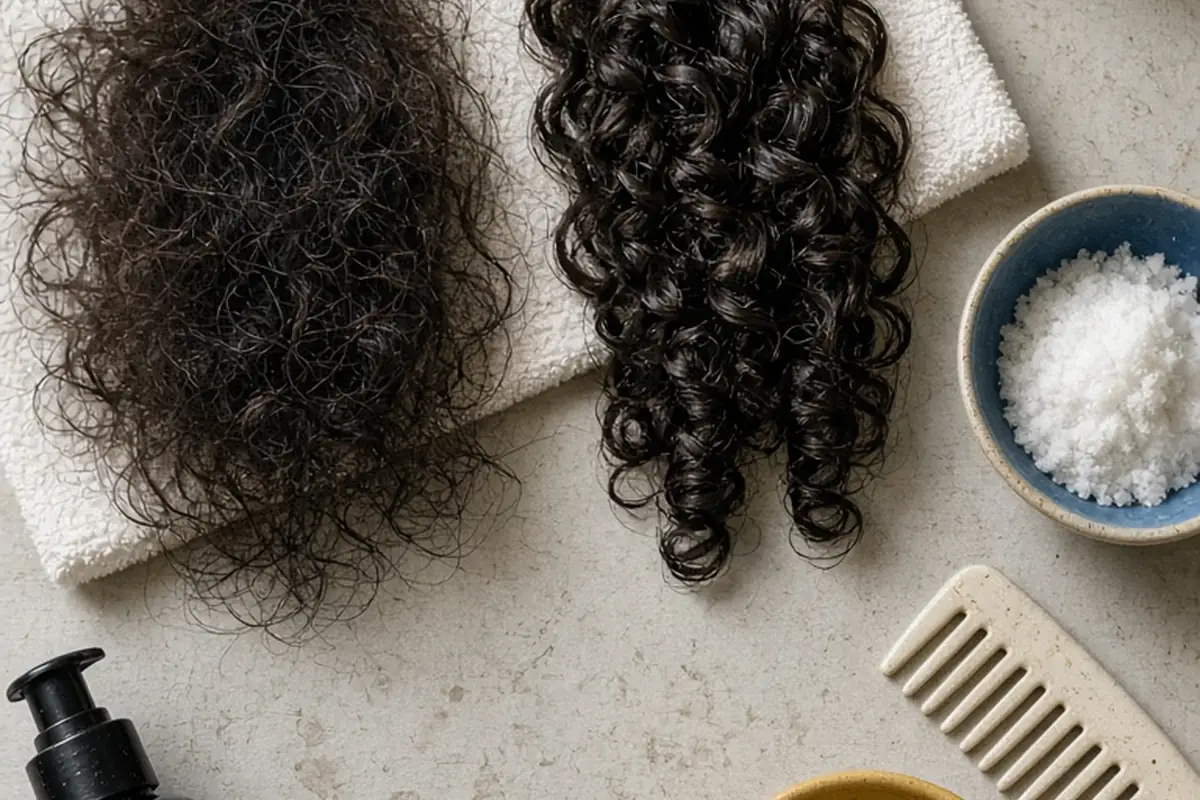
Before using a dedicated moisturizing shampoo, textured hair frequently presents with dullness, rough cuticle texture, brittle ends, tangling, and a dry scalp following cleansing. After introducing a balanced moisturizing formula, wash day yields improved slip, preserved natural sebum, softened strands, and enhanced curl clumping without leaving a heavy film. The visible shift relies on mild cleansers that lift scalp debris while depositing humectants and fatty alcohols, preparing coils and waves for effective deep conditioning.
Textured hair features an asymmetrical follicle structure and frequent bends along each individual strand, which makes the distribution of natural scalp oils down the hair shaft a persistent physical challenge. Traditional clarify-heavy cleansing routines often strip these delicate strands of their minimal moisture barrier, creating a dramatic before-and-after contrast when an appropriate hydrating formula is introduced.
Visible Texture Changes: Before Versus After Initial Washes
Before switching to a moisturizing cleanser, textured hair typically exhibits distinct mechanical and cosmetic challenges immediately following a shower. Strands often feel squeaky, rough, or stiff to the touch, which indicates that the hair cuticle has been ruffled and stripped of necessary lipid layers. In this state, curl clumps separate into frizzy, undefined clusters, individual strands catch on one another during basic handling, and wet detangling requires significant force that risks mechanical breakage. The scalp may feel tight, itchy, or parched within minutes of rinsing away lather.
After washing with a well-formulated moisturizing shampoo, the immediate physical behavior of the hair changes substantially. As water rinses through, strands feel coated with a light lubricating slip rather than a friction-inducing drag, allowing fingers to glide through looser knots without snagging. Natural curl groupings remain intact, showing distinct spring and cohesive coil formation even before applying a dedicated rinse-out conditioner. The scalp feels clean yet supple, lacking the stinging dryness associated with harsh detergent bars or high-sulfate formulas.
How Strand Porosity Dictates Moisture Uptake and Retention
The degree of cuticle openness, known as hair porosity, governs how textured strands interact with moisturizing cleansers. Low-porosity textured hair features tightly overlapping cuticle shingles that resist water absorption. Before using an effective hydrating formula, low-porosity hair often experiences severe product buildup, because heavier oils sit on the strand exterior rather than penetrating. After cleansing with a balanced moisturizing shampoo that utilizes warm water and mild surfactants, the cuticles lift just enough to allow lightweight humectants such as glycerin or aloe vera to draw water into the cortex.
High-porosity hair, whether naturally occurring or caused by color processing, heat styling, and environmental weathering, behaves quite differently. Its cuticles remain permanently propped open, allowing water to enter quickly and escape just as rapidly. Before targeted moisturizing shampoo use, high-porosity strands feel dry almost immediately after exiting the shower. After adopting a formula enriched with fatty alcohols, hydrolyzed proteins, and emollients, the shampoo temporarily patches gaps along the cuticle sheath, noticeably slowing moisture loss and reducing post-wash brittleness.
Evaluating Ingredients: Gentle Cleansers Versus Stripping Detergents
The dramatic performance gap between basic shampoos and moisturizing cleansers stems directly from their primary surfactant systems. Conventional clarifying cleansers frequently rely on strong primary detergents such as sodium lauryl sulfate, which completely strip away the hair's protective lipid layer (18-methyl eicosanoic acid). While effective at degreasing very oily straight hair, this intense action leaves textured patterns vulnerable to moisture starvation, frizz, and fiber split ends.
In contrast, moisturizing shampoos employ gentler cleansing bases, often pairing amphoteric and non-ionic surfactants such as cocamidopropyl betaine, sodium cocoyl isethionate, or decyl glucoside with conditioning agents. These cleansers lift dirt, perspiration, and environmental dust while leaving a portion of the hair's natural lipids untouched. Concurrently, ingredients like cetyl alcohol, stearyl alcohol, panthenol, and plant-derived triglycerides deposit onto the hair shaft during the wash phase, imparting the characteristic softness noticed immediately after rinsing.
Wash-Day Application Technique for Coils, Curls, and Waves
Applying a moisturizing shampoo to textured hair requires deliberate adjustments to application technique to prevent tangling and ensure complete scalp cleansing. Before adopting a structured method, many people pile their curls on top of their head and rub vigorously. This aggressive circular motion forces cuticles to interlock, resulting in painful knots, strand snapping, and patchy cleansing across the crown and nape.
A superior technique involves dividing damp hair into four to six distinct sections before introducing shampoo. Apply the moisturizing product directly to the scalp along parted lines, using the pads of your fingertips to massage in gentle linear or small circular motions without disturbing the mid-lengths. As you rinse the product away with lukewarm water, allow the diluted suds to run downward through the length of your coils. This top-down flow cleanses the hair shafts gently while aligning the cuticles in one direction, setting up smooth detangling for the conditioning stage that follows.
Distinguishing Surface Softening from True Hydration
A common pitfall when evaluating before-and-after results is confusing artificial surface slip with true internal hydration. Some cleansing products achieve an immediate feeling of softness by incorporating heavy, non-water-soluble silicones or high concentrations of polyquaterniums. While these ingredients flatten the cuticle and temporarily reduce friction, they do not inherently add water to a dehydrated cortex. Over several wash cycles, unchecked silicone accumulation can create an impenetrable barrier that prevents ambient moisture and conditioning treatments from entering the hair.
Genuine hydration manifests as structural elasticity, bounce, and bend flexibility rather than an oily or slick exterior coating. When hair is genuinely hydrated by a moisture-balancing shampoo, individual coils feel pliant when gently stretched and snap back into place without snapping or displaying crinkled ends. The strands should feel clean and light when dry, moving freely rather than clumping together into stiff, waxy sections that require aggressive clarifying to reset.
Preventing Scalp Heaviness and Product Buildup Over Time
While moisturizing shampoos provide immediate relief for dry coils, exclusively using ultra-hydrating formulas without periodic resetting can lead to adverse scalp conditions. Over successive weeks, residual emollients, natural sebum, and unevaporated stylers can gather near the follicle openings. Before this accumulation becomes obvious, the hair may begin to look dull, feel heavy at the roots, and take noticeably longer to dry after washing.
To maintain optimal scalp health and strand responsiveness, integrate a gentle clarifying wash or scalp-exfoliating treatment every three to five wash cycles, depending on your styling habits. This clarifying pause resets the hair surface, clearing away lingering residues so that subsequent applications of your moisturizing shampoo can interact directly with the cuticle rather than resting atop layers of accumulated product. Monitoring your scalp for flaking, itching, or an oily film provides a clear indicator of when it is time to cycle in a deeper cleanse.
Pairing Moisturizing Cleansers with Post-Wash Conditioners and Sealers
A moisturizing shampoo represents only the initial phase of the moisture retention cycle for textured hair; it cannot replace the specialized function of deep treatments or leave-in sealers. The shampoo's primary role is to cleanse without stripping, thereby creating a receptive, uncompromised canvas for subsequent conditioning agents. Relying on shampoo alone often leaves textured hair prone to rapid moisture evaporation once exposed to dry ambient air.
To preserve the soft before-and-after benefits observed at the wash bowl, immediately follow cleansing with a rich rinse-out conditioner or deep treatment containing both penetrating oils and structural proteins. After rinsing thoroughly, apply a water-based leave-in conditioner to wet strands, followed by a light botanical oil or butter using the liquid-oil-cream (LOC) or liquid-cream-oil (LCO) layering method. This sequence locks the hydration delivered during the wash process securely inside the hair shaft.
Frequently asked questions
Can a moisturizing shampoo replace a rinse-out conditioner?
No. While moisturizing shampoos deposit conditioning agents to minimize friction during cleansing, their primary role is still dirt and sebum removal. A separate rinse-out conditioner or deep mask has a lower pH and higher concentration of lipid-binding agents needed to seal the cuticle completely.
How often should textured hair be washed with a moisturizing shampoo?
Most textured hair types thrive on a washing schedule of once every seven to ten days. Washing more frequently can remove natural protective sebum, while waiting longer than two weeks may allow product residue and scalp oils to congest follicles.
Why does my hair still feel dry after using a moisturizing shampoo?
Persistent dryness often indicates mineral buildup from hard water, lingering silicone residue, or using water that is too hot during the rinse cycle. If buildup is present, the hydrating emollients in your shampoo cannot reach the hair shaft until you perform a clarifying reset.
Will a moisturizing shampoo weigh down fine textured hair?
It can if the formula contains heavy plant butters like shea butter or high levels of mineral oil. Fine coils and waves benefit most from lightweight moisturizing shampoos that feature glycerin, aloe vera juice, and hydrolyzed wheat or silk proteins instead of heavy waxes.
Your next step
Inspect your current shampoo bottle for harsh sulfates like sodium lauryl sulfate, and try switching to a gentler formula containing cocamidopropyl betaine and fatty alcohols on your next wash day to test for improved strand slip and curl definition.