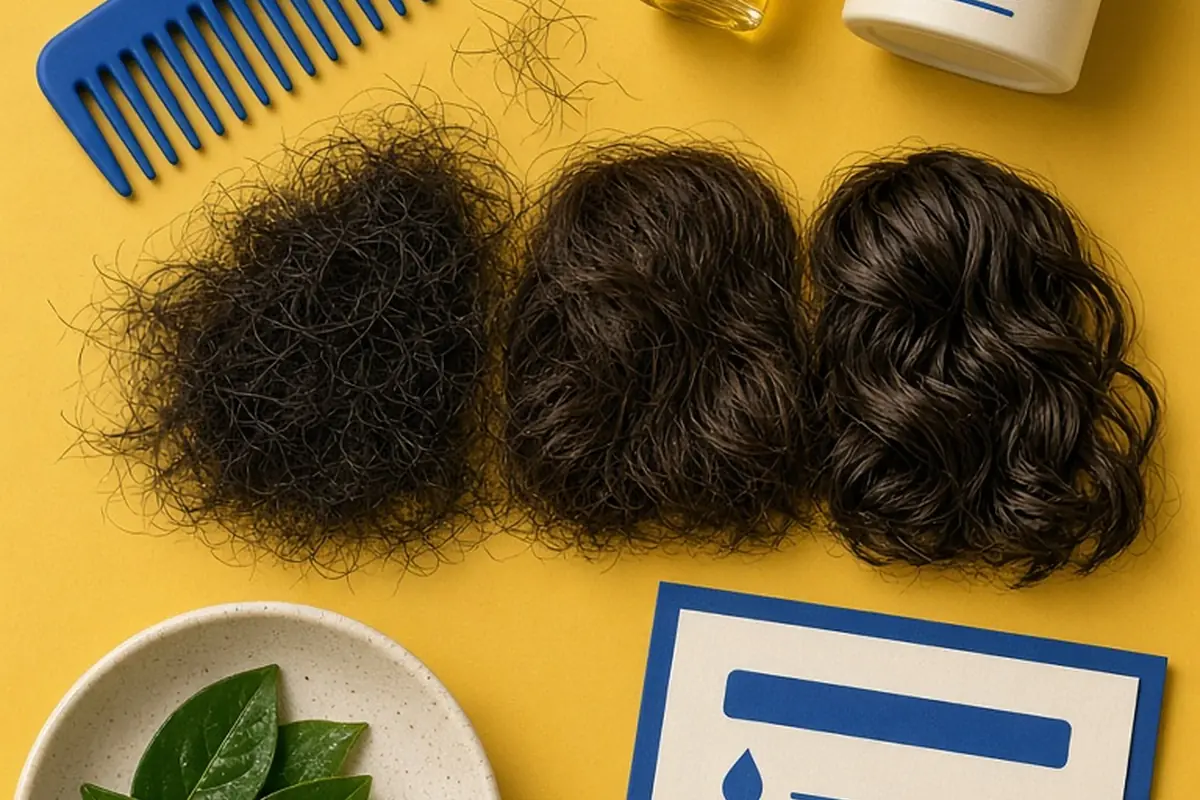
A moisturizing shampoo before and after maintenance schedule balances gentle cleansing with deep hydration prep and post-wash moisture sealing. Before washing, prep hair with detangling and optional pre-shampoo oils to prevent moisture loss. During washing, use a sulfate-free hydrating cleanser focused on the scalp. Immediately after, apply a conditioning treatment, leave-in moisturizer, and sealant to lock in moisture, rotating in a clarifying wash every few weeks to prevent heavy buildup.
Switching to a moisturizing shampoo can transform dry, brittle, or chemically processed hair, but using the product in isolation rarely delivers lasting results. Healthy hair requires a structured cycle that prepares strands before cleansing, preserves natural oils during the wash, and seals in hydration immediately afterward.
Assessing Hair Porosity and Scalp Type Before Building Your Schedule
Before establishing a wash day calendar, you need to understand how your hair absorbs moisture and how quickly your scalp produces sebum. Hair porosity determines how readily water enters and exits the hair shaft. Low-porosity hair features tightly closed cuticle layers that resist water penetration and product absorption, often causing hydrating cleansers to sit on the surface. High-porosity hair has raised or damaged cuticles that absorb water rapidly but lose it just as quickly, leading to chronic dryness, frizz, and tangles. Medium-porosity hair absorbs and holds moisture with minimal effort.
Your scalp environment operates independently of your hair ends. You may have an oily scalp paired with dry, brittle ends, or a dry, tight scalp alongside low-porosity strands. A successful before-and-after schedule addresses these contrasting needs without swinging between greasy roots and parched lengths. When choosing your schedule, prioritize scalp comfort for cleansing frequency and hair porosity for pre-wash and post-wash moisture retention techniques.
The Pre-Wash Phase: Protecting Strands and Detangling Before Cleansing
The pre-wash routine, often referred to as a pre-shampoo or pre-poo treatment, protects the hair fiber from hygral fatigue—the weakening caused by the continuous swelling and contracting of the hair shaft as it absorbs and loses water. Applying a lightweight plant oil, such as jojoba or argan oil, or a slippery detangling conditioner to dry or slightly damp hair 15 to 30 minutes before washing forms a temporary protective shield. This step lubricates the strands, reducing friction and mechanical damage during the cleansing process.
Pre-wash preparation is also the safest window to gently detangle textured or knot-prone hair. Use your fingers or a wide-tooth comb starting from the ends and working upward toward the roots while the pre-treatment provides slip. Detangling dry, unconditioned hair can snap fragile strands, while detangling completely soaked hair under running water can overstretch elastic fibers. Completing this step beforehand makes your shampoo application significantly smoother and prevents matting in the shower.
Designing a Practical Weekly Moisturizing Shampoo Cadence
A moisturizing shampoo schedule should reflect your hair texture, activity level, and styling habits rather than a rigid calendar rule. Fine or straight hair types prone to natural oil buildup usually benefit from washing two to three times per week with a gentle, balanced hydrating formula. Wavy and loose curl patterns often thrive on a twice-weekly wash, which provides sufficient cleansing without stripping natural oils from the mid-lengths and ends.
Coily, tight-textured, or chemically relaxed hair typically requires a weekly or bi-weekly wash routine to preserve essential moisture and avoid unnecessary mechanical manipulation. On your designated wash day, apply the moisturizing shampoo directly to wet roots, massaging with your fingertips to lift debris, sweat, and excess sebum. Allow the suds to rinse naturally down the lengths rather than scrubbing the ends aggressively, which can roughen the delicate cuticle layer.
The Immediate Post-Wash Routine: Conditioning and Sealing Moisture
What you do within the first thirty minutes after rinsing out your moisturizing shampoo determines how long that hydration lasts. Follow every shampoo session with a rinse-out moisturizing conditioner or a rich deep treatment mask. Apply the product generously from mid-lengths to ends, using the slip to smooth down the cuticle. Leave it on for the duration recommended on the packaging, then rinse thoroughly with lukewarm or cool water to encourage the cuticle scales to lay flat.
Once you step out of the shower, gently squeeze excess moisture with a microfiber towel or soft cotton T-shirt instead of vigorously rubbing with a rough terrycloth towel. Apply a water-based leave-in conditioner to damp hair to infuse hydration, followed by a cream or lightweight oil to seal the moisture into the cuticle. This layered approach—frequently referred to as the Liquid-Oil-Cream (LOC) or Liquid-Cream-Oil (LCO) method—prevents ambient dry air from evaporating water out of the hair shaft.
Mid-Cycle Maintenance: Preserving Moisture Between Wash Days
Maintaining hydration between wash days keeps hair pliable and minimizes mid-week breakage without requiring a full wash routine. Throughout the week, refresh dry sections by lightly misting them with water or a botanical leave-in spray, followed by a drop of sealing oil on the ends. Avoid drenching the hair daily, as constant wetting without proper drying can lead to moisture overload and weaken the protein structure of your strands.
Nighttime care plays an equally important role in extending the life of your wash day. Cotton pillowcases absorb moisture directly from hair fibers and generate friction that leads to tangling and frizz. Protect your hair overnight by sleeping on a satin or silk pillowcase, or by wrapping your hair in a satin bonnet or scarf. For longer or curlier hair, loosely gathering strands at the crown of your head in a loose pineapple style preserves curl definition and prevents the ends from rubbing against bedding.
Preventing Buildup: Integrating Clarifying Treatments Into a Moisturizing Regimen
While moisturizing shampoos are formulated with conditioning agents, fatty alcohols, and humectants, continuous use of heavy moisturizing products can lead to product buildup over time. When product residue coats the scalp and hair shaft, it forms an impermeable barrier that blocks fresh moisture from penetrating, causing hair to feel coated, limp, or paradoxically dry and stiff despite frequent washing.
To reset your hair balance, integrate a clarifying or chelating shampoo into your schedule once every three to four weeks, or every two weeks if you regularly use heavy styling butters, silicones, or edge controls. Clarifying thoroughly removes stubborn mineral deposits and styling polymers. Always follow a clarifying wash with a rich deep-conditioning treatment to immediately replenish the moisture barrier before returning to your regular moisturizing shampoo schedule.
Adjusting Your Maintenance Schedule for Weather, Color, and Heat
Environmental changes and styling practices require seasonal adjustments to your before-and-after schedule. In cold, dry winter months, indoor heating and dry winds accelerate moisture loss. During this period, increase the frequency of pre-wash oil treatments, switch to richer leave-in creams, and consider extending the time between clarifying washes to avoid stripping delicate strands.
In humid summer conditions or when living in areas with hard water, humectants like glycerin can draw excess moisture from the air, causing swelling and frizz, while hard water minerals can bind to the hair shaft. For color-treated or heat-styled hair, balance your moisturizing shampoo routine with occasional protein-enriched conditioners. Moisture provides elasticity and softness, but protein reinforces structural integrity; maintaining an equal balance between both keeps hair strong and resilient against heat tools.
Illustrative Scenarios
Balancing High-Porosity Curls with a Structured Weekly Routine
A person with color-treated, high-porosity curl patterns struggled with chronic dryness and tangled ends despite using a moisturizing shampoo three times a week. Their hair felt dry within hours of washing, and their scalp felt weighed down by heavy creams. They restructured their schedule by introducing a 15-minute pre-wash oil treatment on dry hair, reducing moisturizing shampoo sessions to once a week, applying a leave-in conditioner and lightweight sealing oil directly to damp hair, and scheduling a clarifying wash once every four weeks.
Key point: Pairing a gentle moisturizing wash with targeted pre-wash protection, disciplined sealing, and periodic clarifying maintains moisture balance far better than washing more frequently with heavy products.
Frequently asked questions
Can I use a moisturizing shampoo every day?
Daily use is generally unnecessary and can lead to moisture overload or scalp congestion for most hair types. If you have an exceptionally oily scalp or exercise intensely every day, consider alternating a gentle moisturizing cleanser with warm water rinses rather than shampooing repeatedly.
How do I know if my hair has too much moisture or needs protein?
Hair with excess moisture feels overly soft, gummy or limp when wet, and lacks elasticity or curl definition. Hair lacking moisture feels brittle, rough, and snaps easily, while hair lacking protein stretches excessively before breaking and cannot hold its shape.
Should I apply moisturizing shampoo to my ends?
Direct application to the ends is rarely recommended because shampoo formulas are designed to dissolve oils and cleanse the scalp. Applying shampoo at the roots and letting the lather rinse down the lengths cleans the ends gently without stripping moisture.
How long should I wait after coloring my hair to start a moisturizing schedule?
Wait at least 48 to 72 hours after chemical coloring before washing your hair to allow the cuticle to fully close and lock in the pigment. When you do wash, use a sulfate-free moisturizing shampoo formulated for color protection to prevent premature fading.
Your next step
Assess your scalp oiliness and hair porosity this week, then select one pre-wash detangling oil and a matching leave-in sealant to pair with your next moisturizing shampoo session.