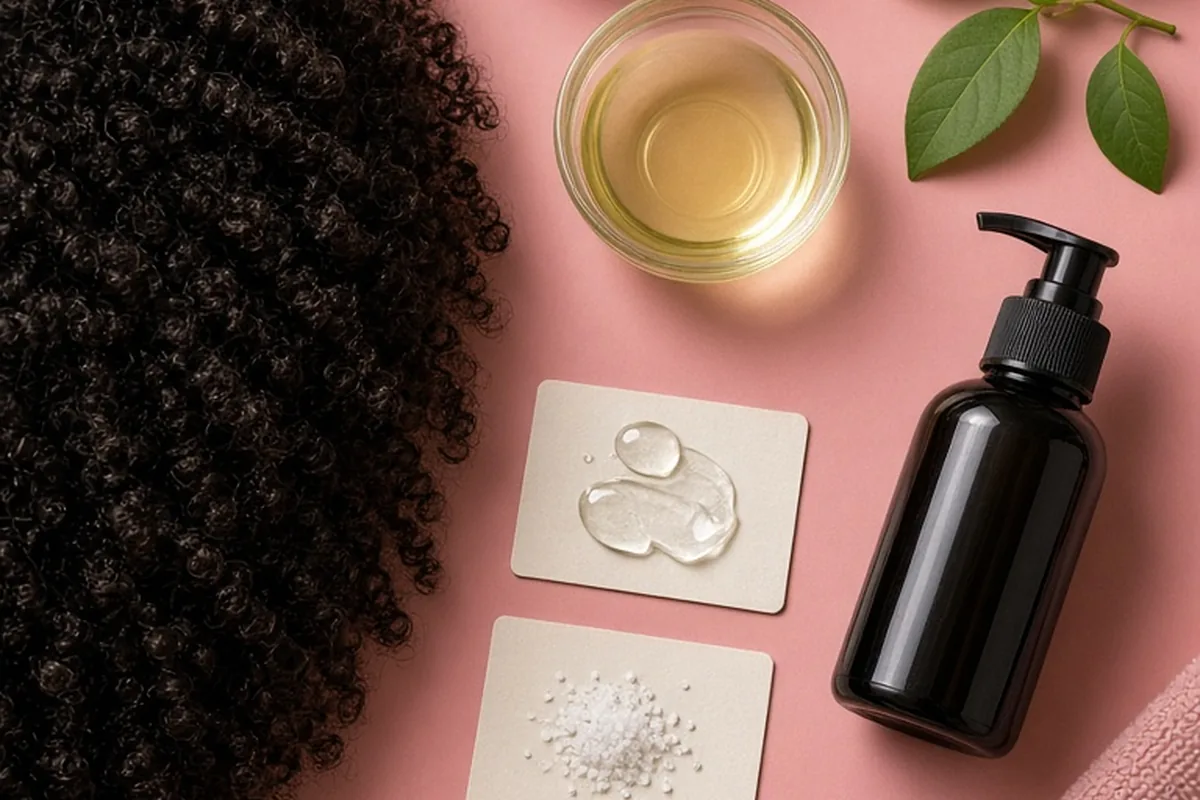
When choosing a moisturizing shampoo for Black hair, look for gentle, sulfate-free cleansers such as sodium cocoyl isethionate or cocamidopropyl betaine paired with hydrating humectants like glycerin and aloe vera juice. To prevent moisture loss, formulas should feature nourishing plant oils or butters—such as shea butter, jojoba, or argan oil—alongside conditioning agents like polyquaternium-10 for slip. Avoid drying short-chain alcohols and aggressive sulfates that strip natural sebum from tightly coiled hair strands.
Tightly textured, curly, and coily hair has a unique structural geometry that influences how moisture moves along the hair fiber. Because the bends and turns in the curl pattern create raised cuticle points and make it difficult for natural scalp sebum to travel down the shaft, selecting a shampoo with the right formulation is essential for maintaining hydration, elasticity, and scalp health.
The Cleansing Base: Gentle Surfactants That Protect Natural Sebum
The primary purpose of any shampoo is to lift dirt, excess oil, and product buildup from the scalp and hair, but the type of surfactant used determines whether the wash process preserves or strips hydration. Traditional clarifying shampoos frequently rely on harsh sulfates, such as sodium lauryl sulfate (SLS) or ammonium lauryl sulfate (ALS), which have strong degreasing properties. For Black hair, which naturally produces less dispersed sebum along the hair length, these aggressive detergents can deplete the hair fiber of its protective lipid layer, leaving coils brittle, dull, and prone to friction-induced breakage.
Moisturizing shampoos for textured hair replace harsh detergents with milder anionic, amphoteric, or non-ionic surfactants. Common gentle options include sodium cocoyl isethionate, cocamidopropyl betaine, disodium laureth sulfosuccinate, and decyl glucoside. Sodium cocoyl isethionate, often derived from coconut fatty acids, creates a dense, creamy lather that cleanses without disrupting the cuticle layer. Cocamidopropyl betaine acts as a secondary surfactant that reduces irritation and adds mild conditioning properties, allowing the wash to remove scalp debris while keeping the hair shaft soft and pliable.
When evaluating a shampoo bottle, examine where these surfactants sit in the ingredient list. If a product advertises itself as deeply hydrating but lists harsh sulfates in the top three ingredients after water, the formula may leave your curls feeling stripped or squeaky clean, which is a sign of lipid depletion. A balanced cleanser maintains scalp hygiene while leaving enough moisture behind to allow easy detangling.
Hydrating Humectants That Draw Water Into Coiled Strands
Humectants are hygroscopic compounds that attract and hold water molecules from the surrounding environment and the wash water itself. In a moisturizing shampoo formulation, humectants ensure that the cleansing process delivers water deep into the cortex rather than allowing the hair fiber to dry out during lathering. Because textured hair has higher porosity variations along the curl curves, humectants play an active role in restoring temporary elasticity during wash day.
Key humectants to look for include vegetable glycerin, panthenol (provitamin B5), aloe barbadensis leaf juice, and sodium PCA. Glycerin is one of the most widely used and effective humectants because of its low molecular weight, which allows it to penetrate beneath the outer cuticle layer. Panthenol not only binds water to the keratin structure but also provides a lightweight film that smooths microscopic cracks along the hair cuticle, improving moisture retention and shine after rinsing.
While humectants are essential, their performance depends heavily on the presence of supporting emollients. A shampoo that contains high levels of humectants without balancing oils or conditioning agents can draw water into the hair shaft too quickly, causing temporary swelling and subsequent cuticle fatigue. A high-quality formula pairs humectants with protective lipid bases to trap that hydration within the fiber.
Plant Butters and Vegetable Oils for Essential Lubrication and Slip
Emollients soften and smooth the hair shaft by filling in the gaps between lifted cuticle scales. In moisturizing shampoos formulated for Black hair, plant-based oils and butters provide necessary lubrication, commonly referred to as slip. Adequate slip reduces mechanical friction between adjacent coils during washing, minimizing the risk of forming single-strand knots (fairy knots) and reducing breakage while massaging the scalp.
Shea butter (Butyrospermum parkii), mango seed butter, and cocoa butter are rich, fatty emollients frequently found in moisturizing cleansers. These butters are packed with stearic and oleic fatty acids that coat the hair fiber, providing a velvety texture that resists moisture evaporation. Lightweight liquid oils, such as jojoba seed oil, argan oil, sweet almond oil, and avocado oil, offer similar protective benefits without weighing down finer curl patterns. Jojoba oil is particularly valuable because its chemical structure closely mimics human sebum, helping to balance scalp moisture levels naturally.
When butters and oils are incorporated into a shampoo base, they should rinse away clean enough to avoid immediate product buildup while still depositing a sheer conditioning layer. If your hair feels coated, heavy, or limp immediately after rinsing out your cleanser, the emollient-to-surfactant ratio may be too concentrated for your specific hair density and porosity.
Conditioning Polymers and Detangling Agents in Moisturizing Shampoo for Black Hair
Cationic conditioning agents carry a positive electrical charge that naturally binds to the negatively charged, damaged sites along the hair cuticle. Because textured hair strands experience higher friction and weathering at the curve points, cationic polymers are critical components in moisturizing shampoo formulas. They neutralize static charges, flatten lifted cuticles, and provide noticeable slip while the hair is wet.
Look for ingredients such as polyquaternium-10, polyquaternium-7, guar hydroxypropyltrimonium chloride, and behentrimonium methosulfate on the ingredient label. Polyquaternium-10 is a water-soluble polymer derived from cellulose that improves combability and reduces wet-combing force without causing severe buildup. Guar hydroxypropyltrimonium chloride, derived from guar beans, forms a protective conditioning shield over the cuticle that enhances soft texture and reduces frizz as the hair begins to air dry.
Botanical mucilage extracts also serve as exceptional natural detangling agents. Ingredients such as marshmallow root extract (Althaea officinalis) and slippery elm bark extract contain complex sugars that create a gel-like coating in water. When included in a moisturizing shampoo, these plant extracts allow fingers to glide smoothly through dense coils during the washing step, making early detangling substantially easier.
Navigating Proteins: Strengthening Fragile Strands Without Stiffness
Proteins in shampoo formulas help temporarily patch weak spots along the hair cuticle and cortex, providing structural support to fragile coils. However, the balance between moisture and protein is vital for textured hair. Black hair that is chemically treated, heat-damaged, or high in porosity benefits significantly from low doses of hydrolyzed proteins in a cleanser, as these ingredients reinforce structural integrity and improve moisture-holding capacity.
Effective protein sources include hydrolyzed wheat protein, hydrolyzed silk, hydrolyzed quinoa, and keratin amino acids. The term hydrolyzed indicates that the large protein molecules have been broken down into smaller peptide fragments capable of attaching to the cuticle or penetrating slightly into the outer cortex. Hydrolyzed silk and wheat proteins are particularly effective at adding tensile strength and light elasticity without hardening the hair.
Conversely, if your hair has low porosity—meaning the cuticles lie flat and resist water absorption—frequent use of protein-heavy shampoos can lead to protein overload. This condition makes strands feel stiff, dry, straw-like, and prone to snapping. For low-porosity hair, choose formulas where proteins appear near the bottom of the ingredient list or opt for protein-free moisturizing cleansers that prioritize humectants and lightweight oils.
Ingredients to Avoid or Monitor Closely on Product Labels
Understanding which ingredients to approach with caution is just as important as knowing which hydrating compounds to seek. A primary concern for coiled textures is the presence of short-chain, drying alcohols. Ingredients such as alcohol denat, SD alcohol 40, isopropyl alcohol, and propanol evaporate rapidly and strip moisture directly from the hair shaft during use. These should not be confused with long-chain fatty alcohols like cetyl alcohol, stearyl alcohol, and cetearyl alcohol, which act as beneficial emollients and thickeners.
Insoluble silicones represent another category to monitor. Heavy silicones, such as dimethicone and cyclopentasiloxane, provide intense initial slip and shine by coating the hair in a hydrophobic barrier. While beneficial for heat protection, non-water-soluble silicones can accumulate on the hair shaft if you only use gentle, sulfate-free shampoos. Over multiple washes, this barrier prevents water and humectants from entering the strand, resulting in chronic dryness beneath a deceptively slick surface. If you prefer silicones, look for water-soluble variations like dimethicone copolyol or PEG-modified silicones.
Strong clarifying agents and synthetic fragrances with high irritant potential can also compromise scalp comfort. Individuals with sensitive scalps or conditions like seborrheic dermatitis should check for artificial fragrances, parabens, and methylisothiazolinone, choosing instead formulas scented with mild botanical extracts or hypoallergenic alternatives.
How to Read the INCI Label to Match Your Hair Porosity and Density
The International Nomenclature of Cosmetic Ingredients (INCI) standard requires ingredients to be listed in descending order of concentration until the one-percent threshold is reached. The first five to seven ingredients typically make up approximately eighty to ninety percent of the entire shampoo formulation. If water is followed immediately by harsh sulfates or high concentrations of drying salts, the formula is unlikely to provide the deep hydration promised on the front packaging.
To select the best formula, match the ingredient hierarchy to your specific hair porosity. High-porosity hair features gaps in the cuticle that absorb water quickly but lose it just as fast; this hair type thrives on shampoos containing richer butters, hydrolyzed proteins, and heavy humectants near the top of the list to seal the cuticle gaps. Medium-porosity hair maintains moisture balance easily and responds well to standard blends of gentle surfactants, aloe vera, and lightweight plant oils like jojoba or argan.
Low-porosity hair requires a different strategy. Because tightly bound cuticles resist water entry, heavy butters and thick proteins in the top ingredients can sit on the surface, causing product buildup without delivering hydration. Low-porosity strands benefit most from shampoos featuring warm-water-activated humectants like glycerin, lightweight surfactants like decyl glucoside, and clarifying slip agents like marshmallow root, which cleanse thoroughly without creating an impenetrable film.
Frequently asked questions
Can a moisturizing shampoo completely replace a deep conditioner?
No, a moisturizing shampoo is designed primarily to cleanse the scalp and hair without stripping natural oils, but it remains a wash-off cleanser. Deep conditioners have a lower pH and higher concentrations of cationic surfactants and penetrating lipids designed to sit on the hair longer to restore internal elasticity. A moisturizing shampoo prepares the cuticle, but a dedicated conditioner is still needed to restore complete hydration.
How often should I use a moisturizing shampoo on Black hair?
Most individuals with textured hair find that washing every seven to ten days strikes the right balance between scalp cleanliness and moisture retention. If you exercise frequently or use heavy styling products, washing once a week with a gentle moisturizing shampoo keeps the scalp healthy without dehydrating the hair. Adjust your frequency based on scalp comfort and visible buildup.
Do I ever need to use a clarifying shampoo if I use a moisturizing one?
Yes, introducing a clarifying shampoo once every four to six weeks is beneficial for removing stubborn product buildup, butter residues, and hard water minerals that gentle moisturizing cleansers cannot lift. Cleansing thoroughly with a clarifier resets the hair shaft, allowing your regular moisturizing shampoo and conditioners to penetrate more effectively.
What is the difference between fatty alcohols and drying alcohols in shampoos?
Fatty alcohols, such as cetyl, stearyl, and cetearyl alcohol, are derived from plant oils and function as emollients that soften hair and stabilize the shampoo formula. Drying alcohols, such as isopropyl alcohol or alcohol denat, have small molecular structures that evaporate quickly and strip natural oils, leading to dryness and brittleness.
Your next step
Inspect the first five ingredients on your current shampoo bottle to confirm it uses gentle, sulfate-free cleansers paired with plant oils or humectants rather than harsh stripping detergents.