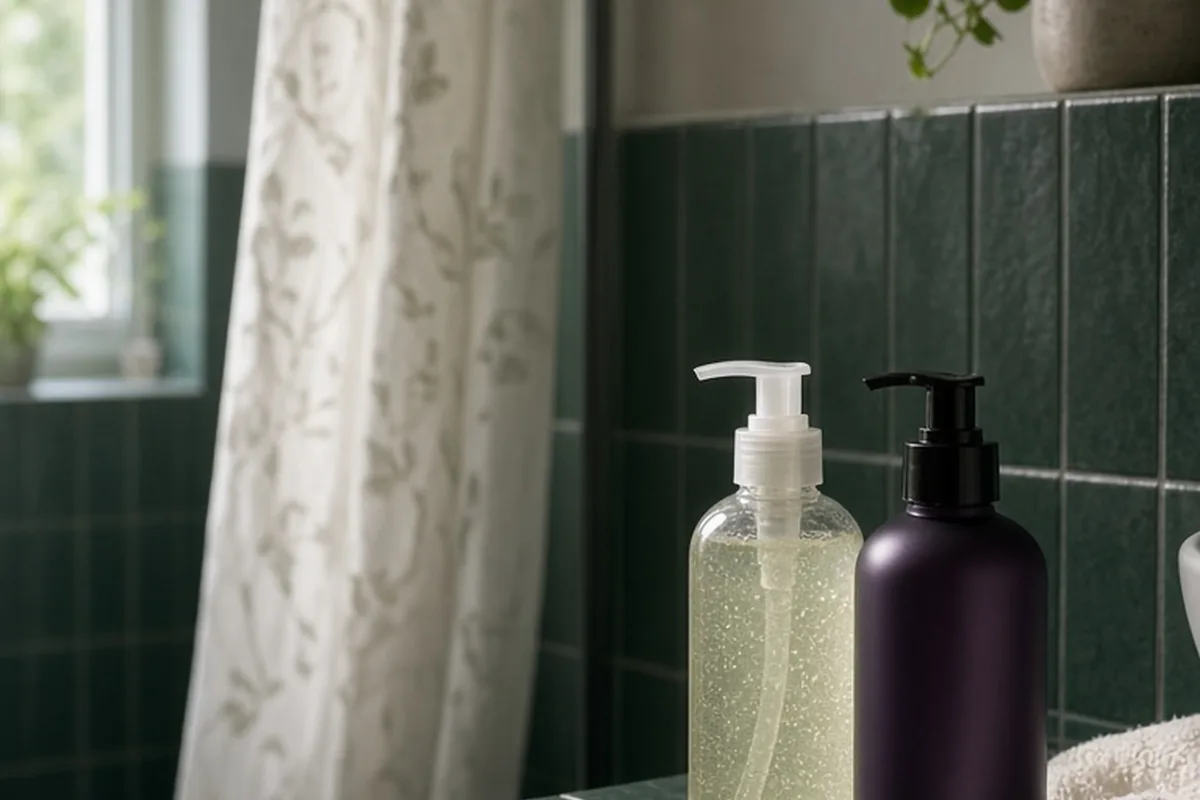
The main difference between at-home and salon moisturizing shampoos for curly hair lies in formulation concentration, surfactant balance, and application technique. Salon formulas typically use higher concentrations of refined conditioning agents, gentle secondary surfactants, and targeted humectants that cleanse without stripping natural oils. At-home results, however, depend heavily on water quality, product emulsification, and scalp sectioning, meaning proper technique can help high-quality retail products perform very closely to professional salon washes.
Curly hair has unique structural bends along the hair shaft that make it difficult for natural scalp sebum to travel down to the ends. Because of this natural tendency toward dryness, choosing the right cleansing method and product is one of the most critical decisions for maintaining curl elasticity, definition, and scalp health.
Formulation Differences Between Salon and Drugstore Moisturizing Shampoos
The primary distinction between professional salon shampoos and general retail moisturizing shampoos comes down to ingredient grade, water content, and surfactant systems. Standard mass-market shampoos often rely on higher water dilutions combined with primary surfactants like sodium laureth sulfate or ammonium laureth sulfate to produce a dense, immediate foam. While these cleanse effectively, they can strip the delicate lipid barrier of curly hair. In contrast, salon-grade moisturizing shampoos frequently utilize gentler, amphoteric or non-ionic cleansing agents such as sodium cocoyl isethionate, disodium laureth sulfosuccinate, or cocamidopropyl betaine, which remove surface debris while preserving structural moisture.
Beyond the cleansing base, professional formulations typically feature higher concentrations of low-molecular-weight humectants and specialized conditioning polymers, such as polyquaternium compounds and hydrolyzed proteins. These smaller molecules can penetrate the hair cuticle more effectively than heavy surface coatings. Drugstore moisturizing shampoos often compensate for stronger cleansing bases by adding heavier silicones, mineral oils, or dense plant butters. While these provide immediate slip in the shower, they can accumulate on curly strands over time, creating a barrier that prevents atmospheric moisture and lighter water-based hydrators from absorbing into the hair shaft.
The Mechanics of the Salon Wash: Why Professional Cleansing Feels Different
Many people notice that their curls feel substantially softer, lighter, and more defined immediately following a salon appointment, even when using similar styling products later at home. Much of this difference stems from physical technique and wash-basin conditions rather than the shampoo bottle alone. Professional stylists spend several continuous minutes thoroughly saturating the hair with warm, regulated water before applying shampoo. This complete saturation opens the outer cuticle slightly and allows water to dissolve water-soluble residues, meaning less physical shampoo is required to lift scalp oils.
Stylists also practice deliberate sectioning and targeted scalp manipulation. Rather than gathering the hair into a pile on top of the head—which causes friction, tangling, and uneven cleansing—a stylist works the product systematically through the root area with the pads of their fingers. The mid-lengths and ends of curly hair are rarely scrubbed directly; instead, they are cleansed gently by the diluted suds as the product is rinsed out under high-pressure, directional water flow. This mechanical precision prevents cuticle disruption and preserves natural curl clumps before conditioning even begins.
Matching Curl Porosity and Pattern to Cleansing Formulations
Understanding your curl porosity is essential when deciding between light hydrating cleansers and rich moisturizing shampoos. High-porosity curls have raised, open cuticles from mechanical manipulation, chemical coloring, or heat styling. These strands lose moisture rapidly and benefit immensely from salon-grade shampoos enriched with balanced proteins, fatty alcohols like cetyl and stearyl alcohol, and lipid replenishers that temporarily fill gaps along the hair shaft without weighing down the curl pattern.
Conversely, low-porosity curls feature tightly bound, overlapping cuticle layers that resist moisture penetration and are prone to product buildup. If you have low-porosity hair, using a rich, butter-heavy moisturizing shampoo—whether from the salon or a retail store—can quickly coat the exterior of the strand, leading to limp, greasy roots and brittle ends. Low-porosity curls thrive with lightweight, humectant-focused formulas containing aloe vera, glycerin, or panthenol alongside gentle clarifying surfactants that keep the cuticle clean enough to accept hydration during deep conditioning steps.
Replicating Salon Cleansing Techniques in Your Home Shower
To achieve salon-level bounce and moisture retention at home, start by adjusting your pre-wash routine. Spend a full two to three minutes ensuring your curls are thoroughly drenched under lukewarm water before reaching for your shampoo bottle. Divide your hair into at least four manageable sections, especially if you have thick, dense coils. Take a small, nickel-sized amount of moisturizing shampoo, rub it vigorously between wet palms to emulsify the formula, and apply it directly to the scalp within one section at a time.
Focus your energy exclusively on massaging the scalp using small, circular motions with your fingertips, avoiding circular scrubbing that creates friction knots. Keep the lengths of your hair hanging downward in their natural direction. When rinsing, let the water carry the lather down through the curls while gently smoothing downward with your hands. If your hair feels coated or does not produce a light lather on the first pass, rinse completely and perform a second quick cleanse using half the amount of product. The second wash will activate easily, lifting remaining impurities without over-stripping.
Managing Product Buildup, Hard Water, and Reset Cleansing
One common issue with relying exclusively on at-home moisturizing shampoos is the gradual accumulation of conditioning agents, styling polymers, and hard water minerals. Even high-end professional moisturizing shampoos deposit micro-conditioning agents to soften the hair. Over multiple weeks, these deposits can combine with calcium, magnesium, and chlorine from household tap water, creating an invisible film that makes curls feel dry, stiff, and unresponsive to leave-in conditioners.
Salons naturally avoid this problem by using filtered backwash systems and regularly integrating chelating or clarifying treatments prior to moisturizing washes. At home, you can maintain optimal curl health by incorporating a dedicated clarifying or chelating shampoo once every three to four weeks. Follow this reset wash immediately with an intensive moisturizing mask. This periodic clearing of the hair fiber ensures that your regular moisturizing shampoo can properly hydrate the strand rather than sitting on top of mineral and butter residue.
Cost-per-Wash, Longevity, and Financial Value Assessment
When evaluating the financial side of salon versus at-home hair care, looking strictly at the upfront bottle price can be misleading. Salon-grade shampoos are formulated with lower water concentrations, meaning you typically need significantly less product per wash compared to thinner retail alternatives. A standard bottle of professional shampoo can last several months for someone washing their curls once or twice per week, bringing the actual cost per wash down considerably over the life of the product.
However, investing in professional salon cleansers only yields value if your lifestyle, wash frequency, and styling routine align with the product's design. If you exercise daily, swim regularly, or prefer washing your hair frequently, cycling through high-end salon bottles can become cost-prohibitive. In these situations, a well-formulated, sulfate-free retail moisturizing shampoo paired with good shower mechanics offers a practical, budget-conscious solution that protects curl integrity without excessive recurring expenses.
How to Spot Incompatible Formulas: Signs Your Curl Shampoo Is Failing
Identifying whether your moisturizing shampoo is supporting your curl health requires monitoring how your hair behaves between wash days. If your hair feels squeaky, rough, or tangled immediately after rinsing the shampoo, the surfactant system is too aggressive for your curl pattern, regardless of how moisturizing the front label claims to be. True moisturizing cleansers should leave the root area clean while imparting enough slip that your fingers can glide through the base without snagging.
On the opposite end of the spectrum, if your curls feel coated, take significantly longer to air dry, or lose their spring within twenty-four hours of washing, the shampoo likely contains conditioning agents that are too heavy for your strand thickness. Fine curls in particular suffer when overloaded with heavy oils in the cleansing phase. If you notice persistent dullness or an itchy scalp alongside flat roots, transition to a lighter, sulfate-free hydrating formula with water-soluble humectants and reserve heavy emollients for your rinse-out conditioners and styling creams.
Frequently asked questions
Can I get salon-quality curl results using drugstore moisturizing shampoo?
Yes, you can achieve results close to a salon wash by selecting sulfate-free retail formulas that use gentle surfactants like cocamidopropyl betaine and avoiding heavy, non-water-soluble silicones. Emulsifying the product thoroughly in your hands and taking time to massage the scalp while keeping hair sectioned will significantly improve your results.
How often should curly hair be washed with a moisturizing shampoo?
Most curly hair types benefit from washing once or twice per week with a moisturizing shampoo to avoid stripping natural oils. Tighter coils and dry textures may prefer washing every seven to ten days, while looser waves or oily scalps may require cleansing every two to three days.
Why does my hair feel dry even after using a moisturizing shampoo at home?
Dryness after washing often stems from hard water mineral buildup, residual styling product coating the cuticle, or using water that is too hot during rinsing. Alternating in a clarifying wash once a month and installing a showerhead filter can help your moisturizing shampoo work effectively.
Should I apply moisturizing shampoo to the ends of my curly hair?
No, moisturizing shampoo should be concentrated directly on the scalp and root area where sebum and sweat collect. Allowing the diluted lather to gently rinse down through the mid-lengths and ends provides sufficient cleansing without depleting fragile moisture from older parts of the hair shaft.
Your next step
Assess your curl porosity, inspect your current shampoo's surfactant list, and practice sectioning your hair under warm water on your next wash day to see if improved technique delivers the results you want before investing in new products.