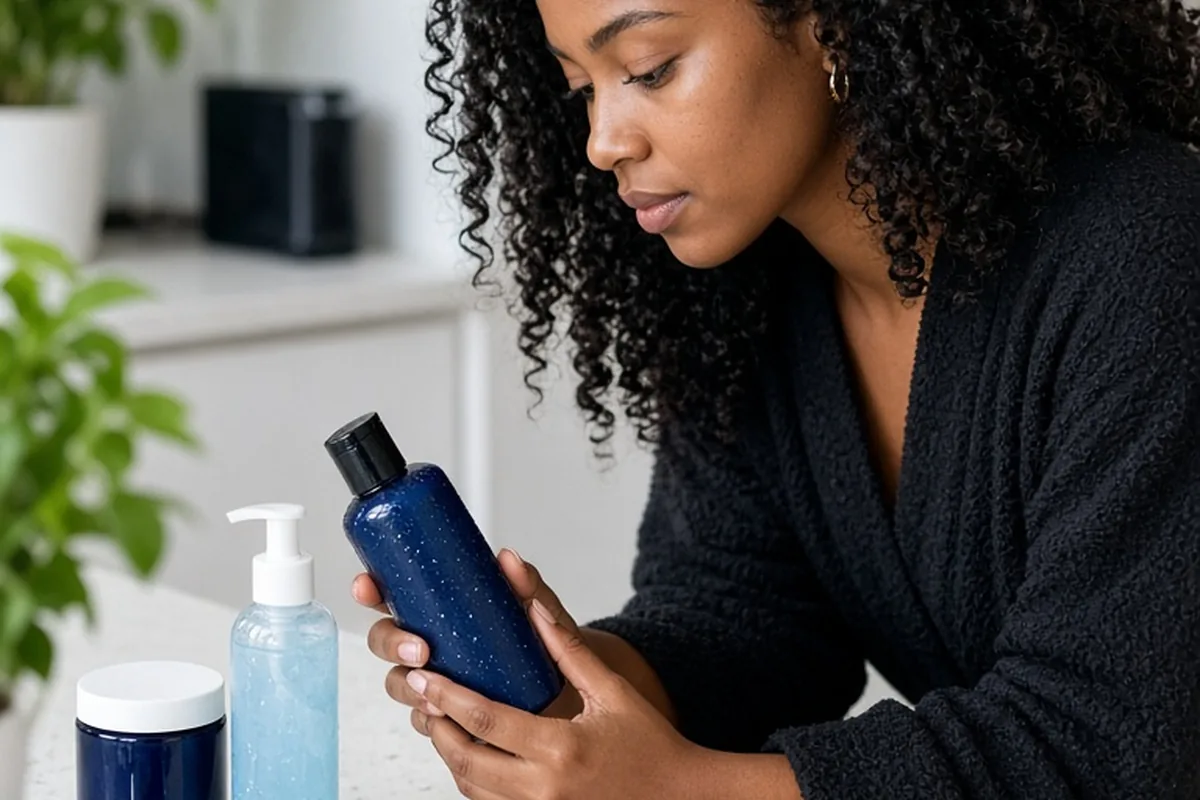
Beginners starting a curly hair routine should look for moisturizing shampoos formulated without harsh sulfates like sodium lauryl sulfate, prioritizing hydrating cleansers with gentle surfactants such as cocamidopropyl betaine or sodium cocoyl isethionate. Effective moisturizing shampoos balance mild cleansing with humectants like glycerin and conditioning emollients like jojoba oil or aloe vera to remove scalp buildup without stripping the natural oils your curl pattern requires for definition.
Starting a textured hair care routine often feels overwhelming due to conflicting advice and crowded store shelves. Choosing the right moisturizing cleanser establishes a healthy baseline by protecting your natural curl pattern from dehydration, breakage, and dullness from the very first wash.
Why Curly and Textured Hair Requires Specialized Moisturizing Cleansers
Curly hair has a distinct structural anatomy that makes it naturally more susceptible to dryness than straight hair. Straight hair fibers allow sebum, the natural protective oil produced by sebaceous glands on the scalp, to glide smoothly down the entire length of the hair shaft toward the ends. In contrast, curls, coils, and waves grow in spiral patterns, twists, and bends that create physical barriers for sebum distribution. As a result, while the scalp may accumulate sweat and natural oils over several days, the mid-lengths and ends of curly strands frequently remain parched and unprotected.
Traditional clarifying or standard commercial shampoos typically rely on aggressive anionic surfactants, such as sodium lauryl sulfate or ammonium laureth sulfate. These strong detergents are engineered to strip away all surface oils, dirt, and styling residue with high-foaming action. While effective at deep cleaning, these surfactants aggressively remove the delicate lipid barrier from textured hair cuticles. When the cuticle layer is stripped clean of lipids, the hair fiber loses moisture rapidly, becomes brittle, develops frizz, and loses its natural elasticity and curl formation.
Moisturizing shampoos formulated for curly hair solve this challenge by adjusting the surfactant system and incorporating conditioning lipids directly into the cleansing formula. Instead of completely stripping the hair fiber, these formulations selectively lift water-soluble residue, excess sebum, and environmental grime while leaving a protective cushion of hydration behind. This balanced cleansing approach preserves the hair cuticle integrity, prevents premature moisture loss during the shower, and prepares textured strands to receive leave-in conditioners and styling creams without roughing up delicate hair fibers.
Decoding Shampoo Labels: Gentle Surfactants Versus Moisture Blockers
Navigating ingredient lists is an essential skill for any beginner building a curly hair regimen. When evaluating product bottles, start by identifying the primary cleansing agents listed within the first five to seven ingredients. Gentle, curl-friendly surfactants include cocamidopropyl betaine, sodium cocoyl isethionate, decyl glucoside, coco-glucoside, and sodium lauroyl sarcosinate. These ingredients are derived from gentle sources such as coconut or glucose and have a milder molecular action that cleanses the scalp without depleting essential cellular moisture.
Beyond the cleansing agents, effective moisturizing shampoos incorporate balanced humectants and natural emollients. Look for ingredients such as vegetable glycerin, aloe vera leaf juice, panthenol (provitamin B5), hydrolyzed silk or wheat proteins, and lightweight plant oils like jojoba, sweet almond, or argan oil. Humectants work by drawing environmental water molecules into the hair shaft, while light emollients temporarily seal micro-gaps along the hair cuticle to smooth the surface and enhance light reflection for natural shine.
Beginners should also learn to distinguish between beneficial ingredients and those that may hinder moisture retention. Drying short-chain alcohols, such as isopropyl alcohol, alcohol denat, or propanol, can rapidly dehydrate curly hair and should generally be avoided near the top of ingredient lists. In contrast, fatty conditioning alcohols like cetyl alcohol, stearyl alcohol, and cetearyl alcohol are hydrating lubricants that soften strands. Furthermore, non-water-soluble silicones like dimethicone require periodic clarifying washes to avoid cumulative buildup that prevents moisture from penetrating the hair shaft.
Matching Moisturizing Shampoos to Your Porosity and Curl Pattern
While curl classification systems categorize hair into wavy (Type 2), curly (Type 3), and coily (Type 4) patterns, hair porosity is actually the most critical factor when selecting a moisturizing cleanser. Porosity refers to how easily your hair cuticles open and close to absorb and retain moisture. Determining whether your hair has low, medium, or high porosity helps you select a shampoo formula with the right weight, lipid content, and cleansing strength.
Low-porosity curly hair possesses tightly bound, overlapping cuticle scales that resist moisture absorption and are prone to rapid product buildup. If you have low-porosity hair, heavy moisturizing shampoos rich in thick butters, such as shea butter or cocoa butter, can sit on top of your strands, weighing down curls and causing limp texture. Instead, choose lightweight hydrating shampoos powered by humectants like glycerin, aloe vera, and lightweight carrier oils that cleanse thoroughly without leaving a waxy residue on tightly sealed cuticles.
High-porosity curly hair, conversely, has raised, damaged, or naturally open cuticles that absorb moisture instantly but lose it just as quickly through evaporation. This hair type often results from heat styling, chemical treatments, mechanical friction, or genetic curl texture. High-porosity curls thrive on richer, creamier moisturizing shampoos containing hydrolyzed plant proteins, ceramides, and nourishing fatty acids. These ingredients fill empty gaps in the damaged cuticle structure and provide a temporary protective barrier that prevents moisture from escaping during the wash cycle.
Step-by-Step Wash Day Techniques for Beginners Using Moisturizing Shampoo
Applying a moisturizing shampoo to curly hair requires a different physical technique than washing straight hair. Before stepping into the shower, consider pre-detangling your curls while they are dry or lightly coated with a slippery pre-shampoo oil treatment. Using your fingers or a wide-tooth comb to gently separate large tangles from ends upward reduces friction, prevents severe knotting when hair becomes saturated with water, and minimizes wet breakage during washing.
Once in the shower, thoroughly saturate your scalp and curls with lukewarm water for at least sixty to ninety seconds. Water saturation allows the gentle surfactants in moisturizing shampoos to disperse evenly across the scalp without requiring excess product. Dispense a quarter-sized amount of shampoo into your palms, emulsify it with a splash of water, and apply it directly to your scalp and roots using your fingertips. Avoid scrubbing with your fingernails, which can scratch delicate scalp tissue and disrupt follicular health.
Massage your scalp systematically in small circular motions to lift away dead skin cells, perspiration, and sebum deposits. Allow the shampoo suds to rinse naturally downward through the mid-lengths and ends of your curls as you rinse with lukewarm water. The diluted lather flowing down the hair shaft provides sufficient gentle cleansing for the delicate ends without the need for aggressive friction, which can disrupt curl clumping and cause frizz.
Determining Wash Frequency and Balancing Moisture with Clarification
Finding the right cleansing cadence is crucial for maintaining scalp health and curl definition. Washing textured hair every single day is generally discouraged, as constant exposure to water and manipulation can lead to hygral fatigue, a condition where the hair shaft weakens from repetitive swelling and contracting. Most beginners with wavy or loose curly patterns find success washing two to three times per week, while those with tighter curls or dense coils often prefer washing once every five to seven days.
Pay attention to tactile feedback from your scalp and hair rather than strictly following an arbitrary calendar schedule. If your scalp feels itchy, looks flaky, or smells stale, it is time to cleanse, regardless of when you last washed. Conversely, if your hair feels dry, brittle, or lacks bounce, you may be washing too frequently or using a formula that is too stripping for your current environmental humidity and activity level.
Even when using a well-formulated moisturizing shampoo, styling products, leave-in conditioners, and natural minerals from tap water will gradually accumulate on the hair fiber over time. To keep your moisturizing products performing effectively, incorporate a dedicated clarifying or chelating shampoo once every three to four weeks. Clarifying creates a clean, reset slate by dissolving stubborn product residue, ensuring that the hydrating humectants and conditioning agents in your daily routine can continue penetrating the hair shaft.
Common Beginner Pitfalls and How to Avoid Over-Hydration or Buildup
A widespread mistake among beginners transitioning to curly hair routines is judging the effectiveness of a moisturizing shampoo solely by its foam production. Gentle, sulfate-free cleansers contain mild surfactants that produce a soft, creamy micro-lather rather than giant mounds of airy suds. Adding excessive amounts of shampoo in pursuit of a heavy lather wastes product, makes thorough rinsing difficult, and increases the likelihood of residue accumulation along the scalp line.
Another common misstep is relying entirely on co-washing (using only conditioner to cleanse) and abandoning shampoo altogether. While co-washing can occasionally refresh mid-lengths between wash days, conditioners lack the necessary surfactant concentration to break down sebum, dead skin cells, and environmental pollutants on the scalp. Over time, exclusive co-washing can clog hair follicles, cause scalp irritation or dandruff, and weigh down curl roots, making curls look flat and unwashed.
Finally, beginners often neglect the importance of rinsing thoroughly. Because moisturizing shampoos contain emollient conditioning agents and humectants, rinsing requires patience and adequate water pressure. Spend at least one to two full minutes ensuring that all cleansing lather is completely flushed from the scalp and nape of the neck. Incomplete rinsing leaves behind residue that can attract environmental dust, irritate sensitive scalps, and prevent subsequent conditioning products from distributing evenly.
Frequently asked questions
Can I use a moisturizing shampoo if I have an oily scalp and dry curly ends?
Yes, you can use a moisturizing shampoo with an oily scalp by concentrating the product exclusively on your roots and scalp during application. Look for balanced formulas featuring gentle clarifying surfactants like sodium cocoyl isethionate or cocamidopropyl betaine paired with lightweight humectants. Avoid rubbing rich conditioning shampoos into the scalp, and use a monthly clarifying wash to maintain clear pores.
How do I know if my moisturizing shampoo is weighing down my curls?
If your curls feel greasy, look limp at the roots, or fail to form their natural bounce and definition within a few hours of drying, your shampoo formula may be too heavy for your hair porosity. Look at the ingredient list and consider switching from dense butter-heavy formulas to lighter, water-based cleansers with aloe vera or vegetable glycerin.
Should beginners use a separate conditioner after using a moisturizing shampoo?
Yes, you should always follow a moisturizing shampoo with a rinse-out conditioner or deep treatment. While moisturizing cleansers prevent dehydration during the washing process, a dedicated conditioner is formulated with a lower pH to close the hair cuticle, detangle strands, and lock in lasting hydration before styling.
What is the difference between a sulfate-free shampoo and a moisturizing shampoo?
A sulfate-free shampoo simply excludes harsh sulfate detergents, but it can still be clarifying or drying if formulated with other strong cleansers. A moisturizing shampoo specifically includes hydrating humectants, fatty conditioning alcohols, and nourishing oils designed to leave hair soft and pliable.
Your next step
Inspect your current shampoo's top five ingredients to verify that it uses gentle surfactants, then wash your scalp with lukewarm water this week to observe how your natural curl pattern responds.