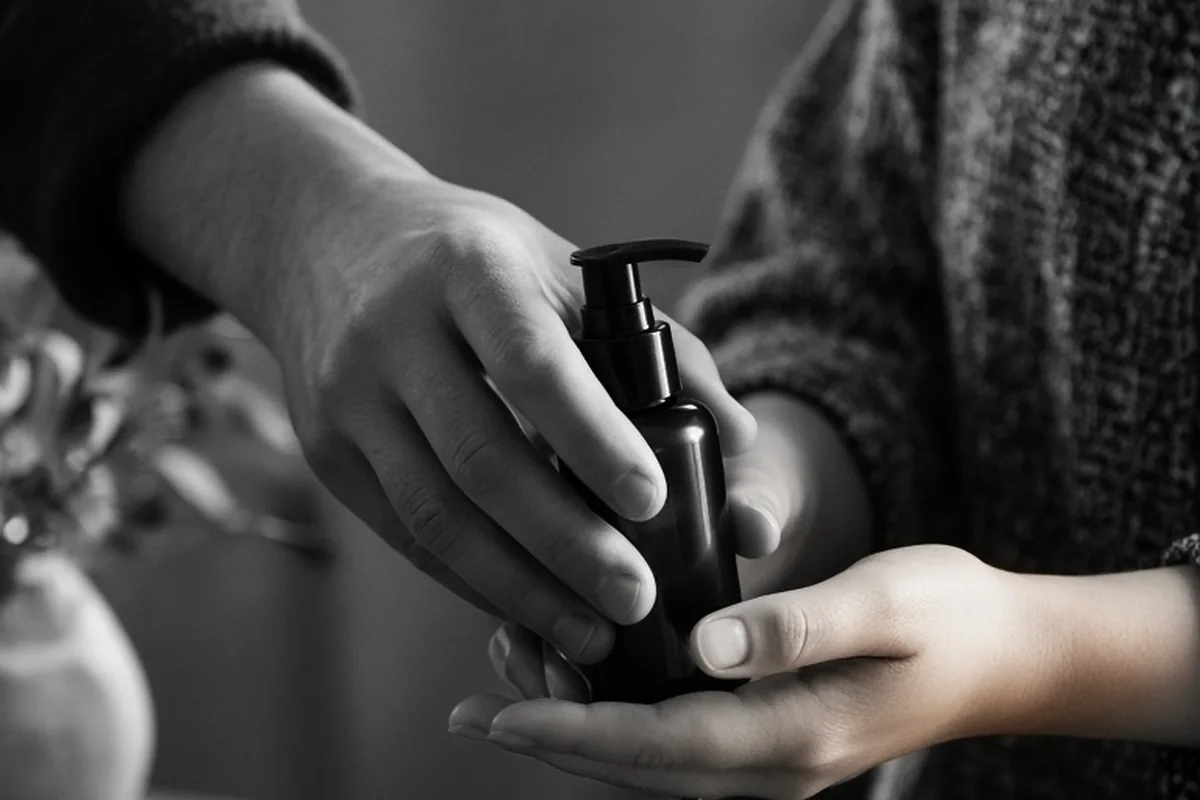
A moisturizing shampoo for fine hair with textured curls must deliver water-binding hydration without heavy surface coating. Look for gentle, sulfate-free cleansers powered by amphoteric surfactants and lightweight humectants like aloe vera, panthenol, and glycerin. Avoid dense mineral oils, heavy petrolatum, and thick shea butter bases, which collapse delicate fine strands while failing to penetrate textured curl patterns.
Caring for fine textured hair presents a unique mechanical paradox. Textured strands require continuous moisture to maintain elasticity and prevent cuticular breakage, yet fine hair fibers possess a narrow diameter that quickly collapses under traditional curl-nourishing formulas. Finding the right balance requires understanding both surfactant chemistry and humectant weight.
The Fine-and-Textured Dilemma: Strand Diameter Versus Curl Pattern
Hair texture and hair density are often conflated, but they describe entirely different physical characteristics of the hair fiber. Texture refers to the pattern of your strands, ranging from loose waves (Type 2) and defined spirals (Type 3) to dense coils and zig-zag patterns (Type 4). Strand diameter, on the other hand, measures the actual thickness of an individual fiber as fine, medium, or coarse. When you have fine hair that is also textured, each individual strand has a narrower cortex and fewer cuticle layers, making it inherently more vulnerable to snapping, yet the bends and turns of your curl pattern prevent scalp oils from traveling down the hair shaft.
Because natural sebum struggles to navigate the bends of a curl, textured hair is naturally prone to mid-shaft and end dryness. The conventional cosmetic industry often solves this by formulating textured hair products with heavy plant butters, unrefined vegetable oils, and dense silicones. While coarse textured hair can support these heavy emollients, fine textured hair cannot. The excess weight flattens the natural coil structure at the root, reduces volume, attracts environmental dust, and creates a greasy film that prevents actual water from entering the hair cortex.
Selecting a moisturizing shampoo for fine textured hair means choosing products that prioritize internal hydration rather than external occlusive coatings. Your goal is to thoroughly cleanse the scalp to preserve root lift while introducing soluble humectants that bind ambient moisture directly into the hair fiber without leaving heavy lipid deposits behind.
Cleansing Agents That Protect Fragile, Textured Cuticles
The primary function of any shampoo is to lift dirt, excess sebum, and environmental debris from the scalp, but harsh cleansing agents can strip the delicate lipid layer from fine cuticles. Strong anionic surfactants, such as sodium lauryl sulfate and sodium laureth sulfate, carry a high negative charge that aggressively strips surface oils and forces the cuticle scales outward. On fine textured hair, this cuticular lifting leads immediately to mechanical friction, severe tangling, and mid-shaft breakage during the wash process.
Instead of aggressive cleansers, look for secondary or amphoteric surfactants that provide a gentle cleanse while preserving moisture. Ingredients such as cocamidopropyl betaine, sodium cocoyl isethionate, disodium laureth sulfosuccinate, and sodium lauroyl methyl isethionate cleanse effectively without stripping the hair fiber of its natural moisture barrier. These cleansers generate a soft, low-friction lather that allows your fingers to glide through delicate curls without pulling or snagging.
Non-ionic surfactants, including decyl glucoside and coco glucoside, represent another mild category frequently found in high-performance moisturizing shampoos. While these plant-derived cleansers produce less foam than traditional sulfate bases, they clean the scalp surface without disrupting the acid mantle or drying out fine, fragile ends. If your fine curls feel stiff, squeaky, or parched immediately after rinsing, your cleanser is likely too aggressive for your hair diameter.
Lightweight Hydration Ingredients That Moisturize Without Flattening
Hydration for fine textured hair relies heavily on humectants—water-loving molecules that attract and hold water molecules within the hair cortex. High-performing ingredients include vegetable glycerin, panthenol (provitamin B5), sodium PCA, hyaluronic acid, and aloe vera juice. Panthenol is particularly valuable for fine strands because its low molecular weight allows it to penetrate beneath the cuticle into the cortex, increasing strand flexibility and creating the perception of fuller body without leaving a greasy residue.
Hydrolyzed proteins provide structural reinforcement alongside hydration, which is essential for fine textured hair that bends and folds under tension. Look for hydrolyzed silk, hydrolyzed quinoa, hydrolyzed wheat protein, or hydrolyzed keratin high on the ingredient list. Because these protein fragments are broken down into small chains, they temporarily fill microscopic gaps along a damaged cuticle, fortifying the strand against snapping while maintaining curl elasticity.
When emollients are incorporated into a moisturizing shampoo for fine hair, they must be exceptionally light. Ingredients like squalane, jojoba oil, argan oil, and lightweight ester derivatives provide surface softness and lubricity without coating the hair in an impermeable barrier. In contrast, avoid shampoos listing raw shea butter, cocoa butter, petrolatum, or heavy castor oil among their first five ingredients, as these dense lipids will quickly accumulate on fine curls.
Customizing Shampoo Schedules Across Wavy, Curly, and Coily Hair
Determining how often to wash fine textured hair depends on your specific curl pattern, scalp sebum production, and daily activity level. Fine wavy hair (Types 2A to 2C) typically experiences sebum migration faster than tighter curl patterns, often requiring cleansing every two to three days. Leaving fine wavy hair unwashed for too long allows natural oils to accumulate at the roots while the ends remain parched, leading to a stringy appearance and stretched-out wave definition.
Fine curly hair (Types 3A to 3C) usually thrives with a washing frequency of two to three times per week. Cleansing at this cadence keeps the hair follicles clear of dead skin cells and product buildup while replenishing the water content that fine curls lose through ambient evaporation. When washing, focus your shampoo application directly onto the scalp tissue, allowing the diluted runoff to cleanse the mid-lengths and ends as you rinse.
Fine coily hair (Types 4A to 4C) has the most delicate structural architecture due to sharp bends along the fiber, requiring careful handling to prevent breakage. A weekly or bi-weekly moisturizing wash schedule is common, but fine coils should never be left unwashed to the point where scalp flaking or product crust forms. Applying a botanical pre-shampoo oil or light conditioning emulsion prior to shampooing can cushion fine coils against friction while allowing the moisturizing shampoo to lift scalp impurities.
Diagnosing Moisture Deficiency Versus Product Buildup
A common point of confusion for individuals with fine textured hair is distinguishing between chronic dryness and heavy product buildup. Both conditions can manifest as dullness, frizzy ends, a lack of curl clumping, and a rough texture. However, treating product buildup with additional moisturizing products only exacerbates the problem, layering more residue over a suffocated hair strand and preventing water absorption.
To test your hair, take a clean, dry strand and run your fingers upward from the end toward the root. If your fingers encounter a tacky, waxy resistance or if your hair feels coated yet brittle when dry, you are likely dealing with product accumulation. Fine hair is especially susceptible to buildup from polyquaterniums, non-soluble silicones, and heavy styling creams that standard gentle shampoos fail to remove.
If you suspect buildup or if you wash your hair with hard municipal water containing high concentrations of calcium and magnesium, incorporate a gentle clarifying or chelating wash every three to four weeks. Follow this reset wash immediately with your standard lightweight moisturizing shampoo and a hydrating conditioner to restore moisture levels. This periodic deep cleanse ensures that your daily moisturizing ingredients can directly reach the keratin structure.
Application Technique: Washing Scalp and Strands Without Friction
The physical manipulation applied during hair washing plays a significant role in whether fine textured hair retains its health or suffers mechanical breakage. Before stepping into the shower, gently detangle dry or lightly oiled hair using your fingers or a wide-toothed comb, working patiently from the ends upward toward the roots. Detangling prior to water exposure reduces knot formation when wet hair is in its most fragile, elastic state.
Once thoroughly wet, dispense a nickel- to quarter-sized amount of moisturizing shampoo into your palms and emulsify it with water before touching your head. Apply the lather directly to the scalp at the crown, temples, and nape using the pads of your fingertips rather than your fingernails. Massage in small, circular motions to loosen sebum and lift cellular debris without piling your hair on top of your head, which causes extensive matting in fine curl patterns.
Allow the lather to cascade down the lengths of your hair during the rinse cycle. The dilute surfactant solution is fully capable of cleansing atmospheric dirt from fine strands without requiring vigorous scrubbing along the delicate lengths. Rinse thoroughly with lukewarm water, as excessively hot water can strip protective lipids, while cold water may prevent effective surfactant rinsing.
Formulating a Complete Wash Routine Around Your Cleanser
A moisturizing shampoo is only the foundational step in a balanced hair regimen; its performance depends heavily on the complementary products you apply afterward. Following your shampoo, apply a lightweight, silicone-free conditioner designed for fine textures. Focus conditioner application strictly from the mid-shaft down to the ends, avoiding direct scalp contact to prevent premature root flattening and clogged follicles.
When styling, choose water-based leave-in conditioners, light botanical foams, or flexible-hold gels rather than dense curl creams or heavy pomades. Look for styling products that utilize flaxseed extract, marshmallow root, or pectin to create definition and hold without depositing heavy residual oils. Layering heavy leave-in products over hair washed with a moisturizing shampoo negates the lightweight bounce and volume the cleanser worked to create.
Finally, inspect your drying techniques. Gently squeeze excess water out of your hair using a smooth microfiber towel or a clean cotton T-shirt instead of a standard terrycloth towel, which catches on delicate fine cuticles. If using a hair dryer, attach a diffuser and select low-to-medium heat settings to preserve curl definition while minimizing thermal stress on fine keratin bonds.
Illustrative Scenarios
Restoring Definition in Fine 3B Curls
An individual with fine, low-density 3B curl patterns struggled for months with chronic flatness at the crown and persistent tangles at the ends. Believing their textured hair required maximum richness, they consistently used a heavy, shea-butter-based co-wash system. Within weeks, their fine curls became limp, heavy, and unresponsive to styling. After switching to a gentle, sulfate-free moisturizing shampoo formulated with sodium cocoyl isethionate, vegetable glycerin, and hydrolyzed wheat protein, they cleansed their scalp thoroughly twice a week. Within three washes, the accumulated weight lifted, revealing springy, defined curls with natural root volume and improved moisture retention.
Key point: Fine textured hair needs water-binding humectants and thorough scalp cleansing rather than dense, butter-heavy conditioning washes that cause mechanical weighing and curl elongation.
Frequently asked questions
Can I use a co-wash instead of a moisturizing shampoo if I have fine textured hair?
Co-washing exclusively is generally not recommended for fine textured hair. Conditioning cleansers lack the surfactant strength needed to lift sebum from fine strands, quickly leading to scalp buildup, flat roots, and limp curl patterns. A gentle, sulfate-free moisturizing shampoo provides the necessary cleanse while still protecting fragile moisture levels.
How do I know if a moisturizing shampoo is too heavy for my hair?
If your hair feels greasy or coated immediately after drying, or if your curl pattern looks stretched and loses its volume within hours of washing, the formula is likely too rich. Look for shampoos free from heavy plant butters, petrolatum, and dense mineral oils.
Will protein in a moisturizing shampoo make fine textured hair brittle?
Lightweight hydrolyzed proteins benefit fine textured hair by reinforcing fragile strands and supporting curl elasticity. However, if your hair feels stiff or straw-like after regular use, alternate your protein-infused moisturizing shampoo with a purely moisture-focused, protein-free cleanser to maintain proper balance.
Does fine textured hair need a sulfate-free shampoo?
Sulfate-free cleansers are typically best for fine textured hair because traditional sulfates strip the fragile cuticle layer, leading to friction and breakage. Secondary surfactants like cocamidopropyl betaine or sodium cocoyl isethionate clean effectively without disrupting the lipid barrier.
Your next step
Check the ingredient list of your current shampoo today and verify that lightweight humectants appear near the top while heavy butters and harsh sulfates remain absent.