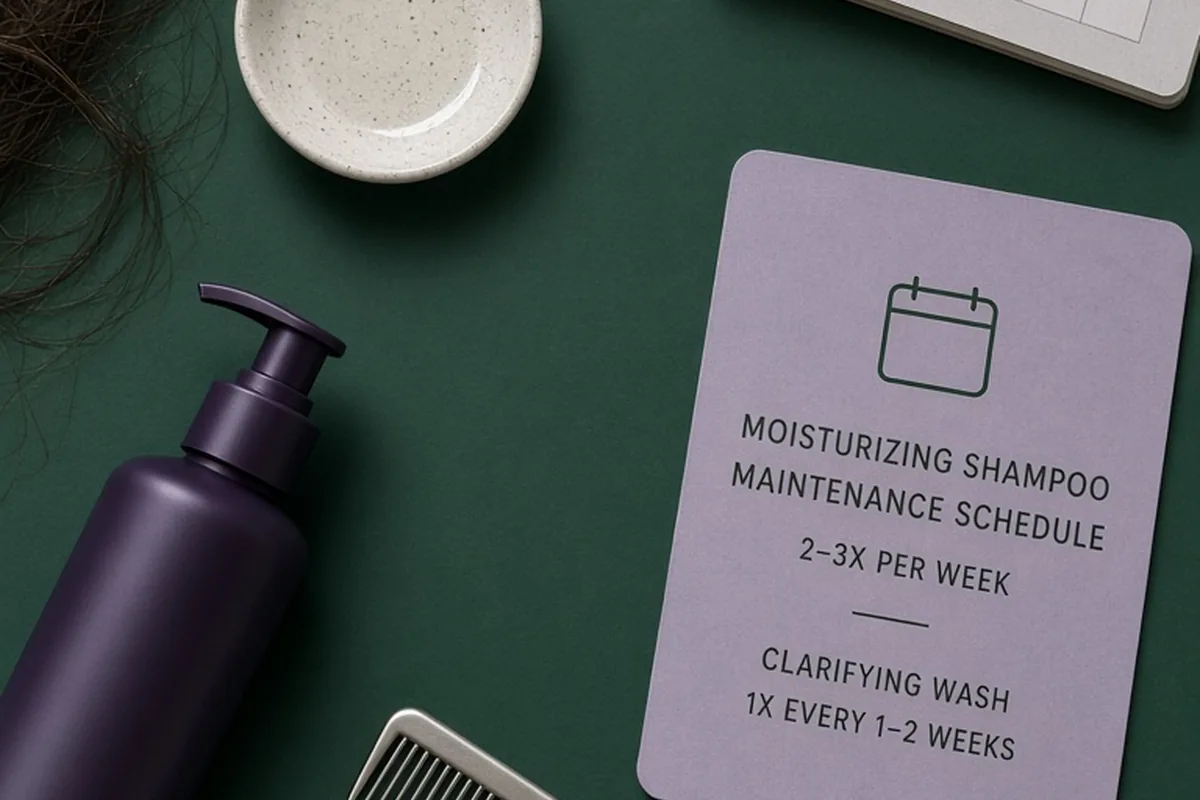
A moisturizing shampoo maintenance schedule for fine hair typically involves using a lightweight hydrating formula two to three times per week, paired with a clarifying shampoo once every one to two weeks. Fine strands require humectant-rich, low-oil hydration focused on the mid-lengths and ends to prevent dryness, while keeping the scalp clean to avoid flat, greasy roots. Adjust frequency based on scalp sebum production, seasonal humidity, and daily styling product usage.
Fine hair presents a unique paradox: individual hair shafts have a narrow diameter that makes them fragile and prone to moisture loss, yet they can become weighed down and greasy within hours if treated with heavy conditioning agents.
Diagnosing Fine Hair Hydration Needs Versus Heavy Product Buildup
Fine hair is defined by the small circumference of each individual strand, not the total density of hair on your head. Because each strand has fewer cuticle layers and a smaller cortex than medium or coarse hair, it loses moisture rapidly when exposed to heat styling, dry indoor air, or frequent washing. However, this same physical structure means fine hair has very little surface area to absorb heavy oils, butters, and conditioning polymers. When treated with rich moisture products designed for thick textures, fine strands quickly collapse against the scalp, losing body, movement, and natural lift.
To establish an effective maintenance schedule, you must first distinguish between hair that is genuinely dehydrated and hair that is suffering from product overload. Dehydrated fine hair often feels rough to the touch, generates static electricity easily, tangles at the nape of the neck, and exhibits brittle or split ends while the roots may remain oily. In contrast, over-conditioned or product-laden fine hair feels limp, appears dull or greasy even shortly after washing, struggles to hold any style, and feels coated or sticky when dry. Recognizing whether your strands need water-based hydration or a thorough reset dictates how often you should reach for a moisturizing formula.
Weekly Moisturizing Shampoo Schedule by Scalp Type and Activity Level
A successful wash schedule depends on balancing the oil output of your scalp with the moisture needs of your lengths. For an oily scalp with fine hair, washing three to four times per week is generally optimal. On this cadence, use a lightweight moisturizing shampoo for two or three of those washes and a gentle balancing or volumizing shampoo for the remaining wash. If you exercise daily or sweat heavily, rinse your scalp thoroughly with lukewarm water on intermediate days rather than using full-strength shampoo every time, which can trigger excess sebum production from over-drying.
For a normal or balanced scalp, a schedule of two to three washes per week maintains adequate cleanliness without stripping natural lipids. Use your moisturizing shampoo for every standard wash, allowing the gentle surfactants to remove daily dust and minor oil while delivering humectants to vulnerable ends. For a dry or sensitive scalp, limit washing to one or two times per week. In this scenario, every standard wash should utilize a moisturizing formula, and you should extend the time between clarifying treatments to avoid irritating the skin barrier on your scalp.
Choosing Lightweight Ingredients in Moisturizing Shampoo for Fine Hair
Selecting the right moisturizing shampoo requires evaluating ingredient labels for weightless hydrators rather than dense occlusives. Fine hair benefits most from humectants, which draw ambient moisture into the hair shaft without forming a thick outer film. Look for ingredients such as glycerin, hyaluronic acid, aloe vera leaf juice, panthenol (Pro-Vitamin B5), and hydrolyzed proteins derived from rice, wheat, or silk. Hydrolyzed proteins offer the added benefit of temporarily reinforcing the delicate structure of fine strands, improving both moisture retention and natural volume.
Conversely, avoid shampoos that place heavy occlusives high on their ingredient lists. Formulations dominated by unrefined shea butter, cocoa butter, mineral oil, heavy silicones such as high-viscosity dimethicone, or pure coconut oil will coat fine strands, leading to premature flattening and grease buildup. Instead, if plant oils are present, they should appear toward the middle or end of the list and consist of lighter options like jojoba, argan, or grapeseed oil, which rinse away cleanly while offering surface protection.
Integrating Clarifying Washes to Prevent Strands from Falling Flat
Even the most weightless moisturizing shampoo leaves trace conditioning agents on the hair cuticle over time. For fine hair, this gradual accumulation reduces natural volume and makes the hair feel heavy, stringy, or unresponsive to styling. Incorporating a dedicated clarifying shampoo into your schedule acts as a reset button, stripping away mineral deposits from tap water, styling product residue, and residual conditioning agents so your moisturizing shampoo can work effectively again.
Apply a clarifying shampoo once every one to two weeks, substituting it for your usual moisturizing wash. When clarifying, concentrate the lather strictly on the scalp and roots, allowing the runoff to clean the mid-lengths and ends as you rinse. Because clarifying formulas are more astringent, always follow with a targeted lightweight conditioner or a five-minute hydrating mask applied exclusively to the lower half of your hair. This step prevents the vulnerable ends of fine hair from becoming brittle while ensuring the scalp is completely refreshed.
Application Technique: Washing and Conditioning Steps for Fine Strands
The physical method used to wash fine hair is just as critical as the products you select. Before stepping into the shower, gently detangle your hair with a wide-tooth comb or flexible bristle brush to prevent wet tangling and breakage. Thoroughly saturate your hair with lukewarm water for at least one minute before applying shampoo; waterlogged strands allow the shampoo to distribute evenly without needing excessive product.
Dispense a quarter-sized amount of moisturizing shampoo into your hands and emulsify it between your palms before applying it directly to the scalp. Massage the scalp with your fingertips using gentle circular motions, avoiding vigorous scrubbing of the lengths. Rinse thoroughly with lukewarm water. When applying conditioner, use a sparing amount and apply it strictly from the mid-lengths down to the ends, keeping the product at least two inches away from the root area. Finish with a cool water rinse to help smooth the cuticle layer and enhance natural shine.
Seasonal and Environmental Adjustments to Your Routine
Your hair maintenance schedule should shift alongside environmental changes throughout the year. During winter or in arid climates, indoor heating and low humidity pull moisture from fine hair rapidly, causing increased static, flyaways, and brittleness. During these months, keep your moisturizing shampoo as the primary cleanser, consider reducing the frequency of clarifying washes to once every three weeks, and introduce a weightless leave-in conditioning spray containing humectants on damp ends after washing.
In contrast, hot and humid summer months introduce higher levels of sweat, sebum production, and atmospheric humidity that can cause fine hair to look limp and greasy faster. During this period, you may need to increase your overall wash frequency by one day per week and clarify every seven to ten days. If you swim in chlorinated pools or ocean water, rinse hair immediately with fresh water and apply a dime-sized amount of lightweight conditioner to the ends before entering the water to minimize mineral and chemical absorption.
Troubleshooting Common Schedule Missteps and Volume Loss
If you notice your hair feels heavy or greasy immediately after drying, you are likely either using too much product, applying conditioner too close to the scalp, or failing to rinse thoroughly. Fine hair requires extended rinsing to ensure all surfactant and conditioning residues are cleared. If greasiness persists despite thorough rinsing, your chosen moisturizing shampoo may contain oils or silicones that are too heavy for your hair diameter, indicating a need to switch to a humectant-focused, gel-based formula.
If your ends feel straw-like and tangle easily despite following your schedule, the issue may stem from excessive heat styling, mechanical damage from rough towel drying, or split ends that have traveled up the hair shaft. Shampoos cannot repair split ends once they form; they can only prevent new damage by maintaining moisture balance. In this scenario, schedule a micro-trim to remove damaged tips, replace rough cotton bath towels with a microfiber towel or smooth cotton wrap, and apply a thermal protectant before using any hot tools.
Frequently asked questions
Can I use a moisturizing shampoo every day if I have fine hair?
Daily use of moisturizing shampoo is generally unnecessary for fine hair and can lead to limp strands from product buildup. If you have an active lifestyle or an exceptionally oily scalp that requires daily washing, alternate your moisturizing shampoo with a gentle daily scalp rinse or lightweight balancing cleanser.
How do I know if my fine hair is over-moisturized?
Over-moisturized fine hair, often referred to as moisture overload or hygral fatigue, feels overly soft, mushy when wet, lacks elasticity, and cannot hold volume or styling curls. If your hair displays these signs, temporarily swap your moisturizing shampoo for a protein-balancing or clarifying wash.
Should I use a hair mask on fine hair while following this schedule?
You can use a hair mask on fine hair, but it should be restricted to once every two to three weeks and applied strictly from mid-lengths to ends. Choose a mask formulated specifically for fine hair that emphasizes hydrolyzed proteins and humectants rather than thick plant butters.
Does hard water change how often I need to clarify fine hair?
Yes, hard water contains high levels of calcium and magnesium that bind to fine hair shafts, blocking moisture absorption and accelerating product buildup. If you have hard water, increase your clarifying or chelating shampoo frequency to once a week to keep the hair shaft clean and responsive.
Your next step
Assess your scalp oiliness and end dryness over a 48-hour period without styling products to determine whether your baseline wash frequency should be two, three, or four days per week.