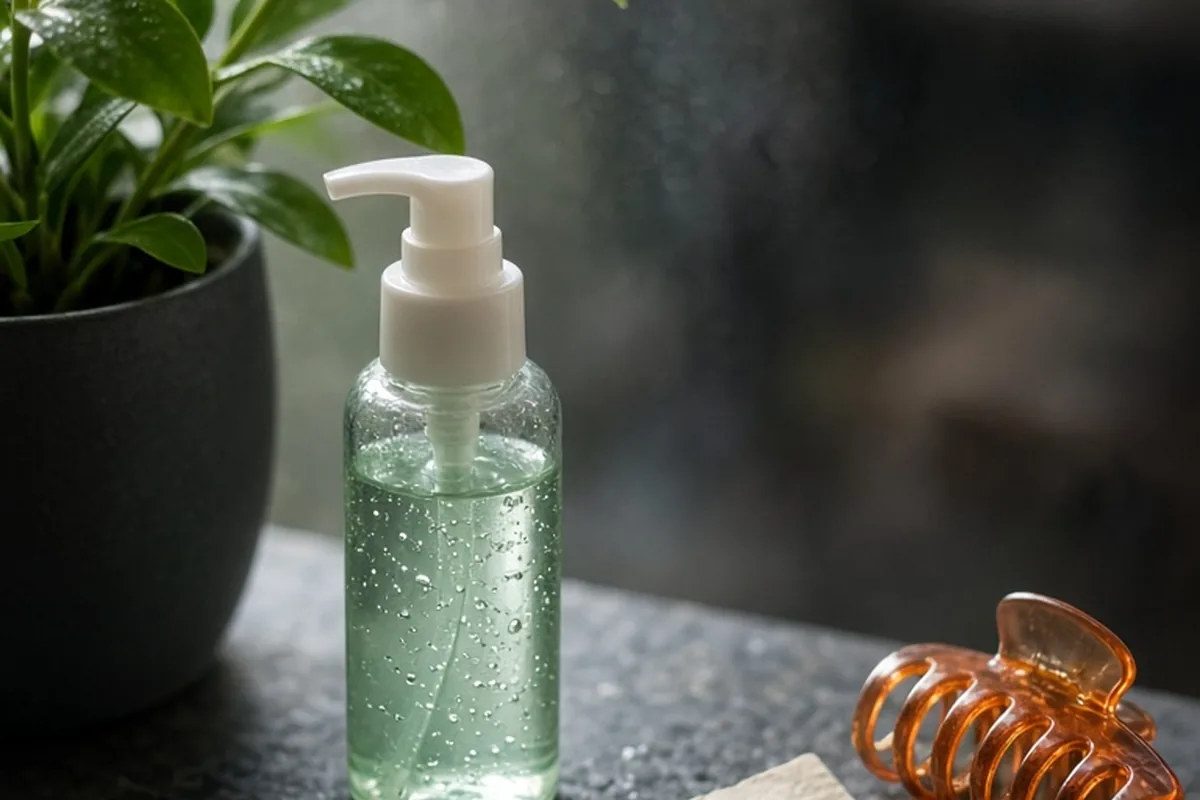
To moisturize fine hair without losing volume, choose lightweight shampoos formulated with water-soluble humectants like glycerin, panthenol, and aloe vera rather than heavy butters or dense oils. Focus application strictly on the scalp to remove excess sebum, allowing the suds to gently cleanse the lengths during rinsing. Balance regular moisturizing washes with a weekly clarifying rinse to prevent product buildup and keep delicate strands bouncy and resilient.
Fine hair presents a distinct daily challenge: individual strands have a narrow diameter that makes them fragile and prone to dryness, yet they can become limp and greasy within hours when exposed to heavy conditioning agents. Achieving soft, hydrated locks without sacrificing natural body requires an understanding of how moisturizing cleansers interact with delicate hair fibers.
Why Fine Hair Needs Specialized Moisture Without Added Weight
The physical structure of fine hair is fundamentally different from medium or coarse hair types. Each individual strand has a smaller circumference and contains fewer cuticle layers protecting the internal cortex. This structural reality means fine hair loses internal hydration quickly when exposed to daily heat styling, environmental sun exposure, dry indoor air, and friction from pillowcases or hats. Because the protective cuticle barrier is naturally thinner, moisture evaporates rapidly, leaving strands rough, prone to static, and susceptible to split ends.
At the same time, fine hair is easily overwhelmed by topical products. The surface area of each hair shaft is small, so even modest amounts of dense lipids, synthetic silicones, or thick plant butters coat the fiber completely. Instead of absorbing into the strand, these heavy substances sit on the exterior, clinging to adjacent hairs and causing them to clump together. The result is hair that looks flat, stringy, and visibly oily at the crown while remaining parched and brittle at the ends. Finding the right balance requires selecting cleansers that deliver water-binding molecules rather than heavy occlusive coatings.
Understanding your hair porosity also plays a decisive role in this dynamic. Low-porosity fine hair features tightly closed cuticles that resist moisture absorption, causing standard moisturizing shampoos to sit on the surface and create instant buildup. Conversely, high-porosity fine hair absorbs moisture readily through damaged or raised cuticles but loses it just as quickly. Identifying whether your fine hair needs gentle surface sealing or deep humectant penetration will dictate how frequently you wash and which formulation works best for your routine.
Moisturizing Shampoo Ingredients That Won't Flatten Fine Strands
When evaluating moisturizing shampoos for fine hair, the ingredient deck reveals whether a formula will provide buoyant hydration or heavy buildup. The most effective options rely primarily on lightweight humectants. Ingredients such as glycerin, panthenol (provitamin B5), hyaluronic acid, and aloe vera leaf juice attract moisture from the surrounding environment and bind it directly to the hair shaft without leaving a waxy residue. Panthenol is particularly valuable for fine strands because its molecular size allows it to penetrate the cuticle and swell the hair shaft slightly, creating a subtle volumizing effect while improving moisture retention.
Hydrolyzed proteins represent another critical category for fine hair health. Ingredients like hydrolyzed wheat protein, hydrolyzed silk, and hydrolyzed quinoa possess small molecular weights that fit into gaps along a weathered cuticle layer. These proteins temporarily reinforce the hair fiber, providing structural rigidity and tensile strength so delicate strands do not snap under tension. Unlike thick conditioning creams, hydrolyzed proteins offer weightless conditioning and help the hair retain internal water without flattening the root.
Conversely, certain ingredients should generally be avoided or minimized in daily cleansers for fine hair. Heavy concentrations of unrefined shea butter, cocoa butter, petrolatum, mineral oil, and non-water-soluble silicones like high-viscosity dimethicone tend to accumulate rapidly on fine strands. While these ingredients perform well on thick, coarse, or highly coily textures, they quickly overburden fine hair. Instead, look for light, fast-absorbing botanical oils such as jojoba oil, argan oil, or meadowfoam seed oil listed lower on the ingredient label, where they provide slip without weight.
Mastering the Scalp-Focused Cleansing Technique
The technique you use in the shower is just as important as the bottle you select. Because fine hair has a high density of sebaceous glands relative to its total hair mass, the scalp produces enough natural sebum to coat fine roots quickly. When applying a moisturizing shampoo, dispense a nickel-sized amount into your hands and emulsify it thoroughly between your palms with warm water before bringing it to your head. This distributes the surfactant system evenly and prevents concentrated product from settling into one spot.
Apply the lather directly to the scalp and hairline, using the pads of your fingertips to gently massage in circular motions. Avoid bunching the ends of your hair up onto your crown to scrub them, as this creates mechanical friction, tangles the delicate strands, and strips the fragile ends of their protective lipid layer. The concentrated lather should remain focused on lifting dirt, sebum, and environmental debris from the scalp skin.
When it is time to rinse, allow the dilute suds to flow down the mid-lengths and ends naturally as the water runs through your hair. This secondary contact is sufficient to cleanse everyday dust and styling residues from the lengths without causing dryness or tangling. Rinse thoroughly for at least sixty seconds with lukewarm water, ensuring no surfactant residue remains at the nape of the neck or along the crown, as leftover product residue is a primary cause of post-wash limpness.
Adjusting Wash Frequency and Incorporating a Clarifying Reset
Fine hair often requires a more frequent cleansing cadence than coarser hair types because sebum travels down the smooth, narrow shaft rapidly. Depending on your sweat levels, climate, and natural oil output, washing fine hair every other day or every two days with a gentle, moisturizing shampoo usually maintains optimal scalp hygiene without stripping the fiber. Attempting to stretch washes too long with dry shampoo can lead to clogged hair follicles, inflammation, and eventual strand weakening.
Even when using well-formulated, lightweight moisturizing shampoos, microscopic deposits of conditioning agents, minerals from hard tap water, and environmental pollutants gradually collect on fine strands over time. When this happens, hair begins to feel simultaneously greasy at the scalp and dry at the ends, resisting style and losing bounce. To solve this, integrate a dedicated clarifying shampoo into your schedule once every one to two weeks, depending on your styling product usage.
A clarifying reset removes built-up polymers and hard water minerals, effectively resetting the hair cuticle so your daily moisturizing shampoo can penetrate cleanly once again. Always follow a clarifying session with an appropriate lightweight conditioner or a targeted mid-length hydration treatment to replenish essential moisture immediately after deep cleansing.
Pairing Your Cleanser with Strategic Conditioning Methods
A common mistake among people with fine hair is skipping conditioner entirely out of fear that it will destroy root volume. However, neglecting conditioner leaves the cuticle scales open and vulnerable to friction, leading to split ends and breakage. The solution lies in strategic application and alternative methods such as reverse washing. In reverse washing, you apply a light conditioner to your damp mid-lengths and ends first, let it sit for two minutes, and then apply your moisturizing shampoo strictly to the scalp, rinsing both out together. This shields delicate ends from over-cleansing while guaranteeing zero heavy residue remains near the root.
If you prefer traditional post-shampoo conditioning, apply your product strictly from the ear line downward. Squeeze excess water from the strands before application so the conditioner is not diluted, and use a wide-tooth comb to distribute the product evenly across the lower third of your hair. Look for rinse-out formulas featuring cetyl alcohol, stearyl alcohol, or behentrimonium chloride, which provide detangling slip and softness without creating greasy build-up.
For leave-in treatments, replace heavy styling creams and silicone serums with fine-mist, water-based leave-in sprays. Lightly misting a protein- and humectant-enriched spray onto towel-damp hair provides thermal protection and manageable slip without coating the individual fibers in a way that prevents them from moving freely.
Drying and Mechanical Care to Maintain Moisture in Fragile Strands
Because fine hair has less physical mass, it is especially fragile when wet. Water temporarily disrupts the internal hydrogen bonds within the hair cortex, stretching the strand and leaving it vulnerable to snapping. After using your moisturizing shampoo and rinse, never rub your hair aggressively with a standard terrycloth towel. The coarse loops of cotton snag fine cuticles, creating microscopic tears that lead to frizz and dullness. Instead, gently squeeze and blot moisture using a smooth microfiber towel or a clean cotton T-shirt.
When detangling, always start at the tips and slowly work your way upward toward the roots using a flexible-bristle detangling brush or a seamless wide-tooth comb. If you encounter a knot, gently separate the strands with your fingers rather than pulling the brush through with force. Applying a light detangling spray beforehand reduces surface tension and protects the cuticle from mechanical stretching.
If you use a blow dryer, apply a lightweight thermal protectant and select low-to-medium heat with medium airflow. Direct the airflow downward along the hair shaft from root to tip to encourage the cuticle scales to lie flat, which locks in internal hydration and maximizes natural shine. Avoid holding the heat nozzle directly against the hair fiber, as excessive localized heat quickly boils trapped moisture inside fine strands, causing permanent structural damage.
Adapting Your Hydration Routine for Changing Seasons and Climates
Environmental factors dramatically alter how moisturizing shampoos perform on fine hair. During cold winter months, artificial indoor heating significantly lowers ambient humidity, pulling moisture out of exposed hair fibers. Fine hair often responds with severe static flyaways and brittle ends. During this period, you may need to increase the frequency of your moisturizing shampoo washes, shorten shower times to prevent hot water stripping, and incorporate a weekly lightweight humectant hair mask on your ends.
In contrast, humid summer weather introduces high levels of atmospheric moisture that can cause fine hair to swell, lose its shape, and fall flat. When humidity is high, humectants can sometimes draw too much water vapor into the cortex, causing the hair shaft to expand unevenly and frizz. During warm, humid months, you may benefit from alternating your moisturizing shampoo with a gentle balancing formula and finishing your styling routine with a weightless anti-humidity shield that repels excess airborne moisture.
Illustrative Scenarios
Adjusting Cleansing Routine for Fine, Color-Treated Hair
A person with fine, shoulder-length hair noticed that traditional rich hydrating shampoos left their roots oily by mid-afternoon while their color-treated ends remained dry and prone to splitting. They switched to a formula centered on panthenol, glycerin, and hydrolyzed silk, applied the lather exclusively to the scalp, and adopted the reverse-washing technique on wash days. They also scheduled a gentle clarifying wash every ten days to remove residue.
Key point: Focusing lightweight humectant cleansers on the scalp while protecting dry ends with reverse washing restores balanced moisture and maintains root lift without causing product buildup.
Frequently asked questions
Can I use a moisturizing shampoo on fine hair every day?
Yes, provided the shampoo uses mild surfactants and lightweight humectants rather than dense oils or heavy butters. If you lead an active lifestyle or produce significant scalp oil, a daily gentle moisturizing wash prevents follicle buildup while maintaining strand hydration.
What is the difference between a volumizing shampoo and a moisturizing shampoo for fine hair?
Volumizing shampoos primarily focus on thorough cleansing and depositing structural polymers to create lift and separation between strands, which can sometimes feel slightly drying over time. Moisturizing shampoos focus on water retention and cuticle smoothing, requiring careful formulation to ensure they hydrate without leaving heavy residues.
How do I know if a moisturizing shampoo is too heavy for my fine hair?
If your hair feels coated, looks piecey or stringy shortly after drying, or loses its volume within a few hours, the formula likely contains heavy occlusives or silicones. Healthy hydration should leave fine hair feeling soft, bouncy, and completely clean at the root.
Should I apply moisturizing shampoo to the entire length of my fine hair?
No. You should concentrate application on the scalp where excess sebum and debris collect. Allowing the diluted lather to run through the mid-lengths and ends during rinsing provides all the cleansing your delicate ends need without stripping their moisture.
Your next step
Inspect your current shampoo bottle's ingredient list today, set aside formulas that rely on heavy plant butters or mineral oils, and switch to a lightweight humectant cleanser applied exclusively to your scalp.