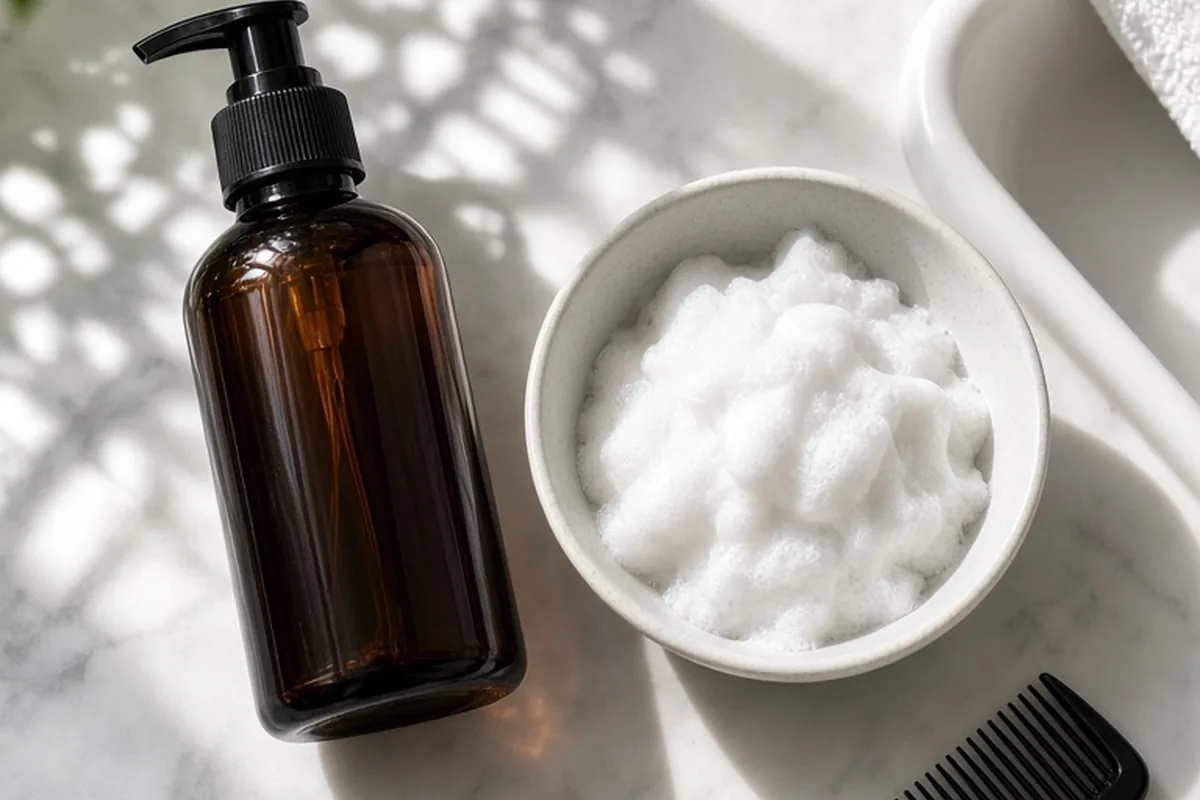
The most common moisturizing shampoo mistakes include applying rich formulas directly onto an unrinsed or oily scalp, skipping clarifying washes, choosing heavy hydrating formulas for low-porosity or fine hair, washing with hot water, and failing to emulsify the shampoo before application. Correcting these errors prevents greasy roots, weighed-down strands, chronic scalp buildup, and paradoxically dry, brittle ends.
Moisturizing shampoos are formulated to preserve natural oils and protect compromised hair fibers, but using them incorrectly can quickly lead to limp strands, clogged follicles, and dull texture.
Overlooking Scalp Needs in Favor of Hair Length Dryness
A frequent error when choosing a moisturizing shampoo is treating the hair fiber and the scalp as if they have the exact same biological requirements. Your scalp is living skin containing a dense network of sebaceous glands that produce natural oils, whereas the lengths and ends of your hair are non-living keratin structures that suffer from daily environmental exposure, mechanical brushing, and heat styling. When people observe split ends, frizz, or dry mid-lengths, their immediate reaction is often to purchase an ultra-rich, oil-heavy moisturizing shampoo. However, massaging dense conditioning agents, heavy plant butters, and thick silicones directly into the scalp can overwhelm the follicular openings, disrupt the skin barrier, and trap dead skin cells and sweat. Over time, this imbalance encourages inflammation, itching, flaking conditions like seborrheic dermatitis, and roots that appear oily mere hours after washing.
A practical approach requires diagnosing the scalp and hair lengths independently before settling on a cleansing strategy. If your scalp tends toward oiliness or normal sebum production while your ends feel parched from past bleach or heat styling, an all-over heavy moisturizing shampoo will rarely solve the underlying problem. Instead, use a gentle, balancing shampoo focused strictly at the roots to clear away excess sebum and environmental debris. Allow the lather to run down the mid-lengths and ends during the rinse rather than rubbing heavy cleansers through the hair fabric. If your ends require intense hydration, protect them before stepping into the shower by applying a small amount of lightweight oil or conditioner to the bottom few inches, keeping the roots clean and receptive to proper cleansing.
Applying Concentrated Product Directly Without Proper Emulsification
Pouring a thick puddle of moisturizing shampoo straight from the bottle directly onto the crown of the head creates immediate application problems. Hydrating shampoos typically feature viscous textures packed with conditioning polymers, cationic surfactants, fatty alcohols, and plant extracts that do not disperse evenly across wet hair on their own. When deposited directly onto one section of the scalp, the concentrated formula latches onto that localized patch of hair, making it exceptionally difficult to rinse clean. Meanwhile, other critical areas—such as the nape of the neck, behind the ears, and the lower occipital region—receive virtually no active cleansing agents, allowing dirt and oxidized sebum to accumulate unnoticed.
To achieve uniform distribution and optimal lathering, always emulsify the shampoo between your palms with a splash of warm water before touching your hair. Rub your hands together vigorously until the dense liquid breaks down into a light, spreadable lather. Once emulsified, distribute the product deliberately across the distinct quadrants of your head: the front hairline, the crown, the sides above your ears, and the base of your neck. Furthermore, verify that your hair is thoroughly saturated with water for at least sixty full seconds before applying shampoo. When hair has dry pockets beneath the surface, the surfactants cannot lift impurities efficiently, and the hydrating emollients cling stubbornly to dry cuticles, creating immediate residue spots.
Ignoring Hair Porosity When Selecting Moisturizing Shampoo Formulations
Hair porosity—how easily your hair cuticles absorb, retain, and release moisture—is a decisive factor in how your strands react to moisturizing shampoos. Low-porosity hair features tightly aligned, overlapping cuticle scales that resist water penetration and readily trap emollient residues on the exterior surface. Washing low-porosity strands with shampoos loaded with heavy shea butter, unrefined coconut oil, or dense film-forming polymers quickly coats the cuticle, resulting in stiff, greasy hair that repels water during future washes. Conversely, high-porosity hair has chipped, widely spaced, or chemically damaged cuticles that absorb water instantaneously but lose hydration just as rapidly, demanding a formula that provides both moisture and cuticle-smoothing lipids.
Choosing a moisturizing shampoo without considering porosity often results in frustration. For low-porosity hair, seek out lightweight moisturizing formulas driven by humectants such as vegetable glycerin, aloe vera, hyaluronic acid, or light oils like jojoba and argan, which hydrate without forming a suffocating barrier. For high-porosity or chemically processed hair, select formulas that integrate hydrolyzed plant proteins alongside nourishing emollients to reinforce weak points along the strand while temporarily smoothing raised cuticles. Observing how quickly your hair wets down in the shower and whether products sit on top of the strand or soak in immediately will guide you toward the right formulation balance.
Skipping Periodic Clarifying and Causing Product Buildup
While moisturizing shampoos are essential for minimizing friction and preventing lipid loss during cleansing, using them exclusively without an occasional reset is one of the most widespread hair care mistakes. Most moisturizing shampoos rely on milder secondary surfactants combined with conditioning polymers, such as polyquaternium compounds, amodimethicone, or natural oils. Over repeated wash cycles, microscopic layers of these conditioning agents bind to the keratin structure of the hair shaft. Eventually, this persistent coating prevents ambient humidity, water molecules, and deep conditioning treatments from reaching the cortex of the hair, producing a paradoxical state where the hair feels greasy near the scalp yet brittle, crunchy, and dry at the ends.
Integrating a clarifying or chelating shampoo into your regimen breaks this accumulation cycle and restores the hair fiber's ability to absorb moisture. The ideal frequency for clarifying depends on your routine, styling habits, and municipal water quality. Straight and fine hair types using moisturizing cleansers often benefit from a clarifying wash every two to three weeks, while dry, thick, or tightly textured hair may only need one every four to six weeks. If you live in an area with hard water, a chelating cleanser is especially valuable for removing mineral deposits like calcium and magnesium that bind to shampoo residues. Follow every clarifying session with a nourishing, balanced conditioner or mask to replenish moisture onto a clean, residue-free hair shaft.
Washing with Overly Hot Water and Rinsing Inadequately
Water temperature plays a major mechanical role in how effectively moisturizing shampoos clean and condition. Washing your hair under high water temperatures softens and strips away the scalp's protective lipid barrier while causing the hair's outer cuticle layer to flare outward. This extreme heat actively counteracts the protective benefits of the moisturizing formula, washing away natural oils faster than the shampoo can replenish them. In response to extreme heat, the scalp often increases sebum production in an attempt to restore balance, leading to a frustrating cycle of root oiliness and length dehydration.
Equally damaging is rushing the rinsing stage. Because moisturizing shampoos contain substantive conditioning ingredients engineered to cling to damaged areas of the hair fiber, they require thorough, deliberate rinsing with lukewarm water. Lingering shampoo surfactant molecules left on the scalp break down the epidermal barrier, causing redness, flaking, and chronic irritation. Take at least two full minutes to rinse your hair thoroughly, using your fingertips to part different sections and ensure clean water passes freely through the roots, behind the ears, and down the lengths until the water runs clear and the hair feels clean rather than slippery.
Misjudging Wash Frequency for Textured, Coarse, or Chemically Treated Hair
Establishing an appropriate wash schedule requires balancing cleanliness with moisture preservation, particularly for textured, curly, coily, or chemically altered hair types. A common misconception among individuals with tightly coiled or dry hair is that stretching wash intervals for several weeks protects against dryness. While harsh, high-foaming cleansers can strip delicate curl patterns, completely avoiding the shower for extended periods allows dead skin, sweat, and styling butter residues to oxidize on the scalp. This accumulation can stifle healthy follicle growth and prevent actual hydration—which originates from clean water—from penetrating the strand.
On the other hand, washing coarse or curly hair daily with a moisturizing shampoo introduces the risk of hygral fatigue—the structural weakening of the hair cortex caused by repeated swelling from water absorption and shrinking during drying. For tightly coiled and curly textures, washing every seven to ten days with a rich, sulfate-free moisturizing shampoo provides the ideal balance between scalp hygiene and curl elasticity. For chemically treated, relaxed, or bleached hair, a routine of one to two washes per week prevents unnecessary mechanical manipulation while ensuring that conditioning ingredients are delivered consistently to compromised fibers.
Using Moisturizing Shampoos as a Substitute for Conditioners and Treatments
A fundamental misunderstanding of cosmetic chemistry leads some to assume that a highly moisturizing shampoo eliminates the need for separate conditioners or treatments. Shampoos are formulated primarily to cleanse; their chemical design relies on surfactants that carry a negative charge or amphoteric structure capable of loosening soil, oils, and environmental residues so they rinse away. Even the most gentle, nutrient-dense moisturizing shampoo operates at a slightly higher pH than the hair shaft itself, which naturally sits between 4.5 and 5.5. This slight shift opens the cuticle scales slightly to facilitate the removal of dirt.
Skipping a post-wash conditioner leaves those cuticles partially open, exposing the inner cortex to environmental friction, mechanical snagging, and rapid moisture evaporation. A rinse-out conditioner is chemically formulated with a lower pH and cationic surfactants that neutralize negative static charges, flatten cuticle scales back down, and form a smooth protective film over the hair shaft. Always view moisturizing shampoo as the gentle preparation step that cleanses without excessive stripping, while dedicated rinse-out conditioners, leave-in creams, and targeted masks provide the sealing and long-term lipid restoration necessary to keep hair supple.
Frequently asked questions
Can using a moisturizing shampoo cause fine hair to look greasy?
Yes. Fine hair has a smaller strand diameter and fewer cuticle layers, making it easily weighed down by the heavy oils, butters, and conditioning polymers commonly found in moisturizing shampoos. If you have fine hair, look for lightweight hydrating formulas based on glycerin, aloe, or hydrolyzed proteins rather than heavy shea butter or argan oil blends.
How do I know if my hair has moisturizing shampoo buildup?
Common signs of buildup include hair that feels coated, waxy, or limp even after washing, roots that become greasy very quickly, and ends that feel dry or crunchy despite using rich products. If your hair takes an unusually long time to dry or lacks natural bounce, you likely need a clarifying wash to remove residual conditioning agents.
Should I apply moisturizing shampoo to the entire length of my hair?
In most cases, no. Shampoo should be concentrated primarily on the scalp and root area where sebum, sweat, and dead skin accumulate. Letting the lather run down the mid-lengths and ends as you rinse is typically sufficient to clean the lengths without causing friction or depleting essential moisture.
Is a moisturizing shampoo safe for color-treated hair?
Most sulfate-free moisturizing shampoos are safe and beneficial for color-treated hair because their gentle surfactants clean without aggressively stripping artificial pigment molecules. However, always check the product label to ensure it is specifically formulated to be color-safe, and alternate with clarifying cleansers sparingly to prevent premature color fading.
Your next step
Inspect your current shampoo's ingredient list for heavy butters or insoluble silicones, emulsify a coin-sized amount between wet hands, and focus application strictly on your scalp during your next wash.