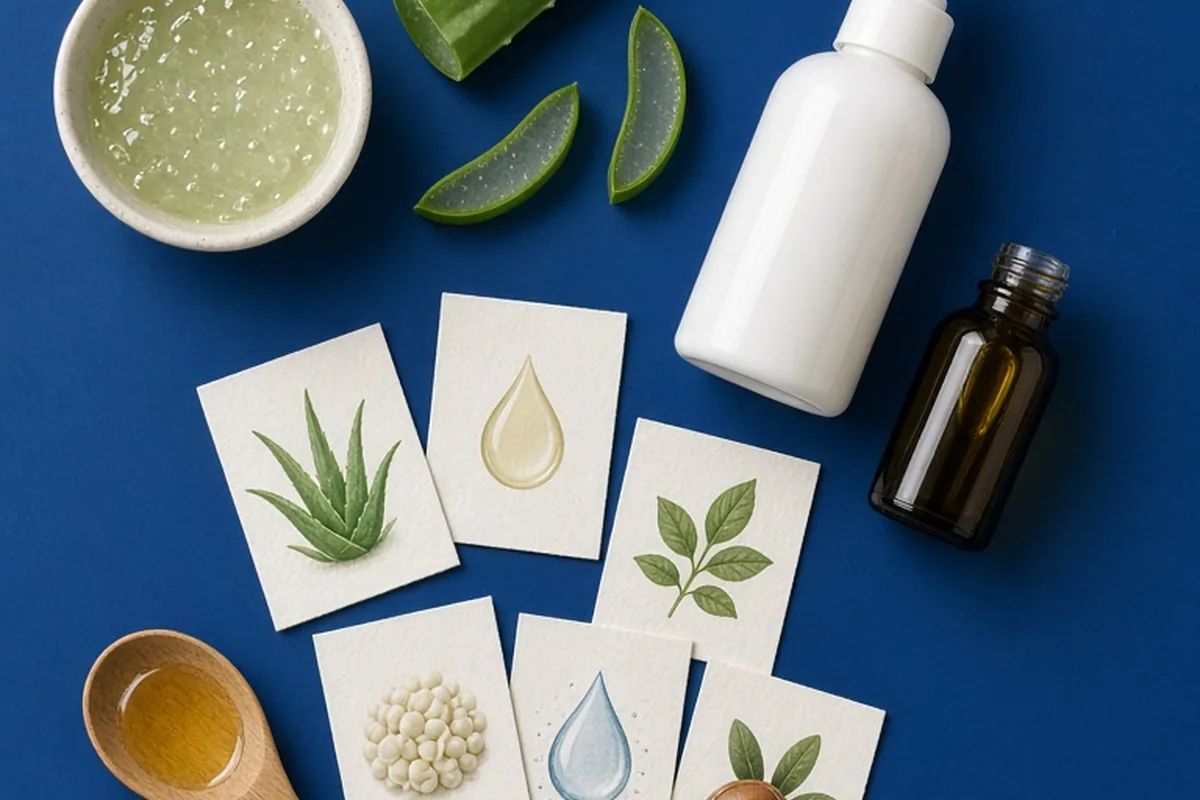
Effective moisturizing shampoo product ingredients combine gentle surfactants with humectants, emollients, and light occlusives to cleanse the scalp without stripping structural moisture. Key ingredients to look for include glycerin, aloe vera, panthenol, cetyl alcohol, argan oil, and gentle cleansers like cocamidopropyl betaine or sodium cocoyl isethionate. The right balance depends on your hair porosity, curl pattern, strand thickness, and scalp oil production.
Navigating product labels can feel overwhelming when numerous bottles claim restorative hydration while relying on harsh detergency. Understanding how individual cosmetic compounds interact with human hair fibers allows you to choose formulations that genuinely improve elasticity and softness.
How Humectants, Emollients, and Occlusives Hydrate Hair Fibers
True hydration in hair care requires three distinct classes of cosmetic agents working in harmony: humectants, emollients, and occlusives. Humectants are water-binding molecules that attract moisture from the surrounding environment into the hair shaft. Common humectants found in hydrating shampoos include glycerin, propylene glycol, hyaluronic acid, sodium PCA, and aloe vera leaf juice. When applied to the hair, these molecules integrate into the outer layers of the cuticle, helping the strand retain suppleness during and after the washing process.
Emollients soften and smooth the rough edges of raised cuticle scales, reducing friction between neighboring strands. Fatty alcohols such as cetyl, stearyl, and cetearyl alcohol serve as rich emollients that provide slip without leaving a heavy grease film. Plant oils, including jojoba seed oil, sweet almond oil, and squalane, mimic the natural lipid layer of healthy hair fibers, filling in microscopic gaps along weathered hair shafts to restore tactile softness.
Occlusives form a lightweight hydrophobic barrier over the hair surface to slow down the evaporation of newly introduced water molecules. While heavy occlusives like petrolatum and thick mineral oils are generally reserved for leave-in conditioners or styling pomades, moisturizing shampoos incorporate lighter film-forming agents such as shea butter derivatives, dimethicone polyols, or polyquaternium compounds. This combination ensures that the moisture attracted by humectants remains locked within the hair matrix rather than rinsing away immediately down the drain.
Cleansing Surfactants in Hydrating Shampoo Formulas
The primary purpose of any shampoo is to clear away sebum, environmental pollutants, dead skin cells, and cosmetic residue from the scalp. However, traditional primary cleansers like sodium lauryl sulfate can excessively strip the lipid layer that protects the hair shaft. When shopping for moisturizing options, the choice of surfactant determines whether the product leaves hair flexible or dry and brittle.
Hydrating formulations replace aggressive sulfates with milder amphoteric, non-ionic, or gentle anionic cleansing bases. Look for ingredients such as sodium cocoyl isethionate, sodium lauroyl methyl isethionate, disodium laureth sulfosuccinate, cocamidopropyl betaine, and decyl glucoside. These surface-active agents create a stable, velvety lather while interacting gently with the hair cuticle. They lift away excess sebum without dissolving the essential structural ceramides that hold the cuticle layers intact.
Many advanced hydrating shampoos use surfactant blending, pairing a mild primary cleanser with secondary conditioning agents. This strategy lowers the critical micelle concentration, ensuring thorough cleansing at lower surfactant strengths. As a result, the wash process preserves the natural moisture barrier of both the scalp skin and the fragile fiber lengths, reducing the risk of post-wash tangles and cuticle erosion.
Moisturizing Shampoo Product Ingredients for Different Hair Porosities
Porosity describes how readily your hair absorbs and holds onto water, and matching your shampoo ingredients to your porosity profile is essential for achieving balanced moisture. Low-porosity hair features tightly bound, overlapping cuticle scales that resist moisture entry. If you have low-porosity hair, look for shampoos dominated by lightweight humectants like aloe vera, panthenol, and glycerin, combined with lightweight emollients like jojoba or grapeseed oil. Heavy butters and large conditioning polymers should be avoided, as they accumulate on the tightly closed cuticle surface, causing product buildup and limp strands.
Medium-porosity hair maintains an open cuticle structure that accepts and retains moisture with ease. Balanced blends containing hydrolyzed vegetable proteins, argan oil, and standard fatty alcohols help sustain natural elasticity without weighing down the style or creating greasy roots. This hair type tolerates a wide variety of botanical extracts and synthetic conditioning aids.
High-porosity hair possesses gaps, chips, and raised cuticles, often resulting from chemical processing, heat styling, or mechanical friction. This structure absorbs moisture quickly but loses it just as rapidly. High-porosity hair benefits from shampoos enriched with hydrolyzed proteins, cationic conditioning polymers such as polyquaternium-10, and rich emollients like avocado oil and shea butter. These ingredients temporarily fill structural defects along the cuticle, sealing the exterior and preventing internal moisture from escaping during the drying process.
Balancing Botanical Oils, Fatty Alcohols, and Conditioning Polymers
Moisturizing shampoos rely on a synergistic balance between botanical oils, fatty alcohols, and synthetic conditioning polymers to deliver immediate detangling slip and sustained softness. Botanical oils supply essential fatty acids that coat the hair fiber. Coconut oil can partially penetrate the hair cortex due to its molecular structure, while oils like marula, meadowfoam seed, and sunflower oil remain primarily on the surface to impart noticeable shine and reduce combing resistance.
Fatty alcohols must not be confused with drying short-chain alcohols such as isopropyl alcohol or alcohol denat. Fatty alcohols are lipid molecules derived from natural plant sources that function as thickeners, emulsifiers, and conditioning emollients. Ingredients like cetearyl alcohol, behenyl alcohol, and myristyl alcohol create a rich, creamy shampoo texture that cushions the hair shaft against mechanical damage while you massage the scalp.
Conditioning polymers, such as guar hydroxypropyltrimonium chloride and amodimethicone, provide targeted deposition. These positively charged molecules adhere specifically to negatively charged, damaged areas along the hair length. By neutralizing negative electrostatic charges, they eliminate static flyaways, flatten lifted cuticles, and provide noticeable combability without leaving an unpleasant, sticky coating on healthy scalp regions.
Evaluating Keratin, Silk, and Hydrolyzed Protein Additions
Many hydrating shampoo labels prominently advertise added proteins like keratin, collagen, silk amino acids, wheat protein, or hydrolyzed soy protein. Understanding the difference between moisture and protein is vital when evaluating these formulas. While humectants and emollients supply moisture and flexibility, proteins provide temporary structural reinforcement by bonding to gaps within damaged cuticle layers.
When hair is structurally weak from color services or thermal tools, small hydrolyzed protein fragments penetrate slight surface fissures to enhance tensile strength and reduce breakage. However, using high-protein shampoos repeatedly on coarse, low-porosity, or protein-sensitive hair can lead to protein overload. Overloaded hair often feels stiff, rough, and prone to snapping because the protein deposits create a rigid exterior that blocks water from entering the cortex.
To achieve proper equilibrium, inspect where proteins appear on the ingredient declaration. If you require deep structural recovery, select products listing hydrolyzed proteins within the first several ingredients following water and surfactants. If your primary concern is dry, brittle hair that lacks softness, choose formulas where proteins appear near the end of the label, prioritizing humectants and fatty alcohols instead.
How to Read an Ingredient Label for Build-Up Risks
Cosmetic ingredient lists follow standardized regulatory naming conventions, listing ingredients in descending order of concentration down to the threshold where minor additives can be listed in any sequence. Water, or aqua, almost universally occupies the top position in liquid shampoos, followed immediately by the primary and secondary cleansing surfactants. Identifying where conditioning compounds sit relative to the cleansers reveals whether the formula leans toward clarifying or intense conditioning.
Certain ingredients frequently added to hydrating shampoos can lead to buildup if used continuously without occasional clarifying. Non-water-soluble silicones, such as standard dimethicone or cyclomethicone, create an effective moisture barrier and mirror-like shine. However, without adequate surfactant power in subsequent washes, these silicones can accumulate, leaving the hair looking dull and blocking moisture absorption. Look for modified water-soluble alternatives like PEG-modified silicones, dimethicone copolyol, or lightweight natural esters if you prefer easier washout.
Cationic polymers and heavy natural butters can also build up on fine hair textures over time. If your hair begins feeling coated, greasy at the crown, or unusually dry at the ends despite regular washing, your moisturizing formula may be leaving residual polymers. Alternating your hydrating wash with a gentle, sulfate-free clarifying shampoo ensures your scalp and hair fibers remain clean and receptive to conditioning ingredients.
Customizing Hydrating Washes for Textured and Chemically Treated Strands
Textured hair, ranging from loose waves to tight coils, has unique anatomical characteristics that make it naturally prone to dryness. The twists and bends along the hair shaft make it difficult for scalp-produced sebum to travel downward toward the ends. Additionally, each curvature point represents a potential structural vulnerability where the cuticle can lift. For coily and curly patterns, look for shampoos packed with rich emollients like babassu oil, murumuru butter, and panthenol, paired with extra-mild surfactants that preserve delicate curl clumps.
Chemically treated hair, including bleached, permanently dyed, relaxed, or permed strands, suffers from depleted lipid levels and elevated cuticle porosity. The chemical processing strips away the 18-methyl eicosanoic acid lipid layer that naturally coats healthy hair. For chemically altered strands, seek shampoos containing ceramide precursors, amino acids, and gentle non-stripping cleansers that prevent color molecules from leaching out while reinforcing fiber cohesion.
Application technique also plays a major role in optimizing product efficacy. Focus the lather primarily on the scalp area, massaging with your fingertips to dissolve oil and debris. Allow the suds to rinse naturally through the mid-lengths and ends rather than scrubbing the lengths together. This practice prevents mechanical friction, minimizes tangles, and ensures that the conditioning ingredients settle smoothly along the cuticle without unnecessary abrasion.
Frequently asked questions
Can a moisturizing shampoo cause an oily scalp?
Yes, if a formula contains heavy oils or high levels of conditioning polymers that deposit heavily on the skin. If your roots become greasy quickly while your ends remain dry, look for formulas using lightweight humectants like aloe vera and panthenol, and apply shampoo strictly to the scalp while thoroughly rinsing.
Are sulfates always bad in a moisturizing shampoo?
Not necessarily, but traditional sulfates like sodium lauryl sulfate are strong cleansers that strip natural surface lipids from dry or textured hair. Milder alternatives like sodium cocoyl isethionate or amphoteric surfactants are generally better suited for preserving moisture in dry or fragile strands.
What is the difference between panthenol and glycerin on a shampoo label?
Glycerin is a small humectant molecule that excels at pulling water into the hair cuticle from the environment. Panthenol, also known as provitamin B5, functions as both a humectant and an emollient, penetrating slightly into the hair shaft to boost pliability and reduce split ends.
How often should you use a moisturizing shampoo?
Washing frequency depends on your hair texture, scalp sebum production, and styling routine. Coarse, dry, or coily hair may benefit from washing once or twice a week with a moisturizing formula, whereas fine hair prone to dry ends might require washing every two to three days.
Your next step
Review the ingredient list on your current shampoo bottle to identify its primary surfactant and top three conditioning agents, then adjust your formula based on your hair porosity and scalp needs.