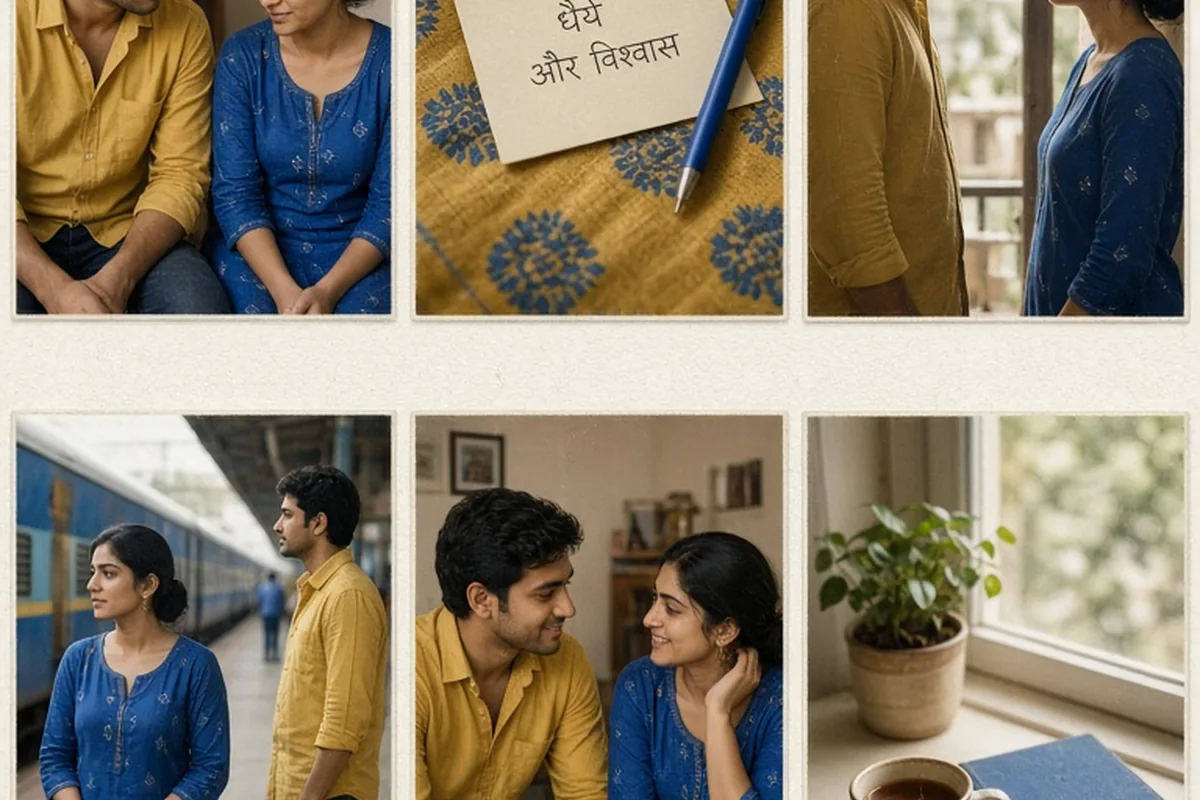
Movies showing love in an arranged marriage focus on couples who build genuine romance after their wedding rather than before it. Classic and modern films like The Namesake, Dum Laga Ke Haisha, Tanu Weds Manu, Hum Dil De Chuke Sanam, and Rab Ne Bana Di Jodi show how deliberate effort, patience, and vulnerability transform formal introductions into authentic partnerships.
Arranged marriage is often misunderstood in contemporary storytelling as a rigid, emotionless arrangement or an outdated ritual. Yet cinema frequently captures a different reality: two distinct individuals who choose to invest in mutual understanding, turning an initial introduction into lasting emotional and romantic connection.
Dum Laga Ke Haisha: Overcoming Surface Expectations for Real Intimacy
Dum Laga Ke Haisha offers an unusually candid look at the resentment that can surface when an arranged match clashes with personal vanity or unrealistic physical ideals. Prem, a high school dropout running an audio cassette shop, feels trapped in an arranged marriage to Sandhya, an educated woman whose weight does not fit his superficial expectations. Instead of idealizing their wedding day, the film charts their mutual hostility, public embarrassment, and stubborn pride, showing how forced proximity without empathy only amplifies defensive behavior.
The turning point arrives when both partners are forced to abandon their defensive postures during a community race that demands physical and emotional coordination. Love in this story does not appear like a lightning bolt; it emerges when Prem stops seeing Sandhya as an imposition on his identity and recognizes her dignity, humor, and resilience. For viewers, the film illustrates that genuine attraction often develops after ego and superficial checklists make way for shared effort and active respect.
The Namesake: Shared Vulnerability in an Unfamiliar World
Mira Nair's adaptation of Jhumpa Lahiri's novel, The Namesake, captures the quiet, enduring romance between Ashoke and Ashima Ganguli. Placed together through traditional familial arrangement in Kolkata, Ashima relocates to a freezing, unfamiliar suburban America. In those early days, their relationship relies on cautious politeness and formal distance as they adjust to cohabitating as relative strangers.
What makes their dynamic powerful is how Ashoke creates safety for Ashima without demanding immediate affection. He notices her homesickness, gives her space to grieve her familiar life, and offers consistent, low-key support. Over decades, their bond shifts from hesitant roommates to profound emotional anchors for one another. The narrative demonstrates that love in arranged marriages often thrives on reliable emotional safety and shared resilience through life's practical upheavals.
Tanu Weds Manu: Embracing Temperamental Differences Without Changing Who You Are
Tanu Weds Manu tackles the challenge of opposite personalities navigating a conventional matchmaking setup. Manu is quiet, steady, and traditional, while Tanu is rebellious, unpredictable, and determined to resist an arranged life. When families match partners who seem completely mismatched on paper, the tension between personal autonomy and marital commitment takes center stage.
Rather than trying to control, manipulate, or reshape Tanu, Manu demonstrates emotional consistency and self-respect. His calm reliability gives Tanu the space to discover that drama and volatility are not the same as true compatibility. The film highlights a crucial dynamic in modern arranged partnerships: attraction grows when neither person feels coerced into a mold, allowing both partners to appreciate traits in each other that balance their own shortcomings.
Hum Dil De Chuke Sanam: The Transformative Power of Empathy and Patience
Hum Dil De Chuke Sanam examines one of the most difficult situations in an arranged union: entering a marriage when one partner's heart still belongs to someone else. Vanraj marries Nandini through a traditional family arrangement, only to discover after the wedding that she is grieving a lost romance. Instead of responding with entitlement, anger, or possessiveness, Vanraj makes the selfless choice to support her emotional closure, even at great personal cost.
This dynamic demonstrates how patience and unconditional respect can radically alter relationship dynamics. By treating Nandini as a complete human being with autonomous feelings rather than an acquired possession, Vanraj demonstrates the kind of mature devotion that outlasts infatuation. Nandini's gradual realization that flashier passion cannot match deep, steadfast loyalty shows that enduring love is built on sustained character rather than instant fireworks.
Rab Ne Bana Di Jodi: Bridging Ordinary Companionship and Romantic Fantasy
Rab Ne Bana Di Jodi explores the common divide between thrilling cinematic romance and ordinary domestic life. Surinder, an unpretentious utility worker, enters a hurried arranged marriage with Taani under tragic circumstances. Sensing her emotional detachment, he creates an alter ego to bring excitement into her life, only to realize that pretending to be someone else cannot build a sustainable foundation.
The film's core insight lies in the contrast between dramatic, performative infatuation and the steady, unglamorous acts of daily care. When Taani finally recognizes that real love is present in quiet breakfasts, patient listening, and reliable presence, she chooses domestic reality over theatrical fantasy. It serves as a reminder that arranged marriages often ground romance in daily actions rather than high-stakes drama.
What Cinematic Arranged Marriages Teach Real-World Couples
Films centered on arranged marriages resonate because they mirror a universal truth about long-term relationships: commitment is often the framework inside which genuine love is cultivated, not merely a prize earned after years of casual dating. When two people commit to showing up with curiosity rather than judgment, the initial awkwardness of an arranged match becomes an opportunity for gradual, deliberate discovery.
However, these films also highlight real boundaries that must not be overlooked. A successful partnership requires mutual goodwill from both sides; patience cannot fix fundamental incompatibility, neglect, or emotional mistreatment. For modern couples entering an arranged process, these stories reinforce that open communication, personal responsibility, and healthy boundaries matter far more than rigid traditional expectations.
Illustrative Scenarios
Navigating the Silent First Months
After an arranged match, David felt anxious because conversations with his new wife, Priya, felt polite but stiff over dinner. Fearing they lacked natural chemistry, he initially considered withdrawing emotionally to protect himself from rejection. Instead, he decided to invite low-pressure collaboration, asking for her input on small home projects and sharing funny, unvarnished stories from his workday. Over several weeks, Priya relaxed, sharing her own anxieties about relocating. Their polite hesitation gradually evolved into comfortable daily camaraderie and genuine affection.
Key point: Awkward silence in a new arrangement is often nervousness rather than a lack of chemistry, and consistent, low-pressure openness helps both partners drop their defenses.
Handling Mismatched Hobbies and Paces
Rohan was energetic and spontaneous, while his arranged partner, Ananya, was introverted and routine-oriented. Rohan initially worried that their divergent lifestyles meant their families had made a mistake. Instead of pushing her into high-energy social gatherings, Rohan suggested alternating quiet evenings with structured weekend outings. Ananya appreciated not being pressured, and in return, she showed genuine interest in his outdoor passions. By respecting each other's natural rhythm, they discovered shared values beneath their contrasting temperaments.
Key point: Differences in personality do not spell incompatibility when both people replace demands with mutual curiosity.
Frequently asked questions
Can genuine romantic attraction develop after an arranged marriage?
Yes, romantic attraction can and often does develop after an arranged marriage when both individuals share fundamental values and treat each other with emotional safety. Daily acts of kindness, shared laughter, and emotional vulnerability create the trust necessary for attraction to flourish over time.
Which movie offers the most realistic view of modern arranged marriage?
Dum Laga Ke Haisha and The Namesake are widely praised for showing the real-world friction, emotional adjustment, and gradual bonding that occur in arranged unions. They avoid melodramatic extremes to showcase the practical effort and patience required to build a life together.
How do couples in arranged marriages handle initial awkwardness?
Couples navigate early awkwardness by prioritizing active listening, maintaining reasonable expectations, and engaging in low-stress shared activities. Focusing on building a baseline friendship first removes the intense pressure to produce instant romantic chemistry.
What is the biggest relationship trap depicted in arranged marriage films?
The most frequent trap is projecting rigid expectations or past romantic ideals onto a new spouse instead of getting to know the actual person in front of you. Films consistently demonstrate that lasting love begins only when both partners let go of idealized fantasies and accept real-world quirks.
Your next step
Pick one movie from this list to watch together with your partner, and use its central dynamic to spark an honest, relaxed conversation about your own communication styles and shared expectations.