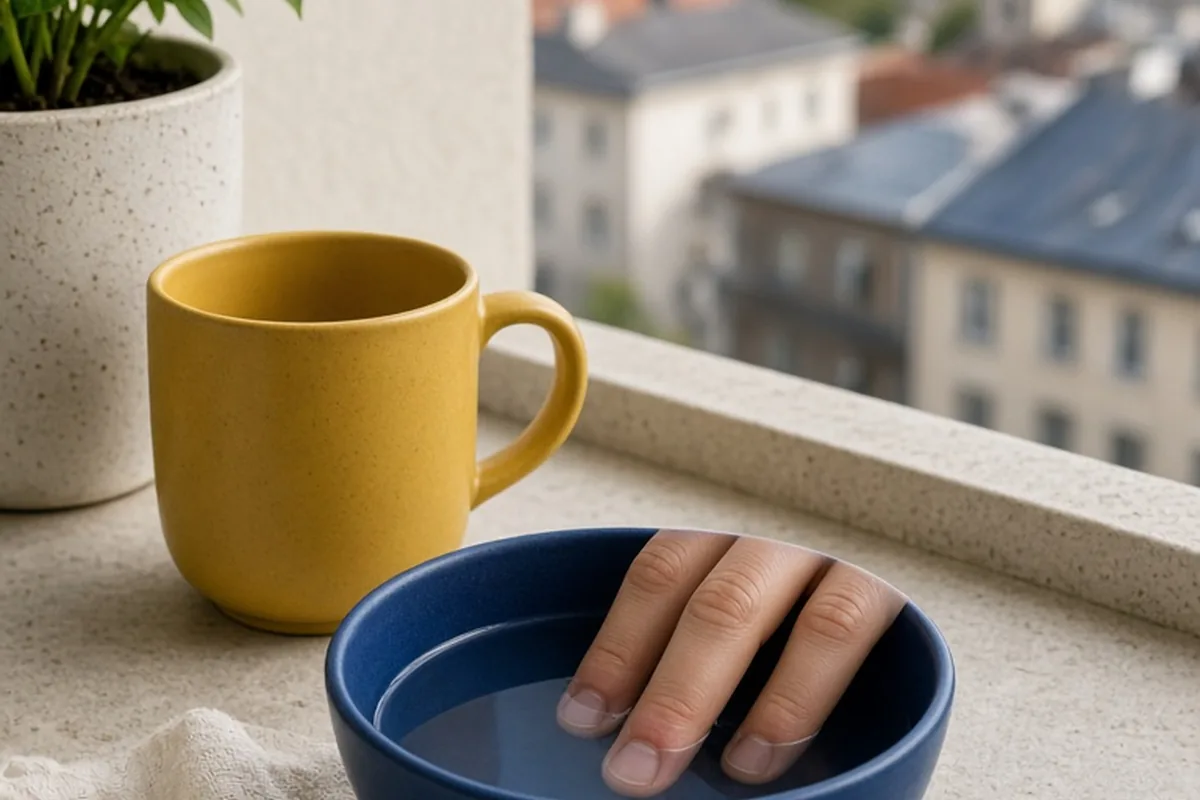
A suspected nail infection after a salon appointment requires immediate, gentle intervention: stop using all polishes or artificial overlays, clean the area with mild soap, take clear baseline photos, and soak the finger or toe in warm water for ten to fifteen minutes twice daily. If you observe spreading redness, increasing heat, throbbing pain, red streaks, or pus, consult a healthcare provider promptly for an accurate diagnosis and targeted treatment.
Receiving a professional manicure or pedicure is intended to be a relaxing, restorative grooming routine, but micro-trauma from sharp nippers, electric files, or compromised salon sanitation can introduce opportunistic bacteria or fungi into the periungual tissues. Navigating a painful, inflamed nail requires a calm, structured approach that balances prompt symptom mitigation with appropriate medical oversight.
Recognizing Early Symptoms and Classifying Nail Inflammation
Distinguishing between ordinary post-service tenderness and an active microbial infection is the crucial first step in protecting your nail bed. Routine procedural soreness often stems from heavy cuticle work or excessive pressure during filing; it typically feels like a dull, widespread ache that subsides within twenty-four hours without visible skin degradation. In contrast, an active bacterial infection, such as acute paronychia, produces progressive, sharp, or throbbing pain localized along the lateral nail fold, accompanied by noticeable cutaneous swelling, tautness, and skin that feels noticeably warm to the touch.
Fungal infections and pseudomonal bacterial colonizations present differently from acute bacterial paronychia and require their own diagnostic vigilance. Fungal conditions (onychomycosis) tend to develop gradually over several weeks, presenting as distal nail plate thickening, crumbly debris beneath the free edge, and yellowish-brown discoloration. Pseudomonal colonization, colloquially known as green nail syndrome, often occurs when moisture becomes trapped beneath a lifted artificial enhancement, yielding a distinctive greenish-black pigment caused by pyocyanin production. Correctly observing these initial visual and sensory cues ensures you do not mistake a rapidly evolving bacterial infection for benign cosmetic irritation.
- Acute localized throbbing that disrupts sleep or daily movement
- Visible erythema (redness) that expands past the immediate cuticle margin
- Skin that feels noticeably hot or appears shiny and stretched
- Discoloration beneath the nail plate, such as green, yellow, or deep brown pigmentation
- Fluctuant pockets or visible fluid collections under the periungual fold
The Immediate Action Checklist for the First Twenty-Four Hours
The first twenty-four hours after noticing inflammation establish the foundation for resolving the issue without permanent nail dystrophy. Your primary objective during this window is to minimize secondary chemical irritation and prevent deeper inoculation of environmental pathogens. Begin by thoroughly washing your hands or feet with warm running water and a fragrance-free liquid soap, gently patting the skin dry with a clean, dedicated cotton towel or disposable lint-free paper towel to avoid cross-contaminating other digits.
Next, initiate clear visual documentation before applying any soothing soaks or over-the-counter products. Capture well-lit, close-up photographs of the affected digit from multiple angles, ensuring the lighting accurately reflects skin tone and the spatial boundaries of any redness. This photographic log creates an objective baseline that allows both you and a visiting clinician to evaluate whether inflammation is remaining stable, improving, or advancing toward surrounding soft tissues over subsequent checks.
- Wash the digit gently with lukewarm water and mild antibacterial or plain liquid soap
- Dry the area completely using a clean disposable paper towel to minimize friction
- Capture date-stamped reference photographs in natural daylight
- Discontinue the use of hand creams, scented cuticle oils, and cosmetic treatments
- Keep the area open to air when resting in a clean environment rather than occluding it
Crucial Mistakes to Avoid When Treating a Salon-Acquired Infection
When faced with an uncomfortable or unsightly nail issue, individuals often resort to aggressive home interventions that inadvertently worsen the underlying pathology. One of the most hazardous missteps is attempting to drain a fluid pocket using household needles, razor blades, or cuticle nippers. Piercing tense periungual tissue introduces mixed skin flora directly into deeper fascial spaces, substantially elevating your risk of developing tenosynovitis or deep felon infections that can compromise digital mobility.
Similarly, you should avoid attempting to mask the problem with additional cosmetic procedures. Applying fresh coats of opaque nail polish, gluing press-on tips, or applying builder gels directly over an inflamed, discolored, or tender nail seals in moisture and provides an anaerobic breeding ground for persistent microbes. Avoid soaking your fingers in aggressive, undiluted household solvents such as chlorine bleach, pure rubbing alcohol, or high-concentration hydrogen peroxide, as these harsh chemicals cause chemical burns and delay cellular repair.
- Do not lance, squeeze, or manipulate fluid collections or inflamed skin folds
- Do not apply decorative polish, press-on nails, or wrap enhancements over the affected area
- Avoid submerging the digit in harsh household chemicals or undiluted astringents
- Refrain from aggressive mechanical filing of discolored or softened nail plates
- Do not trim or push back the cuticle while the surrounding tissue remains reactive
Safe Home Soothing Protocols and Professional Care Thresholds
For mild, superficial periungual redness without systemic symptoms, conservative supportive care can help soothe tissue while your immune system responds. Submerge the affected digit in a clean basin filled with plain warm water or an isotonic saline solution for ten to fifteen minutes, repeated two to three times a day. Warm soaks encourage microvascular circulation, which aids the natural immune response and helps soften surrounding tissues without macerating healthy keratin structures.
Recognizing when conservative home observation must yield to clinical medical care is essential for safety. If your symptoms do not demonstrate clear improvement within forty-eight hours of warm soaking, or if they progress at any point, schedule an evaluation with a primary care clinician, dermatologist, or urgent care physician. A healthcare provider can determine whether your condition warrants a prescription topical antibiotic, an oral antimicrobial agent, or a minor sterile in-office drainage procedure to relieve pressure safely.
- Perform warm water or saline soaks for 10 to 15 minutes, two to three times daily
- Pat the skin completely dry immediately following every soaking session
- Seek medical care if you develop fever, chills, or generalized malaise
- Consult a doctor promptly if red streaks radiate outward from the affected digit
- Schedule professional care immediately if you have underlying diabetes or vascular impairment
Safely Managing Existing Acrylic, Dip, or Gel Enhancements
If your infection develops while wearing artificial enhancements such as acrylic overlays, hard gels, or dip powders, you face a distinct practical trade-off. Leaving an enhancement attached can trap microorganisms and impede topical treatments, yet forcefully ripping or prying off an artificial extension tears away the dorsal layers of your natural nail plate, exacerbating structural vulnerability and creating open entry points for opportunistic pathogens.
If the enhancement is firmly attached and not creating painful levered pressure, leave it undisturbed until evaluated by a medical professional, who can safely clip away unattached segments or direct proper removal. If removal is deemed clinically necessary prior to treatment, avoid aggressive electric filing near the skin margin. Instead, gently file down the enhancement bulk and use a targeted acetone wrap strictly on the nail plate, taking care to shield the inflamed periungual fold with a thin barrier of petroleum jelly.
- Never tear, pry, or force lifting artificial enhancements off the natural nail bed
- Clip away only loose, overhang plastic edges using sterilized nail clippers
- Protect raw, irritated skin folds with an inert barrier if acetone soaking is required
- Allow a medical professional or experienced technician to perform careful removal if pain is severe
Documenting the Occurrence and Contacting the Nail Salon
Communicating with the salon where you received your service is an important step for both consumer accountability and public hygiene. Contact the salon manager in a constructive, factual manner, letting them know that you developed an adverse reaction or suspected infection following an appointment on a specific date with a specific technician. The objective of this conversation is not hostility, but rather alerting management so they can immediately review their autoclave logs, chemical sterilant cycles, and sanitization protocols for whirlpool foot tubs or metal tools.
Maintain a personal administrative file of the incident in case complications escalate. Retain your original appointment receipt, note the names of the staff who performed your service, record the precise services received (such as mechanical cuticle trimming, callous shaving, or tip application), and keep your dated photo log organized. These records provide helpful context if public health reporting becomes necessary or if you need to coordinate medical restitution with the salon's liability insurer.
- Notify salon management calmly and provide the date and technician details
- Request confirmation of tool sterilization protocols, such as autoclave use
- Archive digital receipts, appointment confirmations, and payment statements
- Maintain a chronological record of symptom onset and related medical expenses
Preventing Future Salon Infections and Protecting Your Nail Matrix
Once the acute infection has fully resolved, you can safeguard your future salon visits by adopting rigorous preventative criteria. The single most impactful boundary you can establish during any manicure or pedicure is to explicitly instruct your technician to leave your cuticles intact. The cuticle, or eponychium, functions as an essential biological gasket that seals the gap between the skin and the growing nail plate; cutting or aggressively pushing back this seal breaks the barrier and invites microbial entry.
Additionally, conduct a discreet visual inspection of the salon's sanitation workflow before sitting down for a service. Look for hospital-grade autoclaves with visible indicator pouches that change color upon reaching sterilization temperatures, rather than relying solely on liquid disinfectant jars, which are frequently diluted improperly or contaminated with floating debris. For pedicures, prioritize facilities that utilize pipe-free whirlpool basins or disposable basin liners, as traditional recirculating jetted tubs are notoriously prone to harboring bacterial biofilms within internal plumbing loops.
- Politely decline all cutting, trimming, or mechanical nipping of your cuticles
- Verify that metal tools emerge from sealed, newly opened sterilization pouches
- Ensure single-use items like pumice stones, wooden orange sticks, and buffers are discarded after use
- Opt for foot baths with pipeless technology or fresh single-use disposable liners
- Refrain from shaving your legs within twenty-four hours prior to any pedicure service
Illustrative Scenarios
Illustrative Scenario: Resolving Early Periungual Redness
Following a full set of dip powder nails at a walk-in salon, an individual noticed localized heat and a tight, throbbing sensation beside the thumbnail thirty-six hours later. Rather than prying off the dip overlay or applying harsh rubbing alcohol, they documented the swelling with clear photos, washed the area with mild soap, and performed ten-minute warm saline soaks twice a day while leaving the cuticle untouched. When subtle yellowish fluid began collecting near the lateral wall on the third day, they presented their photo timeline to an urgent care clinician, who diagnosed localized acute paronychia, performed a minor sterile puncture to release pressure, and prescribed a short course of targeted antibiotics.
Key point: Systematic documentation and resisting the impulse to forcibly peel off artificial nails prevents deep tissue trauma and allows medical professionals to resolve localized infections efficiently.
Frequently asked questions
How long does a post-salon nail infection typically last?
A mild bacterial nail fold infection treated early with warm soaks or appropriate medical therapy often improves within three to seven days. Conversely, fungal nail infections or deep fungal paronychia evolve much more slowly and generally require several months of consistent medical treatment to fully clear as the new nail plate grows out.
Can I put antibiotic ointment on an infected nail cuticle?
Over-the-counter antibiotic ointments can sometimes soothe minor superficial abrasions, but they may cause allergic contact dermatitis and cannot penetrate beneath the nail plate or into deeper pockets of pus. A medical evaluation is recommended before relying on topical antibiotics so an expert can specify the exact treatment needed for your infection type.
What should I do if a green spot appears underneath my acrylic or gel nail?
A green spot beneath an artificial enhancement is usually a localized colonization of Pseudomonas bacteria that thrives on trapped moisture and keratin debris. You should safely remove the enhancement to expose the plate to dry air, avoid applying any polish over the stain, and consult a dermatologist or healthcare provider to confirm the nail bed remains intact.
Is it normal for cuticles to feel sore and sensitive for a few days after a manicure?
Minor sensitivity can occasionally occur for twelve to twenty-four hours if cuticles were pushed back firmly, but persistent tenderness, increasing soreness, or any warmth is not normal. Healthy nail services should never produce lasting pain, swelling, or localized throbbing; these symptoms warrant close monitoring and post-salon care.
Your next step
Take a clear, close-up photograph of your affected nail right now to establish a baseline, soak the digit in clean warm water for ten minutes, and book an evaluation with a healthcare provider if throbbing, heat, or swelling does not recede within forty-eight hours.