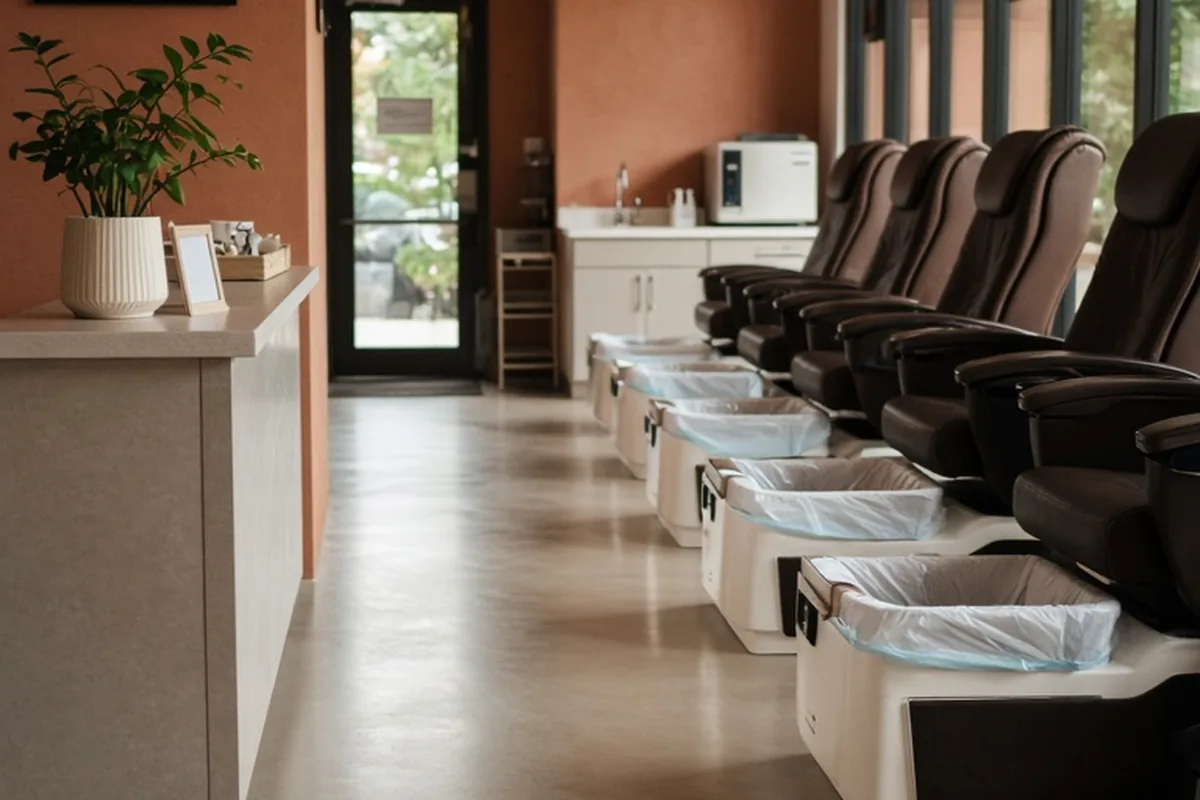
A reliable nail salon hygiene checklist helps you evaluate cleanliness before and during your visit. Essential signs include visible state cosmetology licenses, an autoclave or medical-grade disinfectant for metal tools, single-use items like nail files and buffers discarded after each client, pipeless or disposable-lined foot basins, and technicians washing hands or wearing fresh gloves. If tools come from an unsealed drawer or foot spas look cloudy, pause the appointment immediately.
Walking into a nail salon should feel relaxing, yet cleanliness standards vary widely between establishments. Learning what sanitary practices look like in real time lets you protect your skin and nails without feeling awkward or confrontational during a routine manicure or pedicure.
First Impressions and Reception Area Red Flags
A salon's reception desk and waiting area provide immediate clues about its overall sanitation culture. Before you take a seat at a manicure table or settle into a pedicure chair, glance around the room to assess general order and air quality. In the United States, licensed salons are typically required to post current facility licenses and individual operator credentials in an area easily viewed by patrons. Missing licenses or outdated renewal stickers suggest administrative neglect that may carry over into tool sanitization.
Airflow is another critical sensory indicator. While a faint scent of polish or monomer is normal in any busy nail environment, an overpowering, stinging chemical vapor suggests poor source-capture ventilation. Adequate ventilation systems protect clients and technicians alike from inhaling nail dust and volatile organic compounds. Look closely at the general surfaces: dust-coated display shelves, full trash cans overflowing with soiled cotton, and grimy light fixtures often reflect a staff that rushes between clients without resetting the workspace properly.
- Current cosmetology licenses clearly posted near the entrance or individual stations
- Functional ventilation or localized exhaust fans that reduce heavy vapor and acrylic dust
- Wiped-down, clutter-free service surfaces without lingering debris from prior clients
- Clean, fully stocked handwashing stations with warm water, soap, and single-use towels
Metal Implements and Autoclave Sterilization Standards
Metal tools like cuticle pushers, nippers, and nail clippers come into direct contact with skin and occasionally draw blood if an accidental nick occurs. Because of this contact, non-porous metal items require the highest standard of decontamination. The gold standard in salon care is a medical autoclave, which uses high-pressure steam to eradicate spores, viruses, and bacteria. When an autoclave is used, the tools are sealed in a specialized pouch equipped with a chemical indicator that changes color once full sterilization temperatures are reached.
If a salon does not use an autoclave, state regulations generally permit immersion in a hospital-grade, EPA-registered disinfectant. However, this method only works if the tools undergo thorough mechanical cleaning with soap and water first to remove organic residue, followed by complete immersion in fresh disinfectant for the manufacturer's specified dwell time, usually ten to twenty minutes. Be wary of ultraviolet light cabinets used as primary sterilization devices. While UV boxes can maintain clean tools in a covered space, they do not produce the heat or pressure needed to sterilize contaminated implements covered in oils or skin particles.
- Autoclave pouches opened directly in your line of sight with color-changing indicators verified
- Disinfectant jars containing clean, debris-free liquid rather than cloudy solution with floating particles
- Separate, labeled storage containers for dirty tools awaiting decontamination versus sanitized tools
- No loose metal tools pulled directly out of unsealed drawers, aprons, or personal technician pockets
Porous Single-Use Tools and Disposal Protocols
Unlike metal clippers, porous materials cannot be submerged in liquid disinfectant or heated in an autoclave without degrading. Items such as emery boards, wooden cuticle sticks, foam buffer blocks, pumice stones, and foam toe separators absorb moisture and dead skin cells rapidly. Because they cannot be fully sterilized between clients, cosmetology boards categorize them as single-use items that must be discarded after a single application.
Observe how your technician handles these implements as your service begins. A conscientious technician will retrieve a brand-new file and buffer from a sealed package or an organized clean-supply bin. If a technician hands you a worn emery board with visible grey dust, worn edges, or makeup marks from previous handling, you have the right to request a fresh one. Some salons provide a small plastic case allowing you to take your used files home, which is completely acceptable because the tools remain exclusively yours for future visits.
- Emery boards and foam buffers show crisp, unused edges without nail dust or scuffs
- Wooden orange sticks are fresh and thrown into the trash immediately after use
- Pumice stones or foot smoothing pads are single-use disposables or taken home by the customer
- Used cotton balls, foil wraps, and paraffin wax are discarded into closed receptacles
Pedicure Foot Basins and Water Circulation Safety
Pedicure foot spas present distinct hygiene considerations because warm, circulating water can harbor micro-organisms if internal components are neglected. Traditional piped whirlpool foot spas feature complex interior plumbing and suction screens where skin flakes, hair, and lotion residue accumulate. Over time, this organic matter can form a sticky biofilm that protects bacterial colonies from superficial cleanings.
Safer alternatives include pipeless foot spas with removable magnetic impellers or basins fitted with fresh, disposable plastic liners for every single customer. Regardless of the tub style, thorough cleaning between clients requires dedicated time. The technician should drain the basin, scrub the walls with detergent to eliminate oils, and run an EPA-registered disinfectant through the system for roughly ten minutes before rinsing and drying. If a technician simply empties the water, sprays a quick mist of cleaner, and refills the tub for your service within two minutes, the disinfectant has not had sufficient contact time to work.
- Single-use plastic liners installed and discarded between every client, or pipeless detachable basins
- Observable scrubbing of the basin interior with detergent before any chemical disinfectant is applied
- Disinfectant allowed to circulate or sit in the basin for the full required dwell time
- Clean, freshly laundered towels used beneath your feet rather than damp, reused linens
Hand Hygiene, Cuticle Trimming, and Skin Boundaries
Physical contact during a manicure or pedicure should always start with thorough hand washing. Both the technician and the client should wash their hands with warm water and liquid soap for at least twenty seconds before handling begins. Alternatively, technicians may use alcohol-based hand rub and don a clean pair of disposable nitrile or latex gloves. If the technician pauses the service to answer the salon phone, handle money, or touch personal belongings, they should change gloves or wash their hands again before returning to your nails.
During the manicure itself, cuticle care requires careful boundaries. The cuticle and the adjacent eponychium act as the body's natural defensive seal, preventing fungal spores and bacteria from entering the delicate nail matrix. While pushing back softened dead skin on the nail plate is standard, aggressive nipping, slicing, or trimming of living tissue creates microscopic entry wounds. Requesting that the technician only push back the cuticle rather than cutting it substantially reduces the likelihood of redness, swelling, or infection.
Dip Powder Systems, Waxing, and Shared Product Reservoirs
Shared bulk products can become inadvertent vectors for cross-contamination if proper dispensing techniques are ignored. Dip powder manicures have grown widely popular, but dipping multiple clients' fingers directly into the central powder container is a sanitation issue. If a client with microscopic skin breaks or a subtle fungal condition dips their finger into the jar, residual particles can contaminate the batch for subsequent patrons.
Responsible salons prevent this by pouring a small amount of powder into an individual disposable dish, or by using a clean spoon to sprinkle the pigment over the nail plate while collecting excess powder on a disposable paper towel. Similar rules apply to waxing and paraffin treatments: the technician must never double-dip an applicator stick into a shared wax pot, and paraffin wax should either be poured into individual plastic booties or dispensed from single-portion bags rather than shared communal baths.
How to Address Hygiene Issues Politely and When to Walk Out
Many clients notice sanitation oversights but hesitate to speak up out of politeness or concern about creating an uncomfortable atmosphere. You can protect your safety without being confrontational by using clear, neutral language. Phrasing requests around your personal preferences makes the interaction collaborative rather than accusatory. For instance, you might say, 'I prefer not to have my cuticles clipped today, just gently pushed back,' or 'Could you open a fresh file for my manicure, please?'
However, there is a clear trade-off between accommodating minor delays and tolerating outright unsanitary conditions. If a technician dismisses your polite request, insists on using visibly dirty tools, or refuses to clean a foot basin, your safest choice is to end the service before treatment starts. You can simply state, 'I've decided to postpone my appointment today, but thank you for your time,' pay for any completed portion, and exit. A reputable salon will honor reasonable hygiene expectations without argument.
Illustrative Scenarios
Elena's Pedicure Basin Evaluation
Elena arrived for an express pedicure during a busy Saturday afternoon. When she was guided to the chair, the water was already running in a traditional jetted tub, but the water surface showed a light film from previous bath salts. Elena politely asked the technician if the tub had completed its cleaning cycle. The technician admitted she had only rinsed it between appointments because the salon was running behind schedule.
Key point: By noticing the lingering film and asking a direct, polite question before putting her feet in the water, Elena avoided a contaminated soak and gave the staff an opportunity to perform the proper scrubbing and disinfection cycle.
Frequently asked questions
Can I bring my own manicure tools to the salon?
Yes, bringing your own metal clippers, nippers, and files is widely accepted and eliminates concerns about cross-client contamination. Keep in mind that you become responsible for thoroughly washing, drying, and storing your tools in a clean container at home between uses.
Is an ultraviolet cabinet enough to sterilize nail tools?
No, ultraviolet light cabinets used in salons do not produce the sustained heat and pressure required to sterilize implements. They serve as clean holding units to keep pre-sanitized tools free from ambient dust, but metal items must first undergo an autoclave cycle or complete liquid chemical disinfection.
What should I do if a technician accidentally cuts my cuticle?
Ask the technician to pause immediately, wash the area gently with soap and clean water, and apply an antiseptic with a fresh cotton swab. Avoid submerging the injured finger or toe in communal soaking bowls or scrub solutions for the remainder of the visit.
How long should a pedicure basin sit with disinfectant between clients?
Most hospital-grade disinfectants approved by state cosmetology boards require an active wet contact time of roughly ten minutes to neutralize pathogens. A technician who empties the tub and refills it within two or three minutes has bypassed the necessary dwell time.
Your next step
Before your next salon visit, save this checklist to your phone and take two minutes to inspect the tools, foot basin, and workstation before placing your hands or feet in the chair.