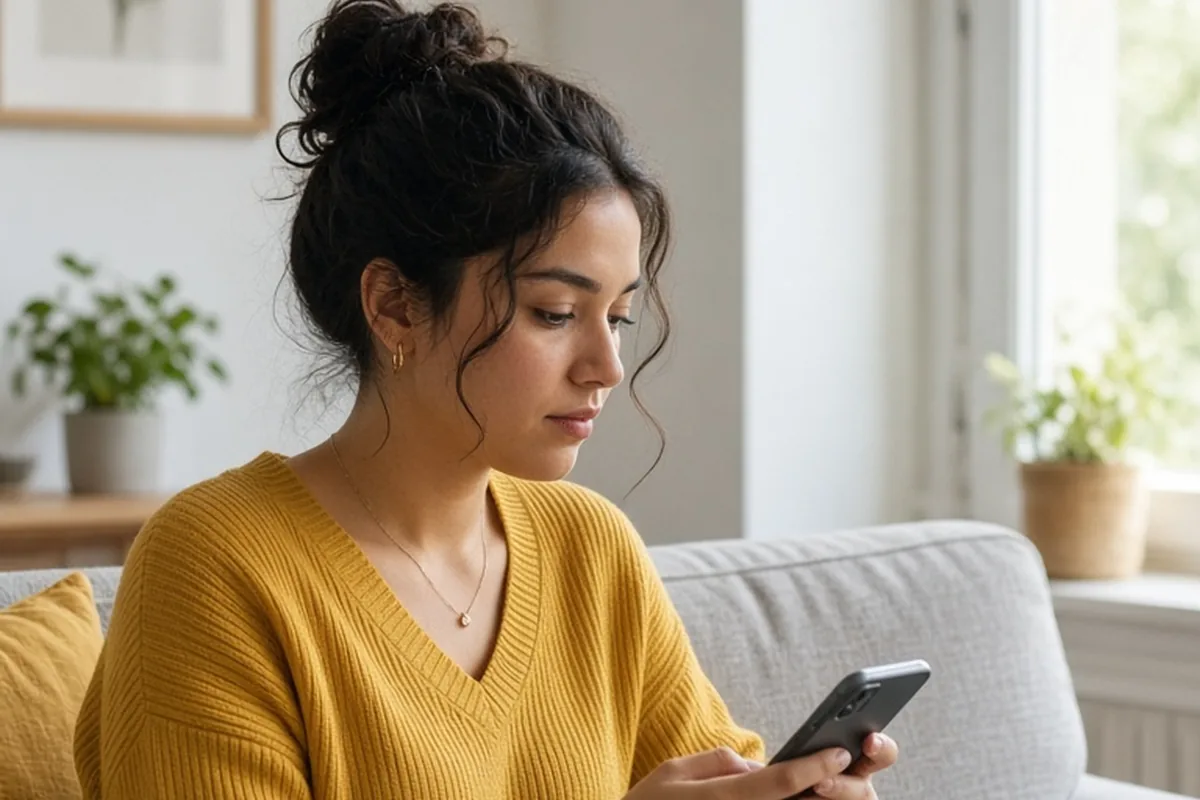
Feeling overlooked when friends do not post your photo on Friendship Day is a painful and common experience. Social media feeds amplify visibility, making public omissions feel like personal rejections. However, a lack of online posts rarely reflects the true depth of your friendships. You can process the sting by stepping away from your feeds, evaluating relationships based on everyday support rather than public display, and initiating direct, private conversations.
Scrolling past collages, group photos, and heartfelt tributes on social media can create an immediate sense of isolation if your face is absent. When an occasion meant to celebrate connection highlights your perceived exclusion instead, it is completely natural to feel hurt, insecure, or invisible.
Understanding Why Social Media Omissions Trigger Emotional Distress
Social media platforms are built around public acknowledgment, which naturally transforms personal milestones and commemorative days into performative displays. When Friendship Day arrives, your digital feeds fill with curated montages, nostalgic photo carousels, and explicit declarations of love. Watching mutual friends tag one another while your notifications remain silent activates an ancient, neurological fear of social exclusion. Your brain often interprets a missing tag not merely as a forgotten photo, but as a deliberate signal that you do not belong to the group.
The pain deepens because public sharing introduces an audience to your private relationships. It is one thing to feel mildly distant from a friend in private; it is entirely another to watch them publicly rank or spotlight their inner circle while leaving you out. This dynamic frequently leads to catastrophic thinking, where a single missing story post is interpreted as proof that your entire social foundation is unstable. Acknowledging that this reaction is a normal response to public metrics helps you de-escalate the emotional intensity before taking reactive measures.
Separating Public Online Displays from Everyday Relationship Reality
It is essential to remember that social media posting habits are rarely an accurate barometer of genuine emotional intimacy. Many people post pictures based on convenience, visual aesthetics, recency of photos on their camera roll, or spontaneous tagging chains rather than careful emotional prioritization. A friend might share an image with an acquaintance simply because they took a flattering selfie together the previous weekend, while neglecting to post about a lifelong confidant with whom they have no recent photos.
Conversely, many of the most resilient, supportive friendships exist almost entirely offline. Consider how a friend behaves during non-performative moments: do they pick up your calls, listen when you are distressed, celebrate your private wins, and respect your boundaries? A person can be a dedicated, loyal friend who simply dislikes posting on social media, forgets commemorative calendar days, or feels overwhelmed by the pressure to curate an online persona. Evaluating the relationship through the lens of private reliability rather than public broadcasting provides a much healthier perspective.
Immediate Steps to Regain Balance and Avoid Reactive Behavior
In the hours immediately following the realization that you were not tagged or featured, your emotional impulses will be at their highest. During this vulnerable window, it is easy to make choices that worsen the situation, such as posting passive-aggressive status updates, abruptly unfollowing close friends, or sending accusatory messages. Taking deliberate, calming actions right away protects your relationships and your self-respect.
To break the cycle of rumination and restore your peace of mind, focus on immediate behavioral shifts:
Close social media applications and mute notifications for the remainder of the day to stop continuous comparison.
Refrain from vague-booking, posting mournful quotes, or deleting old shared photos in an attempt to elicit guilt.
Engage in an absorbing, non-digital activity, such as preparing a meal, going for a brisk walk, or reading a book.
Reach out to an unrelated family member, mentor, or companion to experience positive connection outside the current friend circle.
- Close social media applications and mute notifications for the remainder of the day to stop continuous comparison.
- Refrain from vague-booking, posting mournful quotes, or deleting old shared photos in an attempt to elicit guilt.
- Engage in an absorbing, non-digital activity, such as preparing a meal, going for a brisk walk, or reading a book.
- Reach out to an unrelated family member, mentor, or companion to experience positive connection outside the current friend circle.
Conducting an Honest Audit of Your Friendships
Once the acute sting has faded, use the incident as an opportunity to reflect objectively on your social landscape. It is helpful to distinguish between an innocent oversight and a persistent pattern of one-sided effort. Ask yourself whether this omission is an isolated incident in an otherwise warm relationship or if it reflects an ongoing dynamic where you consistently invest more emotional energy, time, and initiative than you receive in return.
If you realize that you frequently organize gatherings, reach out first, and offer support without reciprocity, the missing social post may simply be the tipping point of an already unbalanced dynamic. In such cases, the solution is not to demand more public praise, but to gradually reallocate your energy toward connections that feel mutually nourishing. Conversely, if the friend is consistently warm, reliable, and attentive in person, attributing negative motives to a single social media holiday is usually unwarranted.
How to Communicate If the Hurt Runs Deeper Than Social Media
If you determine that the exclusion was part of a larger, painful shift in a close friendship, a calm and direct conversation may be warranted. However, framing the discussion entirely around a missing social media post often puts the other person on the defensive, as they may dismiss your concern as superficial. The key is to address the underlying feeling of distance rather than the digital mechanics of the post itself.
Choose a private, low-stress time to speak, preferably in person or over a voice call. You might say something like, 'I noticed I have been feeling a little disconnected from our group lately, and seeing everyone celebrate together over the weekend brought that to the surface. I really value our closeness and wanted to check in on how things feel between us.' This approach focuses on connection and mutual understanding rather than accusation, making it easier for your friend to respond with empathy.
Cultivating Proactive Connection and Broadening Your Support System
Waiting for others to validate your place in their lives often leads to unnecessary disappointment. One of the most empowering responses to feeling left out is to become proactive about building the types of connections you desire. Instead of waiting to see who remembers you on a symbolic day, send a private, heartfelt message to people you genuinely appreciate, or invite an acquaintance for coffee to deepen an emerging bond.
Additionally, relying on a single tightly knit group for all your social and emotional fulfillment increases your vulnerability to minor social snubs. Expanding your social horizons by joining hobby groups, community projects, or sports clubs introduces fresh perspectives and reduces the pressure on any single friendship. When you possess diverse sources of companionship, whether someone shares your photo on a given holiday loses its power to define your self-worth.
Frequently asked questions
Should I directly confront a friend for not posting my picture on Friendship Day?
It is generally best not to confront someone specifically about a missing post, as this can make you seem demanding or hyper-focused on digital optics. If you feel genuinely distant or excluded over time, discuss the broader health of your friendship privately and calmly rather than focusing on social media.
Why do I feel so upset over something as minor as a social media post?
Social media turns inclusion and exclusion into visible public metrics, which triggers natural human fears of rejection and abandonment. Your distress is less about the photo itself and more about the symbolic meaning you attach to being left out of public recognition.
What if my close friend posted pictures with other friends but completely skipped me?
While this can certainly sting, it often comes down to recent shared events, available photos, or simple thoughtlessness rather than malicious intent. Take a day or two to let the immediate hurt subside, then evaluate whether their everyday actions toward you remain kind, respectful, and reliable.
How can I avoid feeling this way when commemorative days happen again?
Consider taking a scheduled social media break during holidays known for heavy photo sharing to protect your peace of mind. Focus your energy on sending direct, private notes of gratitude to people you care about, which reinforces meaningful connection without relying on public validation.
Your next step
Log off your social media apps for the rest of the day and send a brief, genuine text message to one person whose presence you appreciate offline.