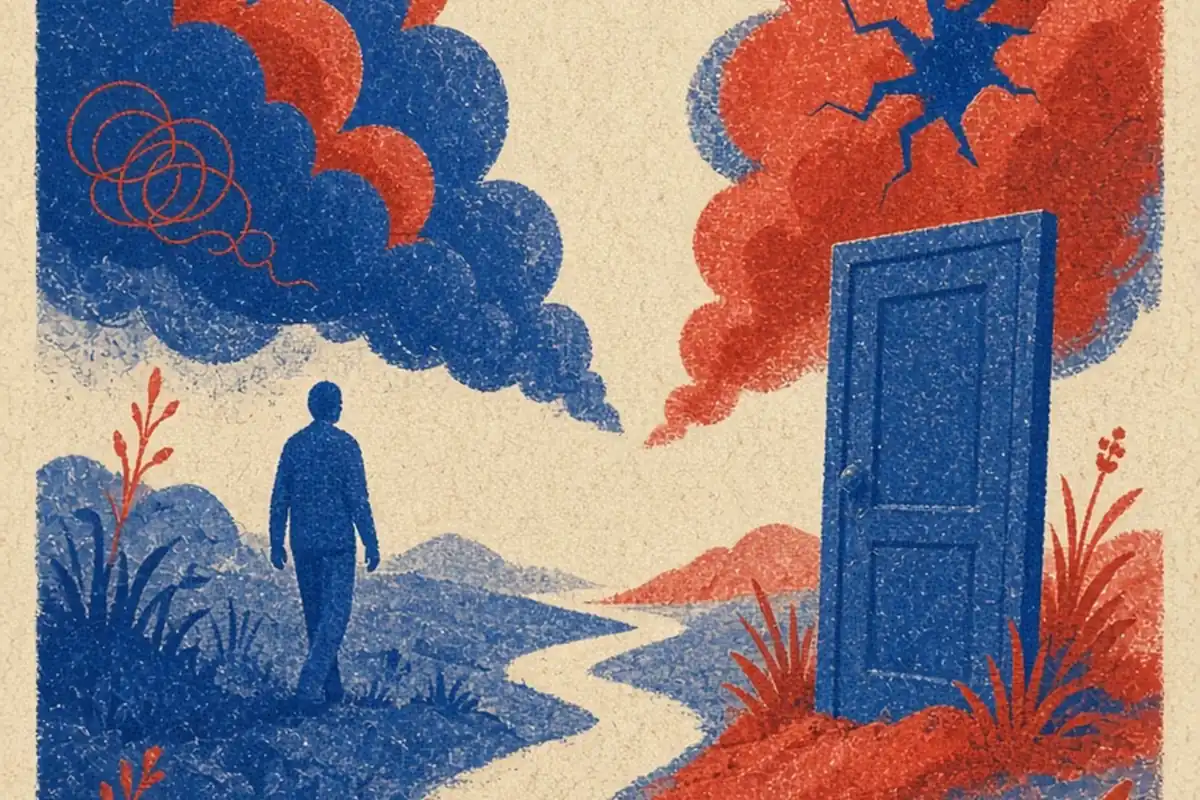
Passive aggressive behavior is indirect resistance or hostility expressed through actions like silent treatment, subtle sabotage, chronic lateness, or backhanded comments rather than open disagreement. It typically signals that someone feels unsafe or unable to express frustration directly. Recognizing the pattern in yourself or others is the first step toward more honest, productive communication.
Most of us have been on both sides of this dynamic at some point. Someone agrees to help but then drags their feet until the task dies quietly. A partner says everything is fine while slamming cabinet doors. You smile and say no problem while privately stewing. Passive aggression is rarely about malice; it is usually about conflict avoidance that has calcified into a habit.
What Passive Aggressive Behavior Actually Looks Like
The term gets thrown around loosely, so it helps to be specific. Passive aggressive behavior is a pattern of expressing negative feelings indirectly rather than addressing them openly. Common forms include deliberate procrastination on tasks someone resents, giving the silent treatment instead of naming a grievance, making sarcastic or dismissive comments and then claiming to be joking, and agreeing to requests while having no intention of following through. The defining feature is the gap between what is said and what is done or felt.
Less obvious examples include consistently forgetting things that matter to a specific person, offering compliments with a sting built in such as telling someone they look great for their age, or withdrawing warmth without explanation after a conflict. These behaviors can be easy to miss because they are deniable. The person doing them can always point to an innocent explanation, which is part of what makes the pattern so frustrating to navigate from the outside.
- Deliberate procrastination on tasks tied to resentment
- Silent treatment in place of naming a grievance
- Sarcasm followed by claims of just joking
- Agreeing verbally while having no intention of following through
- Forgetting things that matter to a specific person
- Backhanded compliments
- Withdrawing warmth without explanation
Why People Behave This Way
Passive aggression rarely starts as a calculated strategy. It usually develops when someone has learned, often early in life, that direct expressions of anger or disagreement are dangerous or pointless. If a child grew up in a household where conflict led to punishment, rejection, or escalation, going underground with negative feelings was a reasonable adaptation. The problem is that the strategy travels into adult relationships and workplaces where it no longer serves anyone well.
In the moment, passive aggression can feel like the safer choice. Saying yes when you mean no avoids a confrontation. Forgetting a task you resented being assigned lets you resist without owning the resistance. There is also a secondary payoff: the other person often ends up confused or frustrated, which can feel like a small form of power for someone who feels they have little. Understanding this does not excuse the behavior, but it does make it easier to address without turning every incident into a moral verdict.
How to Recognize It in a Relationship
In close relationships, passive aggression tends to create a specific emotional texture: you frequently feel like something is wrong but cannot get the other person to confirm it. Conversations circle without resolution. Apologies arrive but nothing changes. You find yourself walking on eggshells not because the other person is openly hostile but because the atmosphere is unpredictable. Over time this dynamic can erode trust more thoroughly than an open argument would, because at least an argument gives both people something concrete to work with.
A useful signal is the pattern of deniability. If you raise a concern and the other person consistently responds with variations of I never said that, you are too sensitive, or I was just kidding, and yet the behavior continues, that is worth paying attention to. One incident of any of these responses is not a diagnosis. A consistent pattern across different situations and topics is what distinguishes a communication habit from an occasional bad day.
How to Respond When Someone Is Being Passive Aggressive
The least effective response is to match the indirectness. Responding to a backhanded comment with your own pointed remark, or to silence with more silence, tends to escalate the underlying tension without surfacing it. A more useful approach is to name what you are observing without labeling it as passive aggression, which tends to put people on the defensive immediately. Something like it seems like something is bothering you and I would rather hear it directly opens a door without issuing an accusation.
When the behavior involves a broken commitment, address the specific instance rather than the character pattern. Focusing on the concrete situation, such as noting that a task was agreed to and did not happen and asking what got in the way, gives the other person a chance to respond to something real rather than a sweeping characterization. This approach will not always work. Some people are not ready or willing to shift the pattern, and in those cases you may need to adjust your expectations about what this relationship can offer rather than continuing to push for a conversation the other person is not equipped to have.
Recognizing the Pattern in Yourself
This is the harder and more useful direction to look. Most people who behave passively aggressively do not think of themselves that way. They think of themselves as keeping the peace, being flexible, or avoiding unnecessary drama. If you notice that you frequently agree to things you resent, that you often feel like your needs go unacknowledged, or that you tend to express frustration through withdrawal or subtle digs rather than direct conversation, it is worth sitting with those observations honestly.
A practical starting point is to notice the gap between what you say and what you feel in low-stakes situations. If a friend suggests a restaurant you dislike and you say sure, fine while privately hoping the reservation falls through, that is a small version of the pattern. Practicing small honesty, saying something like that place is not really my favorite, could we try somewhere else, builds the muscle for larger ones. The goal is not to become someone who voices every grievance but to develop enough comfort with direct communication that you do not have to route everything through indirection.
When It Shows Up at Work
Workplace passive aggression has its own particular flavor because the power dynamics are more rigid and the stakes involve livelihood. It might look like a colleague who agrees to collaborate but consistently misses shared deadlines, a manager who gives vague feedback and then criticizes the result, or a team member who withholds information that would help a project succeed. These behaviors can be especially hard to address because professional norms often discourage direct emotional expression, which creates the same conditions that allow passive aggression to thrive in the first place.
If you are on the receiving end at work, documentation matters. Keeping a record of agreements, timelines, and outcomes gives you something concrete to reference in a conversation with the person or, if necessary, with a manager. When raising the issue, framing it around workflow and outcomes rather than personality tends to be more effective in a professional context. If you recognize these patterns in your own work behavior, it is worth asking whether the environment itself is creating conditions where direct communication feels too risky, because sometimes the answer is yes and that is important information about the workplace rather than just about you.
When the Pattern Is Deeply Entrenched
Some passive aggressive patterns are longstanding and resistant to the kinds of conversational adjustments described above. When the behavior is severe, consistent across many relationships, or causing significant harm to someone's work or personal life, it may reflect something deeper than a communication habit. In those situations, working with a therapist can be genuinely useful, not because passive aggression is a disorder but because the underlying beliefs about conflict, safety, and self-expression that drive it often need more than good intentions to shift.
It is also worth being honest about what you can and cannot change in another person. If someone in your life has a deeply entrenched pattern and is not interested in examining it, you cannot fix that through better phrasing or more patience. What you can do is decide how much of your energy you want to spend navigating it, what boundaries make the relationship workable for you, and whether the relationship as it currently exists is meeting enough of your needs to sustain. Those are not easy questions, but they are the right ones.
Building More Direct Communication Habits
Shifting away from passive aggression, whether in yourself or in a relationship dynamic, is incremental work. It helps to start by identifying what you actually want or feel before a conversation rather than during it. If you know going in that you are frustrated about something specific, you can name that thing rather than letting it leak out sideways. Phrases like I am feeling frustrated about this and I want to talk it through are not magic, but they are more likely to produce a useful exchange than a pointed silence or a comment designed to sting.
For relationships where both people want to improve the dynamic, agreeing on some basic ground rules can help. These might include a shared commitment to raising concerns directly within a reasonable time frame, a norm of checking in when something seems off rather than waiting for it to surface on its own, and an understanding that expressing disagreement is not the same as threatening the relationship. None of this produces perfect communication, but it creates enough safety that indirect expression becomes less necessary over time.
Frequently asked questions
Is passive aggressive behavior always intentional?
Not always. Many people who behave this way are not consciously choosing to be indirect; they are acting from a deeply ingrained habit of avoiding direct conflict. Recognizing the pattern in yourself often requires some honest reflection rather than a clear memory of deciding to behave that way.
Can a passive aggressive relationship dynamic actually change?
It can, but usually only when the person exhibiting the pattern is willing to examine it and try something different. One person shifting toward more direct communication can sometimes create enough safety that the other person follows, but change is not guaranteed and cannot be forced.
How do I bring up passive aggressive behavior without starting a fight?
Focus on a specific behavior or situation rather than the label itself. Saying it feels like something is bothering you and I would rather hear it directly is more likely to open a conversation than saying you are being passive aggressive, which tends to trigger defensiveness before anything useful can happen.
Is passive aggression a sign of a toxic relationship?
Not automatically. It is a communication pattern that can exist in otherwise healthy relationships and can often be addressed with honest conversation and some effort from both people. When it is severe, consistent, and paired with other controlling or dismissive behaviors, it becomes a more serious concern worth examining carefully.
Your next step
This week, notice one situation where you say yes but feel no, and practice naming what you actually want instead, even in a low-stakes context like choosing where to eat or how to spend a free hour. That small act of directness is where the shift begins.