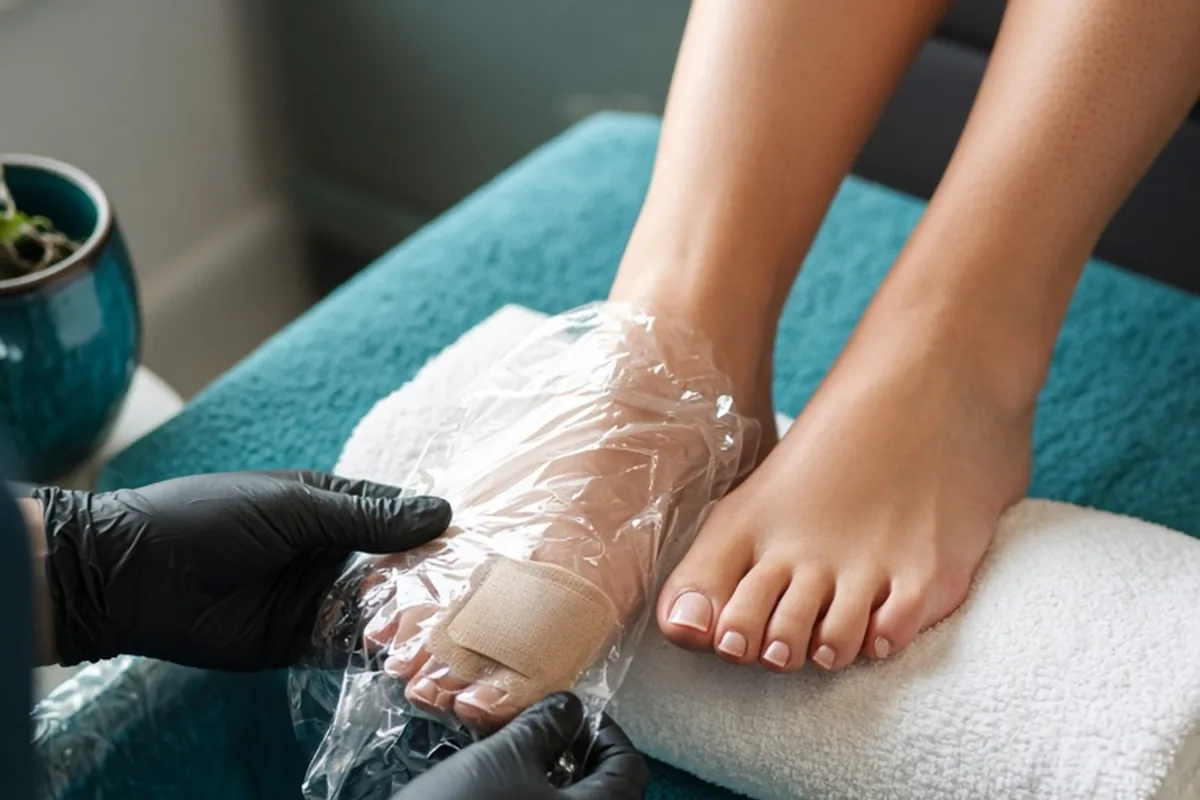
A pedicure with plantar warts checklist requires confirming medical clearance, calling the salon in advance to ensure hospital-grade sanitation, securely sealing the lesion under a waterproof occlusive bandage, choosing a pipeless or dry service, and firmly instructing the technician to bypass the affected area by skipping rasps, pumice stones, and vigorous foot massages.
Plantar warts can turn an ordinary salon visit into a source of hesitation, but having an active viral lesion does not always mean you must forego professional nail grooming entirely. By taking deliberate precautions, understanding salon sanitation protocols, and setting clear boundaries before your feet touch the basin, you can protect your skin, safeguard your technician, and prevent cross-contamination to other clients.
Evaluating Lesion Status and Securing Medical Clearance
Before scheduling any salon appointment, your first practical step is assessing the current condition of the wart. Plantar warts, caused by specific strains of the human papillomavirus entering through micro-abrasions on the sole of the foot, are notoriously resilient and can shed viral particles onto damp surfaces. If your wart is currently weeping, cracked, actively bleeding, or tender from recent clinical treatments such as cryotherapy, cantharidin, or aggressive prescription salicylic acid, a salon pedicure should be delayed. Chemical treatments and liquid nitrogen often leave the surrounding skin delicate, unroofed, or blistered, which drastically elevates the risk of introducing opportunistic bacterial or fungal infections from foot baths.
Consulting a podiatrist or primary care physician provides a definitive baseline for whether public salon services are sensible for your specific stage of healing. When you speak with your doctor, ask directly whether your lesion is sufficiently stable to handle light grooming, or if you should temporarily limit foot care to medical pedicures performed in a podiatric clinic. The primary trade-off of postponing your appointment is missing out on aesthetic upkeep in the short term, but doing so prevents painful setbacks, tissue inflammation, and the potential transfer of viral matter across other areas of your foot where minor friction might break the skin barrier.
- Delay appointments if the wart is raw, blistered, peeling from acid treatments, or bleeding.
- Confirm with a medical provider that non-medical salon grooming is safe for your skin condition.
- Consider specialized medical pedicures in a clinical setting if you have multiple or deeply seeded clusters.
Screening Salons and Disclosing Before You Arrive
Vetting your salon beforehand eliminates uncomfortable conversations in a crowded chair and ensures the facility adheres to rigorous infection control standards. When researching prospective salons, inquire specifically about their instrument sterilization methods and basin sanitation protocols between patrons. Legitimate establishments routinely utilize medical-grade autoclaves—steam-heat sterilization units—rather than relying solely on chemical disinfectant jars, which may not reliably eradicate tough viral pathogens. You should also check whether the salon uses disposable plastic tub liners, single-use buffers, and fresh nail files for every customer.
Calling ahead allows you to disclose your situation privately to the salon manager or receptionist. You can say: 'I have a benign, covered plantar wart on the ball of my foot, and I want to verify that your staff is comfortable working around a sealed bandage while avoiding all exfoliation on that sole.' Scheduling your visit during low-traffic hours, such as Tuesday or Wednesday mornings, provides an added practical advantage. Technicians are typically less rushed during quieter times, allowing them to thoroughly disinfect basins and prep single-use implements without the pressure of a waiting lobby.
- Verify that metal tools undergo autoclave sterilization rather than quick chemical dunks.
- Confirm the use of brand-new, disposable files, buffers, and single-use basin liners.
- Communicate clearly in advance so the technician understands the requirement to avoid the area.
- Book mid-morning weekday slots to ensure unhurried, meticulous sanitizing procedures.
Pre-Appointment Prep and Bandaging Techniques
Physical preparation at home on the day of your appointment establishes an impermeable barrier between your skin and the salon environment. Thoroughly wash your feet with an antibacterial cleanser, rinse completely, and dry the skin entirely using a clean towel that goes directly into the laundry. Do not use over-the-counter paring knives, pumice stones, or emery boards to self-treat or file down the wart prior to your visit. Microscopic lacerations created by home rasping make the surrounding healthy skin significantly more susceptible to picking up secondary pathogens from salon water, while also releasing active viral cells onto your skin surface.
The most critical physical step is applying a high-adhesion, waterproof occlusive dressing over the wart. Standard fabric adhesive strips tend to loosen and detach once submerged in warm water. Instead, use a medical-grade hydrocolloid patch, waterproof adhesive film dressing, or liquid skin bandage topped with reinforced waterproof tape. Test the edges of the dressing to ensure an airtight, watertight seal that will not peel away during rinsing. This physical barrier protects your sensitive lesion from harsh salon soaks and prevents the shedding of viral cells into communal equipment.
- Cleanse and dry feet thoroughly at home using dedicated towels.
- Refrain from shaving your legs or scraping foot calluses within 24 to 48 hours of your visit.
- Apply a heavy-duty waterproof hydrocolloid or film dressing that creates a watertight perimeter.
- Pack an extra bandage and antiseptic wipe in your bag in case the seal shifts during travel.
Selecting Waterless Pedicures or Sanitized Basins
Traditional jetted foot spas present the greatest sanitation risk for individuals with active viral or fungal conditions. The internal piping, tubes, and pump systems of whirlpool foot baths can harbor biofilms—slimy clusters of bacteria and organic debris—that standard surface wipe-downs fail to clear completely. When warm water recirculates through uncleaned pipes, it can distribute residual microorganisms back into the tub. If you choose a water-based pedicure, request a pipeless basin with a brand-new disposable liner, or opt for a simple standalone stainless steel basin that can be fully scrubbed and autoclaved between clients.
An even safer alternative is opting for a waterless or dry pedicure. In a waterless service, warm moist towels, gentle cuticle softening emulsions, and steamed wraps replace the foot soaking basin entirely. This completely removes the risk of shared water contact, prevents the occlusive bandage over your wart from loosening due to prolonged immersion, and keeps the surrounding skin from becoming overly soft or prone to micro-tears. While waterless services may lack the familiar luxury of swirling warm water, their hygienic benefits make them the superior choice when navigating viral verrucas.
- Avoid older whirlpool foot tubs featuring internal pipes, aerators, or recirculation jets.
- Insist on fresh disposable basin liners if utilizing a water-based foot bath.
- Consider a waterless or dry pedicure service to preserve bandage adhesion and reduce waterborne risks.
- Ensure warm towels used in dry treatments are freshly laundered in sanitizing cycles.
Setting In-Chair Boundaries for Tools and Exfoliation
Once you are seated in the salon chair, immediate and friendly boundary-setting is essential for your safety and comfort. Explicitly point out the waterproof dressing to your nail technician before they touch your feet. Instruct them plainly: 'I have a covered skin lesion under this bandage; please leave the bandage untouched, and do not use any pumice stones, foot rasps, callus scrapers, or scrubs anywhere on that foot.' Creditable technicians understand and respect these health boundaries without hesitation, as reputable cosmetology training emphasizes avoiding broken or abnormal skin.
Mechanical friction is the primary driver of wart propagation across the plantar surface. If a technician uses a gritty file or rasp near a wart, tiny microscopic cuts can seed the virus elsewhere, resulting in frustrating mosaic clusters. Furthermore, decline any proposal to shave calluses using a Credo blade or metal razor, which are illegal or heavily restricted in many jurisdictions due to high infection hazards. Limit your service to nail shaping, gentle cuticle pushing, toe buffing, and standard polish application, while skipping deep pressure massages on the affected foot to avoid displacing your protective covering.
- Point out the bandage immediately before the technician begins touching your feet.
- Decline all physical exfoliation, including pumice stones, foot files, and salt or sugar scrubs.
- Never allow the use of sharp razor blades or metal callus scrapers on any part of your foot.
- Ask the technician to use separate disposable files for each foot to eliminate cross-friction.
Post-Pedicure Sanitization and Home Follow-Up
Your checklist does not conclude when you step out of the salon chair. As soon as you arrive home, carefully remove the waterproof bandage you wore during the service. Wash the entire foot with a mild, fragrance-free soap, pat it dry with a paper towel that you can immediately discard, and inspect the wart area for any signs of irritation, moisture ingress, or accidental friction from the salon service. Disposing of single-use paper towels rather than reusable cloth towels prevents incidental viral transfer to other household members.
After cleansing, reapply your standard podiatrist-prescribed treatment, whether that involves topical antiviral solutions, salicylic acid preparations, or a fresh clean dressing. Clean the inside of the shoes or sandals you wore to the salon using an antimicrobial spray or wipe, particularly if moisture from the pedicure touched the footbed. Keeping a consistent home care routine ensures that the salon visit remains an isolated, safe grooming event rather than a trigger for viral spreading or delayed healing.
- Remove the salon dressing promptly upon arriving home and discard it in a lined waste bin.
- Cleanse the foot thoroughly using disposable paper towels to dry the skin.
- Reapply your prescribed medical treatment or a fresh, sterile protective dressing.
- Spray and wipe down the interior footbeds of footwear worn to and from the salon.
Illustrative Scenarios
Coordinating Salon Grooming with a Pre-Existing Sole Lesion
A regular salon client preparing for an event noticed an uncomfortable plantar wart on the ball of her right foot that had recently received a light podiatric treatment. Instead of booking a standard walk-in whirlpool pedicure, she scheduled an off-peak morning appointment at a studio utilizing autoclave sterilization. She cleaned the area at home, sealed the wart under a high-adhesion hydrocolloid bandage, and requested a dry waterless pedicure. She informed the technician before service started to avoid the right sole entirely, bypassing all rasps and pumice tools while enjoying nail grooming on both feet.
Key point: Proactive communication, physical sealing of the lesion, and choosing a waterless service allow clients to receive professional nail care without exposing the salon or spreading the virus across healthy skin.
Frequently asked questions
Can a nail salon technician remove or scrape my plantar wart?
No, nail technicians are licensed strictly for cosmetic care and cannot legally or safely diagnose, scrape, cut, or treat warts. Attempting to remove a wart in a salon chair can cause severe tissue trauma, heavy bleeding, and widespread viral spreading across your foot. Always rely on a board-certified dermatologist or podiatrist for medical removal.
Is it better to choose regular polish or gel if I have a plantar wart?
The type of toenail polish you select does not directly affect a plantar wart on the sole, as the nail plate is anatomically separate from the bottom of your foot. However, standard polish is often preferable because it requires less aggressive acetone soaking and scrapers that could irritate adjacent sensitive skin. Focus your attention on keeping the lesion securely covered regardless of nail coating.
What should I do if my protective bandage falls off during the pedicure?
If your bandage detaches in the basin or during service, politely ask the technician to pause immediately, rinse your foot with clean running water, and dry the area. Apply a replacement waterproof patch from your personal bag before allowing the service to continue. Do not let the technician use files or scrubs on that foot while the wart remains uncovered.
Your next step
For your next step, inspect your foot under bright lighting to verify the lesion is completely closed, and place a waterproof hydrocolloid patch inside your bag alongside your salon appointment confirmation.