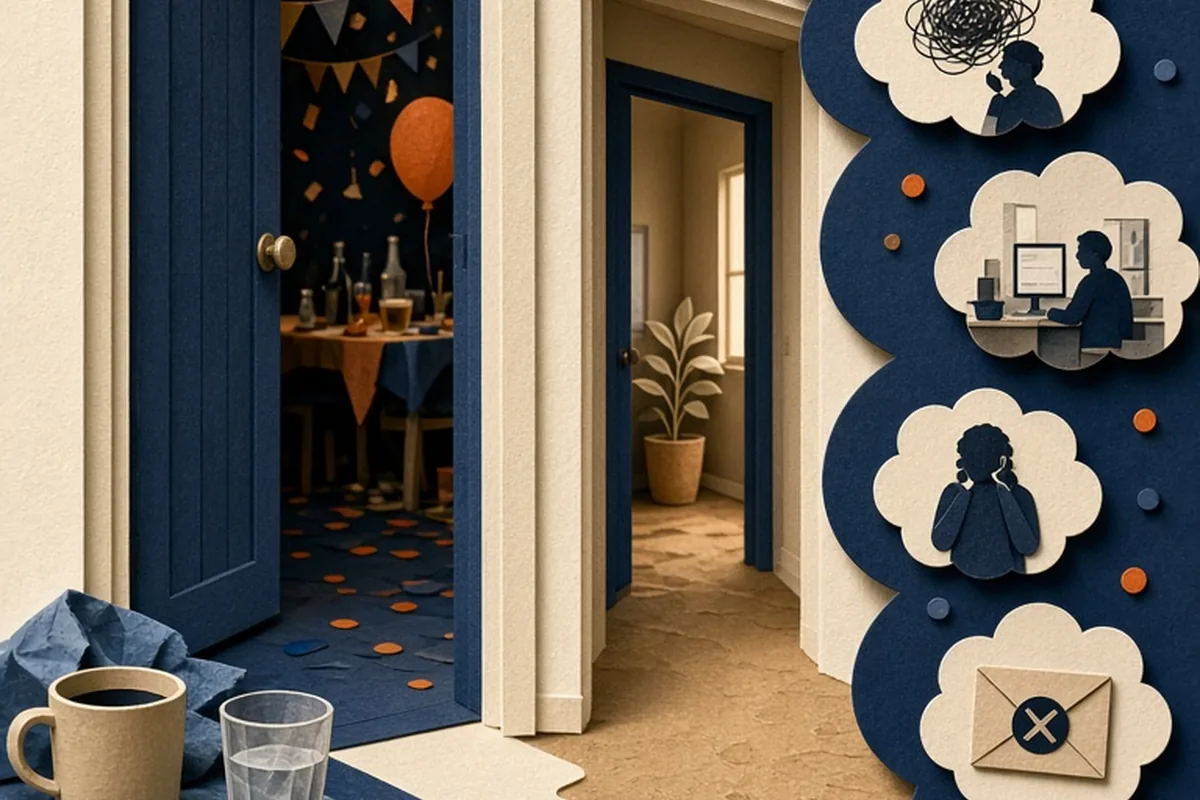
Post-party anxiety, often called hangxiety, is the uncomfortable combination of physical exhaustion, physiological rebound, and intense mental rumination that follows social gatherings and drinking. It usually peaks the morning after an event when your nervous system tries to rebalance itself while your mind replays social interactions. You can ease this distress by hydrating, avoiding impulsive apologetic messages, and recognizing that your anxious thoughts reflect temporary chemical shifts rather than actual social disasters.
Waking up the morning after a celebration or office mixer with a racing heart and a sinking sense of dread is a disorienting experience. Even when nothing objectively disastrous occurred, your brain may insist that you committed unforgivable social blunders, leaving you desperate to hide or frantically fix problems that exist primarily in your imagination.
Understanding the Biological Rebound Behind Post-Social Dread
The intense worry you feel the day after a lively gathering rarely starts with a conscious thought. When you consume alcohol or spend hours in high-stimulation social environments, your nervous system initially shifts into an artificially relaxed, lower-inhibition state. In response, your body naturally releases stimulating neurochemicals to maintain equilibrium. Once the social buzz and the effects of alcohol wear off during the night, your system is left with an excess of these stimulating signals, leading to elevated heart rates, restless sleep, and a state of biological hypervigilance upon waking.
This physical agitation acts as a blank canvas for self-criticism. Because human brains are wired to find reasons for uncomfortable bodily sensations, you wake up feeling physically alarmed and immediately search your memory for explanations. You might convince yourself that your heart is pounding because of an awkward joke you made to a coworker, when in reality your pulse is elevated due to mild dehydration, low blood sugar, and fragmented rest. Recognizing this sequence helps break the cycle, shifting your perspective from believing you ruined your reputation to understanding that your body is simply recalibrating after a heavy load.
Decoupling Bodily Restlessness from Perceived Social Mistakes
Once hangxiety takes hold, mental rumination tends to magnify minor, forgettable moments into catastrophic errors. You might vividly replay a three-second pause in a conversation, a joke that did not land with roaring laughter, or the exact tone you used when introducing yourself to a department head. In an anxious state, you interpret routine human awkwardness as proof of widespread disapproval, forgetting that everyone around you was also focused on their own social performance and comfort.
To break this spiral, practice treating your anxious thoughts as internal weather rather than verified facts. A helpful reality check is the spotlight effect, which reminds us that people rarely scrutinize our behavior with anywhere near the intensity that we scrutinize ourselves. If a colleague seemed distracted during your conversation, it is far more likely they were thinking about getting another drink, checking their phone, or navigating their own fatigue. Acknowledging that your nervous system is amplifying normal social friction allows you to step back and evaluate the previous evening with fair, proportionate judgment.
However, separating body sensations from reality has its practical limits. If you have a clear memory of spilling a drink on someone or speaking over an executive repeatedly, pretending nothing happened is not productive. The goal is not total denial, but rather distinguishing between genuine, observable incidents that warrant a brief future acknowledgment and vague, floating feelings of shame that have no real-world anchor.
Immediate Physical and Environmental Grounding Tactics
Recovering from hangxiety requires addressing your physiological baseline before attempting to solve any perceived social dilemmas. Start by rehydrating with water and electrolyte-rich fluids, as dehydration directly exacerbates feelings of weakness and jitteriness. Eating a balanced meal that includes complex carbohydrates and protein can stabilize your blood sugar, which often plummets after an evening of drinking and disrupted rest. Simple physical comforts like taking a warm shower, putting on clean clothes, and opening a window for fresh air can send powerful sensory cues of safety to an overstimulated nervous system.
In addition to self-care, you need to establish strict digital boundaries for the first few hours of your day. Avoid the temptation to pore over group chat transcripts, inspect photos from the night before, or endlessly scroll through social media feeds looking for clues about how people perceive you. This compulsive checking behavior only fuels panic by keeping your focus locked on the perceived crisis. Give yourself permission to leave your phone in another room while you focus on resting, gentle movement, or quiet domestic tasks that require zero social energy.
- Drink a large glass of water with electrolytes or a pinch of salt to speed rehydration.
- Eat a grounded, easy-to-digest meal containing carbohydrates and protein to steady blood sugar.
- Take a lukewarm shower to physically reset your sensory focus and ease muscular tension.
- Place your phone out of reach for at least two hours to prevent obsessive review of messages.
Navigating Post-Mixer Worry in Professional Settings
Hangxiety often carries significantly higher stakes when the event was an office party, happy hour, or industry conference. In professional contexts, social boundaries are inherently blurry, making it easy to worry that you crossed from friendly to unprofessional. You might fret over whether you spoke too candidly about company politics, shared personal information inappropriately, or appeared overly relaxed in front of organizational leadership.
The most crucial rule during workplace hangxiety is to resist the impulse to send panic-driven morning-after apologies. Reaching out to your manager or teammates with messages like 'I am so sorry if I was annoying yesterday' forces them to manage your emotional state and often calls attention to behaviors they never even noticed. Most people expect company events to be somewhat informal, and minor deviations from standard office demeanor are quickly forgotten in the flow of regular business operations.
Instead of preemptively apologizing, adopt a posture of steady, ordinary professionalism. Return to your routine tasks calmly, greet colleagues as you normally would, and let regular workplace interactions restore the standard social baseline. If an interaction was truly out of line, a measured, brief conversation on Monday is far more effective than an emotional message sent from your bed on a Saturday morning.
Determining When an Apology Is Actually Warranted
While most post-event dread is unfounded, there are times when someone genuinely oversteps a boundary, makes an insensitive comment, or creates an uncomfortable disruption. Determining whether you need to take repair steps requires looking strictly at observable facts rather than your internal sense of embarrassment. Ask yourself whether a neutral bystander would agree that a specific action caused tangible harm, discomfort, or property damage.
If you conclude that an apology is genuinely necessary, keep it concise, accountable, and focused on the other person rather than your own guilt. Avoid overexplaining your state of mind, blaming alcohol, or demanding immediate forgiveness to soothe your feelings. A grounded repair statement should acknowledge the specific behavior, express sincere regret, and state your commitment to respectful conduct going forward, after which you should step back and give the other person space.
Designing Personal Boundaries for Future Social Gatherings
The most effective way to eliminate hangxiety in the long run is to change how you approach high-stimulation gatherings before they even begin. This does not necessarily require complete social withdrawal, but it does demand clear personal rules regarding pacing, consumption, and departure times. Deciding your limits in advance protects you from making impulsive choices when the energy in the room is loud and persuasive.
One reliable strategy is to establish a hard exit time before you arrive. Many social missteps occur late in the evening when energy is low, cognitive control is degraded, and gatherings lose their initial structure. By scheduling a firm departure, perhaps after two hours or immediately following dinner, you protect your future self from the exhaustion that fuels next-day anxiety. Pairing this boundary with alternating alcoholic beverages with water or opting entirely for non-alcoholic options keeps your nervous system stable and ensures your memories of the event remain clear and intact.
The trade-off of setting stricter boundaries is that you might occasionally feel a brief pang of missing out when leaving an event early. However, trading the final chaotic hour of a party for a peaceful, anxiety-free morning is almost always a worthwhile exchange for your mental well-being.
Illustrative Scenarios
Illustrative Scenario: Calming Workplace Mixer Panic
After attending an annual team celebration, a project lead named Jordan woke up convinced that an animated conversation with a senior director had ruined all professional credibility. Jordan recalled talking enthusiastically about internal operational bottlenecks and felt an overwhelming impulse to email the director a five-paragraph apology on Saturday morning. Instead of hitting send, Jordan chose to pause, hydrate, and spend the weekend resting without checking workplace messaging apps. On Monday morning, Jordan arrived at the office prepared for a calm, routine day. When the director stopped by Jordan's desk, it was not to reprimand, but to casually mention that the ideas discussed at the mixer were insightful and worth exploring in a formal meeting.
Key point: Subjective hangxiety often frames animated conversations as catastrophic errors; pausing before issuing panicked apologies prevents turning an ordinary interaction into an awkward issue.
Frequently asked questions
How long does post-party hangxiety usually last?
For most people, hangxiety peaks the morning after an event and steadily fades within twenty-four hours as the body rehydrates, clears alcohol metabolites, and restores normal rest patterns. In cases of significant physical exhaustion or heightened baseline stress, mild rumination may linger into a second day. Gentle self-care and avoiding obsessive replaying of events will help your nervous system settle faster.
Should I text my friends to ask if I did anything embarrassing?
It is usually best to avoid sending reassurance-seeking messages immediately, as this behavior often keeps your focus locked on fear. In most instances, your friends were focused on their own conversations and noticed nothing out of the ordinary. If there is a legitimate reason to suspect a real conflict, wait until you are physically rested and clear-headed before reaching out with a simple, grounded check-in.
Why does hangxiety cause me to remember events more negatively than they actually were?
When your nervous system experiences a chemical and physical rebound after socializing, elevated stress signals prime your brain to anticipate threats. This state biases your memory retrieval, leading you to interpret neutral facial expressions as disapproval and ordinary conversational silences as awkward rejections. Once your physical baseline stabilizes, your perspective on those same memories typically becomes much more balanced.
Can I experience post-party anxiety even if I did not drink alcohol?
Yes, intense post-event exhaustion and overstimulation can trigger similar anxiety without any alcohol consumption. Sustained social performance, masking personal discomfort, and navigating loud environments demand substantial mental and nervous system energy. When you finally stop socializing, the sudden drop in adrenaline paired with physical fatigue can easily produce a wave of vulnerability and second-guessing.
Your next step
Give your nervous system a full twenty-four hours to physically settle through hydration, nourishing food, and screen-free rest before evaluating any social worries or taking action on them.