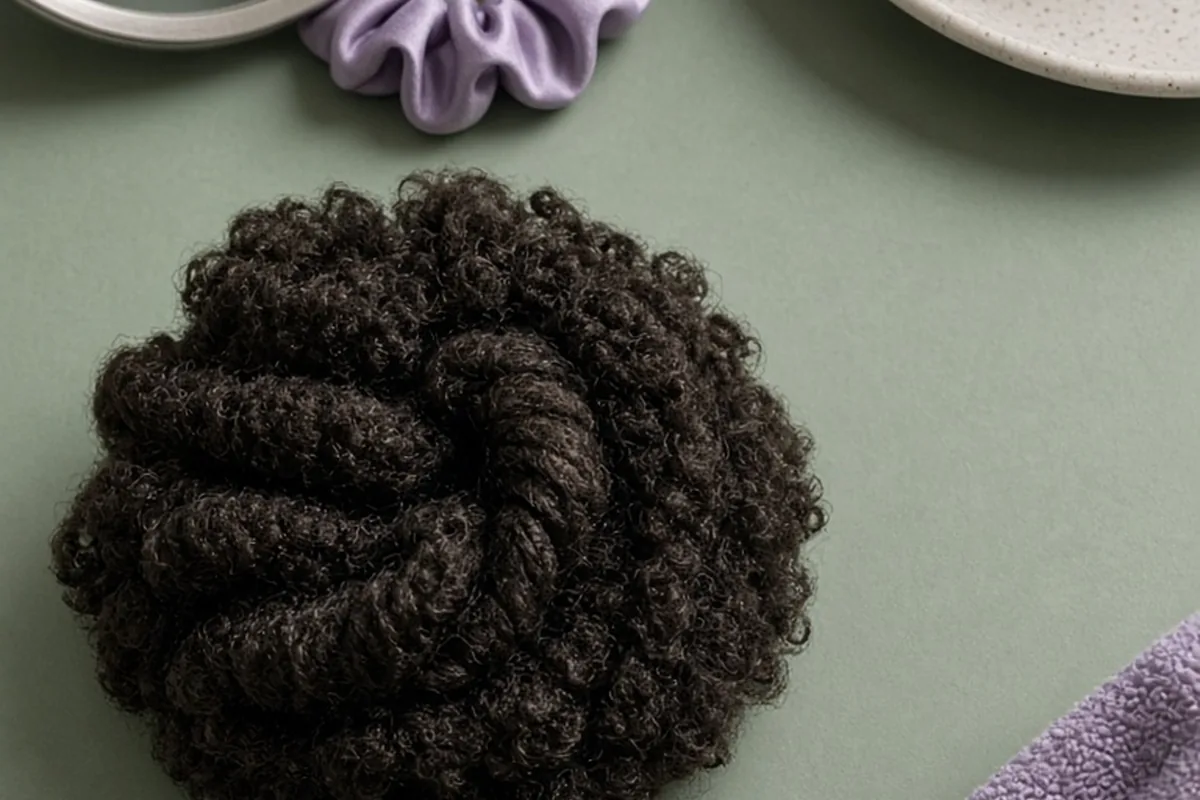
The best protective hairstyles for natural hair for women over 40 prioritize scalp comfort, edge preservation, and moisture retention over tight, heavy installations. Ideal low-tension options include loose flat twists, halo braids, lightweight crochet styles, medium knotless braids with minimal extension hair, and soft low chignons. Because mature natural hair often experiences decreased sebum production, changing porosity from gray strands, and delicate perimeters, gentle styling protects strands while supporting everyday hair health.
Navigating protective styling in your forties, fifties, and beyond requires shifting your focus from purely aesthetic longevity to sustainable hair health. Choosing the right style allows you to protect delicate ends, maintain moisture balance, and keep styling routines effortless.
How Hair Changes After 40 and What It Means for Protective Styling
Natural hair undergoes distinct physiological shifts as you move through your forties and beyond. Hormonal changes, including gradual declines in estrogen and changes in thyroid function, often lead to a reduction in natural sebum production on the scalp. This slower oil output leaves coils and curls more prone to dryness, requiring intentional hydration routines before and during protective styling. At the same time, individual hair strands may become finer in diameter, and the overall density around the crown and temples often diminishes.
The emergence of gray hair introduces another important variable. Gray strands typically have a coarser cuticle layer and reduced natural lipid content, making them feel wiry and resistant to moisture while paradoxically remaining structurally fragile. When you install a protective style on mature natural hair, high-tension techniques that you might have tolerated in your twenties can lead to traction alopecia, follicle inflammation, and breakage. Protective styling after 40 must focus on low tension, lightweight materials, and easy access to the scalp for ongoing hydration.
Protective Hairstyles for Natural Hair for Women Over 40 Without Heavy Extensions
Styling your own natural hair without adding heavy synthetic bundles is often the safest starting point for mature hair. Flat twists that curve gently around the head or terminate in a soft low bun provide an elegant look while distributing tension evenly across the scalp. Unlike individual three-strand plaits, flat twists lie flush against the scalp, eliminating the pulling weight that can compromise thinning edges. You can wear flat twists as an intentional updo for one to two weeks, misting them daily with a water-based leave-in conditioner.
Crown braids, also known as halo braids, offer another low-manipulation alternative that keeps ends tucked away from environmental friction. When creating a halo braid, use your natural hair density and keep the perimeter soft rather than pulling the hairline taut. If your hair is on the shorter side, tuck-and-pin rolls using smooth, seamless hairpins allow you to secure ends without catching delicate cuticles. These styles require minimal daily upkeep and eliminate the mechanical weight that synthetic extensions can place on mature follicles.
Two-strand twists and mini twists using your own hair remain timeless staples for natural hair over 40. Medium-sized two-strand twists offer balanced longevity and easy maintenance, letting you wash and condition your scalp without unraveling the entire style. You can style the twists into loose updos, wear them down, or pin them to the side, giving you versatility without stressing the hairline.
Low-Tension Extension Styles That Protect Delicate Edges and Temples
If you prefer the longevity and versatility of extensions, selecting the right technique and hair fiber is essential to avoid tension damage. Knotless box braids have largely replaced traditional feed-in or knotted box braids because they begin with your natural hair and gradually incorporate small amounts of extension fiber. This technique removes the heavy, tight anchor knot at the root, drastically reducing pressure on the scalp and perimeter. For women over 40, opting for medium or large parts with shorter lengths, such as a shoulder-length bob, keeps the total weight on the scalp minimal.
Crochet installations installed over a loose cornrow base provide high versatility with significantly less tension than individual braids. Pre-looped crochet hair, such as soft water waves, passion twists, or lightweight faux locs, installs quickly and allows for customizable density. You can instruct your stylist to leave your sensitive perimeter completely out or braid the front section loosely, framing the face naturally while keeping the stress off fragile temple areas.
Passion twists and lightweight marley twists created with featherlight water-wave hair offer a textured, soft appearance that complements mature facial features. When choosing extension hair, prioritize synthetic or human hair fibers known for being lightweight rather than dense, heavily packed packs. Always ask your stylist to use moderate section sizes so each natural hair cluster has enough internal strength to support the added fiber without snapping.
Scalp Care and Moisture Maintenance While Wearing Protective Styles
A protective style is only truly protective if your underlying hair and scalp continue to receive consistent moisture and hygiene. Allowing hair to dry out under extensions or twists leads to brittle strands that break easily during the takedown process. Establish a weekly or bi-weekly scalp-cleansing routine using a diluted sulfate-free shampoo or an applicator-tip scalp rinse. Apply the cleanser directly to your exposed parts, gently massage the skin with your fingertips, and rinse thoroughly with lukewarm water without aggressively rubbing the lengths of the style.
Daily or every-other-day hydration prevents gray and aging natural strands from snapping under tension. Use a fine-mist spray bottle filled with pure water or an aloe-vera-infused leave-in conditioner to lightly hydrate your hair from roots to ends. Follow up with a tiny amount of lightweight plant oil, such as jojoba or squalane, applied along your parts and ends to seal in hydration. Avoid heavy petroleum-based greases or waxy pomades along your hairline, as these can clog aging follicles and trap debris, hindering healthy hair retention.
Recognizing Warning Signs That a Protective Style Is Damaging Your Hair
Recognizing early indicators of styling stress protects your follicles from long-term thinning and scarring. If you experience persistent scalp soreness, throbbing, or tension headaches after leaving the salon, the installation is too tight. Small white or red bumps along the hairline, often called tension bumps, indicate acute folliculitis caused by excessive traction. If these bumps appear, you should remove or loosen the offending braids immediately rather than waiting for your scalp to adjust.
Excessive hair shedding along the base of your braids or noticeable gaps in your perimeter are clear signs that the style is too heavy for your current hair density. While losing 50 to 100 shed hairs per day is normal, seeing clumps of hair with intact white bulbs attached to broken strands during style wear indicates traction overload. Regularly check your hairline in good lighting to verify that your edges lie naturally without being pulled taut into the base of the style.
Safe Duration Guidelines and Gentle Takedown Techniques
Leaving a protective style in for too long turns a beneficial routine into a primary cause of breakage. For natural hair over 40, extension styles should rarely remain installed longer than six to eight weeks, while unassisted natural twists and flat twists should be refreshed every two to three weeks. Over time, natural shed hair collects at the root of braids and twists, mixing with product residue and lint to create stubborn tangles and matting that are difficult to undo without breaking fragile mature strands.
The takedown process requires as much patience and care as the installation itself. Never unravel a protective style on dry hair; saturate your strands with a slippery detangling lotion, rinse-out conditioner, or botanical oil before removing twists or braids. Use your fingers to gently separate the shed hair accumulated at the root before running a wide-tooth comb or detangling brush through the section. Allow your hair and scalp to rest in an unrestricted state for at least two weeks between protective installations to let follicles recover.
How to Guide Your Stylist to Protect Mature Natural Hair
Clear communication with your hair stylist ensures your protective style aligns with your personal hair density and scalp comfort. During your consultation, state clearly that you want a low-tension installation designed to preserve your hairline and crown. Specify that you do not want your baby hairs or perimeter pulled into the foundational braids, and ask the stylist to avoid using heavy edge control gels that dry out fragile gray or thinning strands.
Do not hesitate to speak up during the braiding process if you feel sharp pulling or excessive tension. A professional stylist dedicated to hair health will happily adjust their grip or reduce the amount of extension hair used per section. You can also bring your own lightweight hair extensions or gentle scalp-care products to the salon to ensure every component of your styling experience supports your hair goals.
Illustrative Scenarios
Relieving Hairline Tension with Medium Knotless Bobs
Maya, a 47-year-old administrative director, noticed her edges thinning after years of wearing waist-length box braids. She initially assumed the thinning was an unavoidable part of aging and tried using heavy edge waxes to conceal the sparse spots. After consulting a natural hair specialist, Maya switched to a shoulder-length knotless bob using ultralight synthetic fiber and left her front perimeter completely unbraided. Within four months of reducing mechanical weight and eliminating edge tension, her scalp irritation resolved and her hairline regained soft, healthy density.
Key point: Opting for shorter lengths and tension-free installation methods prevents traction damage while maintaining a polished, professional aesthetic.
Managing Dryness in Coarse Gray Coils with Flat Twists
Denise, 53, struggled with extreme dryness and breakage after her natural hair turned mostly gray. Her traditional mini twists were unraveling at the ends and tangling into knots whenever she tried to wash them. Denise shifted to loose, flat-twist halo updos using her natural hair, misting the twists with a water-and-glycerin leave-in spray every morning. This adjustment kept her dry gray ends protected from daily friction, allowed straightforward scalp washing, and reduced her weekly detangling time by half.
Key point: Low-manipulation styles that keep ends tucked away make it easier to deliver consistent moisture to fragile gray hair.
Frequently asked questions
Can I wear protective styles if my hair is thinning at the crown?
Yes, but you should avoid styles that add heavy extension hair or pull tightly across the thinning area. Loose flat twists, unassisted two-strand twists, or soft headwrap styles protect delicate areas without placing mechanical strain on compromised follicles.
How often should I wash my natural hair while wearing a protective style?
Aim to cleanse your scalp every 10 to 14 days while wearing a protective install. Use an applicator bottle with a gentle, sulfate-free cleanser directly on your scalp to clear product buildup without agitating or frizzing the style.
Why does gray natural hair feel drier when styled in twists or braids?
Gray hair naturally produces less internal moisture and has a raised cuticle structure that loses hydration rapidly. When tucked into protective styles, gray strands require frequent light misting with water-based leave-in conditioners and sealing with lightweight oils to stay supple.
How long should I wait between taking down one protective style and installing another?
Give your hair and scalp at least one to two weeks of rest between protective styles. During this break, clarify your scalp, perform a deep-conditioning treatment, and wear low-manipulation styles like loose buns or twist-outs to allow your roots to recover.
Your next step
Assess your current hairline and crown density in good lighting today, then book a low-tension consultation or select a lightweight natural flat-twist style that leaves your delicate edges free from pulling.