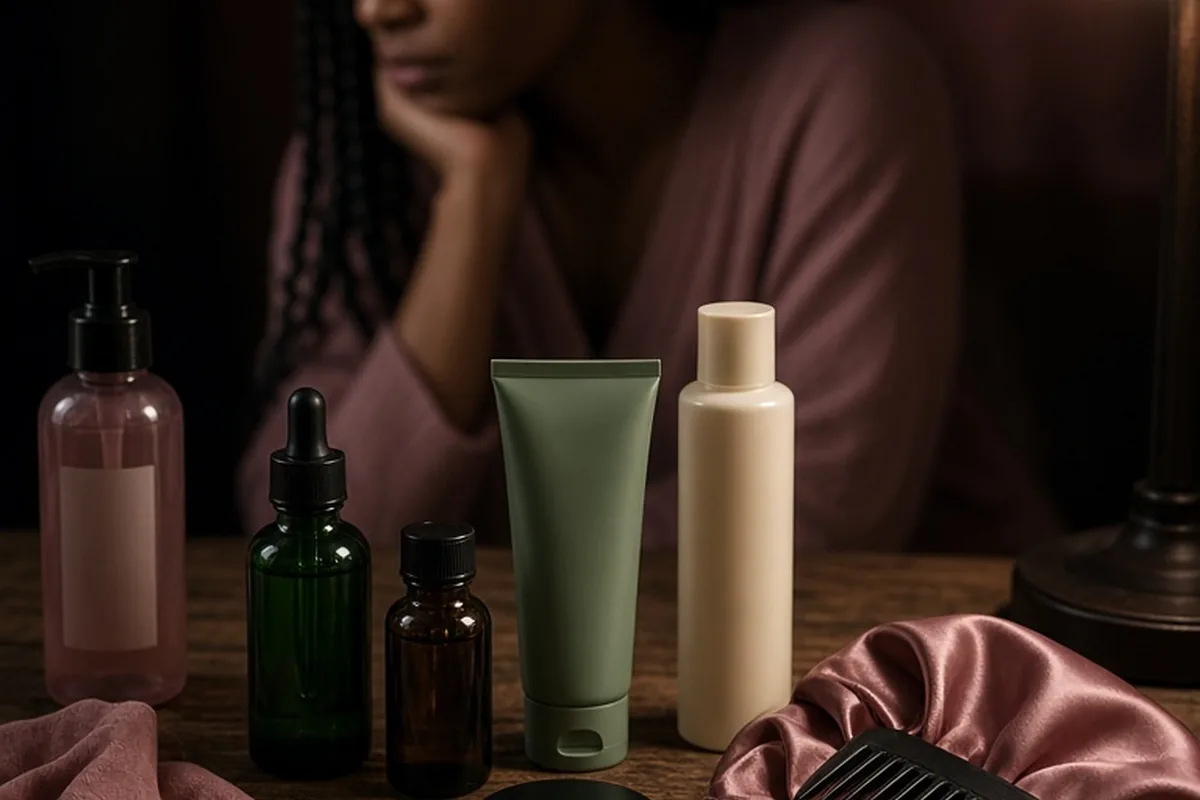
Beginners need a core starter kit divided across three stages: preparation, installation, and daily maintenance. Essential products include a clarifying shampoo and deep conditioner to prepare clean strands, a water-based leave-in conditioner for moisture, a firm-hold styling or parting gel for crisp sections without flaking, a lightweight scalp oil or soothing mist to prevent dryness, a setting mousse to tame flyaways, and a satin bonnet or scarf to prevent friction damage while sleeping.
Wearing protective styles like box braids, twists, cornrows, or crochet weaves can help protect natural textured hair from daily manipulation and environmental stress. However, keeping your natural hair healthy underneath extensions requires selecting products that balance long-lasting moisture, gentle scalp care, and clean styling without creating heavy buildup.
The Core Starter Product Kit: Preparing, Installing, and Maintaining
Starting your journey with protective styles requires categorizing your products by function rather than buying random items off the shelf. A complete routine divides cleanly into three specific phases: pre-installation prep, the installation process, and post-installation upkeep. When you skip products in any of these three stages, you risk scalp irritation, excessive dryness, or premature unraveling of your style.
Your preparation phase centers on creating a clean, deeply moisturized foundation using clarifying cleansers, rich rinse-out treatments, and water-based leave-in sprays. The installation phase focuses on precision and manageability, relying on sectioning tools, parting pomades, and thermal protectants if you blow-dry your hair before braiding. Finally, the maintenance phase preserves your look with water-based refreshing mists, light oils, setting foams, and nighttime friction shields. Organizing your product purchases around these three distinct phases prevents product overload and ensures you have the exact formula needed at each step.
Pre-Install Cleansing and Conditioning Formulas for Long-Term Moisture
The state of your natural hair prior to braiding or twisting directly determines how well your hair retains length during the weeks your style remains installed. A clarifying shampoo is necessary to strip away leftover silicones, heavy butters, and environmental pollutants. Because your scalp will have limited access during the duration of your style, starting with a completely clean scalp prevents trapped debris from causing itching and flaking under the extensions.
Following your clarifying wash, use a deep conditioning treatment that balances hydration and structural support. Look for deep conditioners containing ingredients like aloe vera, glycerin, and hydrolyzed proteins. While your hair is tucked away, it cannot receive your regular wash-day deep treatments, so replenishing moisture stores right before styling is critical. Apply a lightweight, liquid leave-in conditioner after rinsing out your deep conditioner to ensure your strands stay supple throughout the drying and braiding process without feeling gummy.
Installation Essentials: Grip Gels, Parting Pomades, and Heat Defenses
Achieving clean parts and a neat finish requires styling products that provide hold without drying out your natural hair or flaking as they dry. Look for edge controls and braiding gels formulated without high concentrations of drying alcohols. Water-based pomades enriched with humectants and conditioning agents like castor oil or honey extract allow you to smooth the hair at the root and secure your parts cleanly while keeping the natural hair pliable.
If you stretch or blow-dry your hair before installing braids, twists, or weaves, a heat protectant spray or cream is non-negotiable. Stretching the hair temporarily eases tension and tangling during installation, but high heat without adequate protection weakens the cuticle layer. Apply a silicone-based or polyquaternium-based thermal protectant evenly through damp sections before using your blow-dryer or tension comb. This creates a defensive barrier that minimizes heat damage and preserves your natural curl pattern for when you eventually take the style down.
Selecting Extensions and Preparing Fibers to Prevent Scalp Irritation
Many beginners experience severe scalp itching and redness within days of getting synthetic hair installed, often mistaking the reaction for extreme dry scalp. Most synthetic braiding hair is coated with an alkaline base during manufacturing to make the synthetic fibers heat-resistant and flame-retardant. This alkaline coating can cause contact dermatitis on sensitive scalps when placed tightly against the skin for extended periods.
You can prevent this irritation by either purchasing pre-washed, hypoallergenic hair fibers or conducting a simple apple cider vinegar rinse on synthetic hair packs before installation. Submerge the synthetic hair in a basin of warm water mixed with a cup of raw apple cider vinegar for fifteen to twenty minutes until a white film lifts to the water's surface. Rinse the hair thoroughly in cool water and hang it to air dry completely before installation. This simple preparation step neutralizes the alkaline coating, safeguarding your scalp from persistent irritation.
Daily Scalp and Strand Maintenance: Refreshing Sprays and Light Oils
Protective styles do not mean zero maintenance. Natural hair tucked inside extensions still loses moisture to dry ambient air, cotton pillowcases, and daily exposure. Water is the primary hydrator for textured hair, which makes a water-based scalp spray or braid mist a daily staple. Look for water or aloe juice as the first ingredient, supplemented by soothing botanical extracts such as tea tree, peppermint, or chamomile to calm scalp tension.
After applying your water-based mist, seal in that hydration with a few drops of lightweight oil applied directly to the scalp and along the length of your braids or twists. Avoid heavy mineral oils, petroleum jelly, or thick raw butters on your scalp during wear, as these occlusive formulas easily trap dead skin cells and dust, creating stubborn buildup at the roots. Instead, opt for lightweight plant oils like jojoba, sweet almond, or squalane, which absorb cleanly without clogging follicles.
Styling Mousses and Nighttime Friction Defense for Style Longevity
To keep your protective style looking fresh over several weeks without causing mechanical stress, incorporate a lightweight setting foam or styling mousse into your weekly routine. Mousse works well for smoothing down flyaways, setting frizzy synthetic ends, and refreshing the neat appearance of braids or locs. Apply a generous pump of foam across the surface of your hair, wrap it securely with a silky strip or durag, and allow it to dry under ambient air or a hooded dryer.
Nighttime protection is equally vital for preserving your style and protecting your hairline. Cotton and linen pillowcases draw moisture out of the hair and create rough friction that frays braids and breaks fragile baby hairs along your perimeter. Always sleep with a satin or silk bonnet, or use a high-quality satin pillowcase. Choose an extra-large bonnet for long braids or faux locs to avoid bending the ends, and use a wide satin edge scarf to keep your hairline flat and protected from tension while you sleep.
Safe Takedown Products and Detangling Solutions to Prevent Breakage
The removal phase carries the highest risk of mechanical breakage if approached without the right products. Over the weeks your style was installed, your scalp naturally shed hair strands that could not fall away, creating dense shed-hair mats at the base of each braid or twist. Attempting to wash your hair immediately with shampoo before thoroughly detangling these buildup spots will cause the shed hair to lock together, resulting in severe knots and breakage.
Equip yourself with a dedicated takedown spray, a high-slip conditioner, or a natural detangling oil such as coconut or sweet almond oil before unraveling your hair. Apply the slip product generously to each root area, and use your fingers or the tail of a comb to gently separate the shed hair and product buildup before applying any water. Once the shed hair is completely loosened and finger-detangled, follow up with a wide-tooth comb from tip to root before your post-takedown wash.
Frequently asked questions
How often should I apply oil and moisturizing spray to my protective style?
Apply a water-based hydrating spray every two to three days to keep your natural hair supple under the extensions. Follow with a lightweight oil two to three times per week directly on the scalp and along the hair shaft to seal in the moisture without causing heavy buildup.
Can I wash my hair while it is in a protective style?
Yes, you can wash your hair every two to three weeks while wearing a protective style. Dilute a sulfate-free shampoo in an applicator bottle to target your scalp directly, rinse thoroughly with low water pressure, and ensure your roots and synthetic hair dry completely to prevent trapped mildew or odors.
What ingredients should beginners avoid in braiding gels and edge controls?
Avoid styling gels with high concentrations of denatured alcohol, isopropyl alcohol, or heavy waxes. These ingredients can dry out your natural hair strands, leave stubborn white flakes along your parts, and make the hair brittle around high-tension areas like your hairline.
Your next step
Assemble your pre-install clarifying shampoo, water-based leave-in spray, alcohol-free parting gel, and satin bonnet before booking or starting your protective style installation.