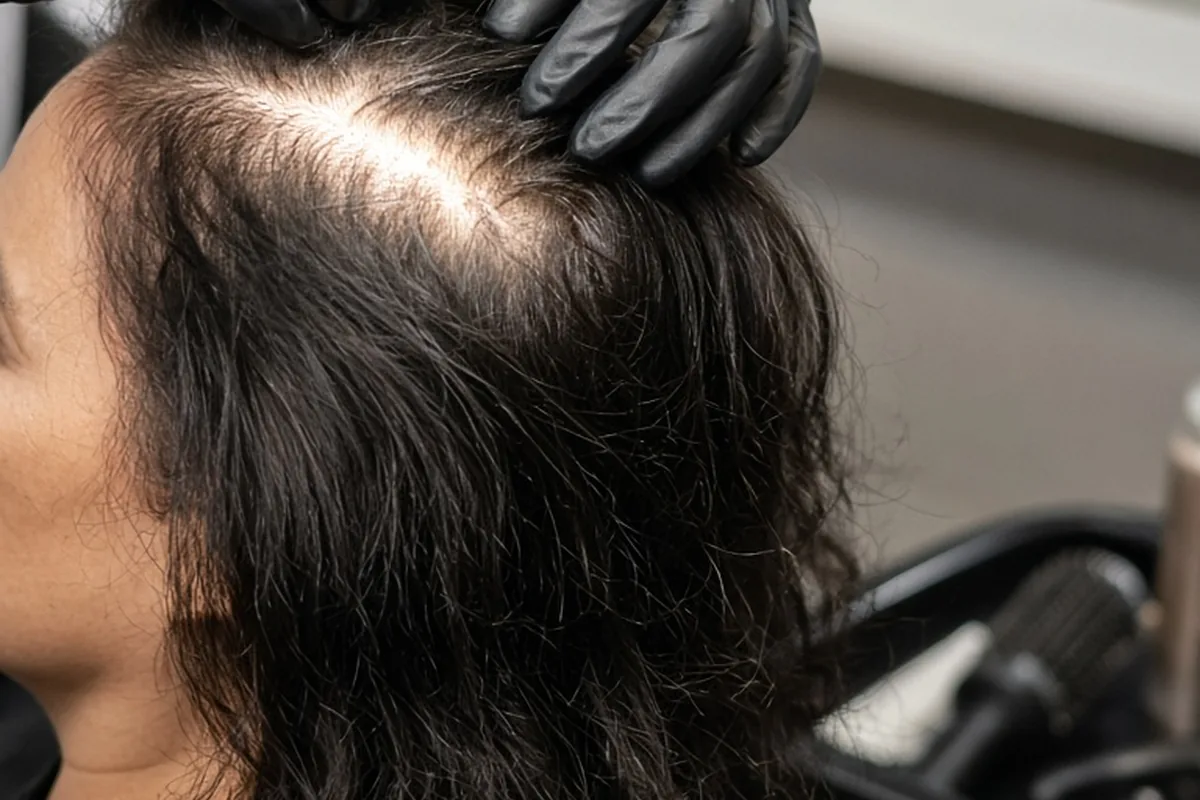
When consulting your stylist about dry scalp care, ask whether your flaking stems from simple dryness or product buildup, which in-salon clarifying or hydrating scalp treatments match your hair texture, how frequently you should wash at home, and what home-care ingredients to seek or avoid. Be sure to ask whether your scalp shows signs of inflammation that warrant seeing a board-certified dermatologist rather than receiving salon services.
Sitting in a salon chair offers a distinct advantage for your hair health: a professional works directly under bright task lighting with an unobstructed view of your entire scalp. Bringing focused questions about your scalp condition transforms an everyday appointment into a collaborative assessment, helping you clarify what your skin needs, avoid counterproductive salon services, and build an at-home regimen that supports both hair fiber health and skin comfort.
Determining Whether Flaking Stems from Dryness, Buildup, or Imbalance
A useful first question to ask your stylist is: What do you see at my roots when you part my hair under the styling lights? Flaking is frequently misidentified at home because loose dead skin cells, dry patches, and accumulated styling residues often look similar in a bathroom mirror. A stylist can physically examine whether the flakes are small, white, and freely shedding, which typically suggests skin barrier dehydration, or whether they appear yellowish, waxy, and adhere closely to the skin surface, which often indicates excessive sebum or an overgrowth of skin microflora. Asking your stylist to describe the texture and distribution of the flakes helps narrow down whether your scalp is genuinely lacking moisture or suffering from an excess of accumulated oils.
Follow this observation by asking: Does my scalp surface look tight and parched, or do you see coated follicle openings and product film? Stylists regularly encounter layers of silicone-heavy serums, dry shampoos, edge controls, and heavy leave-in conditioners that cling to the base of the hair shaft. When these formulas accumulate, they can irritate the epidermal surface and create shedding that mimics dry scalp. Having your stylist differentiate between a dehydrated epidermal layer and stubborn product residue ensures you do not inadvertently treat an overburdened scalp with heavy hydrators that could worsen pore congestion.
Finally, inquire about the overall redness or tone of your scalp tissue across different zones. Ask your stylist if the sensitivity appears localized to areas where you apply concentrated tension, such as parts, braids, or ponytail lines, or if it spans the entire crown and occipital bone. Understanding the physical layout of your dry patches clarifies whether your routine suffers from uneven product rinsing, mechanical stress from tight styling, or an environmental reaction to seasonal dry indoor heating.
Evaluating In-Salon Dry Scalp Treatments for Your Hair Texture
Before agreeing to an add-on service at the shampoo basin, ask: What specific scalp treatment would benefit my condition, and how does it account for my hair texture and density? Many salons offer scalp-focused services ranging from deep clarifying rinses and clay masks to enzymatic peeling agents and steam-assisted botanical oil infusions. However, a treatment designed to strip sebum from fine, straight hair may severely deplete moisture on tightly coiled or chemically relaxed hair. Your stylist should articulate why a specific service formula suits both your scalp skin barrier and the moisture needs of your hair strands.
Next, ask your stylist: What active ingredients are in this salon treatment, and do they rely on physical friction or gentle chemical exfoliation? Physical scrubs containing salt granules or crushed seed shells can cause micro-abrasions and hair breakage if worked aggressively into fragile roots. If the salon uses chemical exfoliants such as salicylic acid, lactic acid, or fruit enzymes, ask how long the formula remains on your skin before emulsifying. Understanding the mechanism of action prevents unexpected burning or prolonged sensitivity, particularly if your scalp is already irritated and dry.
You should also clarify how the salon service interacts with your ongoing styling routine. Ask your stylist: Will this scalp treatment strip my existing color gloss, toner, or smoothing service? Clarifying treatments that lift dry scalp residue can sometimes open the hair cuticle, leading to premature pigment fading. A professional will explain whether they plan to apply a protective barrier along your mid-lengths and ends or use a targeted nozzle applicator that treats the skin while preserving your color investment.
Adjusting Wash Frequency, Cleanser Strength, and Water Temperature
At-home cleansing habits frequently dictate the long-term comfort of your scalp. Ask your stylist: Given my hair texture, lifestyle, and scalp condition, how many days should I realistically wait between shampoo sessions? Finding the proper cadence involves balancing two competing factors: washing too often with harsh surfactants can strip natural sebum and trigger rebound dryness, while spacing washes too far apart allows dead cells, environmental sweat, and natural oils to oxidize and create irritation. Your stylist can evaluate how your roots respond between appointments to recommend a balanced washing interval.
Pair that with a practical inquiry regarding cleanser formulation: Should I alternate between a gentle moisturizing shampoo and a clarifying wash, or stick strictly to one formula? Many individuals default to either intensely moisturizing cleansers that never fully lift debris, or harsh clarifying shampoos that dry out the scalp when used daily. Ask your stylist whether a bi-weekly clarifying cycle followed by a hydrating, sulfate-free cleanser makes sense for your hair density, sebum production, and exercise routine.
Be sure to ask about water habits at the basin: What water temperature should I use at home, and could my home water supply be contributing to this dryness? Hot water feels soothing on an itchy scalp, but it quickly dissolves the delicate lipid barrier of the skin, accelerating dehydration. Your stylist can demonstrate what lukewarm rinsing feels like during your shampoo service and can discuss whether common indicators of hard mineral water, like brittle ends and persistent mineral film, might be compounding your scalp flaking.
Choosing At-Home Scalp Oils, Serums, and Exfoliating Tonics
The retail shelves of salons and beauty supply stores offer numerous targeted scalp treatments, making it critical to ask: What leave-on scalp serums or toners will hydrate my skin without clogging follicle openings? Lightweight water-based humectants containing hyaluronic acid, glycerin, or aloe vera can replenish water content in the stratum corneum without leaving greasy residues that weigh down fine hair or attract dust. Asking for specific formula recommendations keeps you from spending money on heavy products that merely mask dryness rather than hydrating the skin.
If you have textured, coily, or braided hair, ask: How should I incorporate scalp oils or butters without suffocating my scalp skin? In textured hair care traditions, applying oils to the scalp is common practice, yet applying heavy raw butters directly to dry, flaky skin can trap dead skin cells and worsen irritation. A knowledgeable stylist can advise you on applying oils specifically to the hair fiber rather than the scalp, or suggest lighter carrier oils like jojoba or squalane that closely mimic human sebum when massaged sparingly onto clean skin.
Inquire also about chemical exfoliating products: Can I safely use liquid scalp exfoliants at home, and what application technique prevents irritation? Over-the-counter scalp drops containing low percentages of alpha or beta hydroxy acids can help dissolve stubborn flake formations, but using them alongside other active treatments can cause contact dermatitis. Ask your stylist to walk you through proper sectioning, dropper placement, and rinsing schedules to ensure you apply the formula directly to the skin rather than soaking your hair lengths.
Protecting a Dry Scalp During Bleach, Color, and Heat Styling
Chemical processing presents heightened risks when your epidermal barrier is already compromised. If you receive color, highlights, or chemical straighteners, ask your stylist: Is my scalp healthy enough today to tolerate lightener or permanent dye without burning? Applying developer-based hair color or alkaline relaxing agents to a dry, micro-fissured scalp can produce chemical burns, intense stinging, and prolonged post-service peeling. A responsible stylist will part your hair to inspect for raw patches or open abrasions before mixing any chemical bowls.
If you proceed with a service, ask: Can we apply a soothing scalp base or barrier cream along my partings and hairline before applying chemicals? Many salons keep specialized barrier formulas containing mineral oils, botanical bisabolol, or soothing emollients specifically designed to shield delicate scalp tissue from high-pH chemicals. Asking for this protective step provides an added physical cushion against oxidative irritation without interfering with the chemical lift or deposit on your hair strands.
Do not overlook mechanical heat tools during the blow-dry and styling phase. Ask your stylist: How can we adjust blow-dryer airflow, heat settings, and nozzle proximity to avoid scorching my scalp today? High heat focused continuously on damp or dry roots rapidly evaporates residual skin moisture and can cause thermal irritation. Asking your stylist to utilize concentrator nozzles angled away from the skin, medium heat settings, and a cool-shot finish protects your scalp barrier as your hairstyle takes shape.
Recognizing When Scalp Symptoms Require a Medical Referral
While stylists are experts in cosmetic hair care and scalp aesthetics, they are not licensed medical practitioners. It is essential to ask your stylist: Do you see any signs of infection, persistent inflammation, or localized hair loss that look beyond the scope of a salon? Professional cosmetology training includes identifying conditions that require a medical doctor, such as thick silvery plaques, weeping lesions, distinct ring-shaped redness, or pustules centered around follicles. An honest assessment from your stylist protects you from wasting time and money on cosmetic fixes for medical dermatological issues.
Ask specifically: Should we pause our planned salon treatment until a medical professional evaluates my scalp? A professional stylist will gladly postpone chemical treatments, extensive scalp scrubs, or vigorous head massages if your skin looks inflamed or compromised. They can document or describe the exact location and visual appearance of the affected zones so you can accurately describe what your stylist observed when you schedule an evaluation with a physician.
Finally, discuss how your salon services can support any medical treatments you might receive in the future. Ask your stylist: If my physician prescribes a medicated shampoo or topical steroid solution, how can we adapt my salon appointments and hair washing to accommodate that prescription? Medicated shampoos for conditions like seborrheic dermatitis or psoriasis can be notoriously drying to hair ends. Your stylist can recommend rich, targeted conditioning masks to protect your mid-lengths while you apply prescription cleansers exclusively to your scalp.
Frequently asked questions
Should I wash my hair before an appointment where I plan to ask about dry scalp?
It is best to arrive with hair that has not been washed for 24 to 48 hours and without fresh dry shampoo or heavy styling oils applied. This allows your stylist to inspect your natural sebum production, observe where flakes originate, and see the authentic state of your scalp barrier under salon lighting.
Can a stylist diagnose conditions like psoriasis or seborrheic dermatitis?
No, hairstylists are trained to recognize abnormal scalp conditions and maintain sanitary salon standards, but they cannot legally diagnose medical diseases. They can point out visual irregularities, explain cosmetic buildup, and recommend that you consult a board-certified dermatologist for diagnosis and prescription treatment.
Are in-salon clarifying treatments safe if my scalp feels dry and tight?
Clarifying treatments can be safe and beneficial if your dryness is caused by product residue suffocating the scalp, but they can worsen skin dehydration if used on an already stripped skin barrier. Ask your stylist to inspect your scalp first to determine whether a clarifying wash or an intensely hydrating scalp mask is appropriate.
What is the difference between dandruff and a dry scalp?
Dry scalp occurs when the skin lacks adequate moisture or natural lipids, shedding small, dry, white flakes that easily fall away. Dandruff is typically linked to excess oil and an overgrowth of natural skin yeast, which results in larger, greasy, yellowish flakes that often stick to the scalp and hair shafts.
Your next step
Inspect your scalp in natural light before your next salon visit, note your current washing frequency and symptoms, and bring three specific questions from this guide to ask your stylist before they begin washing or styling.