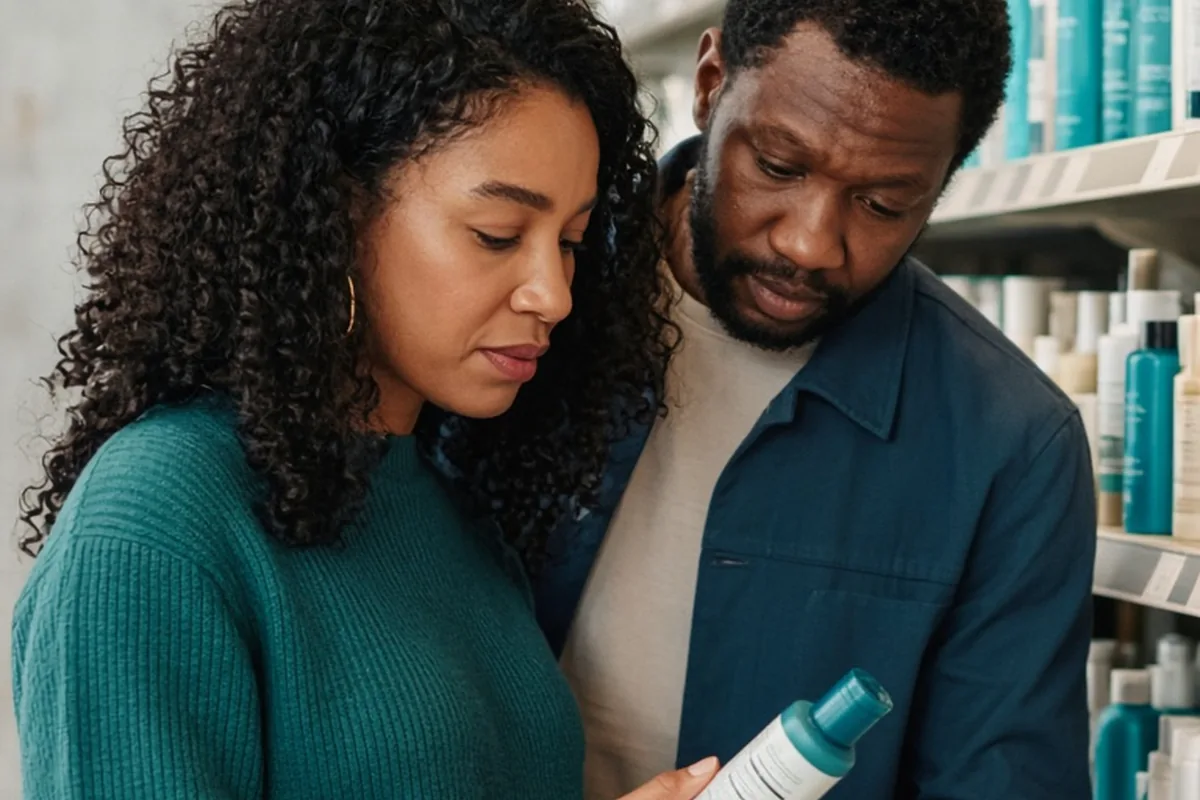
When shopping for low porosity hair products, ask whether water is the primary base, if humectants are lightweight, whether structural proteins are minimal, and if heavy butters sit low on the ingredient list. You should also verify if the formula requires heat for absorption, how cleanly it rinses out, and whether it layers effectively without causing buildup or flaking.
Navigating product aisles with low porosity hair often leads to frustration when rich creams and popular conditioning treatments leave strands feeling greasy on the outside yet brittle underneath.
Evaluating the Base Ingredients and Humectants on the Product Label
When selecting formulas for low porosity hair, the first question to examine is what vehicle carries the hydration. Low porosity strands possess a dense, tightly overlapping cuticle layer that naturally repels water and prevents outside moisture from entering the cortex. Therefore, water must almost always be the very first ingredient listed on shampoos, conditioners, and leave-ins. If an oil, butter, or alcohol-heavy solvent leads the formulation, the product will struggle to penetrate the hair shaft and will instead rest on the outer perimeter, creating a slippery surface without delivering internal hydration.
Beyond the water base, investigate which humectants are utilized to draw ambient moisture into the strand. Lightweight humectants such as glycerin, aloe vera juice, panthenol (provitamin B5), and agave nectar work exceptionally well for tight cuticles because they possess small molecular structures that slip past resistant outer layers. In contrast, dense film-forming humectants or heavy synthetic polymers can accumulate on the surface. When inspecting a product label, ask whether these humectants are balanced by climate-appropriate ingredients, as humectants in very dry or overly humid environments can occasionally pull moisture out of the hair or cause excessive swelling if not sealed properly.
Assessing Protein Concentration and the Danger of Protein Overload
A critical question for any low porosity hair routine is whether a product contains high concentrations of structural proteins. Low porosity hair naturally retains its internal protein matrix because the closed cuticles protect the cortex from losing keratin. Consequently, strands with low porosity rarely require frequent heavy protein treatments unless chemically processed or heat damaged. Ingredients such as hydrolyzed wheat protein, hydrolyzed keratin, collagen, and soy protein can quickly adhere to the compact cuticle, making the hair feel rigid, stiff, dry, and prone to snapping under tension.
To evaluate this balance, examine where proteins appear in the ingredient breakdown. If hydrolyzed proteins or amino acids are within the first five to six ingredients of a daily conditioner or styler, that product may be too concentrated for regular maintenance on low porosity textures. Instead, ask whether the formula is marketed as protein-free or utilizes lighter amino acids near the bottom of the list purely for mild conditioning. Periodic light protein can help maintain elasticity, but daily leave-ins and regular cleansers perform best when moisture dominates the formulation and structural strengtheners are kept minimal.
Determining Whether the Product Requires Warm Water or Heat Activation
Because low porosity hair cuticles remain tightly shut at normal room temperatures, you must ask whether a deep conditioner or treatment requires thermal assistance to function effectively. Products formulated with dense nourishing agents cannot easily slip beneath the cuticle scales on their own. When reviewing deep conditioning masks, check whether the manufacturer instructions recommend using a heated styling cap, a hair steamer, or a warm towel wrap during processing. If a product claims to deliver deep internal hydration in two minutes without heat, it likely relies on surface-coating silicones or cationic conditioning agents rather than true cortex penetration.
Applying indirect heat temporarily expands the outer cuticle layers, creating microscopic pathways for water, fatty alcohols, and lightweight nutrients to enter. Once the hair cools during rinsing with cool or lukewarm water, the cuticles close back down, trapping those nourishing components inside. When shopping for intensive treatments, ask if the product is formulated specifically to respond to warmth, and ensure your wash-day routine incorporates a reliable heat source rather than relying solely on prolonged room-temperature soaking, which often leads to moisture fatigue and waterlogged, limp strands.
Checking Oil Molecular Weights and Butter Placement in the Formula
Another vital inquiry focuses on the specific types and concentrations of lipids within the bottle. Many traditional textured hair products rely heavily on unrefined shea butter, cocoa butter, mango butter, and thick castor oil. While these ingredients provide rich sealing power for highly porous hair, they are often too dense for low porosity strands. Because these heavy lipids cannot easily cross the tightly sealed cuticle boundary, applying them leads to immediate buildup, a waxy coating, dullness, and reduced movement. You should ask whether the formula emphasizes lightweight, penetrating, or semi-penetrating botanical oils instead.
Search the product deck for oils renowned for smaller molecular structures and higher levels of unsaturated fatty acids, such as jojoba oil, argan oil, sweet almond oil, grapeseed oil, and babassu oil. Jojoba oil mimics natural scalp sebum and provides lubrication without forming an impenetrable barrier, while argan and grapeseed oils offer smooth slip and sheen without suffocating the hair strand. If rich butters are present, confirm that they sit toward the bottom of the ingredient list, indicating they are used in modest concentrations to provide softening benefits without overwhelming the delicate moisture balance.
Clarifying Ability and Residue Accumulation in Cleansers and Daily Stylers
Because low porosity hair is uniquely susceptible to product accumulation, you must ask how easily a product washes away and how thoroughly your cleanser removes prior buildup. When cuticles are closed, any styling residue, silicone, or polyquaternium conditioner left on the surface creates an impermeable shield. Over several days, this shield prevents new water from reaching the cortex, leading to paradoxical dryness where hair feels both greasy to the touch and parched inside. Therefore, assessing the cleansing strength and rinseability of every product in your lineup is essential.
Ask whether your cleansing routine includes a dedicated clarifying shampoo or a chelating cleanser that dissolves mineral deposits and stubborn polymer residues. While gentle, sulfate-free co-washes and conditioning cleansers sound appealing for moisture preservation, relying exclusively on them frequently backfires on low porosity hair by adding layers of conditioning agents on top of existing product film. Look for gentle, amphoteric or non-ionic surfactant blends that provide thorough cleansing without stripping natural lipids, and plan to use an active clarifying formula periodically to reset the hair surface.
Analyzing Product Compatibility with the Liquid-Cream-Oil Layering Sequence
When selecting multiple styling products, such as leave-in conditioners, curl creams, and holding gels, you must ask how they interact when layered together on damp hair. The standard Liquid-Oil-Cream (LOC) method frequently fails on low porosity hair because placing an oil layer directly over wet hair blocks the subsequent cream from penetrating or adhering. In contrast, the Liquid-Cream-Oil (LCO) sequence allows water-based moisture and light creams to make direct contact with the cuticle before a light oil seals the outer perimeter.
Before purchasing a multi-product system, test or evaluate product compatibility to prevent clumping, flaking, or white residue. Ask whether the leave-in conditioner and the styling gel share compatible emulsifiers and polymer bases. You can perform a quick palm test by rubbing a dime-sized amount of the leave-in and styling cream together in your hand; if the mixture turns grainy, curdles, or separates into distinct layers, those products will likely produce visible flakes on your hair. Selecting products designed to layer smoothly prevents heavy mechanical buildup and ensures consistent definition.
Interpreting Marketing Terms Versus Actual Low Porosity Hair Chemistry
The hair care market is filled with marketing claims such as ultra-rich repair, instant bond builder, maximum moisture infusion, and anti-breakage miracle. For someone managing low porosity hair, asking what these marketing phrases mean chemically is vital. Many formulas labeled as repairing are loaded with heavy proteins and film-forming polymers meant to patch damaged, high-porosity gaps in the hair cuticle. On intact low porosity cuticles, these repair polymers simply pile onto an already smooth exterior, creating brittle stiffness rather than strength.
Instead of choosing products based on front-label buzzwords, ask whether the back-label formulation aligns with the structural reality of your hair. Look for clear indications of lightweight hydration, such as the presence of fatty alcohols (like cetyl alcohol, stearyl alcohol, or cetearyl alcohol) which provide excellent slip and detangling without heavy wax accumulation. By prioritizing chemical composition over promotional claims, you can avoid spending money on formulations designed for compromised, high-porosity textures that work against the unique strengths and needs of low porosity hair.
Frequently asked questions
How can I tell if a product is causing buildup on my low porosity hair?
Buildup typically presents as hair that feels coated, stiff, or greasy even immediately after washing, combined with water beading excessively on the surface during showers. If your hair takes unusually long to get thoroughly wet or begins resisting moisture after a few days, product residues have likely formed an external barrier.
Can low porosity hair safely use products containing coconut oil?
Coconut oil has a high affinity for hair proteins and can penetrate deeply, but on low porosity hair, it often behaves similarly to a heavy protein treatment. For many individuals with tight cuticles, regular coconut oil use leads to stiffness, dullness, and brittleness, making lighter oils like jojoba or sweet almond safer alternatives.
How often should I use a clarifying shampoo with low porosity hair products?
Most low porosity routines benefit from clarifying every two to four weeks, depending on the number of styling products used. Clarifying removes accumulated humectants, conditioning polymers, and natural sebum, allowing fresh moisture to penetrate the cuticle on subsequent wash days.
Is a leave-in conditioner necessary if I already use a deep conditioner?
A lightweight leave-in conditioner provides a vital water-based foundation for styling, helping detangle strands and keep cuticles smooth after rinsing out a deep treatment. For low porosity hair, opt for a spray or liquid leave-in rather than a thick cream to avoid weighing down the strands.
Your next step
Take one styling product from your current routine, review its first five ingredients for heavy butters or concentrated proteins, and replace any dense formula with a lightweight, water-based alternative on your next wash day.