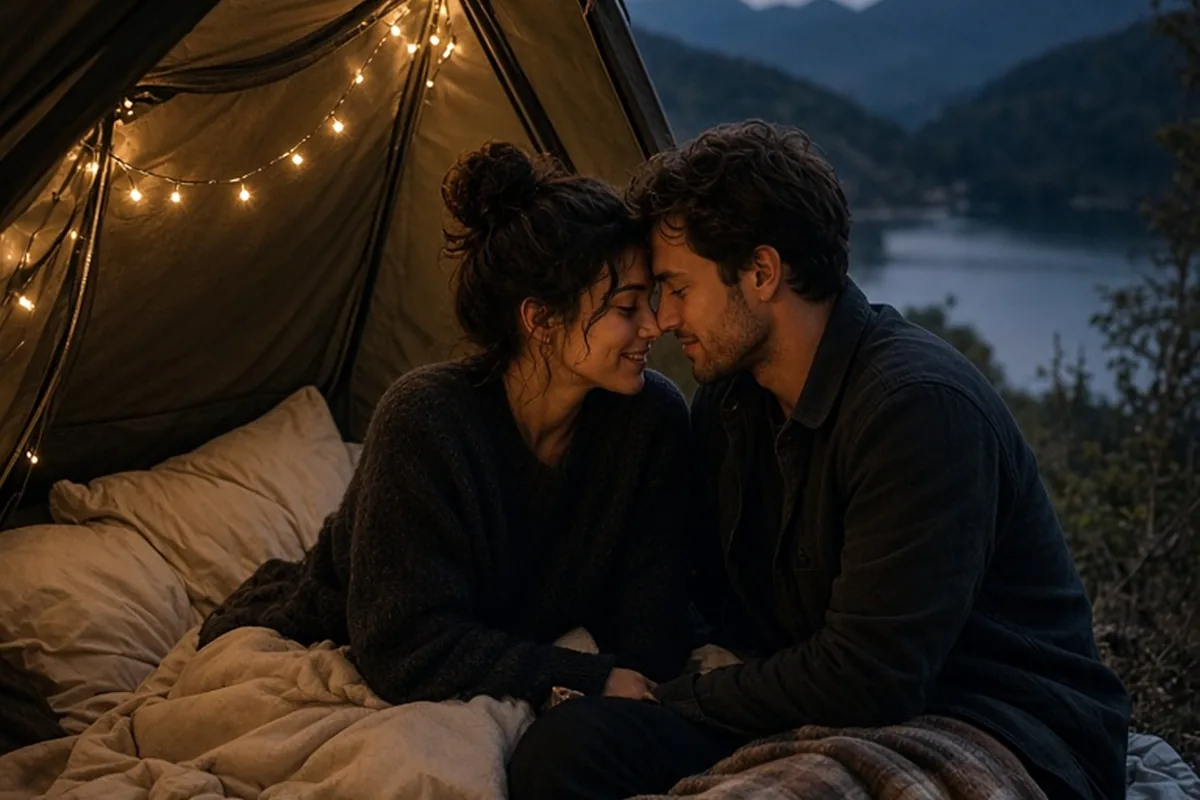
Romantic camping turns a standard outdoor trip into an intimate retreat by prioritizing comfort, atmosphere, and meaningful shared experiences. You can create a romantic getaway by building a plush double bed with real linens inside your tent, cooking elevated one-pot meals over an open fire, layering soft ambient lighting like solar fairy lights, and setting aside unhurried time for private conversations under the stars.
Stepping away from daily routines and digital distractions creates a natural opportunity for couples to reconnect. While traditional camping often focuses on minimalism and utility, a romantic camping trip deliberately weaves ease, warmth, and sensory comfort into the wilderness setting so both partners can relax completely.
Designing a Luxurious and Restful Sleeping Setup
A restful night of sleep is essential for keeping moods high and intimacy effortless during a camping trip. Standard single sleeping bags and narrow foam pads can leave partners physically separated and waking up sore. Instead, treat your tent interior like a boutique hotel room by investing in a double-wide self-inflating mattress or pairing two high-R-value sleeping pads side by side beneath a fitted sheet. Bringing real pillows, soft flannel duvets, and a plush wool throw instantly eliminates the sterile, utilitarian feel of standard outdoor gear and encourages physical closeness.
Layering textures also serves a functional purpose by insulating against ground chill, which is the most common reason campers wake up shivering. Before laying down your mattress, place a durable moving blanket or a woven outdoor rug across the tent floor to add warmth and a soft underfoot surface. Keep a basket of clean, thick thermal socks and cozy sleepwear easily accessible inside the tent so neither of you has to rummage through duffel bags in the dark. The primary trade-off to consider is vehicle space; packing bulky bedding and larger mattresses requires extra trunk room, making this setup ideal for car camping rather than backcountry backpacking.
Elevating Campfire Cuisine with Simple Gourmet Meals
Cooking together over an open flame is one of the most sensory and bonding aspects of camping, provided the meal does not cause unnecessary stress or exhaustive cleanup. Skip freeze-dried rations and overly complicated multi-pot recipes in favor of curated meals that can be mostly prepped at home. Preparing ingredients in advance—such as marinating skewered vegetables, slicing artisan cheeses, or portioning homemade stew into reusable containers—allows you to spend your evening enjoying each other's company by the fire rather than chopping onions on an unstable picnic table.
Consider packing a specialized wooden board to build an evening fireside charcuterie spread complete with cured meats, nuts, fresh figs, and crusty bread while your main course simmers in a cast-iron Dutch oven. Pairing your dinner with a quality wine or a warm spiced cider served in insulated tumblers transforms a simple campfire into a memorable dining date. Always bear in mind wildlife safety and sanitation: clean all cookware thoroughly immediately after eating, pack out food scraps, and store your cooler and dry food securely in your vehicle or a designated bear canister so late-night animal visits never spoil the mood.
Setting Warm Ambient Lighting for an Intimate Atmosphere
Harsh, cold-toned headlamps and blinding white lanterns can instantly ruin the tranquil mood of a campsite. To craft a warm, welcoming environment, rely on diffused, warm-toned lighting sources that mimic candlelight without introducing fire hazards inside or near your tent. String battery-powered or solar fairy lights along the inside ridge of your tent ceiling, loop them around your campsite awning, or tuck small amber LED puck lights into frosted jars on the picnic table to cast a soft, flattering glow.
When moving around the campsite, switch your headlamps to red-light mode, which preserves your natural night vision and avoids blinding your partner mid-conversation. While ambient lighting creates an undeniably romantic setting, be mindful of campground etiquette and nearby neighbors. Keep lighting contained within your designated footprint and turn off non-essential lights before quiet hours to avoid light pollution and respect the natural nocturnal environment around you.
Fostering Deep Connection Through Low-Tech Evening Rituals
One of the greatest gifts of camping is the absence of screens, notifications, and scheduled obligations. You can turn this digital detox into an opportunity for emotional intimacy by planning low-pressure evening rituals that encourage deep conversation and laughter. Bringing a deck of open-ended conversation cards, reading a captivating book aloud to each other by the fire, or listening to a collaborative, low-volume acoustic playlist can spark discussions that rarely surface in the rush of everyday life.
Stargazing is a timeless outdoor activity that feels naturally romantic when paired with thoughtful preparation. Bring a large waterproof ground tarp topped with a fleece blanket and two reclining camp chairs or a double hammock to an open clearing away from tree cover. Using a downloadable offline astronomy app allows you to identify constellations, planets, and passing satellites together. Be mindful of evening temperature drops; even in summer, sitting motionless outdoors can quickly become chilly, so always carry a warm thermos of tea or cocoa and extra layers to keep the experience comfortable.
Planning Daytime Adventures That Balance Exertion and Rest
A successful couple's camping trip strikes a healthy balance between invigorating exploration and restorative downtime. If one partner prefers a strenuous summit hike while the other prefers reading a book in the shade, pushing for an exhausting itinerary can lead to frustration and fatigue. Discuss expectations beforehand and select activities that accommodate both energy levels, such as a moderate trail that ends at a scenic waterfall, a gentle afternoon canoe paddle across a calm lake, or exploring a nearby rural farm stand.
Pack a portable picnic kit with a lightweight blanket and finger foods so you can pause your daytime activities whenever you find a quiet, scenic spot. Building in dedicated periods of unstructured time ensures that neither of you feels rushed or overburdened by a rigid schedule. If unexpected bad weather or physical fatigue sets in, maintain flexibility and be willing to swap an intense outdoor hike for a cozy afternoon playing board games inside the tent without viewing the change of plans as a disappointment.
Preventing Stress by Sharing Camp Responsibilities and Managing Discomforts
Camping inherently involves occasional friction, from struggling with tent poles to dealing with biting insects or unexpected rain showers. Romance often dissolves when one partner feels left carrying the burden of setting up camp, washing dishes, and managing gear. Avoid resentment by establishing an egalitarian division of labor before arriving at the site. One person can take charge of tent pitching and bedding while the other sets up the camp kitchen and starts the fire, allowing you to settle in efficiently as a coordinated team.
Proactively addressing personal comfort and hygiene also goes a long way toward keeping both partners relaxed. Pack a dedicated comfort kit containing high-potency insect repellent, soothing anti-itch balm, biodegradable wet wipes, dry shampoo, and extra micro-fiber towels for easy freshening up. When minor logistical challenges arise—such as damp firewood or a sudden wind gust—approaching them with humor, patience, and mutual support prevents small inconveniences from escalating into unnecessary relationship tension.
Frequently asked questions
What is the best way to stay warm while camping as a couple?
Use an insulated sleeping pad with an R-value of 4 or higher to block ground chill, and share a two-person sleeping bag or a wide duvet rather than separate bags. Wearing thermal base layers, dry wool socks, and a knit beanie while sleeping also helps retain body heat throughout the night.
How can we make a public campground feel more private?
Choose walk-in or end-of-loop campsites that have natural vegetation or rock barriers between sites. You can also position your tent and vehicle strategically to block direct sightlines from roads and neighboring sites, creating a secluded inner courtyard for your chairs and campfire.
What are easy romantic breakfast ideas for a camping morning?
Prepare cinnamon roll skewers over the campfire, make French press coffee with a splash of flavored creamer, or cook a simple one-skillet scramble with pre-chopped vegetables and artisanal cheese. Bringing fresh berries and pastries stored in a sealed cooler provides a low-effort, gourmet start to the day.
Your next step
Choose one comfort upgrade and one shared activity from this guide to plan together for your next weekend outdoor trip.