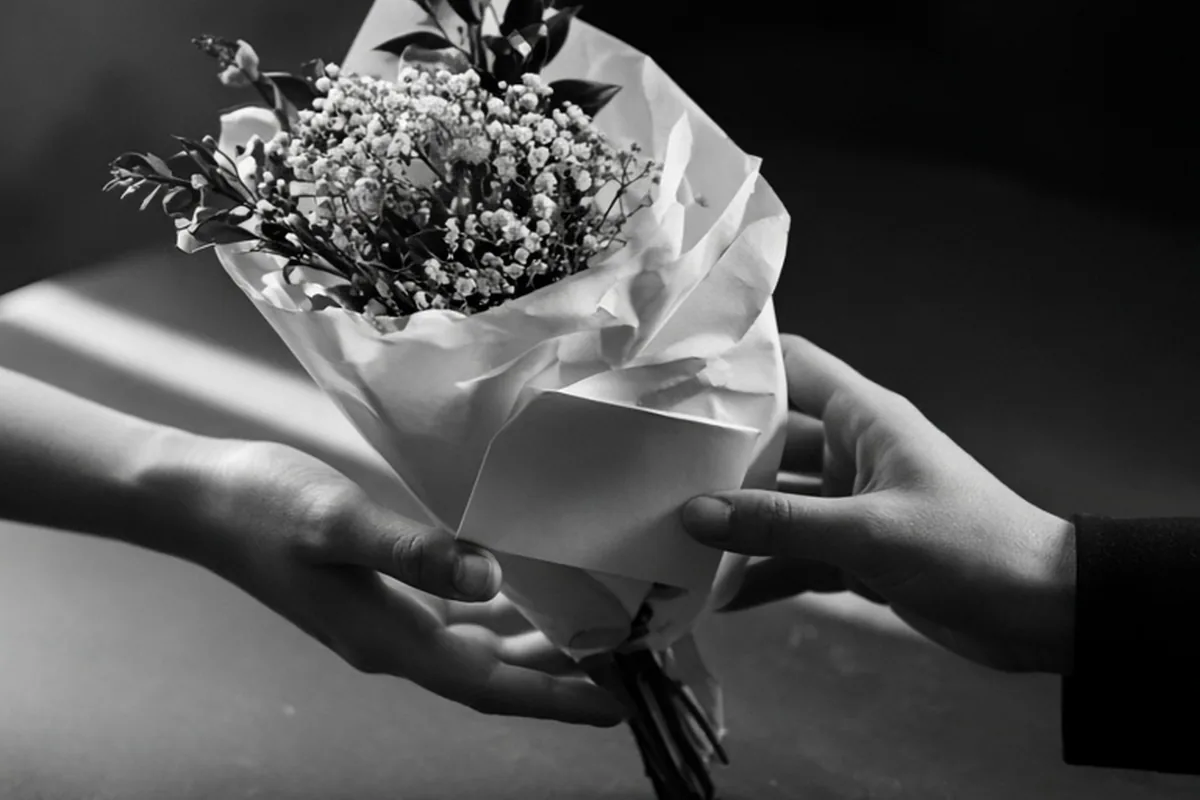
Romantic flowers work best when they match the stage of the relationship and the message you want to send. Choose a modest bouquet, add a specific note, give them without expecting a reply, and skip grand gestures after mixed signals, conflict, or a clear no.
Flowers are simple, but the meaning around them is not. The same bouquet can feel thoughtful on a third date and overwhelming after one lukewarm coffee, so the real skill is reading context before spending money.
What flowers can say, and what they cannot
Flowers are a signal, not leverage. They can say you noticed her taste, remembered a detail, or wanted to make an ordinary evening feel a little more intentional. They cannot create attraction, prove you are serious, erase a bad date, or make someone owe you warmth. If you treat a bouquet like a receipt for affection, the gesture stops feeling romantic and starts feeling like pressure.
A useful test is to ask what you would think if she accepted the flowers politely and changed nothing. If that outcome would make you angry, the gift is carrying too much expectation. A better frame is: this is a small offer of care, not a bid for a result. That keeps your confidence intact whether she smiles, hesitates, or says she would rather keep things slow.
Match the gesture to the stage you are actually in
Early dating calls for proportion. After one good date, a single stem, a small bunch, or flowers sent with a light note can feel charming; a dramatic arrangement can read as auditioning for a role she has not offered yet. By the time you are seeing each other regularly, flowers can mark a birthday, a promotion, a rough week, or simply Tuesday because you were thinking of her.
The trade-off is that bigger is not always clearer. A lavish bouquet may photograph well but can make a new connection feel managed instead of met. If you are unsure, scale down and make the note more personal. Specific attention usually lands better than expense: her favorite color, the lilacs she mentioned, or the fact that she once said roses feel too formal for her.
Choose flowers without turning it into a code
You do not need a secret dictionary to pick well. Traditional meanings vary by culture and family, and most people care more about freshness, color, scent, and whether the choice fits their space. A practical approach is to choose seasonal flowers, avoid overpowering fragrance if you do not know her sensitivities, and pick a size she can carry or place without rearranging her kitchen.
Low-risk options tend to share three traits: they look alive rather than flashy, they fit a normal vase or jar, and they do not demand a performance. If she likes bold style, sunflowers or bright mixed stems can feel playful. If she is understated, tulips, ranunculus, or a simple bunch in one color can feel clean. When in doubt, ask the florist for something fresh and unfussy rather than chasing symbolism.
- A small mixed bunch in colors she actually wears or uses at home
- One quality stem with a handwritten note for early dating
- Seasonal flowers from a local shop instead of a giant imported arrangement
- A potted plant only if she has shown interest in keeping plants alive
Time and deliver them like an adult
Timing matters because flowers interrupt a moment. Bringing a modest bouquet to a planned date can be warm if she can easily set it down; surprising her at work may be sweet for an established partner but awkward for someone who has not told coworkers about you. Sending flowers after a great evening can keep the mood going, while sending them after a slow fade can look like you are trying to restart the conversation by force.
Delivery should protect her dignity and yours. If you hand them over, do it casually and move on to the plan instead of staring for a reaction. If you send them, include a card that gives her room to respond naturally. Avoid public pressure, office spectacle, or doorstep surprises when you are not sure she wants contact. Romance works better when it does not corner the person receiving it.
Write a note that sounds like you
The card is where many good bouquets either become personal or turn generic. Skip lines that could be pasted under any photo and write one sentence only you could send: I keep thinking about your story from dinner, hope these brighten your desk, or thanks for making Sunday feel easy. Keep it short enough that she can read it without bracing for a speech.
Do not use the note to ask for reassurance, apologize for things you have not discussed, or push for the next step. A good message names the moment and leaves the door open. If you want to see her again, pair the flowers with a clear invitation later rather than hiding the question inside the card. Clarity is more attractive than poetic ambiguity.
Know when to skip flowers or choose another gesture
There are times when flowers are the wrong tool. After a clear no, after she asks for space, or after you have already sent multiple unanswered messages, more gifts can cross from persistence into pressure. During a disagreement, flowers may look like an attempt to bypass the conversation; repair usually needs listening, accountability, and a changed behavior before it needs petals.
Practical limits matter too. Allergies, pets that chew plants, travel, a tiny apartment, or a preference for experiences can make flowers inconvenient. If she has hinted that gifts make her uncomfortable early on, choose a lower-stakes gesture: remember her coffee order, plan a date around her interest, or send a song that matches a joke you shared. The point is attention, not botanical correctness.
Handle the response without losing your footing
If she loves them, enjoy it without escalating into grand promises. Say you are glad, keep the evening moving, and let the gesture be one good data point rather than proof of destiny. If the reaction is muted, do not interrogate it. She may be shy, distracted, allergic, unsure about you, or simply not a flower person; a calm response gives you more information than a wounded one.
If she declines or pulls back, protect your self-respect by accepting it cleanly. You can say you understand and stop there. Do not argue that she misunderstood, list what you spent, or turn the moment into a test she failed. Attraction cannot be negotiated into existence, and the way you handle a small no often reveals more than the bouquet did.
Illustrative Scenarios
The late reply that made him overcorrect
After a strong second date, a man sent a good-morning text and got a short reply eight hours later. His first read was that he had blown it, so he nearly ordered a huge bouquet to her office to prove he was serious. Instead, he waited, suggested a specific plan for the weekend, and brought a small bunch of tulips when they met. She relaxed, mentioned she hated workplace attention, and the gesture fit because it stayed private and light.
Key point: A slow reply is not automatically a verdict; match the gesture to the evidence you actually have.
The apology that needed more than petals
During a tense phone call, a man interrupted, got defensive, and heard her go quiet before she ended the conversation. He wanted to send roses the next morning because flowers felt faster than admitting fault. He chose a different order: first a direct apology naming what he did, then a question about whether she wanted to talk, and only later a small plant after she agreed to dinner. The flowers supported the repair instead of replacing it.
Key point: When trust is strained, accountability has to arrive before romance can help.
Frequently asked questions
Are flowers a good idea for a first date?
Usually keep them small or skip them unless you already know she likes that kind of gesture. A single stem can be charming, but a large bouquet can add pressure before there is shared context.
What if I do not know her favorite flowers?
Choose fresh seasonal stems in a color she seems to like, or ask a florist for something simple and not heavily scented. A specific note matters more than guessing a perfect favorite.
Should I send flowers after a bad date or argument?
Not as a substitute for a real conversation. If repair is needed, start with accountability and a clear invitation to talk; add flowers only if she is open to contact.
What if she does not react the way I hoped?
Stay warm and do not demand a bigger response. A muted reaction may mean taste, timing, privacy, or uncertainty, and pressing for gratitude usually makes the moment worse.
Your next step
Before buying anything, write one sentence that names the exact moment you want to acknowledge, then choose a bouquet small enough that she can enjoy it without having to manage your expectations.