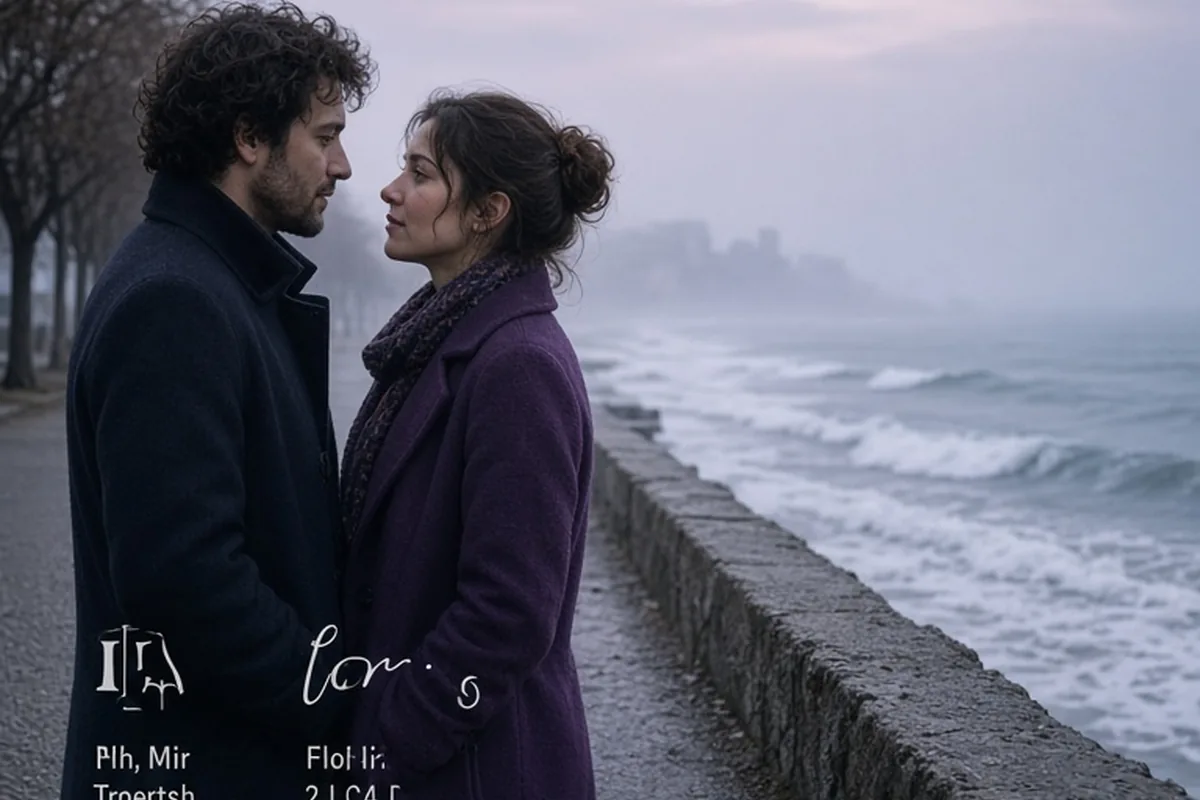
Romantic French phrases offer a timeless way to convey affection, admiration, and devotion across various relationship stages. From playful expressions like tu me plais (I like you) for early dating to profound declarations like je t'aime de tout mon cœur (I love you with all my heart) for established partners, choosing the right phrase requires matching the words to your genuine emotional bond and understanding cultural nuances around intimacy and tone.
French has earned its reputation as the language of romance largely because of its melodic cadence, nuanced vocabulary, and rich history of literary passion. When introducing romantic French phrases into your conversations or written notes, the goal is not to perform a theatrical gesture, but rather to communicate sincere vulnerability and care in a fresh, evocative way.
Classic Declarations of Love and Lifelong Devotion
Expressing profound love in French requires understanding that the language treats emotional declarations with considerable weight. The foundational phrase 'Je t'aime' (pronounced zhuh tem) directly translates to 'I love you.' Unlike in English, where people might casually love a movie or a cup of coffee, the French reserve 'aimer' without qualifiers primarily for serious romantic devotion. Paradoxically, adding the modifier 'bien' to form 'Je t'aime bien' actually softens the statement to mean 'I like you as a friend,' making it crucial to use the unmodified phrase when expressing heartfelt romantic commitment.
When you want to convey deeper intensity, several variations allow you to articulate specific emotional depths. 'Je t'aime de tout mon cœur' (zhuh tem duh too mon kur) translates to 'I love you with all my heart,' making it ideal for vows, milestone anniversaries, or tender private moments. Similarly, 'Tu es l'amour de ma vie' (too ay lah-moor duh mah vee) means 'You are the love of my life,' reserved for defining relationships. For high-energy passion, 'Je suis fou de toi' (for a male speaker) or 'Je suis folle de toi' (for a female speaker) translates to 'I am crazy about you,' blending playful excitement with sincere attraction.
While these classic declarations carry undeniable power, their effectiveness depends heavily on emotional timing. Uttering a heavy declaration too early in a developing relationship can create unintended pressure or miscommunication. It is best to save these profound phrases for moments when mutual commitment and emotional security have already been established through consistent actions and shared understanding.
Tender French Pet Names and Daily Terms of Endearment
French terms of endearment offer an effortless way to bring warmth and intimacy into everyday interactions. Rather than waiting for special occasions, integrating affectionate nicknames into morning greetings, texts, or quiet moments builds a steady sense of closeness. The French language features a wide variety of pet names ranging from elegant classics to endearing, whimsical metaphors drawn from nature and confectionery.
The most universally recognized terms are 'Mon chéri' (mohn shay-ree) when addressing a man and 'Ma chérie' (mah shay-ree) when addressing a woman, both meaning 'my darling' or 'my dear.' If you prefer gender-neutral expressions or wish to emphasize deep emotional connection, 'Mon cœur' (mohn kur), which means 'my heart,' and 'Mon trésor' (mohn tray-zohr), meaning 'my treasure,' are widely used and deeply affectionate. A uniquely French classic is 'Mon petit chou' (mohn puh-tee shoo), which literally translates to 'my little cabbage' or 'my little cream puff,' used as a tender way to call someone 'sweetheart.'
When choosing a pet name, consider your partner's comfort and personality. While some people appreciate playful or traditional terms, others may find certain literal translations amusing rather than romantic. Introducing one term organically during private moments allows you to gauge whether it resonates naturally with your shared dynamic.
Subtle Phrases for Flirting and Early Attraction
In the early chapters of dating, high-stakes declarations of love can feel premature, but subtle French phrases can convey interest and charm without overwhelming the dynamic. The French dating culture often emphasizes wit, banter, and lighthearted flirtation, allowing chemistry to build organically through understated appreciation.
To tell someone you find them attractive and enjoy their presence, 'Tu me plais' (too muh pleh) is the ideal phrase, translating directly to 'You please me' or more naturally, 'I really like you.' If you want to compliment their appearance or energy with sophistication, you might say 'Tu as un sourire magnifique' (too ah uhn soo-reer mahn-yee-feek) to admire their smile, or 'Tu es ravissante' (too ay rah-vee-sahnt) to tell a woman she looks stunning. If you experienced an instant, overwhelming connection, you might reference 'le coup de foudre' (luh koo duh foo-druh), the French term for love at first sight, literally translated as 'a lightning strike.'
When offering compliments or expressing early attraction, tone and delivery are essential. A relaxed, confident delivery ensures that the phrase feels like a sincere expression of appreciation rather than an overly rehearsed routine. Always ensure that romantic overtures respect personal boundaries and invite reciprocal conversation.
Meaningful Expressions for Emotional Support and Long-Term Partnership
Sustained romantic relationships rely on reassurance, emotional safety, and mutual appreciation. French includes many poignant expressions that focus on companionship, emotional security, and the comfort of shared life experiences, extending far beyond physical infatuation.
To express comfort and belonging, 'Avec toi, je me sens chez moi' (ah-vek twah, zhuh muh sahn shay mwah) translates to 'With you, I feel at home,' honoring the emotional peace your partner brings into your life. When navigating periods of separation or busy schedules, 'Tu me manques tellement' (too muh mahnk tell-mahn) communicates 'I miss you so much.' Notably, the French structure for missing someone literally means 'You are missing from me,' framing absence as a shared incompleteness. To affirm your reliability during difficult times, 'Je suis toujours là pour toi' (zhuh swee too-zhoor lah poor twah) provides a reassuring promise: 'I am always here for you.'
Using these phrases during routine or challenging moments helps strengthen the emotional foundation of your relationship. Pairing these verbal expressions with supportive actions, such as listening actively or helping with daily tasks, ensures your words carry genuine weight and lasting meaning.
Poetic Sentiments for Love Letters, Cards, and Milestones
Special milestones like anniversaries, birthdays, or Valentine's Day offer an opportunity to step away from casual communication and embrace poetic, memorable language. Writing a French sentiment inside a handwritten card or personalized gift adds a thoughtful layer of romance that your partner can revisit over time.
Poetic phrases capture nuanced emotions with elegance. For instance, 'Chaque instant passé avec toi est un cadeau' (shahk ehn-stahn pah-say ah-vek twah ay tuhn kah-doh) translates to 'Every moment spent with you is a gift.' To convey unique gratitude, 'Tu es la plus belle chose qui me soit arrivée' (too ay lah ploo bell shohz kee mwah swah ah-ree-vay) expresses 'You are the most beautiful thing that has ever happened to me.' For a classic literary feel, consider 'Vivre sans toi n'est pas vivre' (veev-ruh sahn twah nay pah veev-ruh), meaning 'To live without you is not living at all.'
When incorporating poetic French lines into written notes, including a brief English translation alongside your message can prevent confusion and ensure the sentiment is immediately understood. Grounding poetic phrases with specific memories from your shared history makes the note feel tailored, deeply personal, and heartfelt.
Pronunciation Guidelines and Practical Delivery Tips
Many people hesitate to use romantic foreign phrases out of fear of mispronouncing words or sounding artificial. However, romantic gestures do not require a flawless accent; sincere emotion, eye contact, and attentive body language are far more meaningful than technical perfection.
To build pronunciation confidence, focus on a few fundamental French phonetic patterns. French vowels tend to be purer and shorter than English vowels, and consonants at the ends of words are frequently silent unless followed by a word starting with a vowel. Practicing a phrase out loud a few times in private or listening to native audio samples can help smooth out the rhythm. If spoken delivery feels intimidating, writing the phrase in a note, a morning text, or a celebratory card provides an equally romantic, low-stress alternative.
Avoid overusing foreign phrases to the point where they replace clear, direct communication in your everyday language. Romantic French expressions work best as intentional accents that highlight special moments, complement your natural voice, and celebrate your connection without overshadowing authentic conversation.
Frequently asked questions
How do I tell someone I like them in French without sounding too intense?
You can say 'Tu me plais' or 'Tu me plais beaucoup,' which conveys clear romantic interest and attraction without the heavy lifelong commitment implied by 'Je t'aime.' It sets a warm, playful tone that fits naturally during the early dating stages.
What is the difference between 'Je t'aime' and 'Je t'aime bien'?
While 'Je t'aime' means 'I love you' in a romantic context, adding the word 'bien' softens the meaning to 'I like you' as a friend or acquaintance. Using 'Je t'aime bien' with a romantic partner can unintentionally signal that you view the connection as purely platonic.
Should I write romantic French phrases or say them out loud?
Both approaches work well depending on your confidence and the occasion. If you feel nervous about pronunciation, writing a phrase in a card or message is charming and low-pressure, while speaking it during a quiet moment adds spontaneous warmth.
What are the safest French terms of endearment to start using?
'Mon chéri' (for a male partner) and 'Ma chérie' (for a female partner) are the most classic, universally understood pet names. For a tender, gender-neutral option that feels natural and warm, 'Mon cœur' (my heart) is an excellent choice.
Your next step
Select one romantic French phrase that accurately reflects your current relationship stage, practice it gently, and share it in a handwritten note or quiet moment together.