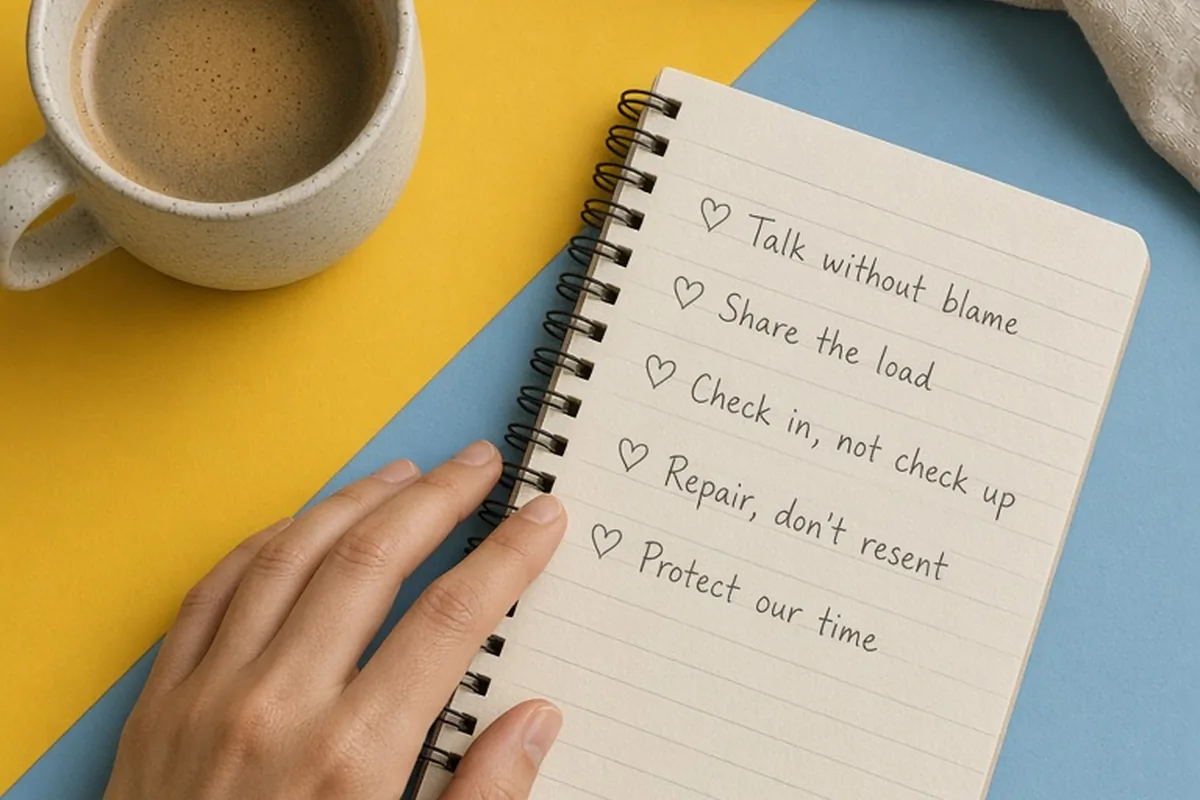
A happy marriage relies on mutual respect, proactive communication, emotional safety, shared financial transparency, and intentional connection rather than rigid demands. Healthy partnership rules function as collaborative agreements: managing conflict without contempt, protecting one-on-one time, sharing domestic responsibilities fairly, and offering repairs quickly when tension arises. Consistent daily habits sustain long-term commitment.
Sustaining a fulfilling partnership over decades requires practical agreements that both partners actively choose rather than unspoken assumptions or rigid restrictions.
Establish Ground Rules for Constructive Conflict
Disagreements are inevitable in any long-term union, but the way a couple handles friction determines whether conflict builds intimacy or breeds chronic resentment. A foundational rule for a healthy marriage is removing character assassination, sarcasm, and contempt from heated discussions. When differences arise, focus exclusively on the specific behavior or situation at hand rather than making sweeping generalizations about your spouse's personality. Name-calling, eye-rolling, or dredging up past mistakes from years ago erodes the psychological safety needed to solve immediate problems.
To make difficult conversations productive, establish a shared pause protocol. If either partner notices their heart rate spiking or feels overwhelmed by defensive emotions, agree to take a twenty-minute break to cool down before resuming the discussion. Use this time for genuine self-regulation rather than rehearsing counterarguments. When you reconvene, prioritize understanding your partner's perspective before defending your own position. This practice shifts disagreements from an adversarial battle of wills into a collaborative effort to solve a mutual problem.
A practical limitation of this approach is that cooling-off periods require discipline and mutual trust. If one spouse uses a timeout simply to evade necessary accountability or stonewall the topic indefinitely, the issue will fester. To prevent avoidance, always specify an exact time to return to the table, ensuring that difficult topics receive thorough closure.
Prioritize Daily Micro-Moments of Connection
Grand romantic gestures and annual vacations are valuable, but the daily rhythm of small interactions forms the true backbone of marital happiness. Couples who thrive make a deliberate habit of acknowledging each other consistently throughout the day. This includes meaningful greetings when reuniting after work, attentive listening without screens during dinner, and brief expressions of appreciation for everyday contributions. These small micro-moments reinforce feelings of security, reassurance, and mutual value.
A useful guideline is maintaining an intentional check-in routine each morning and evening. Taking five uninterrupted minutes to ask how your partner is feeling about an upcoming meeting or simply sitting together with a cup of coffee creates reliable touchpoints. When one partner shares an observation, a worry, or a joke, treat it as an opportunity to turn toward them rather than ignoring the remark or remaining distracted by a smartphone. Consistently validating these small gestures builds an emotional reservoir that cushions the relationship against future stress.
However, daily connection should not turn into an exhausting obligation where every conversation must be deep or emotionally intense. Some days will naturally be busier or more low-energy than others. The goal is maintaining warm presence and basic attentiveness rather than forcing artificial enthusiasm.
Maintain Absolute Financial Transparency and Shared Goals
Money is among the most frequent sources of marital strain, often because finances carry deep emotional meaning regarding security, freedom, and control. A crucial rule for marital peace is operating with complete financial honesty and eliminating hidden debts or secret purchases. Whether a couple chooses combined accounts, separate accounts, or a hybrid system, both partners must have full visibility into household income, expenses, debts, and long-term investments.
Schedule a regular monthly financial check-in to review spending patterns, track progress toward joint savings goals, and adjust budgets without judgment. To prevent feelings of micromanagement or loss of autonomy, build an agreed-upon personal discretionary fund into your monthly budget. This allows each partner to spend a designated amount of money on personal hobbies or outings without needing permission or justifying the expense to the other. Transparent systems remove financial secrecy while preserving individual independence.
The primary challenge with financial alignment is managing divergent spending values, such as when one partner is a natural saver while the other prioritizes current lifestyle experiences. Overcoming this requires compromise where neither partner's philosophy dominates completely, ensuring essential safety nets are funded while allowing reasonable lifestyle enjoyment.
Share Domestic Labor and the Invisible Mental Load
A happy marriage requires a sense of fair partnership in managing the household and daily family logistics. Resentment quickly builds when one partner feels treated like a domestic manager while the other acts merely as an occasional helper waiting for instructions. A vital marital rule is sharing both physical household tasks and the invisible mental load—which includes planning meals, tracking family schedules, coordinating repairs, and anticipating future needs.
Sit down together to inventory household responsibilities and assign primary ownership of specific domains rather than micromanaging individual tasks. For example, if one partner is responsible for dinner planning, they oversee everything from grocery lists to cooking and cleanup, retaining ownership of the entire process. Regularly re-evaluating these responsibilities ensures that changes in work hours, health, or parenting demands are accommodated equitably and without passive-aggressive scorekeeping.
Remember that equitable does not always mean a rigid fifty-fifty split of every individual chore on any given day. Life circumstances fluctuate, and true teamwork involves stepping up to carry extra weight when a spouse is facing professional deadlines, illness, or personal grief, with the understanding that the support will be reciprocated.
Protect Consensual Emotional and Physical Intimacy
Intimacy is both emotional and physical, requiring ongoing nurturing, honest vulnerability, and mutual consent. Over time, the natural progression of careers, child-rearing, and daily fatigue can cause intimacy to slip down the priority list. A helpful rule for long-term partners is treating one-on-one time as an essential commitment rather than an optional afterthought that only happens if surplus energy remains at the end of the week.
Protect a regular date night or dedicated undistracted evening at home at least twice a month. Use this time to step out of domestic routines and talk about personal dreams, shared passions, and non-logistical topics. Similarly, communicate openly and non-defensively about physical closeness and changing desires. Approach conversations about intimacy with curiosity and empathy, validating each other's feelings and exploring ways to stay affectionately connected that feel comfortable and fulfilling for both partners.
A realistic consideration is that romantic desire naturally ebbs and flows across different life stages. Pressuring a partner or treating physical intimacy as an entitlement damages emotional safety. Focus instead on creating mutual comfort, reducing outside stressors where possible, and building warmth through non-sexual touch and verbal appreciation.
Balance Personal Independence with Couple Autonomy
A resilient marriage consists of two whole, autonomous individuals choosing to build a life together, rather than two halves losing their personal identities. Expecting a spouse to satisfy every social, intellectual, and emotional need places an unsustainable burden on the relationship. A healthy partnership rule encourages each spouse to cultivate independent interests, personal friendships, and solo hobbies outside the marriage.
Supporting your partner's individual pursuits deepens attraction and keeps the relationship vibrant. When both individuals have opportunities to grow personally, take solo trips, or spend time with their own social circles, they bring renewed energy, interesting stories, and fresh perspectives back into the partnership. Give each other space without jealousy or guilt, trusting that personal fulfillment strengthens the couple's bond rather than weakening it.
The boundary to watch carefully is ensuring that individual pursuits do not lead to emotional drift or neglected marital responsibilities. Autonomy must exist alongside commitment, meaning external hobbies or friendships should never compromise the priority of the family or lead to secretive emotional dependencies outside the marriage.
Practice Rapid Repair and Sincere Accountability
Even the strongest couples make mistakes, speak abruptly when stressed, or misunderstand each other's intentions. What separates enduring relationships from fragile ones is the speed and sincerity of repair attempts. A fundamental rule for marital longevity is refusing to let emotional rifts linger for days behind silent treatments or passive resistance.
When an interaction goes off course, take ownership of your part in the misunderstanding as soon as possible. A genuine apology focuses on the impact of your actions rather than offering excuses, using phrases like 'I spoke sharply because I was overwhelmed, but that was unfair to you, and I am sorry.' When your spouse offers an olive branch or makes a lighthearted attempt to de-escalate tension, accept it gracefully rather than punishing them with prolonged coldness. Quick repairs prevent minor frictions from calcifying into chronic resentment.
It is worth noting that rapid repair does not mean bypassing deep issues or pretending hurt never occurred. Complex problems still require thorough, calm discussion once emotional equilibrium is restored. Repair simply re-establishes connection so those discussions can happen safely.
Illustrative Scenarios
Navigating Mismatched Evening Downtime
Marcus and Elena frequently experienced friction on Friday evenings after demanding work weeks. Marcus preferred quiet solitude in his workshop to decompress, while Elena viewed the start of the weekend as essential quality time to talk and reconnect. When Marcus retreated immediately, Elena felt ignored and unvalued, while Marcus felt drained by immediate demands for conversation. Rather than continuing the cycle of withdrawal and criticism, they established a clear rule. Marcus took sixty minutes of undisturbed personal time upon returning home, followed by an intentional dinner where he gave Elena his undivided attention. This agreement removed ambiguity and honored both needs.
Key point: Creating clear agreements around personal downtime allows both partners to recharge effectively while protecting shared connection and preventing unhelpful assumptions of rejection.
Resolving Discretionary Spending Conflicts
Julian and Sarah found themselves arguing every month when household bills arrived. Sarah felt anxious about Julian's spontaneous purchases for his cycling hobby, while Julian felt micromanaged whenever Sarah questioned individual bank statements. To end the defensive arguments, they set up a new financial rule. They created a joint account for bills and long-term savings, alongside two separate personal accounts with equal monthly allowances for discretionary spending. Neither partner monitored or questioned how the other spent their personal allowance, provided shared responsibilities were fully met. The transparent system immediately eliminated friction and restored mutual trust.
Key point: Balancing joint financial transparency with equal personal spending allowances preserves individual autonomy while safeguarding shared household security and long-term goals.
Frequently asked questions
What is the single most important rule for maintaining a happy marriage?
While multiple habits contribute to relationship health, practicing consistent mutual respect is fundamental. Respect ensures that communication remains constructive during disagreements, boundaries are honored, and both partners feel valued as equal teammates.
How can couples successfully introduce new relationship rules without creating defensiveness?
Introduce new agreements during a calm, neutral moment rather than during an active argument. Frame the discussion around mutual benefits and shared goals, using 'I' statements to explain how the adjustment will help the relationship thrive.
What should we do if one partner repeatedly breaks an agreed-upon rule?
Address the pattern calmly during a neutral moment to understand the underlying obstacle or unrealistic expectation. If recurring commitments continue to be broken without repair, working with a licensed marriage counselor can provide objective guidance.
Can a marriage survive without explicit rules or boundaries?
Every marriage operates on rules, whether they are consciously agreed upon or implicitly assumed. Making expectations explicit through open conversation prevents misunderstandings, aligns priorities, and protects emotional safety far better than relying on unspoken assumptions.
Your next step
Choose one specific area—such as evening check-ins, financial transparency, or conflict timeouts—and establish a clear, mutual agreement with your spouse this week.