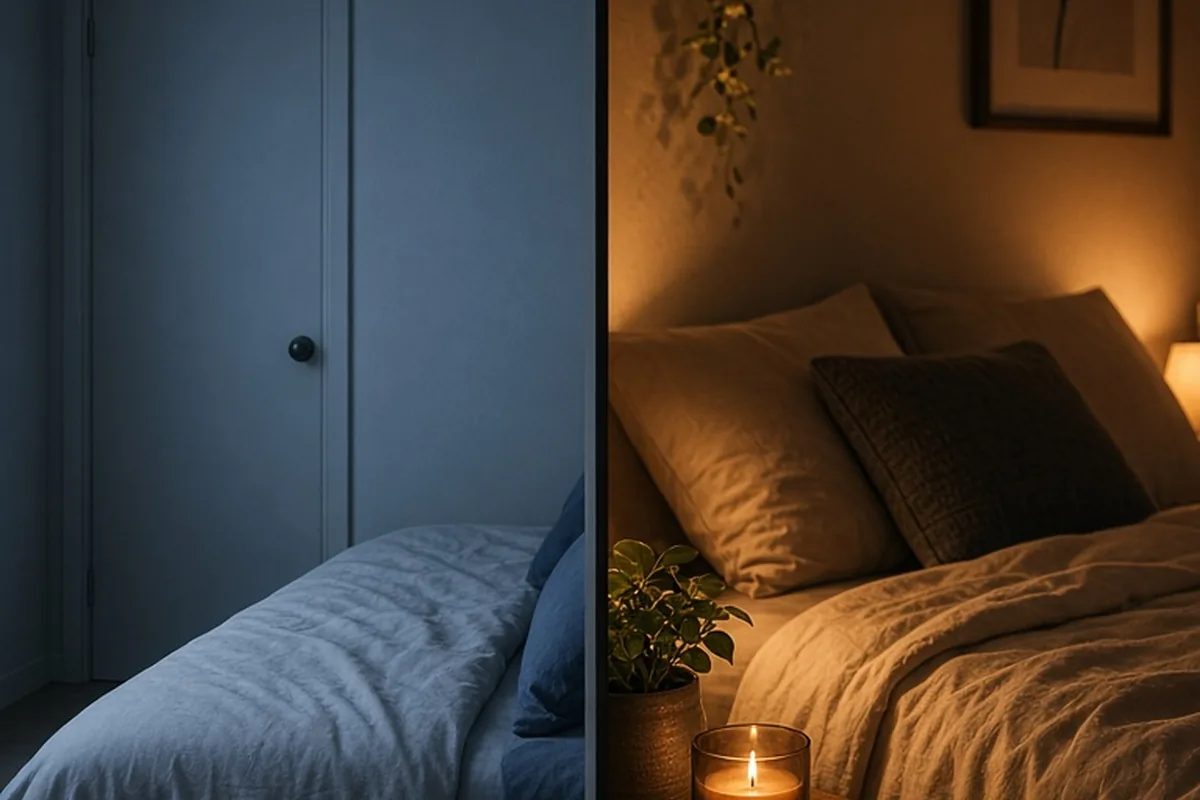
The best sexy bedroom ideas are less about buying a costume or a gadget and more about shaping a room where you both feel relaxed, wanted, and free to say yes or no. Start with soft lighting, comfortable bedding, a door that locks, and clear communication about what you enjoy. Add personal touches that feel sensual to both of you, not performative.
A bedroom can be a private stage for connection, but it works best when it lowers stress instead of raising expectations. The ideas below focus on atmosphere, comfort, and consent so the room supports intimacy rather than pressuring it.
Start With Lighting, Temperature, and Sound
Harsh overhead lighting can make a bedroom feel clinical. Many people feel watched or self-conscious under a bright ceiling light, which pulls attention away from each other. Swap in warm, dimmable lamps or a soft dimmer. One couple replaced a single white bulb with two warm lamps and noticed they talked more before touching. Temperature matters too: a cool room with breathable sheets helps people who run hot. Sound can set a mood with a private playlist, white noise, or silence. The limit is simple: not everyone wants music or candlelight, so ask before assuming ambiance equals arousal.
You do not need a remodel to shift the atmosphere. Start with one change tonight: replace the overhead bulb with a warm dimmer bulb, then add a small lamp on each side of the bed. If you share a home, test a fan or a lighter blanket. For sound, create a short shared playlist and agree on when to use it. A trade-off is that some people focus better in quiet, while others feel awkward in silence. The goal is not a perfect scene. It is a room where both of you can relax enough to notice what you actually want.
Make Comfort the Foundation, Not an Afterthought
Discomfort steals desire fast. A squeaky bed frame, scratchy sheets, too many pillows, or a pile of laundry can keep your body on alert. Fix the basics: tighten the frame, add a rug if the floor is cold, choose sheets that feel good, and keep the bed clear. If you use lube, condoms, water, or tissues, keep them in a discreet tray within reach. One man thought his partner had lost interest, but the real issue was a bed that groaned loud enough to make them self-conscious. A simple bracket and a rug changed the mood more than any costume.
Comfort also supports consent. When your body is supported and your mind is not swimming in distractions, it is easier to notice whether you are saying a real yes, a hesitant maybe, or a no. That awareness matters more than any aesthetic. The limit is that comfort looks different for everyone. One person's cozy layered bed is another person's claustrophobic mess. Involve your partner in the choices. Do not let the bedroom become a storage unit with a mattress in it. A clear surface and a made bed can signal care without demanding anything.
Use Color, Texture, and Scent to Set a Sensual Mood
Color can shift a room without changing its function. Deep jewel tones, warm neutrals, charcoal, or soft blush often feel more sensual than a bright, busy palette. Texture does even more: velvet, linen, faux fur, and silk all invite touch. Scent is powerful but easy to overdo. Fresh sheets, a subtle candle, or a light essential oil can make the room feel inviting if neither of you has sensitivities. A simple move is adding one throw blanket in a fabric you both like to touch. Avoid heavy perfume or synthetic air freshener that can overwhelm a small room.
Test new colors and textures without committing to paint or furniture. Start with throw pillows, a blanket, a curtain, or a lamp shade. Rotate items when they stop feeling right. The limit is that scent can trigger headaches, allergies, or nausea, so keep it subtle and ask first. Also, sensual does not mean feminine or masculine. It means what feels good to the people in the room. A dark green velvet pillow can be as effective as a red satin one if it makes you both want to linger.
Create a Boundary-Friendly Layout and Storage
A sexy room is usually a private room. If you have kids, roommates, or guests nearby, a lock or a door wedge can reduce interruption anxiety. Keep the bed accessible rather than crammed into a corner. For toys, lube, condoms, massage oil, or other supplies, use a discreet box, drawer, or lockbox. Having items within reach but out of sight helps some people stay present instead of worrying about who might see what. One couple with young children kept a locked bedside drawer and a basket they could put away. The privacy let them relax without turning the bedroom into a secret shrine.
Boundaries apply to space, not just bodies. Agree on what stays in the room, what is private, and what is off-limits. A sex room idea should never become a way to pressure someone into an act they do not want. If locks feel unsafe to either of you, choose a different signal, like a closed door or a specific lamp setting. A useful discretion kit might include condoms and lube, massage oil, a towel, wipes, and a small toy if you both enjoy one. Keep the list practical and mutual. The point is privacy and ease, not performance.
Add Sensual Details Without Turning It Into a Performance
Sensual details can deepen connection, but they can also create pressure. Massage oil, a blindfold, a feather, soft rope, or a mirror can be fun when both people are curious. They can feel like a test when one person is trying to keep up. One woman bought a swing as a surprise and her partner felt obligated to use it, which killed the mood for weeks. A better approach is introducing one item at a time, with an easy opt-out. Focus on sensation and play rather than acrobatics. If something feels silly or uncomfortable, laughter is allowed.
Before adding anything, ask three questions: Does this help us connect or perform? Is it for both of us or mostly one person? Can we stop or laugh if it does not work? If the answer to the first is perform, slow down. Not every idea will land, and that is normal. A trade-off is that novelty can spark interest, but too much novelty can overwhelm. Keep a small basket of options and let each partner choose. If either of you feels off, stop. Desire does not respond well to obligation.
Talk About Fantasies and Limits Before You Redesign
The most important sex room idea is a conversation. Before you buy lights, furniture, or toys, talk about what you both want. Ask open questions: What would make this room feel more inviting? What helps you relax? What is a hard no? What sounds fun but maybe not tonight? Listen without defending or negotiating. If one of you wants a dungeon and the other wants a spa, you can still find shared ground in lighting, comfort, privacy, and time. The goal is not to match fantasies perfectly. It is to understand each other well enough to make choices together.
Mismatched desire is common and not a personal failure. You cannot negotiate someone into wanting something, and pressure tends to reduce desire rather than create it. If you keep hitting the same wall, a couples counselor or sex therapist can help you talk without turning it into a fight. That is a practical suggestion, not a diagnosis. The limit is that no redesign can manufacture attraction or repair broken trust. Use the room as a support for connection, not as a substitute for the harder conversations.
Keep the Room Flexible for Sleep, Solo Time, and Repair
A bedroom is also for sleeping, resting, reading, and being alone. If every object in the room signals sex, it can start to feel like a stage you have to perform on. Keep the base neutral: a good mattress, clean sheets, and lighting that can go from soft to practical. Store sensual items in a basket or drawer that can close. One couple kept a woven basket under the bed and put it away on Sunday nights so the room felt normal during the workweek. That flexibility made them more likely to want intimacy when they did have energy.
Repair matters as much as ambiance. After an argument, a sexy room will not fix hurt feelings or restore trust. Use the room for reconnection only when both people are ready. If you are in a rough patch, a therapist can help more than a new mirror or a playlist. The limit is that design supports a healthy relationship; it does not replace one. A room can make it easier to be close, but it cannot make closeness happen on its own.
Illustrative Scenarios
The Surprise Redesign
A man in his thirties waited until his partner was away for a weekend and turned their shared bedroom into what he called a sex room. He added red bulbs, a mirror on the wall, and a box of toys on the nightstand. When she came home, she froze. She felt ambushed in her own space and worried that saying no would hurt him. He first read her silence as shyness. Then he noticed her arms crossed and asked what she was feeling. She said she wanted intimacy but not a surprise redesign. They kept the softer lighting, removed the mirror, and agreed to choose future items together. The lesson is that surprise can feel like pressure, especially in a shared bedroom.
Key point: Co-create the space. A room that turns one person on and makes the other feel trapped is not sexy for long.
The Phone on the Nightstand
A couple in a small apartment had stopped having sex and assumed the problem was their boring bedroom. One partner wanted to paint the walls and buy new sheets. The other felt blamed and pulled away. During a calm walk, they realized neither of them could relax because a phone buzzed on the nightstand all night. They agreed to charge phones in the kitchen and added one warm lamp. They also started asking, once a week, whether either wanted to be close or just sleep. Their bedroom did not become a sex room overnight, but it became a place without alerts. The lesson is that sometimes the sexiest upgrade is removing a distraction, not adding a prop.
Key point: Look for the real barrier. A simple change in routine can do more than a decorative overhaul.
Frequently asked questions
What are simple sexy bedroom ideas for a small space?
Use warm dimmable lighting, keep the bed clear, and choose one texture you both like, such as a velvet throw or linen sheets. A small lockbox or drawer can store intimate items without clutter. You do not need more square footage to make the room feel more private and inviting.
How do I bring up sex room ideas without creating pressure?
Start outside the bedroom and use open questions, like what would make the room feel more comfortable or exciting for you. Share one idea at a time and say clearly that no is a fine answer. If your partner hesitates, drop the topic for now and focus on trust and privacy instead.
Do I need to buy special furniture or toys?
No. Lighting, clean bedding, a lock, and a discreet storage container often matter more than expensive furniture. If you do add toys or props, choose them together and keep an easy opt-out. Novelty can be fun, but comfort and consent come first.
What if my partner says no to changing the bedroom?
Respect the no and ask what would help them feel more at ease, if anything. Their hesitation may be about pressure, privacy, or past experiences rather than the room itself. If the topic keeps causing conflict, a couples counselor can help you talk it through.
Your next step
Pick one change tonight: replace your overhead bulb with a warm dimmer bulb, then ask your partner what would make the room feel more comfortable for them. Listen to the answer before you buy anything else.